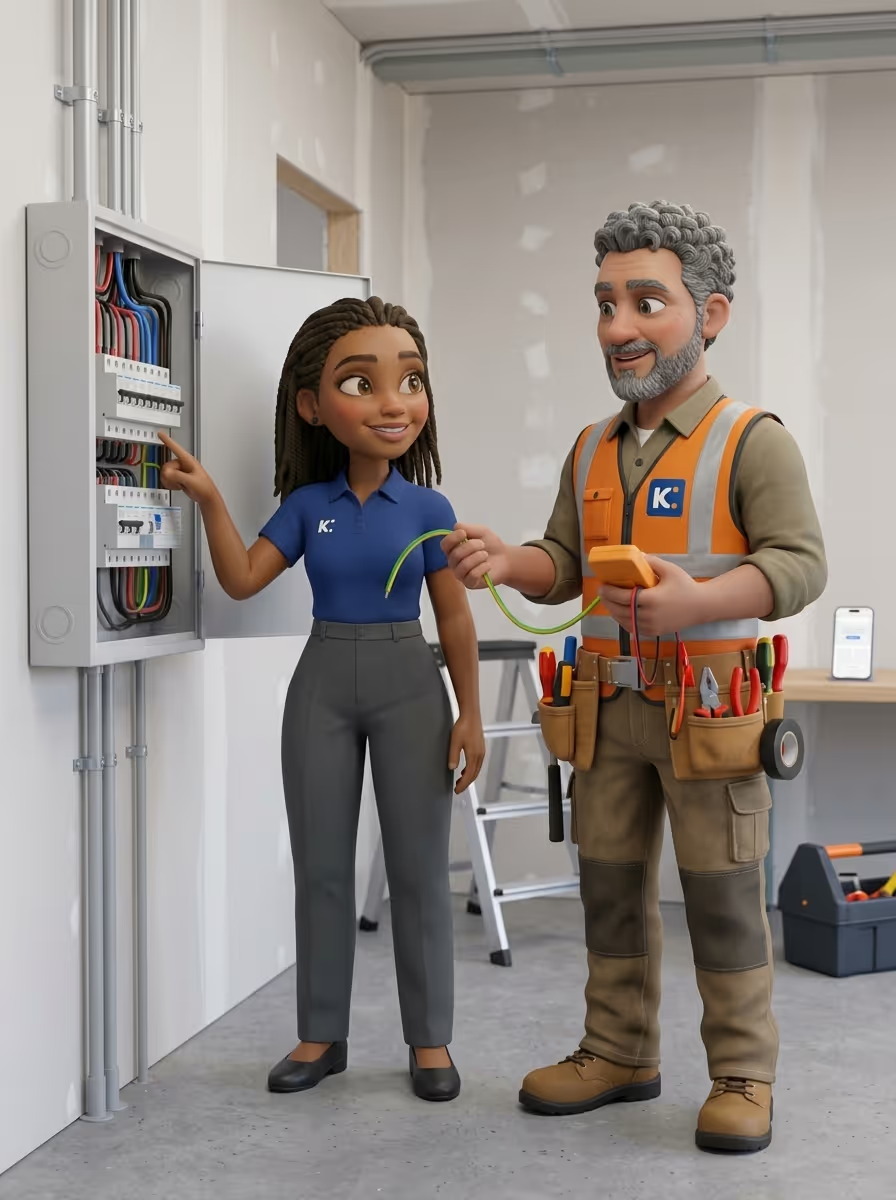
LPG Gas Plumbing Installation: Your Guide to a Safe and Compliant Setup
When considering a move to an LPG gas geyser for your home, the installation process is the single most critical step. It’s the part of the project that ensures your system is safe, efficient, and compliant with all South African regulations. A typical LPG gas plumbing installation in South Africa costs between R7,500 and R18,000. A basic installation for an external geyser where pipes are short might be on the lower end, while a complex indoor installation with a flue and long pipe runs could reach the upper end. The installation must be done by a registered gas practitioner—it's a non-negotiable legal requirement and the foundation of a reliable hot water solution. You can verify a practitioner's credentials through the SAQCC Gas practitioner portal
The Value of a Professional LPG Gas Plumber
A professional gas plumber, who is also a registered gas practitioner, does more than just connect pipes and fittings. They are safety experts trained to work with a highly volatile fuel source. Their expertise ensures that your entire gas system, from the cylinder to the geyser, is installed according to the strict national standards laid out in SANS 10087-1.
As David Zulu, a certified gas installer and Kandua Pro in Gauteng, explains, "The biggest mistake homeowners make is underestimating the details. It’s not just about connecting a pipe. It’s about ventilation, pressure, the right materials, and the specific clearances required by law. Getting one of those wrong can have serious consequences."
A professional will:
- Conduct a thorough site assessment: They will evaluate the best and safest location for your geyser and gas cylinders, ensuring all required clearances from windows, doors, drains, and electrical points are met.
- Select the right materials: They use the correct Class 1 or Class 2 copper piping for gas, which is different from standard water pipes, and ensure all fittings are SABS-approved and appropriate for gas.
- Install with safety in mind: They understand critical safety requirements, such as proper ventilation, the use of a lockable gas cage, and the correct installation of flue pipes for indoor units to prevent the build-up of dangerous carbon monoxide.
- Issue a Gas Certificate of Conformity (CoC): This is a legal document that certifies your installation is safe and compliant. Without it, your home insurance may be voided in the event of an incident.
How a Gas Geyser is Installed: The Process
While every installation is unique, here is what you can generally expect when a professional gas plumber installs your new LPG gas geyser.
- Site Assessment and Planning: The plumber will first discuss your hot water needs and assess the best location for the geyser and gas bottles. They will consider factors like the geyser's size (LPM), the distance from the hot water outlets, and, most importantly, compliance with all safety clearances.
- Mounting the Geyser: The geyser unit is mounted securely on a wall in the pre-determined, compliant location. This is typically on an external wall with plenty of ventilation.
- Installing the Gas and Water Pipes: The plumber will run the gas pipe from the planned cylinder location to the geyser. They will use the correct Class 1 or 2 copper pipes and ensure all connections are leak-proof. They will also connect the geyser to your home's water supply and hot water outlets. For indoor installations, a special flue pipe is installed to vent combustion gases to the outside.
- Setting Up the Gas Supply: A compliant, lockable gas cage is installed outdoors on a firm, level base. The gas cylinders (typically a 19kg or 48kg size) are placed inside, and the regulator and pigtail hose are connected to the main gas line.
- Testing and Commissioning: Once everything is connected, the plumber will perform a series of tests to ensure the system is working correctly. This includes a pressure and leak test, checking the geyser’s ignition, and confirming that the flame is burning correctly (a blue flame with a yellow tip).
- Issuing the Certificate of Conformity (CoC): Upon successful completion of all tests, the registered gas practitioner will issue you the mandatory CoC, which legally certifies the installation is safe and compliant.
Checklist: Before Your Installer Arrives
To ensure a smooth and efficient installation day, here are a few things you can do:
- Clear the Area: Make sure the proposed location for the geyser and the gas cylinders is clear of clutter, vehicles, or obstructions.
- Ensure Access: Provide clear access for the plumber to bring in their tools and materials.
- Plan for Water & Power Off: The installer will need to turn off your water supply and possibly the power for a short time. Plan accordingly.
- Keep Pets & Children Safe: For their safety and to avoid disruption, keep pets and small children away from the work area.
The Risks of DIY and the Value of a Pro
Attempting a DIY gas geyser installation or hiring an unqualified person is extremely dangerous and illegal in South Africa. Plumbers who have to fix these jobs have told us stories of incredibly risky situations they’ve encountered.
Sipho, a Kandua Pro from Durban, recently fixed a DIY job where the homeowner used standard plumbing tape on the gas fittings. "He had a slow, invisible leak right next to his braai area," Sipho recalls. "He was lucky. We found it during a routine check, but it could have easily ignited. The R1,500 he saved on a professional installation could have cost him his home."
A certified plumber understands that:
- Gas is heavier than air and can accumulate in low-lying areas, making correct cylinder placement and ventilation critical.
- Carbon monoxide is an invisible killer, and an improperly installed flue or a lack of ventilation can be fatal.
- Using the right materials and techniques is the difference between a system that runs safely for years and a ticking time bomb.
Summary of Our Cost and Compliance Guides
The cost to install a gas geyser can range from a budget-friendly R7,500 to R18,000 or more. For a detailed breakdown, see our Gas Geyser Installation Cost Guide
After your geyser is installed, proper maintenance is key. You can learn more in our guide to Gas Geyser Maintenance Tips.
Before installation, it is crucial to understand the pros and cons of gas geysers. They offer instant, continuous hot water and are independent of load shedding, but they require a higher upfront investment and the logistics of managing gas bottle refills. They are also space-savers and can lead to significant savings on your electricity bill in the long run.
After your geyser is installed, proper maintenance is key to its longevity and safety. You can perform simple checks like listening for gas smells and looking for leaks, but an annual professional service is a must. During this service, a registered technician will clean the burner, check for leaks with specialised equipment, and ensure all safety features are working correctly. They can also issue or update your CoC.
Customer Stories and Results
The Mkhize family in Randburg, Johannesburg, had a new 20L gas geyser installed after their old electric geyser burst. "We were worried about the upfront cost," says Mrs. Mkhize, "but our first electricity bill was almost R800 lower. The best part is not having to plan our lives around load shedding schedules anymore. The peace of mind is priceless."
Ben, a homeowner in Cape Town, was building a small cottage on his property and opted for a gas geyser from the start to save space and be water-wise. "My Kandua Pro helped me choose a 16L unit perfect for the cottage. The installation was done in a day, and the CoC was issued on the spot. It’s been running perfectly for two years, providing reliable hot water without any issues.
Frequently Asked Questions
1. How long does a gas geyser installation typically take?A standard gas geyser installation generally takes between 4 to 8 hours for a registered professional. More complex jobs that involve longer pipe runs, core drilling, or an indoor installation with a flue pipe can take a full day or longer.
2. What is the difference between a battery-operated and a forced-fan gas geyser?A battery-operated geyser uses batteries to ignite the flame and operate the display. It is completely independent of electricity. A forced-fan geyser has an internal fan that pushes exhaust gases out and requires a standard electrical connection to operate. Forced-fan units are often more efficient and can be more powerful, but they will not work during load shedding unless connected to an inverter or backup battery system.
3. Does the gas geyser need a hot water storage tank?No, a gas geyser is a tankless, on-demand water heater. It heats water instantly as it flows through the unit and does not require a hot water storage tank like a conventional electric geyser. This is what makes them so compact and energy-efficient.
4. Can I convert my existing electric geyser system to gas?Yes, you can. A qualified gas plumber can install a gas geyser in a suitable location and connect it to your existing hot water pipework. They can also decommission and remove the old electric geyser.
5. How do I know if the gas geyser size (LPM) is right for my home?The LPM (Litres Per Minute) rating indicates how much water the geyser can heat at a specific temperature rise. As a general guide, a 6-10 LPM unit is suitable for a single-point use like a kitchen sink. A 12-16 LPM geyser is good for a shower and basin, while a 20 LPM or larger unit can comfortably run a bath or multiple hot water outlets simultaneously. Your installer will help you choose the right size based on your household's needs.
6. What are the legal requirements for gas geyser installations in South Africa?
Yes, the requirements are strict. All gas installations must be done by a gas practitioner registered with SAQCC Gas. The installation must comply with SANS 10087-1 standards and be certified with a valid Certificate of Conformity (CoC).
7. Can a gas geyser be installed in a garage?
*No, this is illegal and unsafe. SANS 10087-1 regulations prohibit installing a fixed gas appliance in a garage due to poor ventilation and the high risk of fire or explosion.*7. Can a
8. Is it possible for a gas geyser to be a part of a solar power setup?Yes. Since gas geysers operate on demand, they can be a perfect complement to a solar PV system. On cloudy days or at night when your solar power is not sufficient to run a heat pump or an electric geyser, your gas geyser can provide hot water. Some modern gas geysers also have a low-amperage electronic ignition that can be powered by a small solar panel or a backup battery system.
9. Can I use a gas geyser to fill a bath?
Yes, provided you choose the right size. A geyser of 16 LPM or larger is recommended to fill a bath efficiently. A smaller unit will struggle to provide enough hot water at a comfortable temperature.
10. How do I ensure I hire a qualified and trustworthy gas plumber?Always ask to see their SAQCC Gas practitioner card, which shows they are registered and qualified for the specific type of gas work. A reputable professional will have no problem providing this documentation. You can also ask for references or check online reviews from previous clients.
Why you can trust us to get it right:
Getting your home projects done is simple, safe, and stress-free.
- Tell us what you need. You can also let our smart AI Home Companion help diagnose your problem if you’re not sure where to start.
- Get answers as you go. While posting your job, you can ask our smart AI home companion anything, from understanding typical costs to how the process works. Ask questions whenever they pop up and get clear, helpful answers instantly.
- We match you with the best. All our pros are 100% vetted. They are ID-verified, have passed a criminal background check, have their certifications verified, and maintain at least a 4.5-star rating.
Plumbers in Parklands: what to know before you book
Good plumbing is invisible, which is exactly why problems feel so urgent when they surface. Whether it's a leak you can hear but not see, a geyser on its last legs, or a bathroom renovation, the right professional makes all the difference.
Kandua connects you with vetted plumbers working in and around Parklands, with guide rates published so you know what to expect.
A few quick answers (so you don't have to scroll)
What separates a great plumber from an average one?
Diagnosis and honesty: testing to find the actual cause, quoting before work, and being registered for the specialised jobs that require it. Reviews from verified customers tell the rest.
What should I budget for plumbing work?
Kandua guide rates start from around R450 for a call-out and about R750 for standard repairs including the first hour, with gas repairs from roughly R850 and installations flat-priced up to around R4,500. Exact pricing is confirmed upfront.
What do I do about a burst or leaking geyser right now?
Shut the cold feed to the geyser, kill its power at the isolator or DB, and get a plumber booked. Every minute of flow you stop is damage avoided.
In Parklands: what local homes typically need
Parklands is in Cape Town's West Coast growth belt near Table View, and its homes are one of the Cape's newest large suburbs, dominated by modern homes and complexes. Around Sunningdale, Table View and Parklands North, that local character shapes the plumber work that comes up most often.
Wind-driven winter rain tests Parklands gutters and stormwater connections hard, and the area's newer homes are now hitting their first geyser and mixer replacement cycles. Sandy soil conditions make sorting drainage properly worth the effort.
Parklands' first generation of geysers and mixers is reaching replacement age together, making hot-water work a local constant. The suburb's rental density adds landlord call-outs to the weekly rhythm.
From Sandown to Big Bay surrounds, Kandua's vetted plumbers cover the greater Parklands area, and Jess matches you with pros who actually work your streets, not just your city.
What common plumbing symptoms usually mean
Around Sunningdale, Table View and the rest of Parklands, these are the plumbing complaints pros hear most, and what each one usually means.
A water bill that suddenly climbs
The classic sign of a hidden leak. Rather than guesswork, professional leak detection at about R1,950 as a guide pinpoints the source with acoustic or gas equipment before anything is opened up.
A drain that blocks again and again
Once is bad luck; repeatedly is a cause, commonly tree roots or a damaged section of pipe. Guide pricing is about R750 for unblocking including the first hour and rodding, and around R1,850 for a camera inspection that shows the real problem.
A geyser acting up
Dripping, rumbling, lukewarm water or tripping power are all end-of-life warnings. As a guide, repairs start around R750 and full installation labour runs about R2,850, excluding the geyser unit itself.
Weak pressure through the whole house
Usually a supply problem, a valve failing, or old galvanised pipes corroding closed. Diagnosis first, then an upfront quote for the right fix.
When it's a DIY job, and when it isn't
Swapping a tap washer, clearing a hair-clogged basin trap, or replacing a toilet flapper are fair DIY territory for a careful homeowner with the water turned off. Know where your main shut-off is before you start.
Anything involving the geyser, gas, drainage runs, hidden leaks, or work behind walls belongs with a professional, both for safety and because botched plumbing multiplies its own repair bill through water damage.
Compliance in South Africa: what matters and when
For Parklands homeowners, these are the certificates and registrations that matter, whether you're buying, selling or upgrading a home in Parklands North or anywhere nearby.
1) The Plumbing CoC
A water installation certificate is required at transfer in several municipalities and sensible everywhere. Guide pricing on Kandua is about R850 for the inspection.
2) PIRB
PIRB registration marks a qualified plumber, and some certified work specifically requires a registered plumber's sign-off. Asking about it costs nothing and tells you plenty.
3) Gas: no shortcuts
Only registered gas installers may legally work on gas installations. Kandua guide rates are from about R850 for certified gas repairs and around R1,450 for installations, certificate included in doing the job right.
4) Solar and heat pumps
These installations must meet standard for safety and insurance. As a guide, budget about R3,850 in labour for a solar geyser and around R4,500 for a heat pump installation.
5) Where electrical compliance sneaks in
Hot water systems connect to your electrical installation, so changes can touch the electrical CoC as well. Good pros raise this upfront.
Pricing: what to budget for plumbing in Parklands
These guide rates give Parklands homeowners a realistic plumbing budget. Drawn from Kandua's latest pricing data, they're the transparent starting point, and your Pro's upfront quote is the final word.
- Call-out: from around R450, covering travel and the assessment so you can get a quote. It's all you pay if you decide not to proceed.
- Standard repairs: about R750 including the first hour of labour, covering pipes, taps, fittings and drain unblocking (rodding included).
- Certified gas work: repairs from roughly R850 and installations around R1,450, by registered gas installers.
- Geysers: repairs from about R750; full installation labour around R2,850; solar geyser installation about R3,850; heat pumps around R4,500.
- Specialised equipment: drain camera inspections about R1,850 and leak detection around R1,950, flat as a guide.
- Water systems: filtration from about R950, pump installation around R1,250, rainwater harvesting from about R1,500, tanks and backup around R2,450.
- Plumbing CoC: about R850 flat inspection fee.
- After hours: typically around 1.5 to 2 times standard rates as a guide, with emergency pricing confirmed upfront.
- Materials: quoted separately, from washers to the geyser unit itself.
For a small job, budget the standard repair rate plus parts, and if several niggles have piled up, one visit covering the lot stretches the call-out furthest.
Genuinely helpful plumbing FAQs for Parklands
What does it cost to hire a plumber in Parklands?
As a guide, a call-out starts from around R450, standard repairs from about R750 including the first hour, certified gas repairs from roughly R850, and flat installations up to around R4,500. Materials are quoted separately and your Pro confirms the exact price upfront.
Do plumbers in Parklands handle emergencies and after-hours work?
Yes, many Kandua pros in Parklands take urgent and after-hours jobs. Emergency work typically runs at around 1.5 to 2 times standard rates as a guide, confirmed upfront before the Pro heads out.
Which parts of Parklands do Kandua plumbers cover?
Vetted plumbers on Kandua work throughout Parklands, including Sunningdale, Table View, Parklands North and Sandown. Jess matches you with a pro who covers your exact area.
Do I still pay the call-out if I accept the quote?
The call-out from around R450 gets the Pro to you and gets you a quote, and it's all you pay if you don't proceed. Go ahead, and your job is priced per the service guide rates your Pro confirms.
What does a geyser replacement really cost?
As a guide, installation labour runs around R2,850, with the geyser unit itself quoted separately (commonly R4,000 to R9,000 or more at retail for typical sizes). Your plumber quotes the full picture upfront, including valves and materials.
How does professional leak detection work?
Specialised acoustic or tracer gas equipment locates the leak without exploratory demolition, at around R1,950 flat as a guide. Finding before opening is nearly always the cheaper sequence.
Who is allowed to work on gas plumbing?
Only registered gas installers, by law. On Kandua, certified gas repairs run from about R850 and installations from around R1,450 as a guide, with the compliance certificate part of the job.
How do I prepare for the plumber's visit?
Know where your main shut-off is, note what's happening and when it started, and photograph the problem area if you can. Clear information means a sharper quote and a faster fix.
Should quotes include VAT?
Always confirm. Some plumbers quote excluding VAT, so when comparing quotes make sure you're comparing like for like: VAT, call-out and materials included or not.
Book with confidence: vetted plumbers in Parklands, guide rates published upfront, and your exact quote confirmed before any work begins.