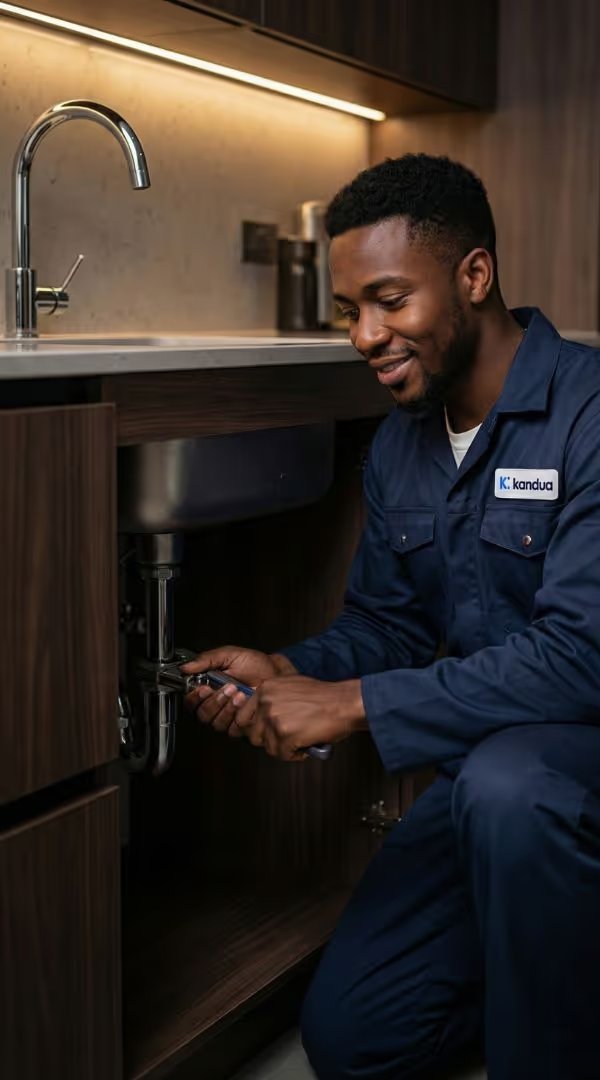
Unblocking Drains and Sewers Near You: Your Comprehensive Guide to our Professional Plumbing Services
Encountering a blocked drain or sewer is a frustrating and often unhygienic problem that can disrupt your entire household. Whether it's a slow-draining kitchen sink or a backed-up toilet, it's a job that requires swift action. A skilled plumber is the professional you need to diagnose and resolve the issue, often using specialised tools to get your plumbing system flowing freely again.
What is a Drain and Sewer Unblocking Service?
A drain and sewer unblocking service involves a professional plumber using their expertise and tools to clear an obstruction within your plumbing system. These blockages can occur in a variety of places, from the U-shaped pipe directly under your sink (the P-trap) to the main sewer line that carries all household waste to the municipal system. Plumbers can pinpoint the exact location and nature of the blockage and apply the most effective method, whether it's a simple drain snake or an advanced hydro-jetting machine.
How a Plumber Unblocks a Drain
When you call a professional plumber for a blocked drain, they follow a systematic approach to ensure the problem is solved safely and effectively.
- Diagnosis: The plumber will first assess the situation to determine the location and severity of the blockage. They might ask questions about which drains are affected and when the problem started. For more complex issues, they may use a CCTV drain camera to visually inspect the inside of the pipes.
- Choosing the Right Tool: Based on the diagnosis, the plumber will select the appropriate tool.
- Drain Snake (Auger): For localised clogs in a sink or toilet, a drain snake is often the first choice. This is a long, flexible metal cable that the plumber feeds into the pipe to physically break apart the blockage or retrieve it.
- Hydro-Jetting: For severe blockages, especially those caused by a build-up of fats, oils, and grease (FOG), a plumber might use a hydro-jetting machine. This tool blasts highly pressurised water through the pipes, scouring the inside walls and flushing out all debris, providing a complete and long-lasting clean.
- The Unblocking Process: The plumber will then use their chosen tool to clear the obstruction. They will work carefully to avoid damaging your pipes. For example, when using a powerful drain snake, they know exactly how to operate it without causing harm to older, more brittle pipes.
- Testing and Cleanup: Once the blockage is cleared, the plumber will run water through the drain to ensure it is flowing correctly. They will then clean up any mess, leaving the area tidy.
The Dangers of DIY and the Value of a Professional
While it might be tempting to tackle a blocked drain yourself, especially with chemical cleaners, this can be a dangerous and costly mistake.
- Risk to Pipes: Many chemical drain cleaners contain corrosive substances that can eat away at older pipes, especially PVC, leading to leaks, cracks, or even bursts. A plumber recently recounted a job where a homeowner had been using a chemical drain cleaner for months, and by the time he arrived, the plastic P-trap under the sink was so brittle it crumbled in his hand, turning a simple unblocking job into a more expensive pipe replacement.
- Ineffective Solution: Chemical cleaners often only burn a small hole through a blockage, leaving the majority of the build-up intact. This means the problem will likely return in a few days or weeks, forcing you to spend more money on another temporary fix.
- Safety Hazards: The chemicals in these products are highly toxic and can cause severe skin burns and respiratory issues. A professional plumber has the correct safety gear and the expertise to handle blockages without putting themselves or your home at risk.
A professional plumber provides a safe, effective, and lasting solution. They don't just clear the immediate problem; they identify the root cause and ensure it's properly dealt with, saving you time, money, and stress in the long run.
Customer Stories and Results
A family in Fourways was battling a recurring kitchen sink blockage for months. They tried every DIY remedy, but the drain would clog up again within a week. When a professional plumber arrived, he performed a quick inspection and recommended hydro-jetting. It turned out that years of cooking oil and grease had created a solid, concrete-like build-up that a simple snake couldn't fully clear. After an hour of hydro-jetting, the pipes were spotless, and the drain has been running smoothly ever since. The family now knows to dispose of their grease properly and save themselves from a similar headache.
Post-Service Care: Preventing Future Blockages
Once your drain is clear, the best way to keep it that way is with good habits.
- Scrape plates into the bin: Before rinsing dishes, scrape all food scraps into the rubbish bin or compost. Even small pieces can contribute to a clog.
- Dispose of fats and oils properly: Never pour fats, oils, or grease (FOG) down the sink. Pour them into a jar or tin, let them cool and solidify, then throw them in the bin.
- Use a drain strainer: A simple mesh strainer in your plughole will catch food particles and other debris before they enter the pipes.
- Be mindful of what goes down: Avoid rinsing coffee grounds, flour, or other starchy foods down the drain.
Frequently Asked Questions
1. How do plumbers identify the cause of a blockage?
Plumbers use a combination of methods. For simple clogs, they might start with a plunger and a drain snake. For recurring or more complex issues, they use a CCTV drain camera, which gives them a live visual of the inside of the pipes to see exactly what is causing the blockage and where it is located.
2. Can a professional plumber fix a burst pipe caused by a blockage?
Yes, a professional plumber has the skills and tools to repair or replace burst pipes. A blockage can sometimes cause enough pressure to crack or burst a pipe, which requires immediate attention from a qualified professional.
3. Is hydro-jetting suitable for all types of pipes?
Hydro-jetting is extremely powerful and effective, but it may not be suitable for old, fragile, or cracked pipes. A reputable plumber will often perform a camera inspection beforehand to ensure the pipes are in good enough condition to withstand the high pressure.
4. What is the difference between a drain and a sewer line?
A drain is the pipe that carries water from a single fixture (like a sink or shower). A sewer line is the main pipe that connects all the drains in your home and carries the waste to the municipal sewer system or a septic tank. A blockage in the sewer line will affect multiple drains in your house.
5. How long does a typical unblocking job take?
A simple clog cleared with a drain snake can often be done in less than an hour. A more complex job involving hydro-jetting or a camera inspection could take several hours, depending on the severity of the blockage and the length of the pipes.
6. Why does my kitchen sink drain keep getting blocked?
The most common cause of recurring kitchen sink blockages is the build-up of fats, oils, and grease (FOG) along with food scraps. Over time, these substances accumulate and harden, leading to a restricted flow and eventual blockage.
7. Can a plumber unblock a drain without a call-out fee?
Most professional plumbers charge a call-out fee, which typically covers their travel to your home and the initial assessment and first hour of labour. It's always best to confirm their pricing structure before they begin work.
8. What are the signs of a main sewer line blockage?
Signs of a main sewer line blockage include multiple blocked drains in your home, water backing up into a shower or toilet when you flush, gurgling sounds from your drains or toilet, and a foul, sewage-like odour coming from your drains.
9. Is it cheaper to do it myself or hire a professional?
While the upfront cost of DIY might seem cheaper, a professional provides a lasting solution. If a DIY attempt fails or damages your pipes, you could end up with a much larger and more expensive problem.
10. What can a professional plumber do that I can't?
A professional plumber has access to specialised tools like industrial drain snakes, CCTV cameras, and hydro-jetting machines. They also have the knowledge to identify the root cause of a problem, such as a collapsed pipe or tree root intrusion, and fix it safely and effectively.
Why you can trust us to get it right:
At Kandua, getting your home projects done is simple, safe, and stress-free.
- Tell us what you need – Or let our smart AI Home Companion help diagnose your problem if you’re not sure where to start.
- Get answers as you go – While posting your job, you can ask our smart AI home companion anything — from understanding typical costs, to how the process works, to how long it might take. Ask questions whenever they pop up, and get clear, helpful answers instantly.
- We match you with the best – All our pros are 100% vetted: ID-verified, criminal background checked, certification verified, and maintaining at least a 4.5-star rating. You don’t have to worry about picking the right person — we make sure the pro we send has the right skills and certification to get your job done right.
With Kandua, you can rest easy knowing you’re in safe hands from the first click to the final handshake.
Plumbers in Durbanville: what to know before you book
From a dripping tap to a burst geyser at midnight, plumbing spans the trivial and the truly urgent. Knowing roughly what things cost, and who to trust, takes the stress out of both ends of that spectrum.
That's the Kandua promise in Durbanville: vetted plumbers, honest guide rates, and no surprises on the invoice.
A few quick answers (so you don't have to scroll)
What separates a great plumber from an average one?
Diagnosis and honesty: testing to find the actual cause, quoting before work, and being registered for the specialised jobs that require it. Reviews from verified customers tell the rest.
What should I budget for plumbing work?
Kandua guide rates start from around R450 for a call-out and about R750 for standard repairs including the first hour, with gas repairs from roughly R850 and installations flat-priced up to around R4,500. Exact pricing is confirmed upfront.
What do I do about a burst or leaking geyser right now?
Shut the cold feed to the geyser, kill its power at the isolator or DB, and get a plumber booked. Every minute of flow you stop is damage avoided.
In Durbanville: what local homes typically need
Durbanville is on the winelands edge of Cape Town's northern suburbs, and its homes are a fast-growing mix of new estates and family neighbourhoods around an older town core. Around Sonstraal Heights, Pinehurst and Graanendal, that local character shapes the plumber work that comes up most often.
New builds around Sonstraal and Pinehurst are not immune to plumbing snags, and the Cape winter tests every gutter and stormwater connection in Durbanville. Established homes in the older parts of town carry the usual ageing geyser and pipe risks.
Durbanville's new estates are reaching the age where builder plumbing meets real-world use, and the punch lists follow. Established homes toward the old town centre carry the Cape's usual winter drainage and geyser rhythms.
From Vierlanden to Durbanville Hills, Kandua's vetted plumbers cover the greater Durbanville area, and Jess matches you with pros who actually work your streets, not just your city.
Common plumbing problems (and what they usually mean)
Around Sonstraal Heights, Pinehurst and the rest of Durbanville, these are the plumbing complaints pros hear most, and what each one usually means.
"My water bill jumped"
An unexplained increase usually means water going where it shouldn't: a hidden leak underground, under a floor, or in a wall. Professional leak detection with acoustic or gas equipment, at about R1,950 as a guide, finds it without digging up the garden on a hunch.
"My drain keeps blocking"
Repeat blockages point to a cause: roots in the line, a collapsed or bellied section, or a buildup that rodding alone won't clear. Unblocking runs at about R750 as a guide including the first hour and rodding, and a camera inspection at around R1,850 shows exactly what's happening down there.
"My geyser is leaking, overflowing or tripping the power"
Geysers fail with warning signs: dripping overflow pipes, rumbling, lukewarm water, or tripping breakers. Repairs start from about R750 as a guide; a full replacement runs around R2,850 in labour, excluding the unit.
"Low water pressure everywhere"
Whole-house pressure loss suggests a supply-side issue, a failing pressure valve, or corroded old pipes narrowing from the inside. A plumber isolates which, then quotes the fix upfront.
When it's a DIY job, and when it isn't
Swapping a tap washer, clearing a hair-clogged basin trap, or replacing a toilet flapper are fair DIY territory for a careful homeowner with the water turned off. Know where your main shut-off is before you start.
Anything involving the geyser, gas, drainage runs, hidden leaks, or work behind walls belongs with a professional, both for safety and because botched plumbing multiplies its own repair bill through water damage.
Compliance in South Africa: what matters and when
For Durbanville homeowners, these are the certificates and registrations that matter, whether you're buying, selling or upgrading a home in Graanendal or anywhere nearby.
1) The Plumbing CoC
A water installation certificate is required at transfer in several municipalities and sensible everywhere. Guide pricing on Kandua is about R850 for the inspection.
2) PIRB
PIRB registration marks a qualified plumber, and some certified work specifically requires a registered plumber's sign-off. Asking about it costs nothing and tells you plenty.
3) Gas: no shortcuts
Only registered gas installers may legally work on gas installations. Kandua guide rates are from about R850 for certified gas repairs and around R1,450 for installations, certificate included in doing the job right.
4) Solar and heat pumps
These installations must meet standard for safety and insurance. As a guide, budget about R3,850 in labour for a solar geyser and around R4,500 for a heat pump installation.
5) Where electrical compliance sneaks in
Hot water systems connect to your electrical installation, so changes can touch the electrical CoC as well. Good pros raise this upfront.
Pricing: what to budget for plumbing in Durbanville
Kandua publishes guide rates so plumbing costs in Durbanville aren't a mystery. Treat them as estimates: Pros price competitively against them, and you always see your exact quote upfront.
- Call-out: from around R450, covering travel and the assessment so you can get a quote. It's all you pay if you decide not to proceed.
- Standard repairs: about R750 including the first hour of labour, covering pipes, taps, fittings and drain unblocking (rodding included).
- Certified gas work: repairs from roughly R850 and installations around R1,450, by registered gas installers.
- Geysers: repairs from about R750; full installation labour around R2,850; solar geyser installation about R3,850; heat pumps around R4,500.
- Specialised equipment: drain camera inspections about R1,850 and leak detection around R1,950, flat as a guide.
- Water systems: filtration from about R950, pump installation around R1,250, rainwater harvesting from about R1,500, tanks and backup around R2,450.
- Plumbing CoC: about R850 flat inspection fee.
- After hours: typically around 1.5 to 2 times standard rates as a guide, with emergency pricing confirmed upfront.
- Materials: quoted separately, from washers to the geyser unit itself.
Think of small jobs as the repair rate plus parts, and group them where you can: one visit for three fixes beats three visits every time.
Genuinely helpful plumbing FAQs for Durbanville
How much should I budget for a plumber in Durbanville?
Guide rates run from around R450 for a call-out, about R750 for standard repairs including the first hour, roughly R850 for certified gas repairs, and up to around R4,500 for the largest flat-priced installations. Your exact quote is confirmed upfront.
Can I get an emergency plumber in Durbanville?
You can. Kandua pros serving Durbanville take after-hours and weekend call-outs, typically at about 1.5 to 2 times standard rates as a guide, with pricing confirmed before dispatch.
Which parts of Durbanville do Kandua plumbers cover?
Vetted plumbers on Kandua work throughout Durbanville, including Sonstraal Heights, Pinehurst, Graanendal and Vierlanden. Jess matches you with a pro who covers your exact area.
What does the call-out fee actually cover?
From around R450 as a guide, it covers the Pro's travel and the time to assess your job and quote. If you decline the quote, that's the only charge; if you accept, the work is priced per the guide rates.
How much is geyser installation labour?
Around R2,850 as a guide for a standard replacement, excluding the unit and materials. Retail geyser units commonly run R4,000 to R9,000 or more depending on size and type, and your Pro quotes everything upfront.
Is leak detection worth it compared to just opening the wall?
Almost always. At about R1,950 flat as a guide, acoustic or gas detection pinpoints the leak first, so you open one spot instead of three. It usually pays for itself in avoided repair work.
Who is allowed to work on gas plumbing?
Only registered gas installers, by law. On Kandua, certified gas repairs run from about R850 and installations from around R1,450 as a guide, with the compliance certificate part of the job.
How do I prepare for the plumber's visit?
Know where your main shut-off is, note what's happening and when it started, and photograph the problem area if you can. Clear information means a sharper quote and a faster fix.
Should quotes include VAT?
Always confirm. Some plumbers quote excluding VAT, so when comparing quotes make sure you're comparing like for like: VAT, call-out and materials included or not.
When you're ready, describe the job to Jess and get matched with vetted plumbers serving Durbanville: transparent guide rates, verified reviews, and no invoice surprises.