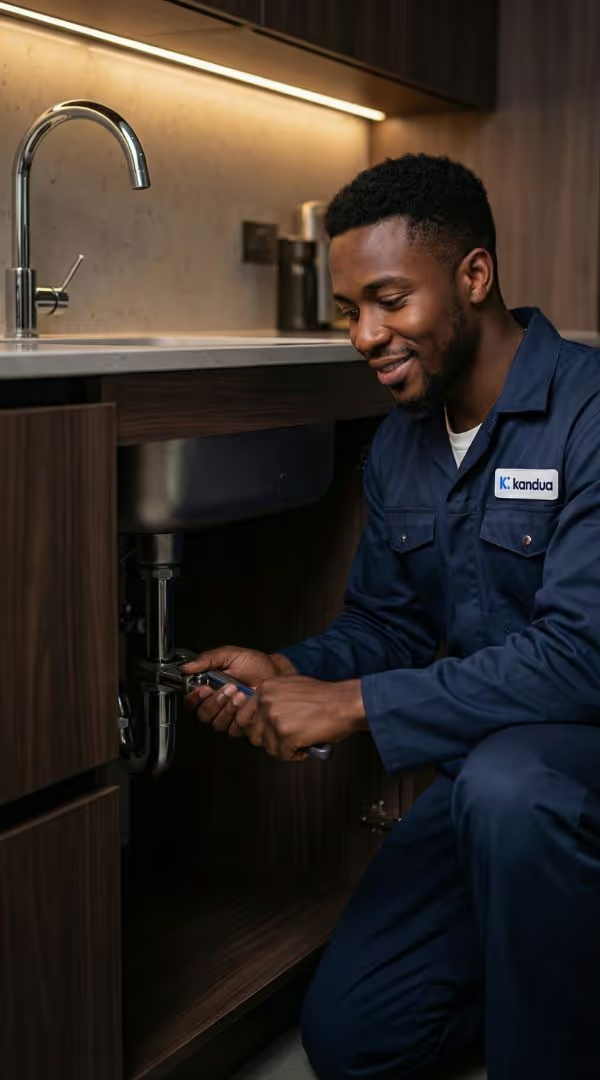
The Complete Guide to Heat Pump Installation in South Africa
A heat pump installation is a smart investment that can significantly reduce your household’s electricity bill, but its long-term performance and efficiency depend heavily on a professional and correct installation. This comprehensive guide covers everything you need to know, from understanding costs and selecting the right unit to what a professional installation entails and how to care for your new system.
The Value of a Professional Heat Pump Installation
Installing a heat pump is not a typical DIY task. It’s a complex process that involves integrating a specialised heating unit with your home’s existing plumbing and electrical systems. A professional installation ensures that the unit is correctly sized, optimally placed, and safely connected to your home’s infrastructure. Without this expertise, you risk poor performance, safety hazards, and even voiding your manufacturer’s warranty. A poorly executed installation can turn a wise, long-term investment into a source of frustration and unexpected costs.
What is a Heat Pump and Why is it Worth it?
A heat pump works by moving heat from one place to another, rather than generating it. In the context of a water heater, it pulls heat from the ambient air, amplifies it, and transfers it into your geyser. This process is far more energy-efficient than a traditional electric geyser, which uses a resistive element to directly heat water. In South Africa, where electricity costs are consistently on the rise, this can result in a reduction of up to 70% in your water heating costs. The system also provides a consistent hot water supply, regardless of the weather, unlike some solar options.
What a Professional Plumber Does During Installation
When you hire a qualified professional for a heat pump installation, you're not just paying for a technician; you're investing in a specialist who understands the entire system. The process typically follows a clear, methodical plan to ensure maximum efficiency and safety.
- Site Assessment and Sizing: A professional will first visit your home to assess your specific needs. They will look at the size of your current geyser, the number of people in your household, and your hot water usage patterns to recommend the correct heat pump size. This step is critical, as an incorrectly sized unit will be inefficient.
- Optimal Placement: The plumber will determine the best location for the outdoor unit, considering factors like proximity to the geyser, sufficient airflow, noise levels, and accessibility for future maintenance. Placing the unit too far from the geyser can lead to significant heat loss.
- Plumbing Integration: The heat pump is connected to your existing geyser using insulated pipes. The plumber will correctly install non-return valves and a circulation pump to ensure water flows efficiently through the system.
- Electrical Connection: A professional will ensure the electrical wiring is safe and compliant with SANS 10142-1 regulations. This often involves running a new, dedicated circuit from your main distribution board (DB) to the heat pump and installing a safety isolator switch.
- Commissioning and Testing: After installation, the plumber will test the entire system to ensure it's functioning correctly, setting the temperature and checking for any leaks or issues. They should also walk you through how to operate your new system.
The Risks of an Incorrect Installation
An installation performed by an unqualified person can lead to severe and costly consequences. The most significant risks include:
- Inefficient Performance: The entire point of a heat pump is to save money on electricity. If the unit is incorrectly sized or placed, it may not run efficiently, meaning your expected savings will never materialise. A plumber once had to correct a job where the homeowner was frustrated by their high electricity bill; it turned out the unit was placed in a small, enclosed space, forcing it to constantly run on less-than-optimal air.
- System Failure: Incorrect wiring or plumbing can place undue stress on the heat pump's compressor, leading to premature failure. This is often an expensive repair or replacement, which will not be covered by your warranty.
- Safety Hazards: The electrical component of a heat pump installation is a serious matter. Non-compliant wiring can pose a fire risk or the risk of electric shock. A Certificate of Compliance (CoC) is essential for this type of work.
- Voided Warranty: Manufacturers require professional installation by a qualified technician to validate their warranty. A DIY or shoddy installation means you're on your own if something goes wrong.
How to Maintain Your Heat Pump
Once your heat pump is installed, a little proactive care will ensure it performs optimally for years.
- Keep the Unit Clear: Regularly check the outdoor unit for debris like leaves, grass, and spiderwebs. Ensure there's at least 50 cm of clear space around the unit for proper airflow.
- Monitor for Strange Noises: While a heat pump has a normal hum, any rattling, grinding, or excessive noise could indicate a problem.
- Schedule Annual Servicing: Like a car, a heat pump benefits from an annual service. A professional technician will clean the coils, check refrigerant levels, and inspect all components to catch minor issues before they become major problems.
Customer Stories and Results
A family in Johannesburg recently had a new heat pump installed. They had an old, inefficient 250L geyser that was costing them a fortune. Within the first month of installing the heat pump, they noticed a dramatic difference in their electricity bill. The plumber had correctly sized a 5.5kW unit for them, and they were thrilled with the consistent hot water and the significant savings. They now feel more secure about their energy usage, knowing they have a reliable, cost-effective solution.
Frequently Asked Questions About Heat Pump Installation in South Africa
1. How long does a heat pump installation typically take?
A standard heat pump installation, connecting to an existing geyser, generally takes between 4 and 8 hours. More complex jobs that require new plumbing or electrical lines may take a full day.
2. Can a heat pump work during load shedding?
No, a heat pump, like a standard geyser, requires electricity to run. However, because it heats water much faster, you can benefit by heating your water in the periods between load shedding stages.
3. What is the average lifespan of a heat pump in South Africa?
With professional installation and regular maintenance, a good quality heat pump can last anywhere from 10 to 15 years, and sometimes even longer.
4. Will my heat pump work on a cold day?
Yes. A heat pump extracts heat from the ambient air, and there is still heat in the air even on cold winter days. While efficiency might be slightly reduced in extremely cold conditions, it will still provide hot water.
5. How much can I save on my electricity bill?
Most homeowners report a reduction of 50% to 70% on their water heating costs, which can represent a substantial saving on the total monthly electricity bill.
6. Do heat pumps require a lot of maintenance?
They are relatively low-maintenance. The most important thing is to keep the outdoor unit clear of debris and to schedule an annual professional service to ensure optimal performance and longevity.
7. Can a heat pump be installed anywhere on my property?
No, placement is critical. The unit needs to be installed in a location with plenty of unobstructed airflow, and ideally as close to the geyser as possible to minimise heat loss from the pipes.
8. Is a heat pump noisier than a standard geyser?
Yes, the outdoor unit of a heat pump produces some noise, similar to an air conditioning unit. However, modern units are designed to be much quieter. Proper placement away from bedrooms can mitigate any noise concerns.
9. Can a heat pump be connected to any geyser?
Heat pumps are compatible with most standard high-pressure geysers. However, they are generally not compatible with low-pressure gravity-fed geysers. A professional will be able to tell you if your geyser is compatible.
10. Do I need a professional for my heat pump installation?
Absolutely. For reasons of safety, efficiency, and to ensure your warranty remains valid, it is essential to have a qualified professional perform the installation.
Why you can trust us to get it right:
At Kandua, getting your home projects done is simple, safe, and stress-free.
- Tell us what you need – Or let our smart AI Home Companion help diagnose your problem if you’re not sure where to start.
- Get answers as you go – While posting your job, you can ask our smart AI home companion anything — from understanding typical costs, to how the process works, to how long it might take. Ask questions whenever they pop up, and get clear, helpful answers instantly.
- We match you with the best – All our pros are 100% vetted: ID-verified, criminal background checked, certification verified, and maintaining at least a 4.5-star rating. You don’t have to worry about picking the right person — we make sure the pro we send has the right skills and certification to get your job done right.
With us, you can rest easy knowing you’re in safe hands from the first click to the final handshake.
Plumbers in Bryanston: what to know before you book
Plumbing problems rarely announce themselves politely. A water bill that jumps, a drain that keeps blocking, or a geyser making new noises are all early warnings that something needs professional attention before it becomes water damage.
Kandua matches homeowners in Bryanston with vetted plumbers for exactly that: repairs, installations, compliance and genuine emergencies, with guide rates you can see before you book.
A few quick answers (so you don't have to scroll)
What separates a great plumber from an average one?
Diagnosis and honesty: testing to find the actual cause, quoting before work, and being registered for the specialised jobs that require it. Reviews from verified customers tell the rest.
What should I budget for plumbing work?
Kandua guide rates start from around R450 for a call-out and about R750 for standard repairs including the first hour, with gas repairs from roughly R850 and installations flat-priced up to around R4,500. Exact pricing is confirmed upfront.
What do I do about a burst or leaking geyser right now?
Shut the cold feed to the geyser, kill its power at the isolator or DB, and get a plumber booked. Every minute of flow you stop is damage avoided.
In Bryanston: what local homes typically need
Bryanston is in Johannesburg's leafy northern suburbs near Sandton, and its homes are large stands with sprawling older homes, many mid-renovation, alongside secure estates and clusters. Around Bryanston East, Bryanston West and Sloane Park, that local character shapes the plumber work that comes up most often.
Large Bryanston stands often run irrigation, pools and boreholes alongside household plumbing, so leak detection across long pipe runs is valuable here. Renovations of older homes also surface dated geysers and pipework that need replacing.
Bryanston bathrooms and kitchens get renovated to high spec, keeping quality installation work steady alongside the estate's irrigation and borehole ecosystems. Heat pumps and solar geysers are popular upgrades on these larger properties.
From Petervale to Epsom Downs, Kandua's vetted plumbers cover the greater Bryanston area, and Jess matches you with pros who actually work your streets, not just your city.
Common plumbing problems (and what they usually mean)
Around Bryanston East, Bryanston West and the rest of Bryanston, these are the plumbing complaints pros hear most, and what each one usually means.
"My water bill jumped"
An unexplained increase usually means water going where it shouldn't: a hidden leak underground, under a floor, or in a wall. Professional leak detection with acoustic or gas equipment, at about R1,950 as a guide, finds it without digging up the garden on a hunch.
"My drain keeps blocking"
Repeat blockages point to a cause: roots in the line, a collapsed or bellied section, or a buildup that rodding alone won't clear. Unblocking runs at about R750 as a guide including the first hour and rodding, and a camera inspection at around R1,850 shows exactly what's happening down there.
"My geyser is leaking, overflowing or tripping the power"
Geysers fail with warning signs: dripping overflow pipes, rumbling, lukewarm water, or tripping breakers. Repairs start from about R750 as a guide; a full replacement runs around R2,850 in labour, excluding the unit.
"Low water pressure everywhere"
Whole-house pressure loss suggests a supply-side issue, a failing pressure valve, or corroded old pipes narrowing from the inside. A plumber isolates which, then quotes the fix upfront.
When it's a DIY job, and when it isn't
Swapping a tap washer, clearing a hair-clogged basin trap, or replacing a toilet flapper are fair DIY territory for a careful homeowner with the water turned off. Know where your main shut-off is before you start.
Anything involving the geyser, gas, drainage runs, hidden leaks, or work behind walls belongs with a professional, both for safety and because botched plumbing multiplies its own repair bill through water damage.
Certifications, registrations and compliance in South Africa
For Bryanston homeowners, these are the certificates and registrations that matter, whether you're buying, selling or upgrading a home in Sloane Park or anywhere nearby.
1) Plumbing Certificate of Compliance
Several municipalities require a plumbing or water installation certificate when property changes hands, and it's good practice anywhere. On Kandua, a Plumbing CoC inspection runs at about R850 as a guide.
2) PIRB registration
The Plumbing Industry Registration Board registers qualified plumbers, and certain certified work must be signed off by a registered plumber. It's a quality signal worth asking about.
3) Gas plumbing compliance
Gas work is legally reserved for registered gas installers, full stop. On Kandua, certified gas repairs run from about R850 and installations from around R1,450 as a guide, with the compliance certificate part of doing it properly.
4) Solar geysers and heat pumps
Hot water alternatives must be installed to standard to be safe, efficient and insurable. Guide labour is about R3,850 for a solar geyser installation and around R4,500 for a heat pump.
5) The electrical side
Geyser and heat pump work touches the electrical installation, so the electrical CoC can become relevant too. A good plumber flags this rather than leaving it for you to discover at transfer.
Pricing: what to budget for plumbing in Bryanston
Plumbing budgets in Bryanston become much easier with Kandua's guide rates in hand. They're not fixed prices: they reflect the latest marketplace pricing data, Pros quote against them competitively, and your exact price is confirmed upfront.
- Call-out: from around R450, covering travel and the assessment so you can get a quote. It's all you pay if you decide not to proceed.
- Standard repairs: about R750 including the first hour of labour, covering pipes, taps, fittings and drain unblocking (rodding included).
- Certified gas work: repairs from roughly R850 and installations around R1,450, by registered gas installers.
- Geysers: repairs from about R750; full installation labour around R2,850; solar geyser installation about R3,850; heat pumps around R4,500.
- Specialised equipment: drain camera inspections about R1,850 and leak detection around R1,950, flat as a guide.
- Water systems: filtration from about R950, pump installation around R1,250, rainwater harvesting from about R1,500, tanks and backup around R2,450.
- Plumbing CoC: about R850 flat inspection fee.
- After hours: typically around 1.5 to 2 times standard rates as a guide, with emergency pricing confirmed upfront.
- Materials: quoted separately, from washers to the geyser unit itself.
Think of small jobs as the repair rate plus parts, and group them where you can: one visit for three fixes beats three visits every time.
Genuinely helpful plumbing FAQs for Bryanston
What does it cost to hire a plumber in Bryanston?
As a guide, a call-out starts from around R450, standard repairs from about R750 including the first hour, certified gas repairs from roughly R850, and flat installations up to around R4,500. Materials are quoted separately and your Pro confirms the exact price upfront.
Do plumbers in Bryanston handle emergencies and after-hours work?
Yes, many Kandua pros in Bryanston take urgent and after-hours jobs. Emergency work typically runs at around 1.5 to 2 times standard rates as a guide, confirmed upfront before the Pro heads out.
Which parts of Bryanston do Kandua plumbers cover?
Vetted plumbers on Kandua work throughout Bryanston, including Bryanston East, Bryanston West, Sloane Park and Petervale. Jess matches you with a pro who covers your exact area.
Do I still pay the call-out if I accept the quote?
The call-out from around R450 gets the Pro to you and gets you a quote, and it's all you pay if you don't proceed. Go ahead, and your job is priced per the service guide rates your Pro confirms.
What does a geyser replacement really cost?
As a guide, installation labour runs around R2,850, with the geyser unit itself quoted separately (commonly R4,000 to R9,000 or more at retail for typical sizes). Your plumber quotes the full picture upfront, including valves and materials.
How does professional leak detection work?
Specialised acoustic or tracer gas equipment locates the leak without exploratory demolition, at around R1,950 flat as a guide. Finding before opening is nearly always the cheaper sequence.
Who is allowed to work on gas plumbing?
Only registered gas installers, by law. On Kandua, certified gas repairs run from about R850 and installations from around R1,450 as a guide, with the compliance certificate part of the job.
How do I prepare for the plumber's visit?
Know where your main shut-off is, note what's happening and when it started, and photograph the problem area if you can. Clear information means a sharper quote and a faster fix.
Should quotes include VAT?
Always confirm. Some plumbers quote excluding VAT, so when comparing quotes make sure you're comparing like for like: VAT, call-out and materials included or not.
When you're ready, describe the job to Jess and get matched with vetted plumbers serving Bryanston: transparent guide rates, verified reviews, and no invoice surprises.