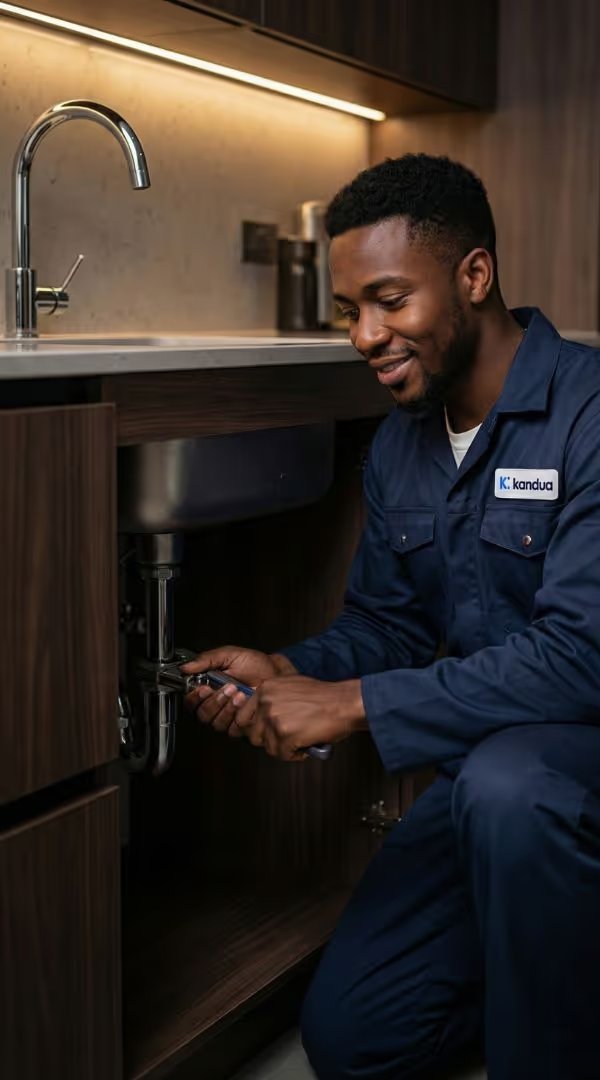
Filtration Systems
Filtration systems are a vital addition to any home, ensuring you and your family have access to clean, safe, and great-tasting water directly from the tap. These systems, whether a simple under-sink unit or a comprehensive whole-house solution, are installed by qualified plumbers to remove or reduce contaminants, and protect your health, home, and appliances.
Clean Drinking Water: The Value of a Water Filter
As South Africans, we're all aware of the varied water quality challenges our country faces. While municipal water is treated, issues can arise from aging infrastructure or changes in water sources. For homeowners on borehole water, filtration is often a non-negotiable step. Installing a water filter system is a proactive investment in your family's health and your home's longevity.
Why You Should Consider a Water Filtration System
- Health and Safety: Unfiltered water can contain a cocktail of impurities, from chlorine and heavy metals to bacteria and viruses. A whole-house filter acts as a barrier, significantly reducing these contaminants and providing safer water for all your daily needs. A plumber recently recounted a job where a family in the Cape Winelands, using borehole water, was astonished at how a proper UV and sediment filter system transformed their visibly cloudy and odorous water into crystal clear, pleasant water.
- Appliance Protection: Hard water, common in many parts of SA, contains high levels of minerals that can lead to scale buildup in pipes, geysers, dishwashers, and washing machines. This reduces their efficiency and lifespan. By filtering your water, you prevent these issues, saving you money on repairs and replacements in the long run.
- Improved Taste and Smell: Many are familiar with the distinct taste of chlorinated tap water. A quality filter effectively removes chlorine and other odour-causing compounds, leaving you with water that tastes and smells fresh and clean.
Types of Home Water Filters
The right system depends on your specific needs and water quality. It's always best to have your water tested by a professional to determine its composition. Common types include:
- Sediment Filters: The first line of defence, these filters trap visible particles like sand, silt, and rust. They protect subsequent, more expensive filters from clogging.
- Activated Carbon Filters: Excellent for removing chlorine, volatile organic compounds (VOCs), and other chemicals that affect taste and odour.
- UV (Ultraviolet) Filters: A chemical-free solution that uses UV light to neutralise bacteria, viruses, and other pathogens. This is crucial for borehole water users.
- Reverse Osmosis (RO) Systems: These provide the highest level of purification by using a semi-permeable membrane to remove a wide range of contaminants, including heavy metals and dissolved solids.
The Installation Process and What to Expect
When you hire a professional plumber for water filter installation, you can expect a smooth, well-executed process. For an under-sink system, the plumber will typically drill a hole for a new dedicated faucet, connect the filter to the cold water line, and run a drain line (for RO systems). For a whole-house system, the work is more involved, requiring the plumber to cut into your main water line to install the filter.
A qualified plumber will always:
- Assess the Site: They will evaluate the best location for the filter, ensuring it is accessible for future maintenance.
- Ensure Watertight Connections: Using the correct fittings and techniques, they will create seals that can withstand constant water pressure.
- Install a Bypass Valve: This is a crucial component that allows you to isolate the filter for maintenance without shutting off water to your entire house.
- Test for Leaks: The plumber will pressure-test the system to ensure there are no drips.
- Flush the System: They will run water through the new filters for a few minutes to flush out any loose particles.
- Provide Instructions: A professional will explain how the system works, where the shut-off valves are, and the maintenance schedule.
The Risks of DIY and the Value of a Professional
While some homeowners might be tempted to install a filter system themselves, the risks are substantial. A plumber we work with recently had to fix a DIY installation where a homeowner had used the wrong size fitting, resulting in a slow leak that caused significant water damage to their kitchen cabinets and floor.
A professional installation is non-negotiable because it prevents costly leaks, ensures the system performs at its optimal level, and, importantly, protects your product warranty. Plumbers have the right tools, knowledge, and experience to handle complex systems and adhere to all South African plumbing standards.
Post-Installation Care: Maintaining Your Investment
A water filtration system is an investment that requires routine care to remain effective. The most important task is changing the filter cartridges on time.
- Manufacturer's Guidelines: Your first reference should always be the manufacturer's recommended replacement schedule, typically ranging from 3 to 12 months, depending on the filter type.
- Telltale Signs: Pay attention to signs that a change is due. These include decreased water flow, a return of bad tastes or odours, or visible sediment in your water. An installer mentioned a client in Johannesburg whose water pressure suddenly plummeted. The cause? A heavily clogged sediment filter from a recent storm, a clear sign it was time for a change.
- Regular Maintenance: When you change a cartridge, take a few minutes to clean the filter housing with warm soapy water and inspect the rubber O-rings for any damage.
Customer Stories and Results
- A family in Durban had a persistent problem with a chlorine smell and taste in their tap water, which made drinking from the tap unpleasant. After a plumber installed a carbon filter system under their sink, they were thrilled with the immediate difference. The water was now fresh and clean, and they no longer had to rely on bottled water.
- In a remote area outside Pretoria, a homeowner on borehole water was concerned about the health risks from potential bacteria. A plumber installed a multi-stage system that included a UV steriliser. The family reported a new sense of peace of mind, knowing that every drop of water used for drinking and cooking was safe and purified.
Frequently Asked Questions
1. How do I know what contaminants are in my water?
The best way to know what contaminants are in your water is to have it professionally tested by a certified laboratory. This is especially important for borehole water or if you have specific concerns about your municipal supply. Testing reveals levels of bacteria, heavy metals, nitrates, and other substances, guiding your filter choice.
2. How often should I change my water filters?
The frequency of filter replacement depends on the type of filter, your water quality, and your water usage. Sediment filters typically need changing every 2-3 months, carbon filters every 6-12 months, and RO membranes every 1-3 years. UV lamps generally need annual replacement. Always refer to the manufacturer's guidelines for your specific filter model.
3. Can I install a water filter myself?
Basic faucet or pitcher filters are typically easy to install. However, under-sink systems, whole-house filters, and reverse osmosis systems often require professional plumbing knowledge to ensure correct installation, prevent leaks, and comply with local regulations. It's always best to consult with a qualified plumber for these more complex installations.
4. Will a water filter affect my water pressure?
Some water filters, particularly those with multiple stages or very fine membranes like reverse osmosis, can cause a slight reduction in water pressure at the filtered tap. Sediment filters, if left unchanged when clogged, can also significantly reduce water flow. Regular maintenance and proper system sizing can help minimise any impact on water pressure.
5. What is the difference between a water filter and a water softener?
A water filter removes contaminants like sediment, chlorine, and bacteria. A water softener specifically removes minerals like calcium and magnesium that cause "hard water," preventing scale buildup in pipes and on fixtures. They serve different purposes but can be used together.
6. Does installing an under-sink filter require a separate tap?
Most under-sink drinking water systems, especially reverse osmosis units, come with their own small, dedicated faucet that is installed on your sink or countertop. Simpler inline filters can sometimes be connected directly to your existing cold water tap.
7. Is it difficult to install a whole-house water filter?
Yes, this is a job for a qualified plumber. It involves shutting off the main water supply to the house and cutting into the primary water line to install the filter housing and bypass valves.
8. What is a bypass valve and why is it important?
A bypass valve is a set of pipes and valves that allows you to route water around the filtration system. It is extremely important because it allows you to perform maintenance, like changing filter cartridges, without having to shut off the water supply to your entire house. It also provides a backup if the filter ever becomes clogged or malfunctions.
9. Do I need an electrician as well as a plumber to install a Reverse Osmosis or UV filter?
In many cases, yes. Reverse Osmosis (RO) systems often use a small electric pump to boost water pressure, and Ultraviolet (UV) filters require electricity to power the sterilising lamp. A qualified plumber will handle the water connections but may require a certified electrician to install a safe and compliant electrical outlet near the unit, especially if one isn't already available.
10. What happens if I don't change my filter cartridge on time?
If you don't change your filter cartridge when it's due, its effectiveness will significantly decrease. This means your water quality will decline, potentially returning to its unfiltered state, and the filter itself could become a breeding ground for bacteria as the trapped impurities decompose. You might also experience reduced water pressure.
Why you can trust Kandua to get it right:
At Kandua, getting your home projects done is simple, safe, and stress-free.
- Tell us what you need – Or let our smart AI Home Companion help diagnose your problem if you’re not sure where to start.
- Get answers as you go – While posting your job, you can ask our smart AI home companion anything — from understanding typical costs, to how the process works, to how long it might take. Ask questions whenever they pop up, and get clear, helpful answers instantly.
- We match you with the best – All our pros are 100% vetted: ID-verified, criminal background checked, certification verified, and maintaining at least a 4.5-star rating. You don’t have to worry about picking the right person — we make sure the pro we send has the right skills and certification to get your job done right.
With us, you can rest easy knowing you’re in safe hands from the first click to the final handshake.
Plumbers in Randburg: what to know before you book
Plumbing problems rarely announce themselves politely. A water bill that jumps, a drain that keeps blocking, or a geyser making new noises are all early warnings that something needs professional attention before it becomes water damage.
Kandua matches homeowners in Randburg with vetted plumbers for exactly that: repairs, installations, compliance and genuine emergencies, with guide rates you can see before you book.
A few quick answers (so you don't have to scroll)
How do I choose a good plumber?
Look for someone who diagnoses before quoting, explains the cause of the problem, prices transparently, and carries the right registration for specialised work like gas.
What does a plumber cost on Kandua?
As a guide, a call-out starts from around R450, standard repairs from about R750 including the first hour, certified gas repairs from roughly R850, and flat installation prices up to around R4,500. Your Pro confirms the exact price upfront.
Is my leaking geyser an emergency?
Treat it as one. Close the cold-water supply to the geyser, switch off its electrical isolator, and book a plumber promptly. Fast action limits ceiling and water damage.
In Randburg: what local homes typically need
Randburg is Johannesburg's established north-west, and its homes are classic 60s to 80s suburbia, with complexes concentrated toward the north. Around Ferndale, Blairgowrie and Bordeaux, that local character shapes the plumber work that comes up most often.
Original geysers and galvanised piping across Ferndale and Blairgowrie translate into leaks, weak pressure and geyser replacements as reliable Randburg call-outs. Mature gardens add root-blocked drains to the list.
Randburg renovators budget for plumbing surprises as original systems reach their limits, and replumbing kitchens and bathrooms mid-renovation is routine. Geyser replacements track the area's housing age precisely.
From Fontainebleau to Bromhof, Kandua's vetted plumbers cover the greater Randburg area, and Jess matches you with pros who actually work your streets, not just your city.
Common plumbing problems (and what they usually mean)
Around Ferndale, Blairgowrie and the rest of Randburg, these are the plumbing complaints pros hear most, and what each one usually means.
"My water bill jumped"
An unexplained increase usually means water going where it shouldn't: a hidden leak underground, under a floor, or in a wall. Professional leak detection with acoustic or gas equipment, at about R1,950 as a guide, finds it without digging up the garden on a hunch.
"My drain keeps blocking"
Repeat blockages point to a cause: roots in the line, a collapsed or bellied section, or a buildup that rodding alone won't clear. Unblocking runs at about R750 as a guide including the first hour and rodding, and a camera inspection at around R1,850 shows exactly what's happening down there.
"My geyser is leaking, overflowing or tripping the power"
Geysers fail with warning signs: dripping overflow pipes, rumbling, lukewarm water, or tripping breakers. Repairs start from about R750 as a guide; a full replacement runs around R2,850 in labour, excluding the unit.
"Low water pressure everywhere"
Whole-house pressure loss suggests a supply-side issue, a failing pressure valve, or corroded old pipes narrowing from the inside. A plumber isolates which, then quotes the fix upfront.
Where DIY ends and the plumber begins
A careful homeowner can handle the small stuff: a washer, a trap, a flapper valve, always with the water off and the main shut-off located first. That short list is worth knowing.
Everything else, especially geysers, gas, in-wall leaks and drainage, is professional work. Standard repairs from about R750 including the first hour are cheap compared to the water damage a wrong move causes.
Certifications, registrations and compliance in South Africa
For Randburg homeowners, these are the certificates and registrations that matter, whether you're buying, selling or upgrading a home in Bordeaux or anywhere nearby.
1) Plumbing Certificate of Compliance
Several municipalities require a plumbing or water installation certificate when property changes hands, and it's good practice anywhere. On Kandua, a Plumbing CoC inspection runs at about R850 as a guide.
2) PIRB registration
The Plumbing Industry Registration Board registers qualified plumbers, and certain certified work must be signed off by a registered plumber. It's a quality signal worth asking about.
3) Gas plumbing compliance
Gas work is legally reserved for registered gas installers, full stop. On Kandua, certified gas repairs run from about R850 and installations from around R1,450 as a guide, with the compliance certificate part of doing it properly.
4) Solar geysers and heat pumps
Hot water alternatives must be installed to standard to be safe, efficient and insurable. Guide labour is about R3,850 for a solar geyser installation and around R4,500 for a heat pump.
5) The electrical side
Geyser and heat pump work touches the electrical installation, so the electrical CoC can become relevant too. A good plumber flags this rather than leaving it for you to discover at transfer.
Pricing: what to budget for plumbing in Randburg
Plumbing budgets in Randburg become much easier with Kandua's guide rates in hand. They're not fixed prices: they reflect the latest marketplace pricing data, Pros quote against them competitively, and your exact price is confirmed upfront.
- Call-out: from around R450, covering travel and the assessment so you can get a quote. It's all you pay if you decide not to proceed.
- Standard repairs: about R750 including the first hour of labour, covering pipes, taps, fittings and drain unblocking (rodding included).
- Certified gas work: repairs from roughly R850 and installations around R1,450, by registered gas installers.
- Geysers: repairs from about R750; full installation labour around R2,850; solar geyser installation about R3,850; heat pumps around R4,500.
- Specialised equipment: drain camera inspections about R1,850 and leak detection around R1,950, flat as a guide.
- Water systems: filtration from about R950, pump installation around R1,250, rainwater harvesting from about R1,500, tanks and backup around R2,450.
- Plumbing CoC: about R850 flat inspection fee.
- After hours: typically around 1.5 to 2 times standard rates as a guide, with emergency pricing confirmed upfront.
- Materials: quoted separately, from washers to the geyser unit itself.
Think of small jobs as the repair rate plus parts, and group them where you can: one visit for three fixes beats three visits every time.
Genuinely helpful plumbing FAQs for Randburg
What does it cost to hire a plumber in Randburg?
As a guide, a call-out starts from around R450, standard repairs from about R750 including the first hour, certified gas repairs from roughly R850, and flat installations up to around R4,500. Materials are quoted separately and your Pro confirms the exact price upfront.
Do plumbers in Randburg handle emergencies and after-hours work?
Yes, many Kandua pros in Randburg take urgent and after-hours jobs. Emergency work typically runs at around 1.5 to 2 times standard rates as a guide, confirmed upfront before the Pro heads out.
Which parts of Randburg do Kandua plumbers cover?
Vetted plumbers on Kandua work throughout Randburg, including Ferndale, Blairgowrie, Bordeaux and Fontainebleau. Jess matches you with a pro who covers your exact area.
Do I still pay the call-out if I accept the quote?
The call-out from around R450 gets the Pro to you and gets you a quote, and it's all you pay if you don't proceed. Go ahead, and your job is priced per the service guide rates your Pro confirms.
What does a geyser replacement really cost?
As a guide, installation labour runs around R2,850, with the geyser unit itself quoted separately (commonly R4,000 to R9,000 or more at retail for typical sizes). Your plumber quotes the full picture upfront, including valves and materials.
How does professional leak detection work?
Specialised acoustic or tracer gas equipment locates the leak without exploratory demolition, at around R1,950 flat as a guide. Finding before opening is nearly always the cheaper sequence.
Who is allowed to work on gas plumbing?
Only registered gas installers, by law. On Kandua, certified gas repairs run from about R850 and installations from around R1,450 as a guide, with the compliance certificate part of the job.
How do I prepare for the plumber's visit?
Know where your main shut-off is, note what's happening and when it started, and photograph the problem area if you can. Clear information means a sharper quote and a faster fix.
Should quotes include VAT?
Always confirm. Some plumbers quote excluding VAT, so when comparing quotes make sure you're comparing like for like: VAT, call-out and materials included or not.
When you're ready, describe the job to Jess and get matched with vetted plumbers serving Randburg: transparent guide rates, verified reviews, and no invoice surprises.