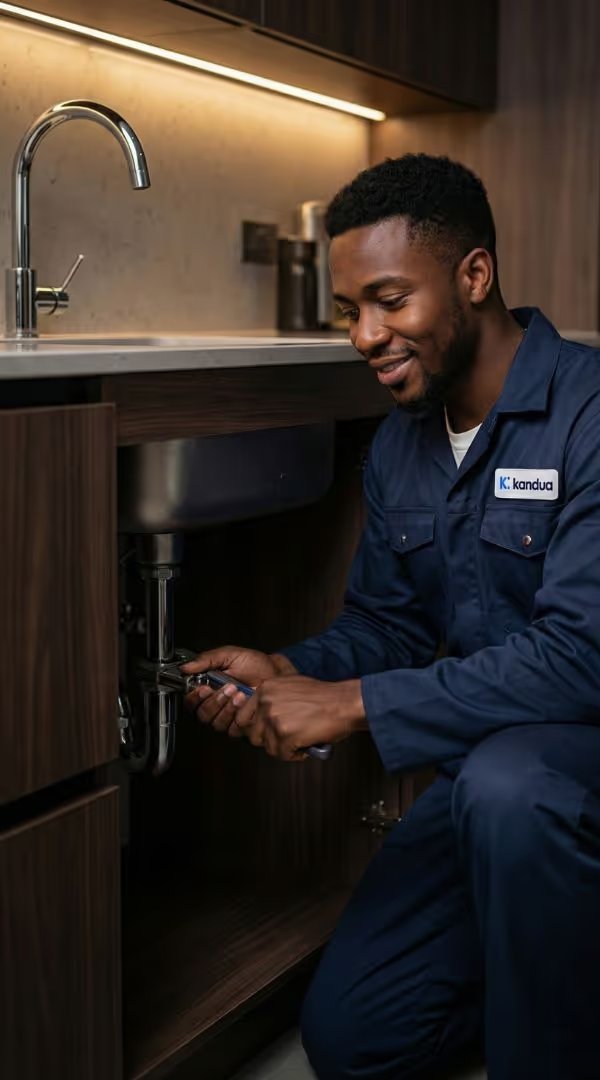
Septic Systems Installation: A Comprehensive Guide for South African Homeowners
Installing a septic system is a major investment for any homeowner, particularly those in rural or off-grid areas of South Africa without access to municipal sewer lines. A correctly installed system is a silent, efficient workhorse that safely manages your household's wastewater for decades. But when it goes wrong, the consequences can be costly, messy, and even hazardous. This guide will walk you through everything you need to know about septic system installation, from how they work to why choosing the right professional is non-negotiable.
The Septic System: More Than Just a Tank
A common misconception is that a septic system is simply a buried tank. In reality, it’s a living, biological system with three key components that must work together in harmony:
- The Septic Tank: This large, watertight container, typically made of plastic or concrete, receives all your home's wastewater. Inside, solids settle to the bottom (forming sludge) and lighter materials like grease and oil float to the top (forming a scum layer). Naturally occurring bacteria begin the process of breaking down this waste.
- The Outlet Pipe: This pipe carries the separated liquid waste, known as effluent, out of the tank. Modern systems often include a baffle or filter at this point to prevent solids from escaping.
- The Soakaway (or Drain Field): This is a network of perforated pipes laid in gravel-filled trenches. The effluent from the tank flows into these pipes and slowly seeps into the surrounding soil. The soil acts as a natural filter, removing harmful bacteria and pathogens before the water re-enters the groundwater system.
A failure in any one of these components means a failure of the entire system.
How Septic System Installation is Conducted by a Pro
A reputable and experienced plumber or septic system specialist follows a meticulous process to ensure a safe, compliant, and long-lasting installation.
- Site Assessment and Planning: The professional will first visit your property to assess its suitability. This includes conducting a "percolation" or "perc" test to determine how well your soil drains. They will also consider the site's layout, ensuring there is enough space and a suitable slope for gravity-fed drainage.
- System Design: Based on the perc test, the number of bedrooms in your home, and local municipal bylaws, the pro will design the system. This includes selecting the correct size tank and designing the layout and size of the soakaway.
- Permit Application: The professional should handle the process of applying for and obtaining the necessary permits from your local municipality. This step is critical for legal compliance.
- Excavation: Once the permits are in place, the team will use a TLB (tractor-loader-backhoe) or other excavation machinery to dig the hole for the tank and the trenches for the soakaway.
- Tank Placement: The septic tank is carefully lowered into the excavated pit, placed on a bed of compacted sand or concrete, and meticulously levelled. A well-known plumbing professional from the Eastern Cape once told us how critical this step is, stating, “If the tank is even slightly off-kilter, the flow of wastewater will be uneven and the entire system will be compromised.”
- Piping and Connections: The inlet and outlet pipes are connected to the tank, ensuring all connections are gas and watertight. The perforated pipes are then laid in the soakaway trenches on a bed of gravel.
- Backfilling and Grading: The excavated area is carefully backfilled with suitable material and compacted to prevent settlement. The ground is then graded to direct surface water away from the septic system.
- System Start-up: The tank is filled with water to stabilise it and to initiate the system's biological processes.
The Value of Getting a Professional Septic System Installer
Attempting a DIY septic tank installation is not just risky—it can be catastrophic. The complexities involved in soil science, engineering, and legal compliance make it a job for a qualified professional.
The Risks of a Botched Installation:
- Health Hazards: An incorrectly installed system can leak, contaminating your groundwater and potentially your borehole, posing serious health risks from bacteria like E. coli.
- Environmental Damage: Leaking effluent pollutes the environment and can lead to legal penalties.
- Costly Failures: A poorly designed or installed system will fail prematurely. One of our vetted professionals in Pretoria had a call-out where a DIY installer had used the wrong type of pipe and forgotten a distribution box. The soakaway failed within six months, and the homeowner had to pay for the entire system to be dug up and reinstalled, a far more expensive process than the initial job.
- Property Devaluation: A non-compliant or failing septic system can significantly reduce your property's value and make it difficult to sell.
A professional installer ensures your system is designed and built to last, adhering to essential standards like the SANS (South African National Standards) 10400-P for sanitary disposal. They provide the peace of mind that comes from knowing your waste management system is safe, legal, and reliable.
What to Know Before You Install
Before you start, it's essential to arm yourself with knowledge to ensure your project is a success.
- Understanding Your Septic Tank: Know what it is and what it isn't. It's a biological waste treatment plant, not a rubbish bin. You'll need to know the basics of how it functions and what it can handle.
- The Importance of Planning: A septic tank installation is a complex project that requires careful planning. This includes conducting a percolation test to assess your soil, understanding the sizing requirements based on your home's bedrooms, and navigating local bylaws.
- Navigating Costs: The cost of a septic system installation varies significantly across South Africa. Factors like soil type, tank size, site accessibility, and regional labour rates all play a part. Being prepared for the potential costs, from permits to materials and labour, will help you budget effectively.
- Long-Term Care: Once your system is installed, the work isn't over. Proper maintenance is key to its longevity. You need to know the essentials of what to flush (and what not to), how to conserve water, and the importance of regular professional pumping.
Customer Stories and Results
A homeowner in the Western Cape had a new rural property that needed a septic system. They were concerned about the high water table and the clay-heavy soil. After a consultation with a professional plumber, a thorough perc test was conducted, which confirmed the challenging soil conditions. The pro designed a more advanced, engineered soakaway system that would handle the poor drainage. While the initial cost was slightly higher than a standard installation, the system has worked flawlessly for over five years, preventing any of the problems the homeowner had feared.
Another family in Johannesburg had an old, failing system. They decided to get a new one installed. The professional they hired was meticulous, assessing their water usage and future plans. Instead of simply replacing the old system with a like-for-like, they recommended a slightly larger tank and a new, more efficient soakaway in a different location on the property. The family was impressed by the detailed explanation and the future-proofing approach. The new system was installed quickly and cleanly, and they’ve had no issues since.
Post-Installation Care: A Guide for Longevity
After your new septic system is installed, a little care goes a long way.
- Be Mindful of What You Flush: Only flush human waste and septic-safe toilet paper. Never flush wet wipes (even if they claim to be "flushable"), feminine hygiene products, or paper towels.
- Use Water Sparingly: Avoid overloading the system. Repair leaky taps promptly, and spread out your laundry loads throughout the week.
- Protect Your Drain Field: Don't park vehicles or build anything over your soakaway. Avoid planting trees or shrubs in the area, as their roots can clog the pipes.
- Pump Regularly: The most important maintenance task is regular pumping to remove accumulated sludge and scum. For a typical household, this should be done every 3 to 5 years.
Frequently Asked Questions about Septic Systems
How do I know what size septic tank I need?
The size of your septic tank is primarily determined by the number of bedrooms in your house, not the number of occupants. A qualified plumber will use this information, along with your anticipated water usage, to recommend the correct tank size to ensure it can handle your household's waste load effectively.
How far away from my house should my septic system be?
According to South African National Standards (SANS), a septic tank should be at least 5 metres from a building, and the soakaway should be at least 10 metres from buildings and 50 metres from any water source like a borehole or well. These distances are critical for safety and to prevent contamination.
Can I install a septic tank if I have clay soil?
Yes, but it will be more complex and expensive. Clay soil has poor drainage, so you will need a much larger and potentially more advanced type of soakaway to compensate for its slow absorption rate. This is why a professional percolation test is absolutely essential before installation.
How often does a septic tank need to be pumped?
For an average household with a correctly sized tank, it is recommended to have it pumped every 3 to 5 years. A larger family or a smaller tank might require pumping more frequently, perhaps every 1 to 2 years.
What are the signs that my septic system might be failing?
Common signs include slow drains in your sinks, gurgling sounds from your pipes, sewage odours around your property, unusually lush green grass, or soggy spots over your drain field. If you notice any of these, contact a professional immediately.
What shouldn’t I put down my drains if I have a septic system?
Avoid flushing or pouring fats, oils, and grease (FOG), non-biodegradable items (like wet wipes and paper towels), harsh chemicals (including strong bleaches and drain cleaners), coffee grounds, cat litter, or medications down your drains.
How long does a septic system installation typically take?
A standard installation in good soil conditions usually takes 3 to 5 days. However, factors like rocky soil, difficult site access, or bad weather can extend the project duration to one or two weeks.
Are plastic or concrete septic tanks better?
Plastic (polyethylene) tanks are generally the most popular choice in South Africa. They are lighter, easier to install, and corrosion-resistant. Concrete tanks are more durable but require heavy machinery like a crane to install, which increases the cost.
Is a percolation test legally required for septic tank installation?
Yes, a percolation test is a legal and crucial requirement. It measures how quickly your soil absorbs water and is used to determine the size and design of the soakaway, ensuring your system functions correctly and doesn't pollute the environment.
How can I ensure my septic system is compliant with regulations?
The best way is to hire a professional plumber or septic system specialist who is experienced and knowledgeable about the latest National Building Regulations (SANS) and your local municipality’s specific bylaws. They will handle the design and permit process to ensure full compliance.
Why you can trust Kandua to get it right:
At Kandua, getting your home projects done is simple, safe, and stress-free.
- Tell us what you need – Or let our smart AI Home Companion help diagnose your problem if you’re not sure where to start.
- Get answers as you go – While posting your job, you can ask our smart AI home companion anything — from understanding typical costs, to how the process works, to how long it might take. Ask questions whenever they pop up, and get clear, helpful answers instantly.
- We match you with the best – All our pros are 100% vetted: ID-verified, criminal background checked, certification verified, and maintaining at least a 4.5-star rating. You don’t have to worry about picking the right person — we make sure the pro we send has the right skills and certification to get your job done right.
With us, you can rest easy knowing you’re in safe hands from the first click to the final handshake.
Plumbers in Soweto: what to know before you book
From a dripping tap to a burst geyser at midnight, plumbing spans the trivial and the truly urgent. Knowing roughly what things cost, and who to trust, takes the stress out of both ends of that spectrum.
That's the Kandua promise in Soweto: vetted plumbers, honest guide rates, and no surprises on the invoice.
A few quick answers (so you don't have to scroll)
How do I choose a good plumber?
Look for someone who diagnoses before quoting, explains the cause of the problem, prices transparently, and carries the right registration for specialised work like gas.
What does a plumber cost on Kandua?
As a guide, a call-out starts from around R450, standard repairs from about R750 including the first hour, certified gas repairs from roughly R850, and flat installation prices up to around R4,500. Your Pro confirms the exact price upfront.
Is my leaking geyser an emergency?
Treat it as one. Close the cold-water supply to the geyser, switch off its electrical isolator, and book a plumber promptly. Fast action limits ceiling and water damage.
In Soweto: what local homes typically need
Soweto is Johannesburg's largest and most storied township, now a city in its own right, and its homes are original family homes with generations of extensions, alongside fast-growing new developments. Around Protea Glen, Diepkloof and Orlando, that local character shapes the plumber work that comes up most often.
Extended and densified Soweto properties often carry plumbing added in stages, so pressure quirks, leaks and drain blockages are everyday work. New developments around Protea Glen bring standard new-home snags and geyser installations.
As Soweto properties formalise and trade, compliant plumbing and proper geyser installations carry growing weight. New developments around Protea Glen add standard new-home work to the area's staged-extension realities.
From Pimville to Jabulani, Kandua's vetted plumbers cover the greater Soweto area, and Jess matches you with pros who actually work your streets, not just your city.
Common plumbing problems (and what they usually mean)
Around Protea Glen, Diepkloof and the rest of Soweto, these are the plumbing complaints pros hear most, and what each one usually means.
"My water bill jumped"
An unexplained increase usually means water going where it shouldn't: a hidden leak underground, under a floor, or in a wall. Professional leak detection with acoustic or gas equipment, at about R1,950 as a guide, finds it without digging up the garden on a hunch.
"My drain keeps blocking"
Repeat blockages point to a cause: roots in the line, a collapsed or bellied section, or a buildup that rodding alone won't clear. Unblocking runs at about R750 as a guide including the first hour and rodding, and a camera inspection at around R1,850 shows exactly what's happening down there.
"My geyser is leaking, overflowing or tripping the power"
Geysers fail with warning signs: dripping overflow pipes, rumbling, lukewarm water, or tripping breakers. Repairs start from about R750 as a guide; a full replacement runs around R2,850 in labour, excluding the unit.
"Low water pressure everywhere"
Whole-house pressure loss suggests a supply-side issue, a failing pressure valve, or corroded old pipes narrowing from the inside. A plumber isolates which, then quotes the fix upfront.
Where DIY ends and the plumber begins
A careful homeowner can handle the small stuff: a washer, a trap, a flapper valve, always with the water off and the main shut-off located first. That short list is worth knowing.
Everything else, especially geysers, gas, in-wall leaks and drainage, is professional work. Standard repairs from about R750 including the first hour are cheap compared to the water damage a wrong move causes.
Compliance in South Africa: what matters and when
For Soweto homeowners, these are the certificates and registrations that matter, whether you're buying, selling or upgrading a home in Orlando or anywhere nearby.
1) The Plumbing CoC
A water installation certificate is required at transfer in several municipalities and sensible everywhere. Guide pricing on Kandua is about R850 for the inspection.
2) PIRB
PIRB registration marks a qualified plumber, and some certified work specifically requires a registered plumber's sign-off. Asking about it costs nothing and tells you plenty.
3) Gas: no shortcuts
Only registered gas installers may legally work on gas installations. Kandua guide rates are from about R850 for certified gas repairs and around R1,450 for installations, certificate included in doing the job right.
4) Solar and heat pumps
These installations must meet standard for safety and insurance. As a guide, budget about R3,850 in labour for a solar geyser and around R4,500 for a heat pump installation.
5) Where electrical compliance sneaks in
Hot water systems connect to your electrical installation, so changes can touch the electrical CoC as well. Good pros raise this upfront.
Pricing: what to budget for plumbing in Soweto
Kandua publishes guide rates so plumbing costs in Soweto aren't a mystery. Treat them as estimates: Pros price competitively against them, and you always see your exact quote upfront.
- Call-out: from around R450, covering travel and the assessment so you can get a quote. It's all you pay if you decide not to proceed.
- Standard repairs: about R750 including the first hour of labour, covering pipes, taps, fittings and drain unblocking (rodding included).
- Certified gas work: repairs from roughly R850 and installations around R1,450, by registered gas installers.
- Geysers: repairs from about R750; full installation labour around R2,850; solar geyser installation about R3,850; heat pumps around R4,500.
- Specialised equipment: drain camera inspections about R1,850 and leak detection around R1,950, flat as a guide.
- Water systems: filtration from about R950, pump installation around R1,250, rainwater harvesting from about R1,500, tanks and backup around R2,450.
- Plumbing CoC: about R850 flat inspection fee.
- After hours: typically around 1.5 to 2 times standard rates as a guide, with emergency pricing confirmed upfront.
- Materials: quoted separately, from washers to the geyser unit itself.
Think of small jobs as the repair rate plus parts, and group them where you can: one visit for three fixes beats three visits every time.
Genuinely helpful plumbing FAQs for Soweto
How much should I budget for a plumber in Soweto?
Guide rates run from around R450 for a call-out, about R750 for standard repairs including the first hour, roughly R850 for certified gas repairs, and up to around R4,500 for the largest flat-priced installations. Your exact quote is confirmed upfront.
Can I get an emergency plumber in Soweto?
You can. Kandua pros serving Soweto take after-hours and weekend call-outs, typically at about 1.5 to 2 times standard rates as a guide, with pricing confirmed before dispatch.
Which parts of Soweto do Kandua plumbers cover?
Vetted plumbers on Kandua work throughout Soweto, including Protea Glen, Diepkloof, Orlando and Pimville. Jess matches you with a pro who covers your exact area.
What does the call-out fee actually cover?
From around R450 as a guide, it covers the Pro's travel and the time to assess your job and quote. If you decline the quote, that's the only charge; if you accept, the work is priced per the guide rates.
How much is geyser installation labour?
Around R2,850 as a guide for a standard replacement, excluding the unit and materials. Retail geyser units commonly run R4,000 to R9,000 or more depending on size and type, and your Pro quotes everything upfront.
Is leak detection worth it compared to just opening the wall?
Almost always. At about R1,950 flat as a guide, acoustic or gas detection pinpoints the leak first, so you open one spot instead of three. It usually pays for itself in avoided repair work.
Who is allowed to work on gas plumbing?
Only registered gas installers, by law. On Kandua, certified gas repairs run from about R850 and installations from around R1,450 as a guide, with the compliance certificate part of the job.
How do I prepare for the plumber's visit?
Know where your main shut-off is, note what's happening and when it started, and photograph the problem area if you can. Clear information means a sharper quote and a faster fix.
Should quotes include VAT?
Always confirm. Some plumbers quote excluding VAT, so when comparing quotes make sure you're comparing like for like: VAT, call-out and materials included or not.
When you're ready, describe the job to Jess and get matched with vetted plumbers serving Soweto: transparent guide rates, verified reviews, and no invoice surprises.