
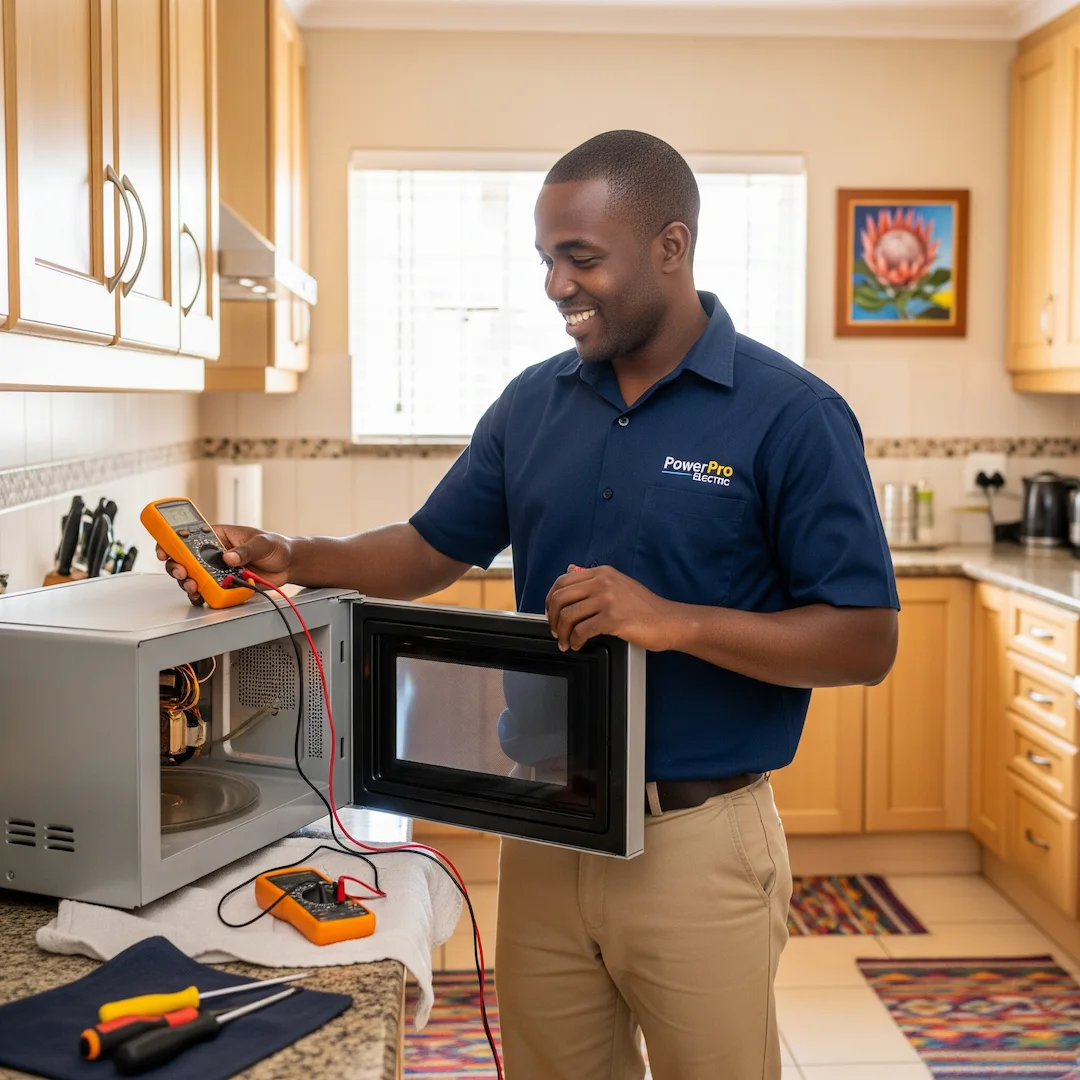
Microwave Malfunction? Choosing a Specialist Repair Service in SA for Safety and Longevity
Microwave acting up? Learn why choosing a specialist repair service in South Africa is safer than DIY, more cost-effective than replacement, and key to extending your appliance’s lifespan.

Microwave Malfunction? Choosing a Specialist Repair Service in SA for Safety and Longevity
The humble microwave. It’s the unsung hero of the modern South African kitchen, reheating last night’s bobotie, defrosting chicken for the braai, and making popcorn for movie night. So, when it suddenly stops heating, starts making a strange buzzing noise, or simply won’t turn on, it’s more than a minor inconvenience—it throws your daily routine into chaos.
Your first thought might be to either poke around inside yourself or to simply head to the nearest retailer for a replacement. But what if a professional repair could be safer, more cost-effective, and extend the life of your trusted appliance for years to come? Before you make a decision, it’s crucial to understand what’s happening inside that metal box and why calling a specialist is nearly always the smartest move.
The Hidden Dangers: Why a Microwave is Not a DIY Project
It might look like a simple appliance, but a microwave oven is a high-powered piece of equipment that contains components capable of delivering a lethal electrical shock, even when unplugged. This is not an exaggeration. Our network of vetted appliance repair professionals consistently warns homeowners about the serious risks involved.
One of our top-rated technicians in Pretoria recently shared a cautionary tale. He was called out to a home where the owner had attempted to replace a fuse. Unaware of the high-voltage capacitor, the owner had narrowly avoided a severe electric shock. The capacitor in a microwave can store thousands of volts of electricity long after the power cord has been disconnected. Without specialised knowledge and tools to safely discharge it, you are putting your life at risk.
Here’s a breakdown of the key hazardous components inside your microwave:
- The High-Voltage Capacitor: As mentioned, this is the most dangerous part. It acts like a battery, storing a massive electrical charge required to power the magnetron. A professional technician has the training and specific equipment to safely discharge this capacitor before beginning any diagnostic work.
- The Magnetron: This is the component that actually generates the microwaves that heat your food. It operates at extremely high voltage and can cause severe burns and electrical shock if handled improperly. Furthermore, if a magnetron is damaged or incorrectly installed, it can potentially lead to microwave radiation leakage.
- The High-Voltage Transformer: This steps up your home's standard 230V electricity to the several thousand volts needed by the magnetron. Mishandling this component can result in fatal electrocution.
Disclaimer: Attempting to repair a microwave yourself is extremely dangerous due to the high-voltage components inside. This work should only ever be performed by a qualified and experienced appliance repair technician.
Common Microwave Problems a Pro Can Fix
While some issues might signal the end of your appliance’s life, many common faults are surprisingly repairable for a qualified technician. This not only saves you money but is also a more environmentally friendly choice than sending a large appliance to the landfill.
Here are some typical microwave woes and what they usually mean:
- Microwave Not Heating Food: This is the most frequent complaint. The culprit is often a faulty magnetron, but it could also be a problem with the high-voltage diode or capacitor. A technician will safely test these components to pinpoint the exact cause and replace the faulty part.
- The Turntable Isn't Spinning: This is usually less serious. It could be a stripped-out coupler (the plastic piece that connects the motor to the plate) or a burnt-out turntable motor. Both are relatively straightforward and inexpensive parts for a pro to replace.
- The Microwave is Making Loud, Unusual Noises: A buzzing, humming, or grinding sound can indicate several problems. It might be a faulty magnetron, a stirrer motor issue (the fan that distributes microwaves), or even a problem with the high-voltage diode. Ignoring these sounds is unwise, as they often signal a component that is failing and could cause further damage.
- The Touchpad or Buttons Don't Work: Sometimes the issue isn't with the heating components at all, but with the control panel. A technician can diagnose whether it's a simple connection issue or if the entire control board needs replacing.
- Sparks or Arcing Inside the Microwave: If you see sparks, stop using the appliance immediately. This is often caused by a damaged waveguide cover (the small metallic-looking card on the inside wall) or splattered food that has carbonised. A technician can safely clean the interior and replace the waveguide cover.
Is Microwave Repair Expensive in South Africa?
This is the key question for most homeowners. The answer depends on the fault, the brand of your microwave, and the cost of the replacement parts. However, in many cases, a repair is significantly cheaper than a replacement.
Let’s break down the potential costs:
- Call-Out Fee: Most technicians charge a standard call-out fee to come to your home and diagnose the problem. In major metro areas like Johannesburg, Cape Town, or Durban, this typically ranges from R450 to R750. This fee often includes the first hour of labour.
- Simple Repairs: For minor issues like replacing a blown fuse, a faulty door switch, or a lightbulb, you can expect the total cost (including the call-out fee) to be somewhere between R600 and R950.
- Moderate Repairs: A more involved job, like replacing the turntable motor or the waveguide cover, might cost between R800 and R1,400, depending on the price of the part.
- Major Repairs: The most expensive common repair is replacing the magnetron. Including the part and labour, this can range from R1,200 to R2,500+.
When you compare these figures to the cost of a new, decent-quality microwave—which can easily range from R2,000 to over R6,000 for high-end or combination models—a repair often makes excellent financial sense, especially if the issue is moderate or minor.
How to Choose the Right Repair Service
Finding a trustworthy and competent technician is key to a successful repair. You want someone who can get the job done safely and provide a lasting solution.
Here’s what to look for:
- Experience with Your Brand: While most microwaves operate on similar principles, a technician with experience in specific brands (like Samsung, LG, Defy, or Miele) will be more familiar with their common quirks and have easier access to the correct parts.
- Transparent Pricing: A reputable service will be upfront about their call-out fee and how they charge for labour and parts. Be wary of anyone who won’t give you a clear cost structure.
- Warranty on Workmanship and Parts: Always ask if the repair comes with a warranty. A standard guarantee is usually 3 to 6 months on both the parts they supply and their labour. This gives you peace of mind that the fix is reliable.
- Good Reviews and Reputation: Look for a service provider with a track record of positive customer feedback. This is a strong indicator of professionalism and quality work.
By investing in a professional repair, you're not just fixing a broken appliance. You're ensuring your family's safety, making a sound financial decision, and choosing a more sustainable path. A well-repaired microwave can continue to serve your kitchen for many more years, making that call to a specialist a very wise investment.
Frequently Asked Questions (FAQs)
How can I tell if my microwave is leaking radiation?
A properly functioning microwave with an intact door seal is extremely safe. Leaks are rare and usually only occur if the door, its hinges, or seals are significantly damaged. If you can see physical damage or gaps around the door, it's best to stop using it and have it inspected by a professional. There are no reliable home methods to test for radiation leakage; this requires specialised equipment.
Can a power surge from load shedding damage my microwave?
Yes, absolutely. Like any electronic device, microwaves are vulnerable to power surges that can occur when electricity is restored after load shedding. A surge can damage the main control board, the transformer, or other sensitive electronic components. Using a high-quality surge protector plug for your microwave is a highly recommended and affordable preventative measure.
Is it worth repairing a very old microwave (10+ years)?
It depends. If it’s a high-end, built-in model, a repair is often still worthwhile. For a standard, inexpensive countertop model, the cost of a major repair (like a magnetron replacement) might be close to the price of a new, more energy-efficient model. A technician can give you an honest assessment to help you decide.
What could cause a strange burning plastic smell from my microwave?
A burning smell should never be ignored. Stop use immediately and unplug the appliance. The cause could be an electrical fault, such as a short-circuiting transformer or wiring issue. It could also be a piece of plastic cutlery or a non-microwavable container that has accidentally been heated and is melting. If you've checked and there's no foreign object inside, you must call a technician to diagnose a potential electrical fire hazard.
Find a vetted electrician near you
Small appliance repair: find a pro near you
Suzette Meyer is the lead author and content creator for Kandua.com, South Africa’s #1 marketplace for home services. Suzette has made it her mission to help homeowners with advice on all aspects of home repair, maintenance and improvement, including how to choose the right Pro and how to make smart upgrades that improve your resale value or save costs.

Latest articles, advice and more
.webp)
.webp)
.jpeg)
Sinking Pavers, Weeds and Water That Pools: What Your Driveway Is Telling You
When your driveway starts sprouting weeds, pooling water, or sinking in patches, the bricks are not failing you. The layers underneath have moved, and they are trying to tell you exactly what went wrong.
.jpeg)
What Your Garage Door Motor Actually Does (And Why It Breaks)
Spoiler alert: your garage door motor isn't actually doing the heavy lifting. The torsion springs carry almost all the weight. The motor simply pushes, pulls, controls the descent so it doesn't slam, and acts as a lock when the door is shut. That’s why a relatively small box on your ceiling can move such a massive door. Want to test this? Pull the red manual release cord and lift the door by hand. If it glides up easily and stays put when you let go, your springs are doing their job, and the fault lies with the motor. If the door feels like dead weight or slams back down- stop. You’ve got a spring problem.
.jpeg)
4 Warning Signs Your Tiles Are Failing (And What They Mean)
Tiles rarely fail overnight. They warn you first. A hollow sound underfoot, grout that crumbles away, a tile that lifts at one edge, or a crack that runs across two tiles all point to something happening under the surface. Here is what each sign means, and how urgent it is.
.webp)
.webp)
Beyond the Unboxing: A Detailed Guide to Correct Washing Machine Plumbing & Setup
New washing machine in South Africa? Learn essential plumbing and setup tips to prevent leaks, ensure efficient operation, and extend your appliance’s lifespan - expert advice before your first load.
.webp)
New Washing Machine? Don't Plug It In Yet! Essential Installation Tips for SA Homes
Installing a new washing machine? Learn the essential setup steps South African homeowners often overlook to prevent leaks, noise, and damage—and ensure efficient, long-lasting performance from day one.
.webp)
.webp)
%25201200%2520x%25201200%2520(1).jpeg)
What Retiling a Bathroom Costs in 2026, Room by Room
Retiling a bathroom in South Africa costs between R230 and R800 per square metre in 2026, including materials and labour. A standard family bathroom, stripped and fully retiled, usually lands between R11,800 and R27,500. A guest toilet costs a fraction of that. A large porcelain en-suite costs a lot more.
How to Install a Horizontal Geyser | Step-by-Step Pro Guide
Want to install a geyser like a pro? This step-by-step tutorial shows you exactly how to do a horizontal Ariston Axios geyser installation, straight from the BluLever plumbing workshop. 🎥 Hosted by MK, BluLever’s technical facilitator, and supported by a qualified electrician, Life and a BluLever graduate artisan, Zinhle. This is your ultimate guide to a SANS 10254-compliant installation — from preparing the wall, to plumbing, electrical wiring, and pro troubleshooting tips.
How to Maintain a Geyser | Step-by-Step Pro Guide
Want to maintain a geyser like a pro? This step-by-step tutorial shows you exactly how to do the three core geyser maintenance checks on an Ariston Axios geyser installation, straight from the BluLever plumbing workshop. 🎥 Hosted by MK, BluLever’s technical facilitator, and supported by a qualified electrician, Life. This is your ultimate guide to geyser maintenance — from diagnosing the problem to checking the heat regulation of the geyser, to pressure regulation and then finally corrosion protection.
%201.avif)
Not just another newsletter. It's an advantage