
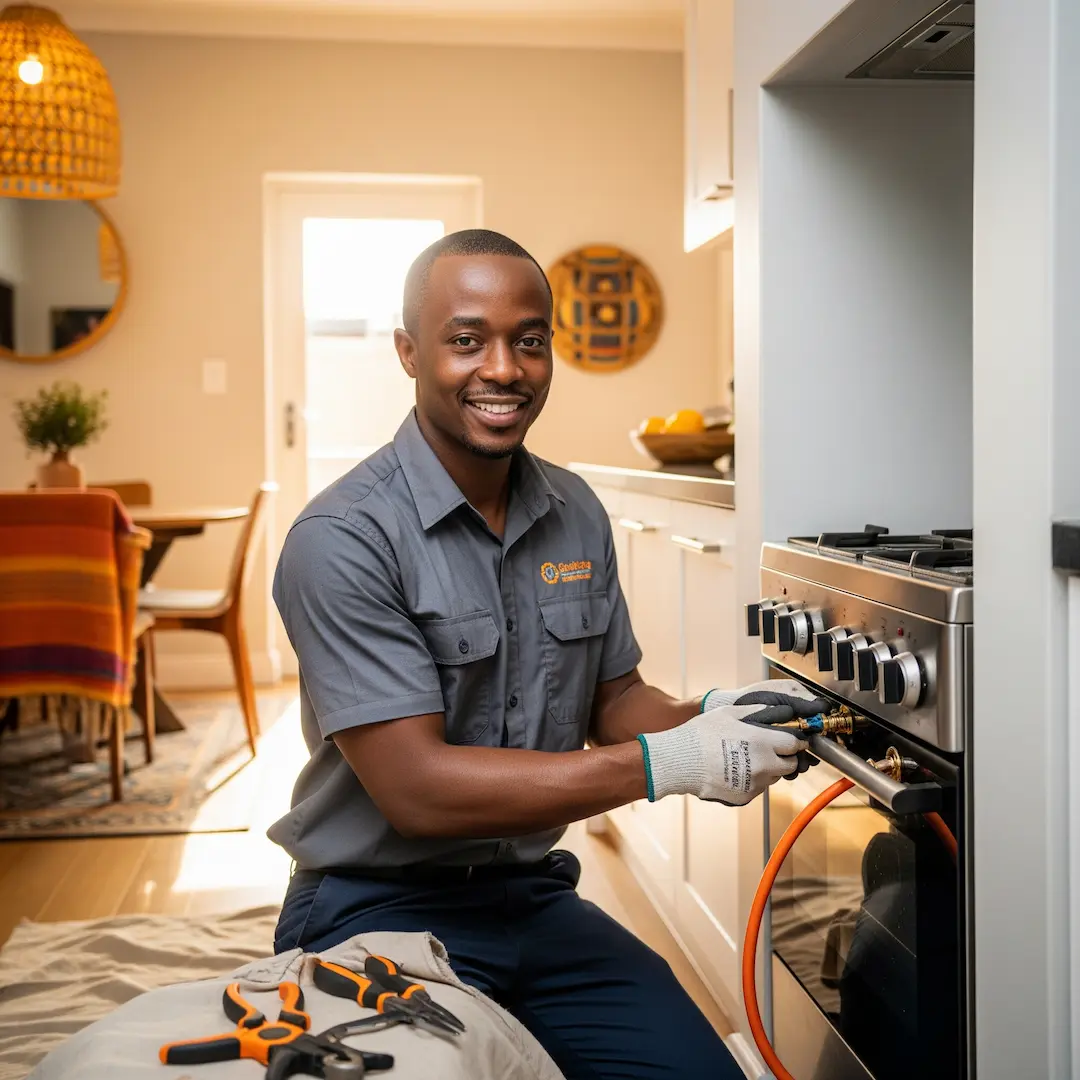
Natural Gas Stove Installation in SA: Connecting to the Grid & Ensuring Safety Compliance
Installing a natural gas stove in South Africa? Learn why professional installation, strict safety compliance, and understanding local regulations are essential for safe, efficient, and lawful cooking.

Bringing the efficiency and precise control of a natural gas stove into your South African home is an excellent decision for any keen cook. However, unlike simply plugging in an electric appliance, natural gas stove installation requires careful planning, adherence to strict regulations, and the expertise of a qualified professional. In South Africa, safety and compliance are paramount, ensuring your installation is not only functional but also entirely safe and lawful.
The good news is that connecting to the municipal natural gas grid offers a continuous, convenient, and often cost-effective fuel source. But it's crucial to understand the process and the regulations that govern it. Our expert service providers, who have years of hands-on experience across the country, highlight that the most common mistakes arise from a lack of understanding about the specific compliance requirements.
Understanding Natural Gas vs. LPG
Before diving into the installation specifics, it’s important to clarify the difference between natural gas and Liquefied Petroleum Gas (LPG). While both are used for cooking, their properties and installation requirements differ significantly.
- Natural Gas: This is piped directly into your home from a municipal supply, like Egoli Gas in Gauteng or other regional providers. It's lighter than air and dissipates quickly if there's a leak, though proper ventilation is still crucial.
- LPG (Liquefied Petroleum Gas): This is stored in cylinders (like the familiar 9kg or 19kg gas bottles) and is heavier than air, meaning it tends to pool in low areas if a leak occurs. The regulations for LPG storage and installation (SANS 10087-1) are distinct, particularly concerning cylinder placement and ventilation.
This guide focuses specifically on natural gas stove installation, connecting your appliance to the municipal grid.
The Installation Process: A Step-by-Step Overview
Installing a natural gas stove involves several key stages, each requiring precise execution to ensure safety and compliance.
- Site Assessment and Planning:A SAQCC Gas registered installer will first assess your kitchen layout, the location of your existing gas line (if any), and the proposed placement of your new stove. They'll consider factors like accessibility for maintenance, proximity to combustible materials, and ventilation requirements.
- From an installer's perspective, this initial assessment is vital. They've seen countless homes where an appliance might fit physically but doesn't comply with safety distances to windows, electrical points, or combustible surfaces. It's about finding the 'sweet spot' that balances aesthetics with absolute safety.
- Gas Line Connection:If you're already connected to the municipal natural gas grid, the installer will extend the existing gas line to the stove's location. This involves cutting, threading, and joining pipes, typically copper pipes of Class 1 or 2, which are designed for gas applications and differ from standard plumbing copper.
- If you're not yet connected to the municipal grid, you'll need to contact your local natural gas supplier (e.g., Egoli Gas) to arrange for a main supply line to be brought to your property. This is a larger civil engineering project and will precede the internal stove installation.
- Appliance Connection:Once the gas line is in place, the installer will connect it to the gas stove. This connection is typically made using an approved flexible gas hose, which, according to SANS standards, should not be longer than 2 metres and must not pass through any partitions (e.g., cupboard walls, drywall).
- One installer recently recounted a job where a homeowner had attempted to install a stove themselves, using an unapproved, excessively long hose that snaked through multiple cupboards. The installer had to completely redo the connection, emphasising that shortcuts with gas are simply not an option.
- Ventilation Requirements:Proper ventilation is critical for any gas appliance. While natural gas is lighter than air, good airflow ensures that any unburnt gas or combustion byproducts (like carbon monoxide) are safely dispersed.
- For most domestic natural gas stoves, general kitchen ventilation, such as an extractor fan or open windows, is often sufficient. However, for larger or high-output stoves, or in particularly enclosed spaces, your installer might recommend specific ventilation solutions like a ducted extractor fan that vents directly outside.
- The SANS regulations also stipulate specific distances for electrical points. For instance, electrical switches or plug points should be at least 200mm away from any burner or potential gas release point.
- Flue Requirements (If Applicable):Most standard natural gas cooktops and ovens are "unflued," meaning they release combustion products directly into the room, relying on general ventilation. However, some larger, more powerful, or specialised natural gas appliances (like certain integrated ovens or gas fireplaces) may require a flue to safely vent combustion gases directly outdoors.
- If a flue is required, it must be properly installed and sealed according to SANS guidelines, ensuring that exhaust gases are effectively carried away from the living space. The material and construction of the flue are critical, often involving stainless steel pipes, with insulated sections where the flue passes through ceilings or roof spaces.
- Leak Testing and Commissioning:After all connections are made, the installer will conduct a thorough leak test using specialised equipment to ensure there are absolutely no gas leaks. This is a critical safety step.
- Once confirmed leak-free, the appliance will be commissioned, which involves checking its operation, burner ignition, and flame appearance.
- Issuing the Certificate of Conformity (CoC):This is arguably the most crucial step. Upon successful completion and verification of the installation, your SAQCC Gas registered installer will issue a Certificate of Conformity (CoC). This document is your official proof that the installation meets all South African National Standards (SANS) safety regulations.
- A CoC is mandatory for all new gas installations and is often required for insurance purposes, property sales, or if any alterations are made to an existing gas installation. It’s valid for five years, but if you sell your property, a new CoC (not older than three months) may be required.
Natural Gas Stove Regulations in South Africa: SANS 10087-1
The cornerstone of gas safety in South Africa is the South African National Standard (SANS) 10087-1. This standard governs the handling, storage, distribution, and maintenance of gas installations, ensuring a high level of safety for domestic, commercial, and industrial setups. While the standard primarily details LPG installations, the principles of safe practice, qualified installers, and the need for a CoC extend to natural gas installations.
Key regulatory aspects to remember:
- Mandatory SAQCC Gas Registered Installer: This cannot be stressed enough. Only a gas practitioner registered with the South African Qualification & Certification Committee for Gas (SAQCC Gas) is legally permitted to install, repair, or service natural gas appliances and issue a Certificate of Conformity. Always ask for their SAQCC Gas ID card and verify their qualifications on the back of the card to ensure they are competent for the specific work required.
- Certificate of Conformity (CoC): As mentioned, a CoC is legally required for all gas installations. It's your guarantee that the work has been done according to SANS standards. Without a valid CoC, your gas installation is considered illegal and unsafe, potentially voiding your home insurance in case of an incident.
- Pipework Specifications: SANS specifies the type of piping that must be used (e.g., Class 1 or 2 copper pipes for gas, not plumbing pipes). Any pipes passing through walls or underground must be sleeved for protection.
- Clearances: Strict minimum clearances must be maintained between gas appliances, gas lines, and combustible materials or electrical points. For instance, electrical switches and plug points must be at least 200mm away from any burner.
- Ventilation: While specific numerical requirements for natural gas stoves might differ from LPG, the general principle of adequate ventilation to prevent gas build-up and ensure proper combustion remains paramount. Your installer will advise on specific room ventilation requirements.
Why Choose a Professional?
While the idea of a DIY project might appeal for some home improvements, gas installation is emphatically not one of them. The risks associated with incorrect gas installations are severe, ranging from gas leaks and fires to carbon monoxide poisoning.
- Our vetted service providers often recount stories of call-outs to homes where homeowners attempted to connect gas appliances themselves. In one instance, a family experienced recurring headaches and nausea, only to discover a slow, unnoticeable gas leak from a poorly sealed connection on a new stove. It was a stark reminder of how quickly seemingly minor issues can escalate into serious health and safety hazards.
- A professional, SAQCC Gas registered installer brings not only the technical expertise but also the deep understanding of SANS regulations and safety protocols. They have the right tools, knowledge, and experience to ensure your installation is safe, efficient, and compliant with all South African laws. They are also insured for the work they perform, offering you additional peace of mind.
What to Consider When Getting a Quote
When seeking quotes for your natural gas stove installation, ensure the following is included:
- Installer's Credentials: Confirm they are SAQCC Gas registered and capable of natural gas work.
- Scope of Work: A detailed breakdown of the installation process, including piping, connection, and any necessary ventilation modifications.
- Materials: Specification of the type of pipes, fittings, and flexible hose to be used.
- COC Issuance: Explicit confirmation that a Certificate of Conformity will be issued upon completion.
- Warranty/Guarantee: Information on any warranty provided for the installation work.
Average costs for natural gas stove installation in South Africa can vary widely based on the complexity of the job, the length of new gas lines required, and your location. Generally, you can expect installation costs (excluding the appliance itself) to range from around R2,000 to R7,500. This is a broad estimate, and a detailed quote from a registered installer is essential.
Final Thoughts on Your Natural Gas Stove
Installing a natural gas stove is a fantastic upgrade for any kitchen, offering benefits like instant heat, precise temperature control, and often lower running costs compared to electricity. However, the journey from decision to delicious meals hinges entirely on a professional, compliant, and safe installation. By prioritising a SAQCC Gas registered installer and ensuring a valid Certificate of Conformity, you're not just getting a new appliance; you're investing in the safety and peace of mind for your home and family.
Frequently Asked Questions
How long does a natural gas stove installation typically take?
The actual installation process for a natural gas stove, once the main gas line is already at your property, can often be completed within a few hours to a full day, depending on the complexity of extending the internal gas line and any associated modifications. If a new main municipal gas line needs to be brought to your property, that process will take significantly longer and is handled by the gas utility company.
Can I use an existing LPG stove with natural gas?
No, generally not without conversion. LPG stoves are designed to operate with LPG, and natural gas has different pressure and burning characteristics. Attempting to use an LPG stove with natural gas without proper conversion can be dangerous and inefficient. A qualified gas installer can assess if your LPG stove can be converted to natural gas by replacing specific components like jets and regulators.
What are the signs of a gas leak?
The most common sign of a gas leak is a distinctive "rotten egg" smell, which is added to natural gas for detection purposes. Other signs can include a hissing sound near a gas line, visible bubbles in water (if applied to a suspected leak point), or a noticeable increase in your gas bill without increased usage. If you suspect a gas leak, immediately turn off the main gas supply if safe to do so, open windows and doors, evacuate the area, and contact your gas supplier or an emergency service provider from a safe distance. Do not use electrical switches, cell phones, or anything that could create a spark.
How often should my natural gas installation be inspected?
While the Certificate of Conformity (CoC) for a gas installation is generally valid for five years, it is highly recommended to have your natural gas installation and appliances inspected by a SAQCC Gas registered installer at least once every 12 to 18 months, or whenever you suspect an issue. Regular inspections help identify potential wear and tear, minor leaks, or other issues before they become serious problems, ensuring ongoing safety and optimal performance.
Find a vetted electrician near you
Natural gas appliance installation: find a pro near you
Suzette Meyer is the lead author and content creator for Kandua.com, South Africa’s #1 marketplace for home services. Suzette has made it her mission to help homeowners with advice on all aspects of home repair, maintenance and improvement, including how to choose the right Pro and how to make smart upgrades that improve your resale value or save costs.

Latest articles, advice and more
.webp)
.webp)
.webp)
.webp)
.jpeg)
Sinking Pavers, Weeds and Water That Pools: What Your Driveway Is Telling You
When your driveway starts sprouting weeds, pooling water, or sinking in patches, the bricks are not failing you. The layers underneath have moved, and they are trying to tell you exactly what went wrong.
.webp)
.webp)
Beyond the Unboxing: A Detailed Guide to Correct Washing Machine Plumbing & Setup
New washing machine in South Africa? Learn essential plumbing and setup tips to prevent leaks, ensure efficient operation, and extend your appliance’s lifespan - expert advice before your first load.
.webp)
New Washing Machine? Don't Plug It In Yet! Essential Installation Tips for SA Homes
Installing a new washing machine? Learn the essential setup steps South African homeowners often overlook to prevent leaks, noise, and damage—and ensure efficient, long-lasting performance from day one.
.webp)
.webp)
%25201200%2520x%25201200%2520(1).jpeg)
What Retiling a Bathroom Costs in 2026, Room by Room
Retiling a bathroom in South Africa costs between R230 and R800 per square metre in 2026, including materials and labour. A standard family bathroom, stripped and fully retiled, usually lands between R11,800 and R27,500. A guest toilet costs a fraction of that. A large porcelain en-suite costs a lot more.
How to Install a Horizontal Geyser | Step-by-Step Pro Guide
Want to install a geyser like a pro? This step-by-step tutorial shows you exactly how to do a horizontal Ariston Axios geyser installation, straight from the BluLever plumbing workshop. 🎥 Hosted by MK, BluLever’s technical facilitator, and supported by a qualified electrician, Life and a BluLever graduate artisan, Zinhle. This is your ultimate guide to a SANS 10254-compliant installation — from preparing the wall, to plumbing, electrical wiring, and pro troubleshooting tips.
How to Maintain a Geyser | Step-by-Step Pro Guide
Want to maintain a geyser like a pro? This step-by-step tutorial shows you exactly how to do the three core geyser maintenance checks on an Ariston Axios geyser installation, straight from the BluLever plumbing workshop. 🎥 Hosted by MK, BluLever’s technical facilitator, and supported by a qualified electrician, Life. This is your ultimate guide to geyser maintenance — from diagnosing the problem to checking the heat regulation of the geyser, to pressure regulation and then finally corrosion protection.
%201.avif)
Not just another newsletter. It's an advantage