
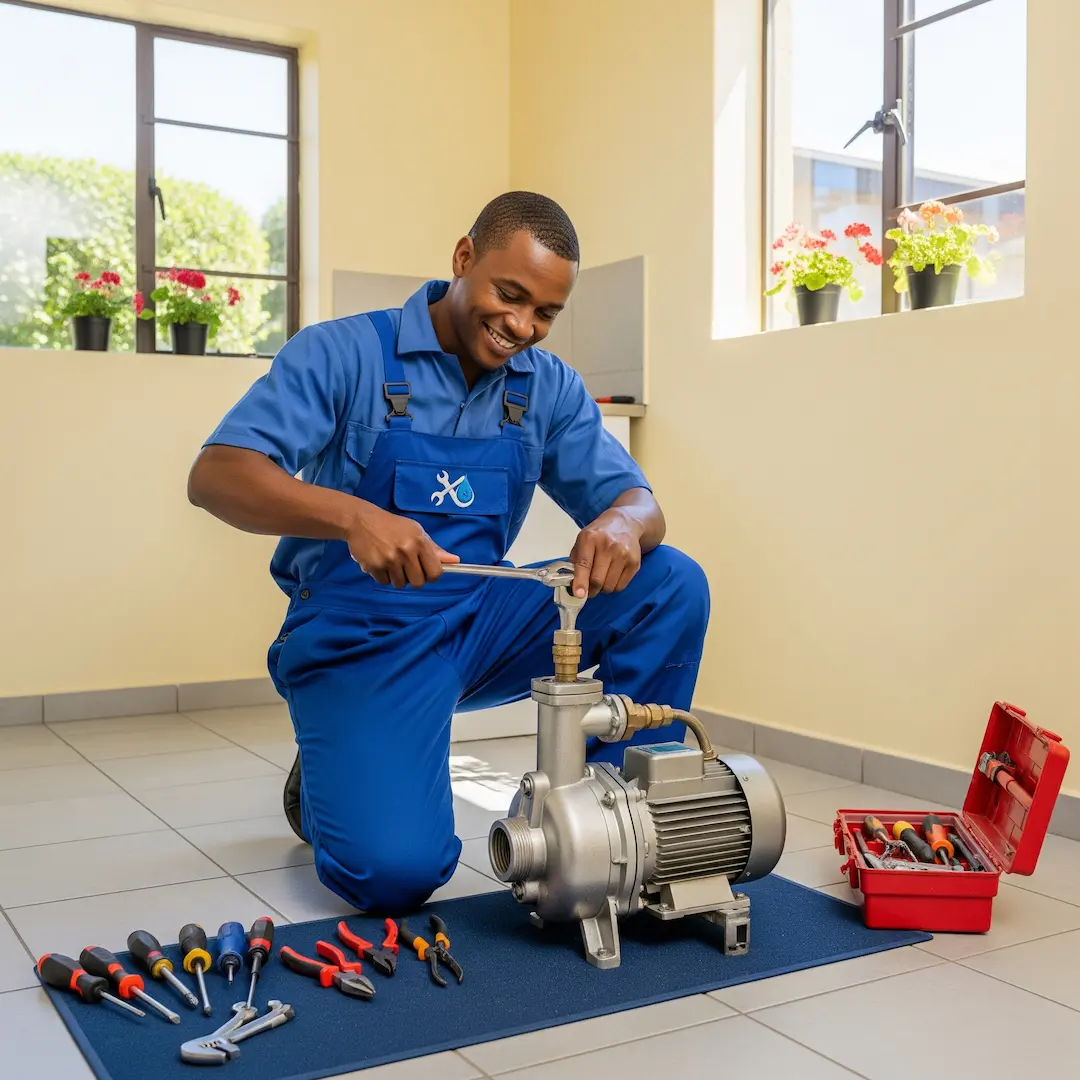
Water Pump Repair vs. Replacement: Making the Right Decision for Your System
Water pump acting up in South Africa? Learn how to decide between repair or replacement, key factors to consider, and how to avoid recurring faults and wasted costs.

A reliable water supply is crucial for any South African home, whether you're relying on municipal lines with a booster pump or drawing from a borehole. When your water pump starts acting up, it can quickly become a major headache. The big question that inevitably arises is: should you repair your existing pump or bite the bullet and replace it entirely? This decision isn't always straightforward and often depends on several factors, including the type of pump, the nature of the fault, and your budget.
From what our experienced plumbers often encounter on the ground, making the wrong choice can lead to recurring problems and wasted money. Let's dive into the key considerations that will help you make an informed decision.
Understanding Your Water Pump and Common Issues
Before we discuss repair or replacement, it’s helpful to understand the common types of water pumps found in South African homes and the issues they typically face.
- Booster Pumps: These are often used in urban areas to increase water pressure from the municipal supply. They kick in when water flow is detected, ensuring a strong, consistent flow to your taps and appliances.
- Submersible Borehole Pumps: If you have a borehole, you likely have a submersible pump. These are designed to be fully submerged in the borehole, pushing water up to your property.
Regardless of the type, water pumps are intricate pieces of equipment and can experience a range of issues. Our expert plumbers have seen it all, and some of the most frequent culprits behind pump failure include:
- Motor Failure: This is often the most serious issue. The motor is the heart of the pump, and if it burns out, a full replacement is often the most economical solution. Factors like continuous running due to a faulty pressure switch, or incorrect electrical supply can lead to motor burnout.
- Seal Leaks: Over time, seals can wear out, leading to water leaks. You might notice water pooling around your pump (for booster pumps) or a drop in water pressure if it's a submersible pump leaking within the borehole. A plumber once shared a story of a client in Pretoria who kept topping up their pool only to discover the slow, persistent leak was from their borehole pump’s worn seal, leading to significant water loss over months.
- Impeller Damage: The impeller is a rotating component that moves water. It can get damaged by sediment, debris, or cavitation (when air bubbles form and collapse, causing wear). If you hear grinding noises or notice reduced water flow, a damaged impeller could be the cause.
- Bearing Wear: Worn bearings often manifest as a whining, squeaking, or grinding noise coming from the pump. This indicates friction and can lead to eventual motor failure if not addressed.
- Electrical Issues: Problems with wiring, tripped breakers, or a faulty pressure switch can prevent a pump from starting or cause it to cycle erratically. Sometimes, what seems like a pump failure is simply an electrical fault.
Repair or Replace? Key Factors to Consider
Deciding whether to repair or replace your water pump boils down to a thorough assessment of several critical factors. Our network of plumbers advises considering these points carefully:
1. Age of the Pump
Just like any appliance, water pumps have a lifespan.
- Older Pumps (7+ years): If your pump is nearing or has exceeded its expected lifespan (which can vary depending on the type and usage, but typically 7-15 years for good quality units), investing in a major repair might be a short-term fix for a long-term problem. An older pump, even with a repaired component, might soon develop other issues, leading to a cycle of costly repairs. A plumber in Durban recently advised a homeowner against repairing a 10-year-old borehole pump that needed a new motor. The cost of the motor, plus labour, was nearly 70% of a brand-new, more energy-efficient model. The homeowner opted for replacement and found their electricity bill for the pump significantly reduced.
- Newer Pumps (Under 5 years): If your pump is relatively new, a repair is often the more sensible and cost-effective option, especially if the damage is isolated to a single component like a seal or a pressure switch.
2. Severity of the Damage
The extent and nature of the damage are crucial.
- Minor Issues (e.g., faulty pressure switch, minor seal leak, blocked impeller): These are generally repairable and far less costly than a full replacement. A skilled plumber can diagnose and fix these issues relatively quickly, often on-site.
- Major Issues (e.g., burnt-out motor, cracked housing, extensively corroded internal components): These are often indicators that replacement is the better choice. The cost of sourcing and replacing major components can sometimes rival the price of a new pump, especially when factoring in labour.
3. Cost of Repair vs. Cost of a New Unit
This is often the most significant factor for homeowners.
- Water Pump Repair Cost: The cost of repairing a water pump in South Africa can vary widely depending on the type of pump, the specific issue, and the plumber's labour rates. For smaller repairs like replacing a pressure switch or a basic seal, you might expect to pay anywhere from R950 to R2,000, including parts and labour. More complex repairs, such as replacing the motor or impeller, could push costs up significantly, potentially ranging from R2,500 to R15,000 or even higher for specialized borehole pumps. For borehole pump repairs, specifically, costs can range from R5,000 to R40,000, heavily dependent on pump capacity, borehole depth (as this impacts labour time and equipment needed to retrieve the pump), and the specific part needing replacement.
- Water Pump Replacement Cost: The cost of a new water pump also varies greatly by type, brand, and capacity. A new booster pump for a typical home might cost anywhere from R2,000 to R10,000, excluding installation. Submersible borehole pumps are significantly more expensive, with the pump unit alone ranging from R5,000 to R25,000. The total cost for a full borehole pump system installation, including drilling and all components, can be between R60,000 and R120,000. Installation labour for a new pump will add to this, often reflecting a few hours to a full day's work depending on complexity.
Expert Tip: Always get a detailed quotation from a qualified plumber that clearly outlines the repair costs, including parts and labour. Compare this against the cost of a new, equivalent pump, plus installation. If the repair cost is more than 50-60% of a new pump's cost, replacement is generally the more prudent long-term investment.
4. Efficiency and Technology
Newer pumps are often significantly more energy-efficient than older models.
- Energy Savings: If your current pump is old, even a successful repair might not address its high energy consumption. Replacing it with a modern, energy-efficient model (especially those with variable speed drives) could lead to substantial savings on your electricity bill over time, effectively offsetting the higher upfront cost.
- Improved Performance: Newer pumps may offer better performance, quieter operation, and more advanced features like smart controls.
5. Availability of Parts
Sometimes, the decision is made for you.
- Obsolete Models: For very old or obscure pump models, spare parts might be difficult or impossible to source in South Africa. Plumbers often encounter situations where parts are no longer manufactured, making repair unfeasible.
The Repair Process: What to Expect
If you opt for a repair, here's a general idea of what a qualified plumber will typically do:
- Diagnosis: The first and most critical step. The plumber will assess the pump, perform tests (e.g., electrical checks, pressure tests), and visually inspect for leaks, corrosion, or damage. They’ll listen for unusual noises.
- Disassembly (if necessary): For internal issues, the pump might need to be disassembled. This is particularly true for seal replacements or impeller checks.
- Part Replacement: The faulty component (e.g., motor, pressure switch, seals, bearings, impeller) will be replaced with a new, compatible part. Adhering to manufacturer specifications and relevant SANS standards for components is crucial.
- Reassembly and Testing: The pump is reassembled, and the system is tested thoroughly to ensure the repair is successful, there are no leaks, and the pump is operating optimally, including checking pressure and flow rates.
- System Optimisation: For booster pumps, the plumber might also check and adjust the pressure switch settings to ensure efficient operation and prevent future issues. For borehole systems, they may advise on water quality testing (as per SANS 241 for drinking water) if sediment or impurities are suspected to be contributing to pump wear.
DIY Disclaimer: While some minor issues might seem simple to fix, working with water pumps involves electricity and often complex plumbing systems. Attempting DIY repairs without the necessary expertise and safety knowledge can be dangerous, leading to electric shock, further damage to the pump, or water leaks. It's always recommended to call a qualified and experienced plumber for any pump-related issues.
Making the Right Decision
Ultimately, the decision to repair or replace your water pump should be made with a clear understanding of the costs, the age of your pump, the severity of the problem, and your long-term goals.
- When to Lean Towards Repair:The pump is relatively new (under 5 years old).
- The issue is minor and easily identifiable (e.g., pressure switch, minor leak, easily accessible blockage).
- The cost of repair is significantly less than a new pump (less than 50% of replacement cost).
- Parts are readily available.
- When to Lean Towards Replacement:The pump is old and nearing the end of its lifespan.
- The motor is burnt out or there is extensive internal damage.
- The cost of repair is approaching or exceeding the cost of a new pump.
- You are looking for improved energy efficiency and performance.
- Parts for your old pump are obsolete or difficult to find.
- You've had multiple repairs on the same pump in a short period.
A trustworthy plumber will provide an honest assessment, explaining the pros and cons of both repair and replacement, helping you make the best decision for your home and budget.
Frequently Asked Questions
How can I tell if my water pump is failing?
Common signs include reduced water pressure, inconsistent water flow (sputtering), unusual noises (whining, grinding, clicking), the pump running continuously or cycling on and off frequently, and visible leaks around the pump or reduced water levels in your borehole if applicable.
What is the average lifespan of a water pump?
The lifespan varies greatly depending on the type, quality, usage, and maintenance. On average, a well-maintained water pump can last anywhere from 7 to 15 years. Some high-quality pumps, especially borehole pumps, might last longer with proper care.
Can a faulty pressure switch mimic a failing pump?
Yes, absolutely. A faulty pressure switch is a common culprit behind a pump running constantly or failing to switch on/off correctly. This can often be repaired or replaced relatively cheaply and is a common diagnostic step a plumber will take before condemning the entire pump.
Is regular maintenance important for my water pump?
Definitely. Regular maintenance can significantly extend your pump's lifespan and prevent costly breakdowns. This often includes checking electrical connections, inspecting for leaks, cleaning filters (if applicable), and ensuring proper pressure settings. For borehole pumps, annual water quality testing and periodic borehole rehabilitation (every 3-5 years) are also recommended.
Find a vetted plumber near you
Pumps installation and repair: find a pro near you
- Pumps installation and repair near you
- Pumps installation and repair in Johannesburg
- Pumps installation and repair in Sandton
- Pumps installation and repair in Midrand
- Pumps installation and repair in Roodepoort
- Pumps installation and repair in Randburg
- Pumps installation and repair in Pretoria
- Pumps installation and repair in Cape Town
Suzette Meyer is the lead author and content creator for Kandua.com, South Africa’s #1 marketplace for home services. Suzette has made it her mission to help homeowners with advice on all aspects of home repair, maintenance and improvement, including how to choose the right Pro and how to make smart upgrades that improve your resale value or save costs.

Latest articles, advice and more
.webp)
.webp)
.jpeg)
Sinking Pavers, Weeds and Water That Pools: What Your Driveway Is Telling You
When your driveway starts sprouting weeds, pooling water, or sinking in patches, the bricks are not failing you. The layers underneath have moved, and they are trying to tell you exactly what went wrong.
.jpeg)
What Your Garage Door Motor Actually Does (And Why It Breaks)
Spoiler alert: your garage door motor isn't actually doing the heavy lifting. The torsion springs carry almost all the weight. The motor simply pushes, pulls, controls the descent so it doesn't slam, and acts as a lock when the door is shut. That’s why a relatively small box on your ceiling can move such a massive door. Want to test this? Pull the red manual release cord and lift the door by hand. If it glides up easily and stays put when you let go, your springs are doing their job, and the fault lies with the motor. If the door feels like dead weight or slams back down- stop. You’ve got a spring problem.
.jpeg)
4 Warning Signs Your Tiles Are Failing (And What They Mean)
Tiles rarely fail overnight. They warn you first. A hollow sound underfoot, grout that crumbles away, a tile that lifts at one edge, or a crack that runs across two tiles all point to something happening under the surface. Here is what each sign means, and how urgent it is.
.webp)
.webp)
Beyond the Unboxing: A Detailed Guide to Correct Washing Machine Plumbing & Setup
New washing machine in South Africa? Learn essential plumbing and setup tips to prevent leaks, ensure efficient operation, and extend your appliance’s lifespan - expert advice before your first load.
.webp)
New Washing Machine? Don't Plug It In Yet! Essential Installation Tips for SA Homes
Installing a new washing machine? Learn the essential setup steps South African homeowners often overlook to prevent leaks, noise, and damage—and ensure efficient, long-lasting performance from day one.
.webp)
.webp)
%25201200%2520x%25201200%2520(1).jpeg)
What Retiling a Bathroom Costs in 2026, Room by Room
Retiling a bathroom in South Africa costs between R230 and R800 per square metre in 2026, including materials and labour. A standard family bathroom, stripped and fully retiled, usually lands between R11,800 and R27,500. A guest toilet costs a fraction of that. A large porcelain en-suite costs a lot more.
How to Install a Horizontal Geyser | Step-by-Step Pro Guide
Want to install a geyser like a pro? This step-by-step tutorial shows you exactly how to do a horizontal Ariston Axios geyser installation, straight from the BluLever plumbing workshop. 🎥 Hosted by MK, BluLever’s technical facilitator, and supported by a qualified electrician, Life and a BluLever graduate artisan, Zinhle. This is your ultimate guide to a SANS 10254-compliant installation — from preparing the wall, to plumbing, electrical wiring, and pro troubleshooting tips.
How to Maintain a Geyser | Step-by-Step Pro Guide
Want to maintain a geyser like a pro? This step-by-step tutorial shows you exactly how to do the three core geyser maintenance checks on an Ariston Axios geyser installation, straight from the BluLever plumbing workshop. 🎥 Hosted by MK, BluLever’s technical facilitator, and supported by a qualified electrician, Life. This is your ultimate guide to geyser maintenance — from diagnosing the problem to checking the heat regulation of the geyser, to pressure regulation and then finally corrosion protection.
%201.avif)
Not just another newsletter. It's an advantage