
TV mounting near me
Connect with fast, affordable and vetted Handymen near you for all your TV mounting needs




How to book a TV Mounting Pro in South Africa
No jargon, no endless scrolling. Just tell Jess what you need and let her handle the rest.
Chat with your 24/7 home companion in plain language. She listens, pinpoints the real problem and connects you with a vetted Pro.
Skip the scrolling. Jess connects you with top-rated, background-checked qualified experts ready to help near you.
Track your job, get and approve your quote and pay securely in one flow: start to finish, all in one place.
"Totally satisfied with the service. The recommended company did an excellent job. Work is professional and neat. I'd recommend Kandua to anyone who needs work done.
"The plumber was efficient, affordable and knowledgeable about his craft, he resolved a blocked drain by replacing the old galvanised p-trap pipe with a new one and left the place spotless after resolving the issue."
"What a pleasant experience. Not only did he respond super fast to my enquiry, but he came out and gave a quote and kept me updated throughout the whole process."
"I recently used Kandua for an electrical project at my home, and I couldn't be more pleased with the results. The entire experience was seamless and stress-free."
"Great and sufficient service. My Pro did an exceptional job with his team. Work clean and very professional. Highly recommended. First class!"
"My Pro responded within minutes, since I started the search. He was on time for the appointment. He fixed swimming pool equipment and gave us friendly and professional advice. Highly recommend."
Frequently asked questions 👇
Quick guidance and answers to your questions about TV mounting in South Africa
Standard mounting runs R450 to R950, large TVs and full-motion brackets R850 to R1,500, with brackets themselves R250 to R1,200 if supplied. Surface cable trunking adds R150 to R450; in-wall concealment and new plug points are quoted separately.
Centre of the screen at seated eye level — roughly 100 to 110cm from the floor for a typical couch, higher only for standing-view rooms. The mounted-too-high TV is the most common regret in home setups; measuring from your actual seating beats any generic rule.
Yes — by fixing into the studs behind the board or using engineered hollow-wall anchors rated well above the TV’s weight. What fails is ordinary plastic plugs in plasterboard. Full-motion arms on drywall need particular care because the extended arm multiplies the load.
Two routes: surface trunking (quick, paintable, renter-friendly) or in-wall concealment, which chases cables into the wall for a completely clean look. In-wall routing that includes a new plug point behind the TV crosses into electrical installation work — that part is done by a registered electrician.
Fixed sits flattest and cheapest for a straight-on couch view; tilt helps when the TV must sit higher than ideal; full-motion suits corner placements and rooms watched from multiple angles. Bigger and heavier brackets demand stronger fixing — another reason bracket choice belongs in the booking conversation.
HowmuchdoesitcosttohireanaHandymaninSouthAfrica?

Get it done by someone you can trust
Manage and grow a business you are proud of
The Cost of TV Mounting in South Africa
(Written by the Kandua Team, with practical insights from our network of vetted South African handymen)
A wall-mounted TV transforms a room — right up until it’s mounted crooked, too high, or into fixings that can’t hold it. Modern TVs are big, expensive, and heavier than they look, and South African walls (brick, drywall, and everything between) each demand different fixings.
Professional mounting is quick and cheap relative to what’s hanging on the result. This guide covers TV mounting costs in South Africa and what separates a secure install from a slow-motion accident.
Expert Advice Before You Book
“Height is the mistake I fix most,” says a vetted handyman on the Kandua network. “People mount TVs way too high — the centre of the screen should sit at seated eye level, roughly a metre from the floor for most couches. That, the right anchors for the wall, and a scan for cables before drilling: that’s the whole job done properly.”
- Buy the right bracket: match the bracket to the TV’s size and VESA pattern, and decide fixed, tilt, or full-motion before installation day — or ask the pro to supply one.
- Think about the boxes: decoders, consoles, and soundbars need power and cabling nearby — plan where they’ll live before choosing the TV position.
- Ask for cable management: trunking painted to match the wall, or routing into a cabinet, is a small add-on that makes the whole install look professional.
Typical Costs for TV Mounting
Here’s what South African homeowners can expect to pay in 2026:
- Standard mount (up to ~55”, fixed or tilt bracket): R450 to R950 labour.
- Large TVs (65”+) and full-motion brackets: R850 to R1,500.
- Bracket supply (if needed): R250 to R1,200 depending on size and type.
- Cable trunking/concealment (surface): R150 to R450.
- Soundbar mounting: R250 to R500.
- In-wall cable chasing with new plug point: quoted separately — the new socket is a registered electrician’s work.
For a deeper breakdown of rates, see the Kandua Handyman Rates Cost Guide.
How Location Affects Costs in South Africa
Prices vary by region, driven by local labour rates, travel distances, and demand:
- Western Cape: R500 to R1,100 for standard mounts.
- Gauteng (Johannesburg & Pretoria): R450 to R1,000 for most installations.
- KwaZulu-Natal: R450 to R1,000.
Factors That Influence Your Final Quote
- Wall type: double brick is ideal; drywall needs stud-fixing or engineered anchors rated for the TV’s weight — both work, done right.
- TV size and bracket type: big screens and articulating full-motion arms carry serious leverage and need heavier fixing.
- Cable plans: surface trunking is quick; in-wall concealment means chasing, plastering, and — for a new plug — an electrician.
- Extras: soundbars, shelves for boxes, and mounting above fireplaces (heat and height considerations) add scope.
Cost Examples by Job Complexity
- Straightforward job: 55” TV on double brick with tilt bracket and painted trunking. Time: About an hour. Typical cost: R600 to R1,100.
- Complex job: 75” TV on full-motion arm on drywall (stud-anchored), soundbar mounted, cables routed to a cabinet. Time: 2 to 3 hours. Typical cost: R1,400 to R2,200.
Customer Story
A homeowner in Soweto shared: “New 65-inch for the World Cup, and no ways was I trusting my own drilling with that price tag. The pro scanned the wall, found a water pipe exactly where I’d planned to drill, shifted the mount 30cm, and had it level with hidden cables in an hour. That scan alone paid for the whole job.”
When to Hire a Professional
The TV is the cheapest thing at risk — walls hide pipes and cables. Call a professional when:
- The wall type is uncertain: drywall, hollow block, and old brick each need specific anchors; the wrong fixing holds fine — until it suddenly doesn’t. Pros test the wall and rate the fixings to the load.
- Anything runs behind the wall: pros scan for electrical cables and pipes before drilling; TVs are usually mounted near plug points, which is exactly where cables live.
- You want in-wall cables or a new plug: chasing cables into the wall is messy skilled work, and a new socket behind the TV is electrical installation — that part must be done by a registered electrician.
Checklist: Before Your Pro Arrives
- Have the TV, bracket, and all cables on site (or ask the pro to supply the bracket).
- Decide the wall and rough position; the pro will confirm the height.
- Clear furniture from the working area.
- Decide where decoders and consoles will live.
- Keep the TV box for a few days — handy if anything needs exchanging.
Frequently Asked Questions (FAQ)
How much does TV mounting cost in South Africa?
Standard mounting runs R450 to R950, large TVs and full-motion brackets R850 to R1,500, with brackets themselves R250 to R1,200 if supplied. Surface cable trunking adds R150 to R450; in-wall concealment and new plug points are quoted separately.
What height should a TV be mounted at?
Centre of the screen at seated eye level — roughly 100 to 110cm from the floor for a typical couch, higher only for standing-view rooms. The mounted-too-high TV is the most common regret in home setups; measuring from your actual seating beats any generic rule.
Can a TV be safely mounted on drywall?
Yes — by fixing into the studs behind the board or using engineered hollow-wall anchors rated well above the TV’s weight. What fails is ordinary plastic plugs in plasterboard. Full-motion arms on drywall need particular care because the extended arm multiplies the load.
How do I hide the cables from a wall-mounted TV?
Two routes: surface trunking (quick, paintable, renter-friendly) or in-wall concealment, which chases cables into the wall for a completely clean look. In-wall routing that includes a new plug point behind the TV crosses into electrical installation work — that part is done by a registered electrician.
Should I use a fixed, tilt, or full-motion bracket?
Fixed sits flattest and cheapest for a straight-on couch view; tilt helps when the TV must sit higher than ideal; full-motion suits corner placements and rooms watched from multiple angles. Bigger and heavier brackets demand stronger fixing — another reason bracket choice belongs in the booking conversation.
Summary of TV Mounting Costs (2026)
- Budget jobs: from R450
- Average jobs: around R950
- High-end jobs: R2,200+
- Typical range: R450 to R2,200+
Ready to get it sorted? Post your job on Kandua and receive quotes from vetted, reviewed pros near you — fast, free, and with secure payment from start to finish.
Handymen in South Africa: what to know before you book
Every home has a list. The door that sticks, the tap that drips, the shelf that never went up, the silicone that’s gone black around the bath. None of it is urgent — until the list is 15 items long and the small stuff has started causing bigger stuff.
Kandua helps you get through it by matching you with a vetted handyman for your job — whether it’s one repair, a move-in list, or a full day of catching up on maintenance.
A few quick answers (so you don’t have to scroll)
How do I choose a good handyman?
Pick someone who asks for photos before quoting, is upfront about what they can and can’t do (a good handyman refers specialist work out), prices as call-out + labour + materials, and has verified reviews for the type of work you need.
What can a handyman legally do in South Africa?
General repairs and maintenance — carpentry, painting, mounting, sealing, tiling, minor fixes — are all fair game. But electrical work that affects the installation must be done by a registered electrician (it needs a Certificate of Compliance), gas work must be done by a registered gas installer, and significant plumbing should go to a qualified plumber. More on this below.
What should handyman work cost?
Most handymen charge a call-out fee + hourly labour + materials, with day rates available for longer lists. (There’s a pricing guide further down.)
Is it cheaper to bundle jobs?
Almost always. One visit means one call-out fee, and a half-day or full-day booking usually beats the same jobs priced separately. Keep a running list and book once it’s worth a visit.
Jobs a handyman handles well
The classic handyman scope is wide — that’s the point. Common jobs include:
- Doors and windows: sticking doors, dropped hinges, handles and locks (non-specialist), draught seals, window stays
- Mounting and hanging: TVs, shelves, curtain rails, blinds, mirrors, artwork — with the right anchors for your wall type
- Carpentry and cupboards: hinges, runners, shelving, skirtings, small built-in repairs, furniture assembly
- Painting and plaster: touch-ups, single rooms, filling and repainting cracks, fascia boards and window frames
- Sealing and wet areas: silicone around baths, showers, and counters, regrouting, small waterproofing repairs
- Minor plumbing-adjacent fixes: tap washers, toilet seats, showerheads — anything more serious belongs with a plumber
- Exterior upkeep: gutter cleaning and realignment, fence and gate repairs, ceiling boards and cornices, small roof tile fixes
If you’re not sure whether a job is “handyman-sized”, describe it with photos — a good pro will tell you honestly whether it’s theirs or a specialist’s.
What a handyman shouldn’t do — and who to call instead
This is the part that protects you legally and for insurance. In South Africa, some work is regulated regardless of how simple it looks:
1) Electrical work
Any work on the electrical installation — new plugs or circuits, DB work, moving points, light fittings beyond a straight swap — must be done by a registered electrician, because additions and alterations require a Certificate of Compliance (CoC). Uncertified electrical work can void insurance claims and cause problems when you sell. A handyman changing a bulb is fine; a handyman wiring a new plug point is not.
2) Gas
All gas installations and repairs (hobs, geysers, braais plumbed to a line) must be done by a registered gas installer, who issues a gas CoC. No exceptions — this one is a safety and insurance issue.
3) Plumbing
Simple like-for-like fixes (a washer, a toilet seat) are handyman territory. But geysers, drainage, and anything touching the water supply or municipal connections should go to a qualified plumber — several municipalities require registered plumbers for notifiable work, and geyser installations must comply with SANS 10254 for insurance purposes.
The good news: you don’t have to figure out the boundary yourself. Describe the job to Jess, and you’ll be matched with the right type of vetted pro — handyman, electrician, or plumber — for what the job actually needs.
When it’s a DIY job — and when it isn’t
DIY is fine when the cost of getting it wrong is low: assembling furniture, tightening a handle, filling a small nail hole.
Call a handyman when:
- the job involves ladders, roofs, or gutters — falls are the most common DIY injury
- you’re drilling into walls without knowing what’s behind them (pipes and cables don’t forgive)
- the fix has failed before — repeat failures usually mean the cause wasn’t addressed
- it involves water — sealing, waterproofing, and leak-adjacent work done badly gets expensive quietly
- you need it done straight and level and once — TV mounts, shelves, and rails are cheap to do right and annoying to redo
- the list is long — a pro’s day rate often beats your whole weekend
Pricing: what to budget for a handyman in South Africa
Pricing varies by city, travel distance, and the skill level a job needs — but most homeowners will see a familiar structure:
Typical cost structure
- Call-out fee (travel + often the first hour)
- Labour (hourly, or a day rate for longer lists)
- Materials/parts (often with a small sourcing markup)
- After-hours premium (nights, weekends, public holidays)
- Disposal/clean-up where the job creates rubble or waste
Typical ranges you’ll see (guideline)
- Labour: roughly R300 – R550/hour for general work, with skilled jobs like tiling, waterproofing, or built-in repairs reaching R600 – R800+/hour
- Call-out/first hour: often around R450 – R750 depending on area and travel
- Day rates: commonly R1,600 – R4,800 for a full day — usually the best value for a long list
The bundling rule
The call-out fee is the same whether the pro does one job or eight. If you have several small fixes, batching them into one visit is the single biggest saving available — and it’s why keeping a running list pays.
10 Genuinely helpful handyman FAQ’s
- What’s the difference between a handyman and a contractor?
Scale and regulation. A handyman handles repairs and small improvements; a contractor manages structural work, additions, and projects involving multiple trades, permits, or plans. If the job changes the building rather than maintains it, it’s contractor territory. - Can a handyman install a new plug point or light fitting?
A like-for-like light fitting swap is a grey area many handymen will do; a new plug point, new circuit, or anything at the DB legally needs a registered electrician and a CoC. If in doubt, ask: “Will this work need a CoC?” — if yes, it’s not a handyman job. - Should I supply my own materials?
You can, and it avoids sourcing markups — but agree it upfront, buy exactly what the pro specifies, and accept that wrong materials on the day means paying for the time anyway. For specialised items, letting the pro source is usually worth the markup. - How do I get an accurate quote for a list of small jobs?
Photograph every item, note sizes and wall types where relevant, and share the full list upfront. Pros quote tighter when they can plan the sequence and bring the right materials in one trip. - What does a half-day vs full-day booking get through?
As a rough guide: a half-day clears 4–6 small jobs (mounting, sealing, adjustments); a full day handles a room’s painting, a long snag list, or one bigger job plus the small stuff. Your pro can sequence the list to fit the time. - Why does the same job get such different quotes?
Usually scope assumptions: one pro is quoting a patch, the other a proper fix; one includes materials, the other doesn’t. Compare what’s included, not just the number — and be wary of quotes given without photos or a visit. - Is a warm socket, tripping power, or burning smell a handyman job?
No — that’s a registered electrician, and it’s urgent. Switch the circuit off at the DB and book an electrician; a handyman shouldn’t open electrical work like this. - Can a handyman fix damp and mould?
Often, yes — if the cause is failed silicone, blocked gutters, cracked plaster, or poor ventilation, a handyman can fix the source, treat the mould, and repaint properly. Rising damp or leaks inside walls need specialist assessment first. - Do handymen guarantee their work?
Reputable pros stand behind workmanship for a reasonable period — ask what’s covered and for how long before work starts, and keep the invoice. Materials carry the manufacturer’s warranty separately. - What should I ask a handyman before they start?
Three questions cover most issues:
- “Is this priced as call-out + hourly + materials, and what counts as after-hours?”
- “Is any part of this job regulated work that needs an electrician, plumber, or gas installer instead?”
- “What do you guarantee on workmanship, and for how long?”
Why use Kandua when you book a Handyman in South Africa
When you book through Kandua, you’re not just finding a pro – you’re getting a safer, simpler and more reliable way to sort out jobs around your home
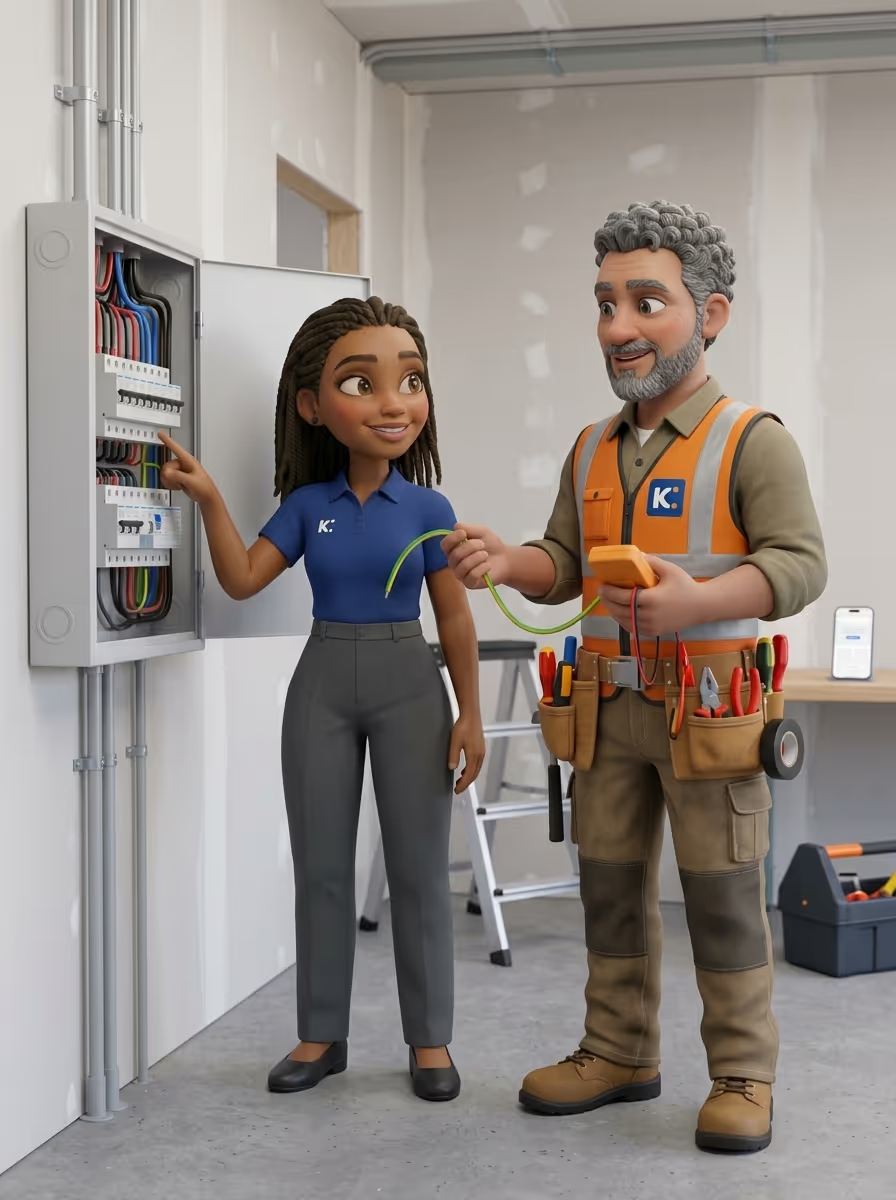
Vetted for your safety
AI that actually understands
A perfect match. Zero spam
Payments made simple
Pay only via the Pay Now button on Kandua invoices. We can't help with off-platform payments.
Booked. Matched. Protected
The moment you post, we share your job with vetted and verified Pros near you. Your safety is our biggest priority.

Your whole job. In one place.
Create a free account, track and manage your job from start to finish: follow each step, approve quotes, pay invoices securely, and keep every document. No more chasing EFTs or wondering what happens next.
Please settle the deposit so your pro can prepare for the work.
Built to keep you in control
Every part of your job lives in your account: visible, secure, and a tap away.
Watch your job move from posted, to matched, to completed, with a clear status at each stage.
Review your quote and approve it right in the app. No back and forth and no paperwork.
Pay deposits and invoices securely in one tap. No time-consuming EFTs or strange requests.
Every quote and invoice stays saved against your job. Revisit or download whenever you need.