
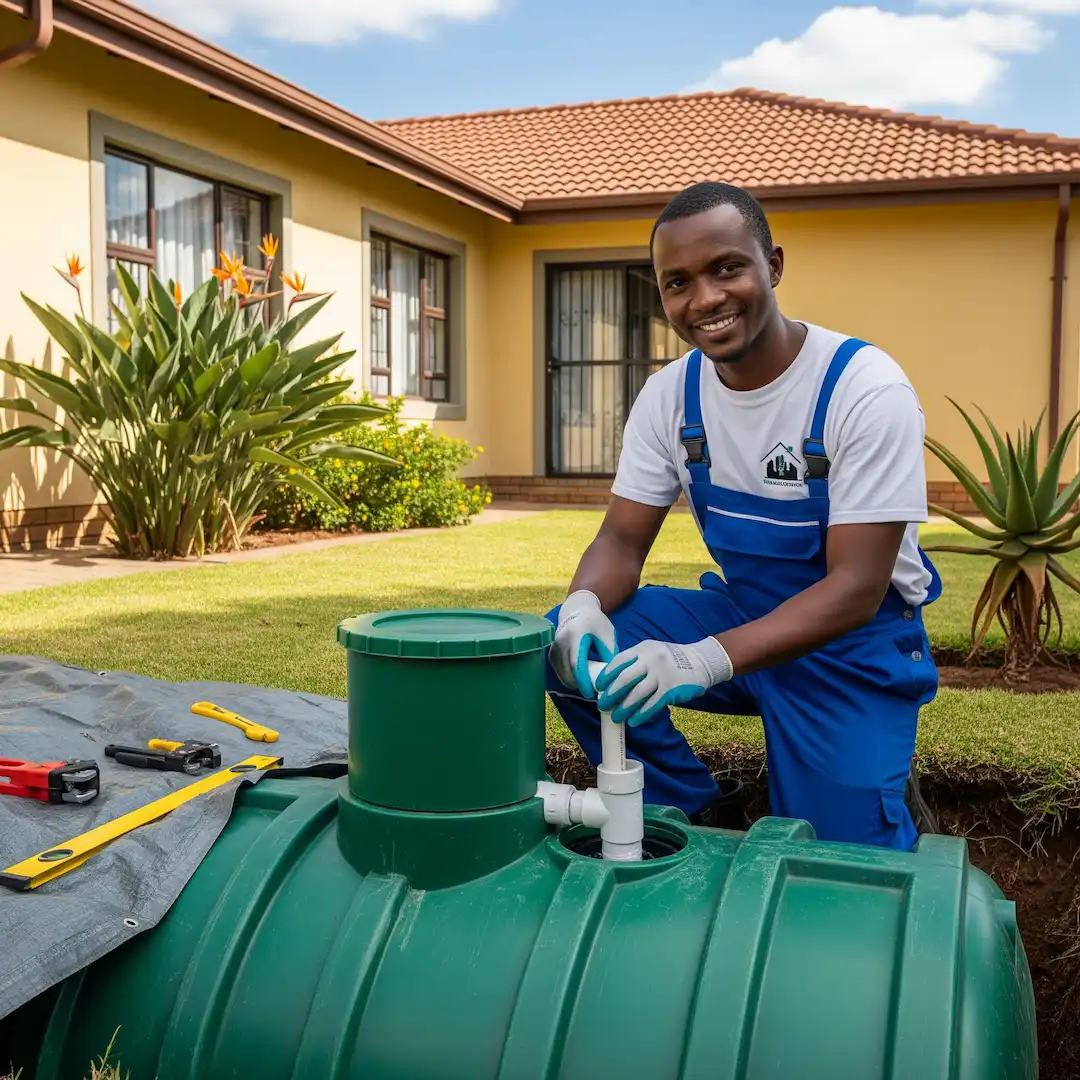
Septic Tank Installation in South Africa: Why Expert Planning & Execution are Non-Negotiable
Installing a septic tank in South Africa? Learn why expert planning and professional installation are essential for safety, compliance, and long-lasting wastewater performance on non-municipal properties.

Septic Tank Installation in South Africa: Why Expert Planning & Execution are Non-Negotiable
A septic tank system is one of the most critical pieces of infrastructure on any property not connected to a municipal sewer line. When installed correctly, it's a silent, efficient workhorse, safely managing your household wastewater for decades. But when it goes wrong, it goes spectacularly wrong, leading to foul odours, contaminated groundwater, and repair bills that can make your eyes water.
You've decided a septic system is right for your property. Now comes the most important decision of all: choosing the right professional to install it. This isn't a job for a general handyman or a "bakkie builder." A proper septic tank installation is a complex civil works project that demands expertise in plumbing, soil science, and local regulations. Getting it wrong is not an option.
This guide will walk you through what you need to know before a single shovel of soil is turned, ensuring your investment is safe, compliant, and built to last.
More Than Just a Tank: Understanding Your Septic System
Before diving into the installation process, it's crucial to understand that a septic system is more than just a buried container. It's a living, biological system with several key components that must work in harmony:
- The Septic Tank: This is a large, watertight container, typically made from plastic (like polyethylene) or pre-cast concrete. It receives all your household wastewater. Inside, solid waste settles to the bottom to form a sludge layer, while lighter materials like grease and oil float to the top, forming a scum layer. Bacteria in the tank begin to break down the solids.
- The Outlet Pipe: This allows the separated liquid waste, known as effluent, to flow out of the tank and into the next stage. Modern tanks have baffles or filters to prevent sludge and scum from escaping.
- The Soakaway (or French Drain / Drain Field): This is a network of perforated pipes laid in gravel-filled trenches. The effluent from the tank flows into these pipes and slowly seeps ("percolates") into the surrounding soil. The soil acts as a natural filter, removing harmful bacteria and pathogens before the water rejoins the groundwater system.
A failure in any one of these components means a failure of the entire system.
The Critical Pre-Installation Checklist: What a Professional Must Do
A reputable installer doesn't just show up and start digging. They undertake a thorough planning and assessment phase. If your potential installer skips any of these steps, consider it a major red flag.
Soil Percolation (Perc) Test: The Foundation of Your System
This is arguably the most important step in the entire process. A perc test measures the rate at which water is absorbed by the soil on your property.
- Why it's crucial: The result of this test determines if your property is suitable for a conventional septic system and dictates the required size of your soakaway.
- The process: A professional will dig one or more holes in the proposed soakaway area, fill them with water, and measure how long it takes for the water level to drop.
- The outcome: Soil that drains too quickly (like sand) might not filter the effluent properly, potentially contaminating groundwater. Soil that drains too slowly (like heavy clay) will become saturated, causing effluent to pool on the surface or back up into your home.
One of our vetted experts in KwaZulu-Natal shared a cautionary tale. A client had a new system installed on their smallholding, but within a year, their beautiful lawn became a soggy, foul-smelling swamp. The original installer had completely skipped the perc test. The property's heavy clay soil simply couldn't absorb the effluent from the undersized soakaway. The entire system had to be dug up and replaced, a costly and distressing lesson in the importance of proper soil analysis.
Sizing Your System Correctly
A "one-size-fits-all" approach to septic systems is a recipe for disaster. The size of your tank and soakaway must be calculated based on the potential wastewater load of your home.
In South Africa, the standard practice, often guided by SANS (South African National Standards) 10252-2, is to size the system based on the number of bedrooms in the house, not the number of current occupants. This ensures the system can handle the maximum potential occupancy of the home, which is crucial for future-proofing and property resale value.
- Tank too small: It will fill up too quickly, requiring very frequent and costly pumping. It also doesn't allow enough time for solids to settle, so solid waste can clog your soakaway, leading to premature failure.
- Soakaway too small: It will be overwhelmed by the volume of effluent, leading to the soggy-lawn scenario described above.
Navigating Municipal Bylaws and National Standards
Septic system installations are regulated to protect public health and the environment. A professional installer must be familiar with:
- National Building Regulations & SANS 10252-2: This standard covers drainage installations and provides guidelines for septic systems.
- Local Municipal Bylaws: Every municipality may have its own specific requirements regarding septic systems. These often dictate the minimum distance (setbacks) the system must be from buildings, property boundaries, wells, boreholes, rivers, and dams. For example, a system typically needs to be at least 3 metres from a building and 30-50 metres from a borehole or well.
Your installer should be responsible for ensuring the proposed design is fully compliant. Ask them directly about the specific regulations in your area. Their confident and knowledgeable response is a good sign of their professionalism.
Site Selection and Layout
Based on the perc test and local bylaws, the installer will determine the best location for the tank and soakaway. This involves considering:
- Gravity: The layout should ideally allow for wastewater to flow via gravity, avoiding the need for expensive and failure-prone pumps.
- Accessibility: The tank must be located where a vacuum truck can access it for future pumping.
- Future Plans: Consider future property extensions, swimming pools, or driveways. You cannot build over any part of your septic system.
Red Flags: How to Spot a Dodgy Septic Tank Installer
Your home is one of your biggest investments; don't entrust its sanitation to an unqualified individual. Watch out for these warning signs:
- They skip the perc test: This is a non-negotiable step. Anyone willing to install a system without one is cutting corners.
- They offer a vague, "one-price-fits-all" quote over the phone: A professional needs to conduct a site assessment to provide an accurate quote.
- They can't explain sizing calculations: If they suggest a size without asking about the number of bedrooms, they don't know what they're doing.
- They are unaware of local municipal bylaws: This is a massive red flag. A compliant installation is essential.
- They push for the cheapest materials: While everyone loves a good deal, ultra-cheap, non-certified tanks can crack or fail prematurely.
- The quote seems too good to be true: A proper installation requires significant labour, machinery (like a TLB for excavation), quality materials, and expertise. An impossibly low price means corners are being cut somewhere, and you will pay for it later.
The Long-Term Consequences of a Botched Installation
Choosing the wrong installer isn't just a minor inconvenience; it can have devastating and expensive long-term effects.
- Health Hazards: A failing system can contaminate your drinking water (especially if you have a borehole) with harmful bacteria like E. coli, leading to serious illness.
- Environmental Damage: Leaking effluent pollutes groundwater and can harm local ecosystems. You could even face fines from environmental authorities.
- Property Damage: Constant dampness can affect your home's foundation. A waterlogged garden is unusable and can hurt your property's value.
- Financial Drain: A system that fails after a few years requires a complete replacement, often costing more than the initial installation due to the added difficulty of removing the old system. Add to this the cost of frequent pumping and failed landscaping.
- Legal & Resale Issues: When you sell your home, you will likely need to provide a certificate of compliance for the plumbing. A non-compliant septic system will be flagged, potentially scuttling the sale or forcing you into expensive last-minute repairs.
A septic tank is a long-term investment in your property's health and functionality. The expertise and diligence of your installer are the best insurance you can have for that investment. Take your time, ask the right questions, and choose a professional who understands that this is more than just digging a hole—it's about building a system that will serve you safely and reliably for decades to come.
Frequently Asked Questions
How often will my new septic tank need to be pumped or serviced?
For an average household, a correctly sized and properly used septic tank will typically need to be pumped every 3 to 5 years. This can vary depending on the size of your tank and the number of people living in your home. Regular pumping removes the accumulated sludge and scum, preventing it from clogging your soakaway.
What can and can't go down the drain when I have a septic system?
Your septic system relies on living bacteria to break down waste. To keep it healthy, only human waste and toilet paper should be flushed. Avoid flushing wet wipes (even "flushable" ones), sanitary products, nappies, and cotton buds. In the kitchen, minimise the amount of cooking oil, grease, and food scraps that go down the drain. Harsh chemicals, bleach, and antibacterial soaps can also kill the essential bacteria in your tank.
Can I plant trees or build a garden over my soakaway?
It is strongly advised not to plant trees or large shrubs near your soakaway. Their roots are aggressive and will seek out the water source, eventually growing into the pipes and causing blockages or damage. A shallow-rooted grass lawn is the best covering for a soakaway area. You should never build any permanent structure, deck, or driveway over your soakaway or tank.
How long should a properly installed septic system last?
A well-maintained, professionally installed septic tank system can last for a very long time. The tank itself (if made from concrete or high-quality plastic) can last for 40 years or more. The soakaway's lifespan is typically shorter, often between 15 and 25 years, as the soil can eventually become less effective at absorbing effluent. Proper use and regular maintenance are key to maximising its lifespan.
Find a vetted plumber near you
Septic systems installation: find a pro near you
- Septic systems installation near you
- Septic systems installation in Johannesburg
- Septic systems installation in Sandton
- Septic systems installation in Midrand
- Septic systems installation in Roodepoort
- Septic systems installation in Randburg
- Septic systems installation in Pretoria
- Septic systems installation in Cape Town
Suzette Meyer is the lead author and content creator for Kandua.com, South Africa’s #1 marketplace for home services. Suzette has made it her mission to help homeowners with advice on all aspects of home repair, maintenance and improvement, including how to choose the right Pro and how to make smart upgrades that improve your resale value or save costs.

Latest articles, advice and more
.webp)
.webp)
.jpeg)
Sinking Pavers, Weeds and Water That Pools: What Your Driveway Is Telling You
When your driveway starts sprouting weeds, pooling water, or sinking in patches, the bricks are not failing you. The layers underneath have moved, and they are trying to tell you exactly what went wrong.
.jpeg)
What Your Garage Door Motor Actually Does (And Why It Breaks)
Spoiler alert: your garage door motor isn't actually doing the heavy lifting. The torsion springs carry almost all the weight. The motor simply pushes, pulls, controls the descent so it doesn't slam, and acts as a lock when the door is shut. That’s why a relatively small box on your ceiling can move such a massive door. Want to test this? Pull the red manual release cord and lift the door by hand. If it glides up easily and stays put when you let go, your springs are doing their job, and the fault lies with the motor. If the door feels like dead weight or slams back down- stop. You’ve got a spring problem.
.jpeg)
4 Warning Signs Your Tiles Are Failing (And What They Mean)
Tiles rarely fail overnight. They warn you first. A hollow sound underfoot, grout that crumbles away, a tile that lifts at one edge, or a crack that runs across two tiles all point to something happening under the surface. Here is what each sign means, and how urgent it is.
.webp)
.webp)
Beyond the Unboxing: A Detailed Guide to Correct Washing Machine Plumbing & Setup
New washing machine in South Africa? Learn essential plumbing and setup tips to prevent leaks, ensure efficient operation, and extend your appliance’s lifespan - expert advice before your first load.
.webp)
New Washing Machine? Don't Plug It In Yet! Essential Installation Tips for SA Homes
Installing a new washing machine? Learn the essential setup steps South African homeowners often overlook to prevent leaks, noise, and damage—and ensure efficient, long-lasting performance from day one.
.webp)
.webp)
%25201200%2520x%25201200%2520(1).jpeg)
What Retiling a Bathroom Costs in 2026, Room by Room
Retiling a bathroom in South Africa costs between R230 and R800 per square metre in 2026, including materials and labour. A standard family bathroom, stripped and fully retiled, usually lands between R11,800 and R27,500. A guest toilet costs a fraction of that. A large porcelain en-suite costs a lot more.
How to Install a Horizontal Geyser | Step-by-Step Pro Guide
Want to install a geyser like a pro? This step-by-step tutorial shows you exactly how to do a horizontal Ariston Axios geyser installation, straight from the BluLever plumbing workshop. 🎥 Hosted by MK, BluLever’s technical facilitator, and supported by a qualified electrician, Life and a BluLever graduate artisan, Zinhle. This is your ultimate guide to a SANS 10254-compliant installation — from preparing the wall, to plumbing, electrical wiring, and pro troubleshooting tips.
How to Maintain a Geyser | Step-by-Step Pro Guide
Want to maintain a geyser like a pro? This step-by-step tutorial shows you exactly how to do the three core geyser maintenance checks on an Ariston Axios geyser installation, straight from the BluLever plumbing workshop. 🎥 Hosted by MK, BluLever’s technical facilitator, and supported by a qualified electrician, Life. This is your ultimate guide to geyser maintenance — from diagnosing the problem to checking the heat regulation of the geyser, to pressure regulation and then finally corrosion protection.
%201.avif)
Not just another newsletter. It's an advantage