
Choosing Your Home Water Filter: Carbon, Sediment, UV, and Reverse Osmosis Explained
Choosing a home water filter in South Africa? Learn the differences between carbon, sediment, UV, and reverse osmosis systems - and how to select the right solution for safe, clean drinking water.

In South Africa, ensuring the quality of your home's water supply has become a significant consideration for many homeowners. While municipal water generally adheres to the SANS 241 drinking water standards, issues like aging infrastructure, localised contamination, or reliance on alternative sources like borehole water mean that understanding home water filtration is more crucial than ever. From discoloured water due to iron and manganese, to concerns about microbiological contaminants like E. coli, homeowners are increasingly looking for ways to ensure their water is safe and pleasant to drink.
Choosing the right water filter for your home can feel like navigating a maze, with various technologies promising different benefits. To help you make an informed decision, let's break down the most common types of home water filters available in South Africa: Carbon, Sediment, UV, and Reverse Osmosis, explaining what they do, what they're best at removing, and their practical implications for your home.
Understanding Your Water First
Before diving into filter types, it's vital to understand your water source and potential contaminants. Many expert plumbers we work with often advise clients to get their water tested, especially if they're on borehole water or notice persistent issues with municipal supply. A lab test can identify specific contaminants such as heavy metals, nitrates, or bacteria, which will guide your filter choice far more effectively than guesswork. For instance, a homeowner in a rural area relying on borehole water might find high levels of iron and manganese, alongside potential bacterial contamination, requiring a multi-stage approach.
1. Sediment Filters: The First Line of Defence
Imagine tiny particles of sand, rust, or silt floating in your water. That's where a sediment filter comes in. These filters act as a physical barrier, trapping larger particulate matter and preventing it from reaching other, finer filtration stages or your home appliances.
How They Work
Sediment filters are typically made from materials like polypropylene, spun fibre, or pleated fabric, designed with specific micron ratings (e.g., 5-micron or 1-micron). Water flows through the filter, and particles larger than the filter's pores are physically blocked and retained.
What They Remove
- Sand
- Silt
- Rust particles
- Dirt
- Other visible particulate matter
Pros
- Protects other filters: By removing larger particles, sediment filters extend the lifespan and efficiency of subsequent, more sensitive filters like carbon or RO membranes. Our plumbers often highlight this as a cost-saving measure in the long run.
- Protects plumbing and appliances: Prevents sediment buildup in pipes, taps, water heaters, washing machines, and dishwashers, reducing wear and tear and potential clogs.
- Improves water clarity: Makes water visually clearer and can reduce cloudiness.
- Cost-effective: Generally one of the most affordable filter types.
Cons
- Doesn't remove dissolved contaminants: Sediment filters don't remove chemicals, bacteria, viruses, heavy metals, or dissolved solids.
- Requires regular replacement: They get clogged over time and need frequent replacement (typically every 2-3 months, but sometimes more often depending on water quality) to maintain effectiveness and water flow. A common sign you need a replacement is a noticeable drop in water pressure or visible sediment returning to your water.
Best For
- As a pre-filter in multi-stage filtration systems (highly recommended for all systems).
- Homes with well water or borehole water that often contains suspended solids.
- Areas with older piping that might shed rust and sediment into the water supply.
2. Carbon Filters: For Taste and Odour
If your municipal water has a strong chlorine taste or an unpleasant smell, a carbon filter is often the answer. These filters use activated carbon to absorb a wide range of organic contaminants, significantly improving the aesthetic qualities of your water.
How They Work
Activated carbon is highly porous, created by heating carbon-rich materials (like coconut shells or wood) in an oxygen-free environment. This process creates millions of tiny pores that provide a large surface area for contaminants to "stick" to through a process called adsorption.
Carbon filters come in two main forms:
- Granular Activated Carbon (GAC): Loose carbon granules that water flows through.
- Carbon Block: Carbon is compressed into a solid block, offering more contact time and generally better contaminant removal.
What They Remove
- Chlorine and chloramines (common disinfectants in municipal water)
- Volatile Organic Compounds (VOCs)
- Pesticides and herbicides
- Industrial solvents
- Trihalomethanes (THMs), a byproduct of chlorine disinfection
- Bad tastes and odours
Pros
- Excellent for taste and odour: Dramatically improves the palatability of tap water. Many South African homeowners notice an immediate difference in their tea and coffee.
- Removes a broad range of organic chemicals: Effective against many common chemical pollutants.
- No electricity required: A passive filtration method.
- Relatively affordable: More expensive than sediment filters, but still a cost-effective solution for improving water quality.
Cons
- Doesn't remove minerals, heavy metals, or microorganisms: While some specialised carbon filters might have additives for lead reduction, standard carbon filters are not effective against bacteria, viruses, nitrates, or hard water minerals.
- Saturation: Over time, the carbon becomes saturated with contaminants and loses its effectiveness, requiring regular replacement (typically every 6-12 months, depending on usage and water quality).
- Not ideal for hot water: Hot water can reduce the filter's efficiency.
Best For
- Improving the taste and smell of municipal tap water.
- Removing chlorine and its byproducts.
- Addressing concerns about organic chemical contamination.
3. UV (Ultraviolet) Filters: Sterilising Your Water
When the primary concern is microbiological contamination – bacteria, viruses, and other pathogens – a UV filter is a powerful, chemical-free solution.
How They Work
A UV water filter system uses a special UV-C lamp housed in a chamber. As water flows through this chamber, it's exposed to germicidal ultraviolet light. This light disrupts the DNA of microorganisms, rendering them unable to reproduce and effectively neutralising them.
What They Remove
- Bacteria (e.g., E. coli, Salmonella, Campylobacter)
- Viruses (e.g., Hepatitis A, Norovirus)
- Protozoa (e.g., Giardia, Cryptosporidium)
Pros
- Highly effective against microorganisms: Kills 99.99% of bacteria, viruses, and protozoa without using chemicals. This is particularly reassuring for borehole users or during municipal water quality advisories.
- Chemical-free: Doesn't add any chemicals to your water, preserving its natural taste and composition.
- Minimal maintenance: Typically requires an annual UV lamp replacement and occasional cleaning of the quartz sleeve.
Cons
- Doesn't remove non-living contaminants: UV filters don't remove sediment, chlorine, heavy metals, dissolved solids, or improve taste/odour. They only treat biological threats.
- Requires pre-filtration: For UV to be effective, the water must be clear. Sediment or cloudiness can shield microorganisms from the UV light, so a sediment filter is almost always a necessary pre-filter.
- Relies on electricity: A power outage will mean the system is not actively purifying water.
- Sensitive to flow rate: Water must be exposed to the UV light for a sufficient time, so an appropriate flow control system is essential.
Best For
- Homes using borehole or well water where microbiological contamination is a risk.
- As an added layer of protection for municipal water, especially in areas prone to intermittent supply or quality issues.
- Anyone prioritising protection against waterborne diseases.
4. Reverse Osmosis (RO) Systems: The Ultimate Purifier
Reverse Osmosis (RO) is often considered the most comprehensive home water filtration method. It provides a highly purified water, often comparable to bottled water quality.
How They Work
RO systems typically employ multiple stages of filtration, starting with a sediment filter and a carbon filter, before the main RO membrane. Water is pushed under pressure through a semi-permeable membrane that has extremely tiny pores. This membrane allows only pure water molecules to pass through, leaving almost all contaminants behind, which are then flushed away as wastewater.
What They Remove (with pre-filters)
- Dissolved solids (TDS)
- Heavy metals (e.g., lead, arsenic, mercury, chromium)
- Fluoride
- Nitrates and nitrites
- Chlorine and chloramines
- Bacteria and viruses (though UV is often recommended as a complementary stage for biological contaminants, especially with borehole water)
- Salts
- Many organic chemicals
Pros
- Superior contaminant removal: Removes a vast array of contaminants, including those that other filters miss, providing exceptionally pure water.
- Improved taste and purity: Produces highly pure water with a very clean taste.
- Environmentally friendly alternative to bottled water: Reduces reliance on plastic bottles.
Cons
- Water wastage: RO systems typically waste a significant amount of water (often 3-5 litres of wastewater for every litre of purified water produced), though newer, more efficient models are available. This is a crucial consideration in water-scarce South Africa.
- Slower filtration rate: RO systems produce purified water slowly, often requiring a storage tank.
- Removes beneficial minerals: Along with contaminants, RO also removes beneficial minerals like calcium and magnesium, which some argue can make the water taste "flat" or potentially impact health over long-term exclusive consumption. Some RO systems include a remineralisation stage to address this.
- Higher upfront and maintenance costs: Generally the most expensive system to install and maintain, with the RO membrane needing replacement every 1-3 years and pre-filters every 3-6 months.
- Can cause slight pressure drop: May lead to a noticeable drop in water pressure at the filtered tap.
Best For
- Homeowners seeking the highest level of water purity for drinking and cooking.
- Addresses a wide range of water quality issues, including heavy metals and dissolved solids.
- Ideal for those concerned about virtually all types of contaminants in their water.
The Importance of Professional Installation
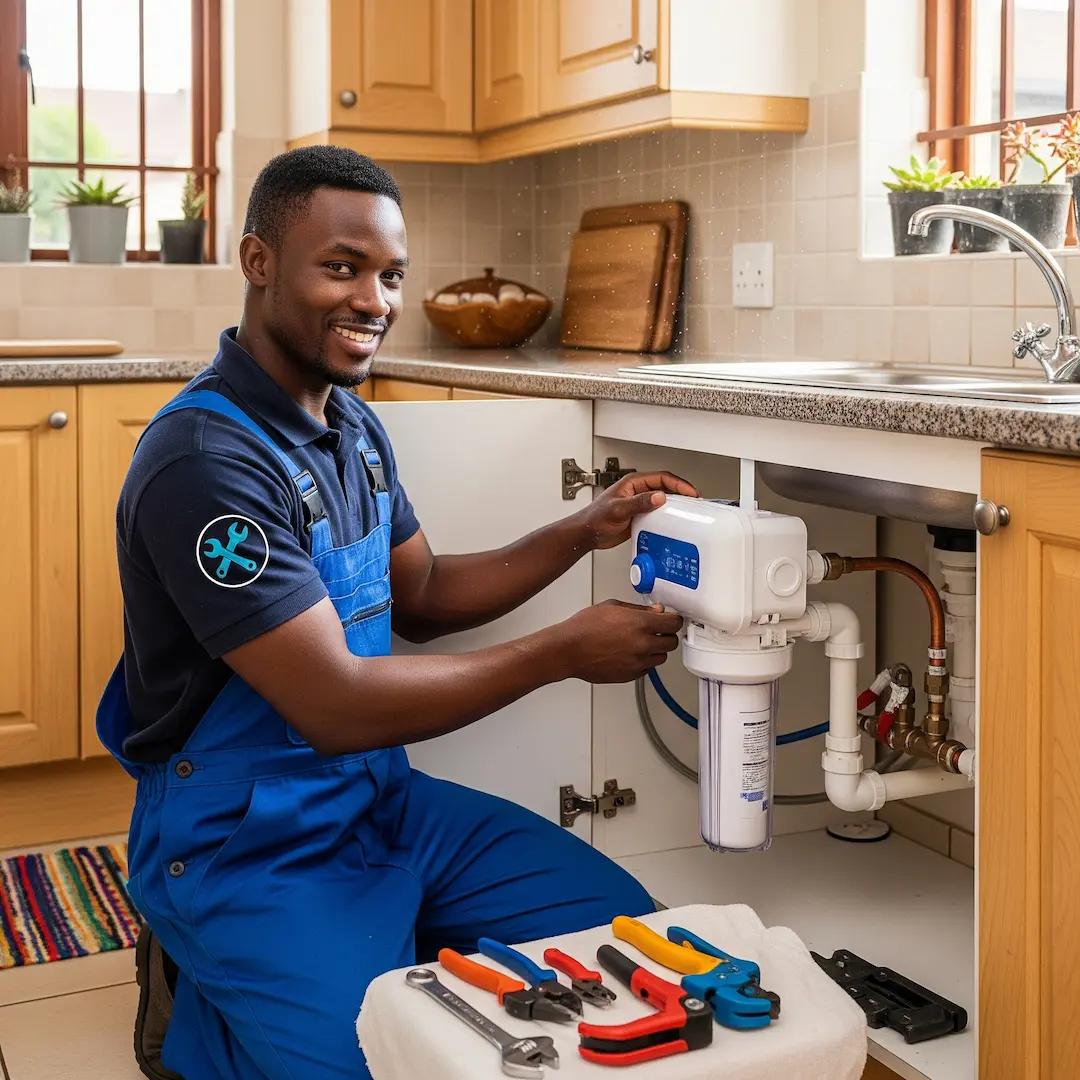
While some basic filters can be DIY-installed, more complex systems like whole-house filters, under-sink RO systems, or UV purifiers require professional plumbing expertise. A qualified plumber will ensure the system is installed correctly, adheres to relevant South African National Standards (SANS), and integrates seamlessly with your existing plumbing. They can also advise on proper sizing, flow rates, and maintenance schedules tailored to your specific needs. From our experience, improper installation can lead to leaks, reduced efficiency, or even recontamination. A plumber can typically install a standard under-sink filter system for anywhere from R1,500 to R4,500, with more complex RO or whole-house systems potentially costing more, depending on your home's setup.
Final Thoughts on Your Filtration Journey
Choosing the "best" water filter isn't about finding a one-size-fits-all solution, but rather identifying the system that best addresses your specific water quality concerns and lifestyle. Start by understanding your water, then consider what contaminants you want to remove, your budget, and the level of maintenance you're comfortable with. Whether it's a simple carbon filter for taste, a UV system for germ protection, or a comprehensive RO system for ultimate purity, investing in a home water filter is an investment in your health and peace of mind.
Frequently Asked Questions
How do I know what contaminants are in my water?
The best way to know what contaminants are in your water is to have it professionally tested by a certified laboratory. This is especially important for borehole water or if you have specific concerns about your municipal supply. Testing reveals levels of bacteria, heavy metals, nitrates, and other substances, guiding your filter choice.
How often should I change my water filters?
The frequency of filter replacement depends on the type of filter, your water quality, and your water usage. Sediment filters typically need changing every 2-3 months, carbon filters every 6-12 months, and RO membranes every 1-3 years. UV lamps generally need annual replacement. Always refer to the manufacturer's guidelines for your specific filter model.
Can I install a water filter myself?
Basic faucet or pitcher filters are typically easy to install. However, under-sink systems, whole-house filters, and reverse osmosis systems often require professional plumbing knowledge to ensure correct installation, prevent leaks, and comply with local regulations. It's always best to consult with a qualified plumber for these more complex installations.
Will a water filter affect my water pressure?
Some water filters, particularly those with multiple stages or very fine membranes like reverse osmosis, can cause a slight reduction in water pressure at the filtered tap. Sediment filters, if left unchanged when clogged, can also significantly reduce water flow. Regular maintenance and proper system sizing can help minimise any impact on water pressure.
Find a vetted plumber near you
Water filtration systems: find a pro near you
Suzette Meyer is the lead author and content creator for Kandua.com, South Africa’s #1 marketplace for home services. Suzette has made it her mission to help homeowners with advice on all aspects of home repair, maintenance and improvement, including how to choose the right Pro and how to make smart upgrades that improve your resale value or save costs.

Latest articles, advice and more
.webp)
.webp)
.webp)
.webp)
.jpeg)
Sinking Pavers, Weeds and Water That Pools: What Your Driveway Is Telling You
When your driveway starts sprouting weeds, pooling water, or sinking in patches, the bricks are not failing you. The layers underneath have moved, and they are trying to tell you exactly what went wrong.
.webp)
.webp)
Beyond the Unboxing: A Detailed Guide to Correct Washing Machine Plumbing & Setup
New washing machine in South Africa? Learn essential plumbing and setup tips to prevent leaks, ensure efficient operation, and extend your appliance’s lifespan - expert advice before your first load.
.webp)
New Washing Machine? Don't Plug It In Yet! Essential Installation Tips for SA Homes
Installing a new washing machine? Learn the essential setup steps South African homeowners often overlook to prevent leaks, noise, and damage—and ensure efficient, long-lasting performance from day one.
.webp)
.webp)
%25201200%2520x%25201200%2520(1).jpeg)
What Retiling a Bathroom Costs in 2026, Room by Room
Retiling a bathroom in South Africa costs between R230 and R800 per square metre in 2026, including materials and labour. A standard family bathroom, stripped and fully retiled, usually lands between R11,800 and R27,500. A guest toilet costs a fraction of that. A large porcelain en-suite costs a lot more.
How to Install a Horizontal Geyser | Step-by-Step Pro Guide
Want to install a geyser like a pro? This step-by-step tutorial shows you exactly how to do a horizontal Ariston Axios geyser installation, straight from the BluLever plumbing workshop. 🎥 Hosted by MK, BluLever’s technical facilitator, and supported by a qualified electrician, Life and a BluLever graduate artisan, Zinhle. This is your ultimate guide to a SANS 10254-compliant installation — from preparing the wall, to plumbing, electrical wiring, and pro troubleshooting tips.
How to Maintain a Geyser | Step-by-Step Pro Guide
Want to maintain a geyser like a pro? This step-by-step tutorial shows you exactly how to do the three core geyser maintenance checks on an Ariston Axios geyser installation, straight from the BluLever plumbing workshop. 🎥 Hosted by MK, BluLever’s technical facilitator, and supported by a qualified electrician, Life. This is your ultimate guide to geyser maintenance — from diagnosing the problem to checking the heat regulation of the geyser, to pressure regulation and then finally corrosion protection.
%201.avif)
Not just another newsletter. It's an advantage