
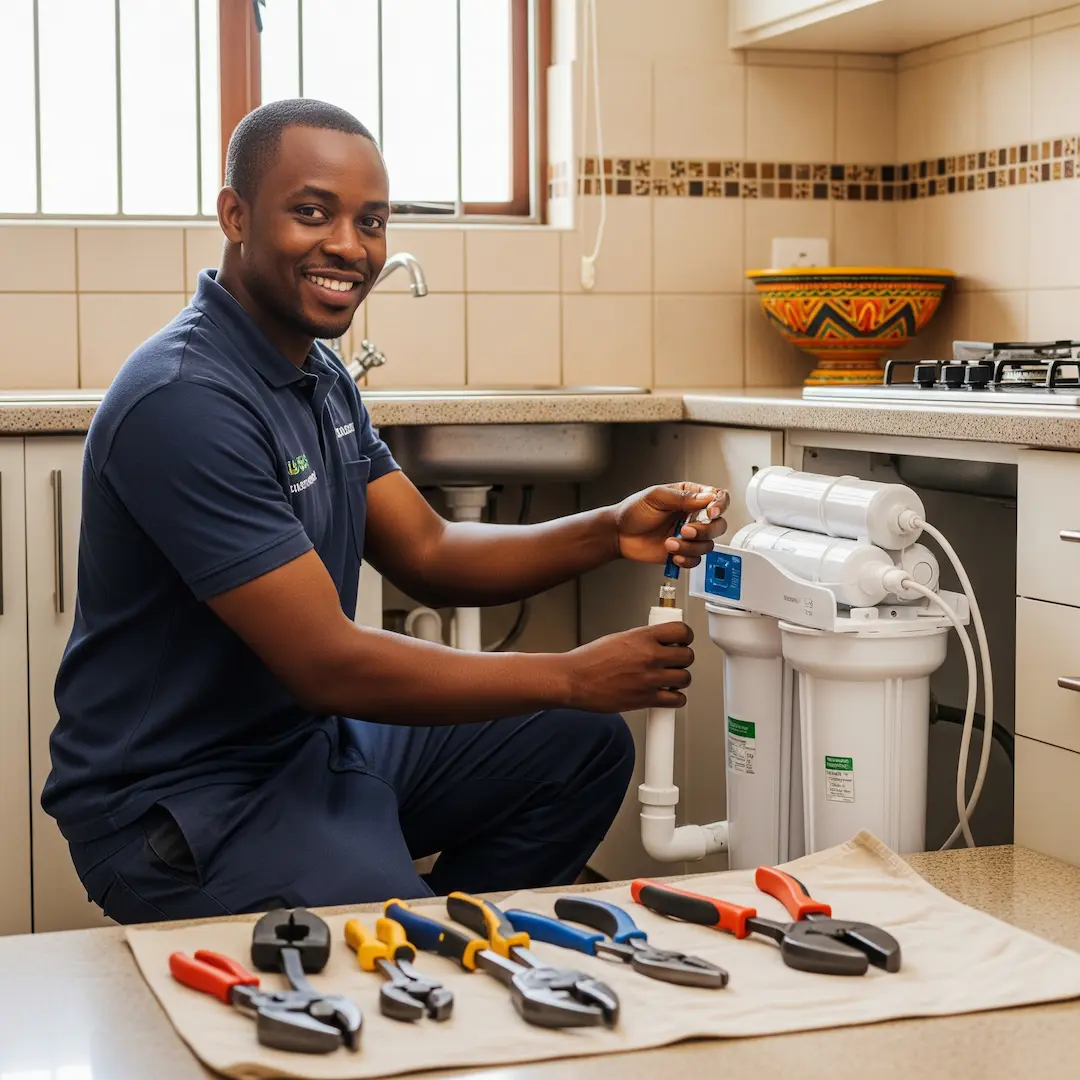
Enjoying Your Filtered Water in SA! When & How to Change Your Water Filter Cartridges
Using a home water filter in South Africa? Learn when and how to replace filter cartridges to keep water clean, safe, and great-tasting - simple maintenance tips every homeowner should know.

Enjoying Your Filtered Water in SA! When & How to Change Your Water Filter Cartridges
Having a home water filtration system is a fantastic investment, ensuring you and your family have access to cleaner, better-tasting water right from the tap. But just like any appliance that works hard for you, a water filter needs a bit of attention to keep performing at its best. One of the most common questions we hear from homeowners across South Africa is, "When do I need to change my home water filter?" and "How do I maintain my water filter effectively?"
Let's dive into the practicalities of keeping your filtered water flowing beautifully, based on insights from experienced plumbers who install and maintain these systems daily.
Understanding When to Change Your Water Filter Cartridges
Knowing when to replace your water filter cartridge is crucial for maintaining water quality and the efficiency of your system. It's not just about time; it's also about usage and the quality of your incoming water.
The Manufacturer's Guideline: Your First Port of Call
Every water filter system comes with a manufacturer's recommendation for cartridge replacement. This is your baseline. For most common whole-house or under-sink filters, this typically ranges from 3 to 12 months.
However, these are general guidelines. Think of it like servicing your car – the manufacturer suggests a mileage or time interval, but if you're doing a lot of off-road driving or towing, you might need maintenance sooner. Water filters are similar.
Signs Your Filter Cartridge Needs Changing
Plumbers often share stories of call-outs where the "problem" was simply an overdue filter change. Here are the tell-tale signs that it's time for a fresh cartridge:
- Decreased Water Flow: This is one of the most common indicators. If you notice your taps are no longer delivering water at their usual pressure, especially through the filtered tap, it's highly likely your cartridge is clogged with sediment and impurities it's trapped. It's like a sponge that's full – it can't absorb any more.
- Noticeable Change in Taste or Odour: The primary purpose of a filter is to remove unwanted tastes and smells, particularly chlorine, which is commonly used in municipal water treatment in SA. If you start to detect a metallic taste, a chlorine smell, or any other off-putting flavour, your filter's ability to remove these contaminants has diminished. One installer recently mentioned a client in Durban who called because their filtered water suddenly tasted "swampy" after heavy rains – turns out, their filter was long overdue for a change and couldn't cope with the increased turbidity.
- Visible Sediments: While less common with properly functioning filters, if you start seeing small particles or cloudiness in your filtered water, it's a clear sign the filter is no longer doing its job effectively and is allowing sediments to pass through.
- System Indicator Lights/Alarms: Many modern water filtration systems, especially under-sink and whole-house units, come equipped with built-in indicators that alert you when a cartridge change is due. Pay attention to these! They're designed to take the guesswork out of maintenance.
Factors Affecting Filter Lifespan in South Africa
South Africa's diverse water sources mean filter lifespans can vary. Here's what our plumbing experts highlight:
- Water Quality in Your Area: Some regions in South Africa have naturally harder water or water with higher sediment loads. For instance, areas drawing water from rivers with significant agricultural run-off might experience filters clogging faster than those with water from clearer dams. If you're in an area known for "hard water," you might find yourself changing sediment filters more frequently.
- Household Water Consumption: A large family will use significantly more water than a single person. More water passing through the filter means it will reach its capacity for trapping impurities much faster.
- Type of Filter Cartridge: Different cartridges are designed for different purposes and have varying lifespans.
- Sediment filters (often the first stage in multi-stage systems) typically need more frequent replacement as they catch larger particles.
- Activated carbon filters, which address taste, odour, and chlorine, generally last longer than sediment filters but will also eventually become saturated.
- Specialised filters (e.g., for lead removal, fluoride reduction, or bacterial filtration) often have specific, sometimes shorter, replacement schedules due to the complex nature of what they're removing.
How to Maintain Your Water Filter System
Beyond just changing cartridges, a little ongoing attention can significantly extend the life and efficiency of your entire filtration system.
Regular Visual Inspections
Get into the habit of visually inspecting your filter housing and connections every few months. Look for:
- Leaks: Even small drips can indicate a loose connection or a seal that's degrading.
- Cracks or Damage: The housing should be free of any visible damage.
- Build-up: While the filter itself is trapping contaminants, ensure the external parts of the system are clean.
Cleaning the Housing (When Changing Cartridges)
When you open up your filter system to replace a cartridge, take the opportunity to clean the housing.
- Rinse thoroughly: Use warm, soapy water (a mild dish soap is fine) to clean the inside of the housing and the cap.
- Scrub gently: A soft brush can help remove any slime or residue.
- Rinse well: Ensure all soap residue is completely flushed out before reassembling.
- Inspect O-rings: These rubber rings create the seal. Check them for cracks, nicks, or dryness. If they look worn, replace them. A thin smear of food-grade silicone grease can help them seat properly and prevent future leaks. Plumbers often stress the importance of these little O-rings – a common cause of leaks after a DIY change is a poorly seated or damaged O-ring.
Backwashing (For Some Systems)
Some advanced or whole-house filtration systems have a backwash feature. This process reverses water flow to flush out accumulated sediment and can extend the life of certain media. If your system has this feature, follow the manufacturer's instructions for how often and how to perform a backwash.
Simple Steps for Changing Your Water Filter Cartridges
While it might seem daunting at first, changing a water filter cartridge is a relatively straightforward DIY task for most standard systems. If you're unsure or uncomfortable, always call in a qualified plumber. DIY can be dangerous if you're not confident in your abilities, especially when dealing with water pressure and potential leaks.
Here's a general guide:
- Turn Off the Water Supply: This is critical! Locate the shut-off valve for your main water supply or the specific valve leading to your filter system. Turn it off completely.
- Relieve Pressure: Open the filtered water tap (or a nearby cold water tap if it's a whole-house system) to release any built-up pressure in the lines. This will also drain some of the water.
- Locate the Filter Housing: Your filter will be housed in a canister.
- Unscrew the Housing: Most filter housings require a specific filter wrench, often supplied with the system. Place a bucket or towel underneath to catch any residual water that will spill out. Slowly unscrew the housing.
- Remove the Old Cartridge: Carefully pull out the old, used filter cartridge. It will likely be discoloured and heavy with trapped impurities. Dispose of it responsibly.
- Clean the Housing: As mentioned above, take this opportunity to clean the inside of the housing with warm, soapy water. Rinse thoroughly. Check the O-ring for damage and apply food-grade silicone grease if necessary.
- Insert the New Cartridge: Unwrap your new filter cartridge. Ensure it's the correct replacement for your system. Carefully insert it into the housing, making sure it seats properly.
- Screw the Housing Back On: Hand-tighten the housing first, then use the filter wrench for a final snug turn. Do not overtighten, as this can crack the housing or damage the O-rings.
- Slowly Turn On the Water Supply: Turn the water supply valve back on very slowly. Listen for air escaping and check for leaks around the filter housing.
- Flush the System: Run water through the filtered tap for a few minutes (check your manufacturer's instructions for the recommended flushing time – it could be anywhere from 5 to 20 minutes). This flushes out any air, carbon fines (small black particles common with new carbon filters), and ensures the filter is fully primed before you start drinking.
Sourcing Replacement Cartridges in South Africa
Finding the right replacement cartridges for your specific system in South Africa is generally straightforward.
- Hardware Stores: Large hardware chains like Builders Warehouse and Leroy Merlin typically stock a good range of standard filter cartridges for popular brands.
- Specialised Water Filtration Shops: Many cities have dedicated water treatment or filtration shops that can offer a wider variety of cartridges, including less common types, and expert advice.
- Online Retailers: E-commerce platforms are increasingly popular for sourcing replacement cartridges, often offering competitive prices and delivery. Just ensure you know your exact filter model and size.
- Plumbing Suppliers: Your local plumber will also know where to source the right cartridges and may even carry stock of common types.
Always double-check the model number and size of your current cartridge to ensure you purchase the correct replacement.
By understanding the signs of a worn-out filter, performing routine maintenance, and confidently replacing cartridges, you'll continue to enjoy the benefits of clean, filtered water in your South African home for years to come.
Frequently Asked Questions
How do I know what type of filter cartridge I need?
You'll need to know the make and model of your water filtration system. The cartridge itself or the system's user manual will usually have this information clearly printed. If you're unsure, take a photo of your existing filter and its housing to a plumbing supplier or hardware store for assistance.
Can I clean and reuse my old filter cartridge?
Generally, no. Most water filter cartridges are designed for single use and are not meant to be cleaned and reused. Cleaning them can damage the filter media, making them ineffective or even potentially introducing contaminants back into your water.
What happens if I don't change my filter cartridge on time?
If you don't change your filter cartridge when it's due, its effectiveness will significantly decrease. This means your water quality will decline, potentially returning to its unfiltered state, and the filter itself could become a breeding ground for bacteria as the trapped impurities decompose. You might also experience reduced water pressure.
Do whole-house filters need different maintenance than under-sink filters?
The principles of maintenance are similar (cartridge replacement, housing cleaning, leak checks). However, whole-house filters are typically larger, may require specific tools, and some advanced models might have additional features like backwashing cycles. Always refer to the manufacturer's manual for your specific whole-house system.
Find a vetted plumber near you
Water filtration systems: find a pro near you
Suzette Meyer is the lead author and content creator for Kandua.com, South Africa’s #1 marketplace for home services. Suzette has made it her mission to help homeowners with advice on all aspects of home repair, maintenance and improvement, including how to choose the right Pro and how to make smart upgrades that improve your resale value or save costs.

Latest articles, advice and more
.webp)
.webp)
.jpeg)
Sinking Pavers, Weeds and Water That Pools: What Your Driveway Is Telling You
When your driveway starts sprouting weeds, pooling water, or sinking in patches, the bricks are not failing you. The layers underneath have moved, and they are trying to tell you exactly what went wrong.
.jpeg)
What Your Garage Door Motor Actually Does (And Why It Breaks)
Spoiler alert: your garage door motor isn't actually doing the heavy lifting. The torsion springs carry almost all the weight. The motor simply pushes, pulls, controls the descent so it doesn't slam, and acts as a lock when the door is shut. That’s why a relatively small box on your ceiling can move such a massive door. Want to test this? Pull the red manual release cord and lift the door by hand. If it glides up easily and stays put when you let go, your springs are doing their job, and the fault lies with the motor. If the door feels like dead weight or slams back down- stop. You’ve got a spring problem.
.jpeg)
4 Warning Signs Your Tiles Are Failing (And What They Mean)
Tiles rarely fail overnight. They warn you first. A hollow sound underfoot, grout that crumbles away, a tile that lifts at one edge, or a crack that runs across two tiles all point to something happening under the surface. Here is what each sign means, and how urgent it is.
.webp)
.webp)
Beyond the Unboxing: A Detailed Guide to Correct Washing Machine Plumbing & Setup
New washing machine in South Africa? Learn essential plumbing and setup tips to prevent leaks, ensure efficient operation, and extend your appliance’s lifespan - expert advice before your first load.
.webp)
New Washing Machine? Don't Plug It In Yet! Essential Installation Tips for SA Homes
Installing a new washing machine? Learn the essential setup steps South African homeowners often overlook to prevent leaks, noise, and damage—and ensure efficient, long-lasting performance from day one.
.webp)
.webp)
%25201200%2520x%25201200%2520(1).jpeg)
What Retiling a Bathroom Costs in 2026, Room by Room
Retiling a bathroom in South Africa costs between R230 and R800 per square metre in 2026, including materials and labour. A standard family bathroom, stripped and fully retiled, usually lands between R11,800 and R27,500. A guest toilet costs a fraction of that. A large porcelain en-suite costs a lot more.
How to Install a Horizontal Geyser | Step-by-Step Pro Guide
Want to install a geyser like a pro? This step-by-step tutorial shows you exactly how to do a horizontal Ariston Axios geyser installation, straight from the BluLever plumbing workshop. 🎥 Hosted by MK, BluLever’s technical facilitator, and supported by a qualified electrician, Life and a BluLever graduate artisan, Zinhle. This is your ultimate guide to a SANS 10254-compliant installation — from preparing the wall, to plumbing, electrical wiring, and pro troubleshooting tips.
How to Maintain a Geyser | Step-by-Step Pro Guide
Want to maintain a geyser like a pro? This step-by-step tutorial shows you exactly how to do the three core geyser maintenance checks on an Ariston Axios geyser installation, straight from the BluLever plumbing workshop. 🎥 Hosted by MK, BluLever’s technical facilitator, and supported by a qualified electrician, Life. This is your ultimate guide to geyser maintenance — from diagnosing the problem to checking the heat regulation of the geyser, to pressure regulation and then finally corrosion protection.
%201.avif)
Not just another newsletter. It's an advantage