
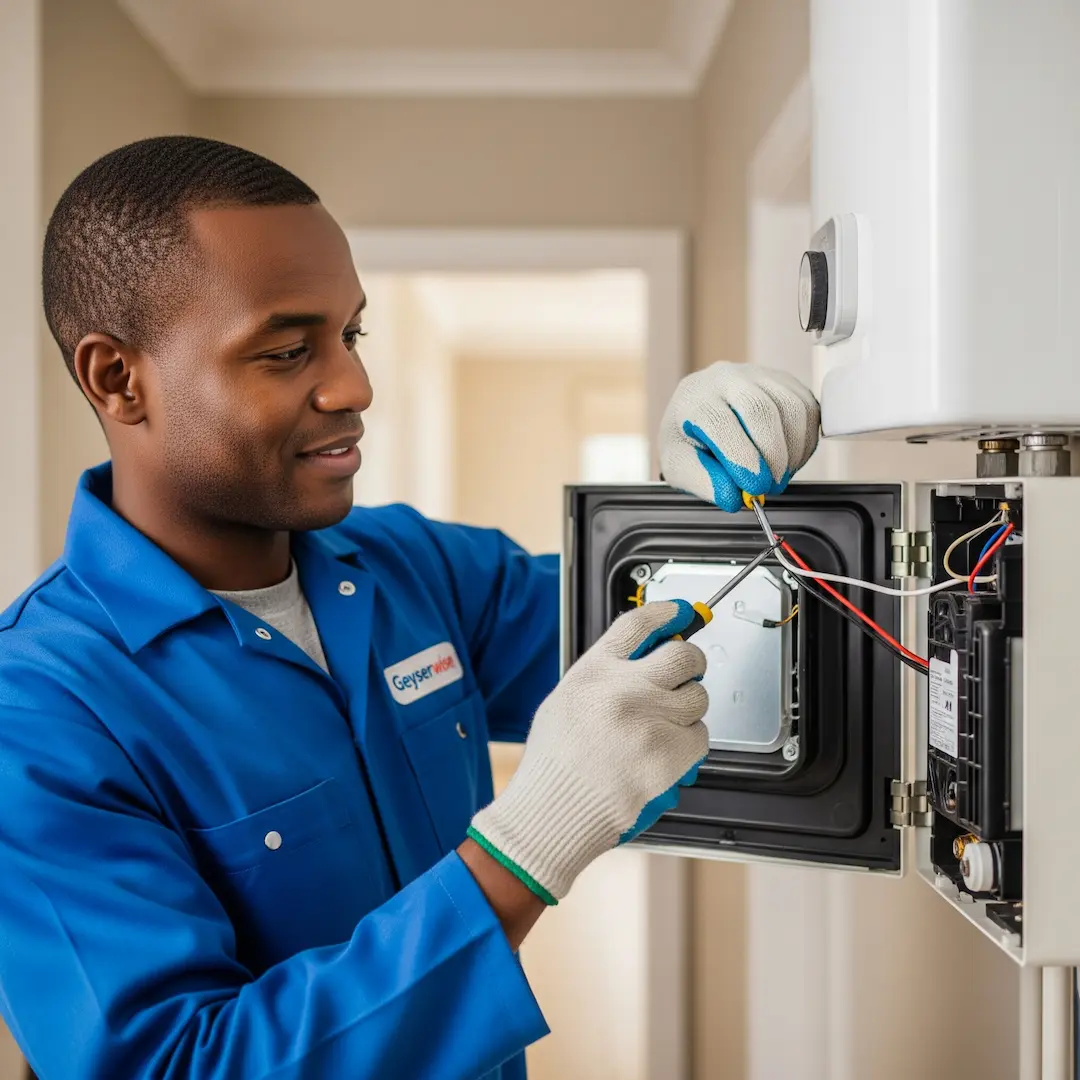
Geyserwise Error Codes Explained: Beyond the Basics for Efficient Troubleshooting & Repair
Geyserwise showing error codes? Learn what they mean, the issues behind them, and how South African homeowners can restore reliable hot water with informed action or expert help.

The comforting hum of a geyser is a sound of modern convenience, but when that familiar sound is replaced by a digital display flashing an enigmatic code, it can quickly turn into a headache. Geyserwise systems are fantastic for energy efficiency, giving you more control over your hot water. However, like any sophisticated piece of technology, they occasionally encounter issues that manifest as error codes. Understanding what these codes mean is the first crucial step towards getting your hot water back on track.
This guide goes beyond simply listing codes; we'll delve into the underlying problems they signify and, crucially, what actions you can take. This isn't just about reading a manual; it's about gaining insights from the experiences of plumbers who deal with these systems daily across South Africa.
Why Understanding Geyserwise Error Codes Matters
Think of your Geyserwise display as a doctor for your geyser. Each error code is a symptom, pointing to a specific ailment. Ignoring these signs can lead to more significant damage, higher repair costs, and, of course, a prolonged period without hot water. By knowing what the code indicates, you can often provide valuable information to a professional, or in some cases, even resolve a minor issue yourself.
We’ve seen situations where a homeowner, initially flustered by a code, was able to pinpoint the issue for our technicians simply by understanding what the display was trying to tell them. This saves time and often, money.
Decoding Common Geyserwise Error Codes
Here’s a comprehensive breakdown of the most common Geyserwise error codes, what they typically mean, and the steps you can consider.
Error Code E1: Temperature Sensor Open Circuit
This is one of the more frequent culprits. An E1 code suggests that your Geyserwise system isn't detecting a temperature reading from the sensor connected to your geyser.
- What it means: The temperature probe, which measures the water temperature inside your geyser, is either disconnected, faulty, or has a broken wire. It's like your geyser has lost its ability to feel the water's temperature.
- Insights from the field: We've encountered numerous E1 errors where the sensor cable was accidentally pulled loose during other maintenance work, or gnawed through by rodents. In older installations, the insulation might have degraded, leading to a short.
- What you can do:Check the connections: Carefully inspect where the temperature sensor cable plugs into the Geyserwise unit. Ensure it's firmly seated. Also, check the connection point on the geyser itself (usually a small probe inserted into a pocket).
- Inspect the cable: Look for any visible damage, kinks, or signs of wear on the sensor cable.
- Reset the system: Sometimes a simple power cycle (turning off the geyser's power at the circuit breaker for a few minutes and then turning it back on) can clear a temporary glitch.
- When to call a professional: If the connections appear fine and a reset doesn't resolve the E1 code, it's highly likely that the sensor itself is faulty and needs replacement. This is a job for a qualified plumber or electrician to ensure the correct sensor is installed and wiring is safe.
Error Code E2: Temperature Sensor Short Circuit
Similar to E1, E2 also relates to the temperature sensor, but indicates a different kind of fault.
- What it means: An E2 code suggests that the temperature sensor wiring has short-circuited. This means the electrical signal is taking an unintended path, leading to an incorrect or no temperature reading. It's like the geyser's temperature gauge is stuck, giving a false reading.
- Insights from the field: We've seen E2 codes arise from water ingress into the sensor's housing or damage to the cable where it's been pinched or abraded, causing the internal wires to touch. Sometimes, incorrect wiring during installation can also lead to this.
- What you can do:Inspect for visible damage: Look very closely for any signs of water around the sensor or cable, or any physical damage to the cable itself.
- Reset the system: As with E1, a power cycle can sometimes clear a temporary short.
- When to call a professional: If you can't find obvious external damage and a reset doesn't work, the sensor or its wiring inside the geyser pocket is likely compromised. This requires professional diagnosis and replacement to avoid potential electrical hazards.
Error Code E3: Over-Temperature Protection
This code indicates a potentially serious issue, as it's a safety mechanism kicking in.
- What it means: The Geyserwise system has detected that the water temperature inside your geyser has exceeded its safe operating limit (usually around 90-95°C). This is a critical safety feature designed to prevent scalding and damage to the geyser. It's the geyser equivalent of an engine overheating.
- Insights from the field: The most common causes we've identified for E3 are a faulty thermostat (not regulating temperature correctly), a stuck element (constantly heating), or insufficient water flow (leading to localized overheating). Less common, but still possible, is an incorrect sensor reading due to a faulty probe.
- What you can do:IMMEDIATELY turn off the power: This is crucial. Go to your electrical distribution board and switch off the circuit breaker specifically for your geyser. Do not attempt to use the hot water until the issue is resolved.
- Allow cooling time: Let the geyser cool down completely for several hours.
- Check for water leaks: While the power is off, check for any visible leaks around the geyser. A leak can sometimes cause the element to be partially exposed, leading to overheating.
- When to call a professional: An E3 error is not something to attempt to fix yourself, as it involves critical safety components. You absolutely need a qualified plumber or electrician to diagnose the exact cause (faulty thermostat, element, or sensor) and perform the necessary repairs safely. Tampering with these components without expertise can be extremely dangerous.
Error Code E4: High Pressure Switch Activation (for Solar Systems with Pump)
This error is specific to Geyserwise systems that incorporate a pump for solar water heating.
- What it means: The Geyserwise system has detected that the pressure in the solar collector loop has become too high. This is typically a safety mechanism to prevent damage to the solar panels or pipework. It's like a pressure cooker releasing steam because the pressure is too high.
- Insights from the field: We often see this when there's an airlock in the solar loop, a blockage, or if the expansion vessel (which absorbs pressure fluctuations) is faulty or undersized. Sometimes, it can be a symptom of the pump working overtime against resistance.
- What you can do:Check for airlocks: If you know how, and are confident, you can try to bleed the air from the solar collector pipes. However, this often requires specific tools and knowledge of the system.
- Inspect pipes for kinks: Look for any obvious kinks or damage to the solar pipework that could be restricting flow.
- When to call a professional: Diagnosing and fixing high pressure in a solar thermal system requires specialised knowledge. It could involve checking the expansion vessel, pump, or looking for blockages in the collector pipes. This is definitely a job for a solar water heating technician or a plumber with solar expertise.
Error Code E5: Low Pressure Switch Activation (for Solar Systems with Pump)
Another error code for solar pump systems, E5 signifies the opposite problem of E4.
- What it means: The Geyserwise system has detected that the pressure in the solar collector loop is too low. This could mean there isn't enough fluid in the system or a significant leak. It's like the system isn't getting enough 'blood' to circulate.
- Insights from the field: The most common cause we see for E5 is a leak in the solar loop, causing fluid loss. Less frequently, it could be a faulty pressure switch itself, or issues with the pump not circulating fluid effectively.
- What you can do:Look for leaks: Carefully inspect all visible solar pipes and connections for any signs of fluid leakage. Even small drips can lead to significant pressure drops over time.
- When to call a professional: Low pressure in a solar thermal system often points to a leak or a problem with the circulating pump. A qualified solar technician will be able to locate the leak, repair it, and re-pressurise the system safely, or diagnose pump issues.
Error Code E6: Circulation Pump Error / No Flow (for Solar Systems)
This error also applies to solar water heating systems that use a pump.
- What it means: The Geyserwise system is not detecting adequate fluid circulation through the solar collector. This means the heat collected by your solar panels isn't being transferred to your geyser. It's like a heart that isn't pumping blood effectively.
- Insights from the field: Common reasons we encounter for E6 include a seized or faulty pump, an airlock in the system preventing flow, or a blockage in the pipes. Sometimes, a lack of power to the pump can also trigger this.
- What you can do:Check pump power: Ensure the pump has power and is turned on (if it has a separate switch).
- Listen for pump operation: Can you hear the pump trying to run? A humming sound with no flow could indicate a seized pump.
- When to call a professional: This error requires a solar technician to diagnose whether the pump is faulty, if there’s an airlock that needs bleeding, or if there’s a blockage in the system. Replacing a solar pump or clearing a complex airlock should only be done by a professional.
Error Code E7: Communication Error (Less Common)
This error code is less frequently encountered but can be frustrating.
- What it means: The Geyserwise display unit is having trouble communicating with the main control board or other components. This is similar to your computer losing connection with its keyboard or mouse.
- Insights from the field: We've seen E7 codes result from loose wiring connections between the display and the main unit, or in rare cases, internal component failure within either the display or the main board. Sometimes, severe electrical surges can also cause this.
- What you can do:Check connections: Carefully inspect all data cables connecting the display unit to the main Geyserwise controller. Ensure they are firmly plugged in.
- Reset the system: A power cycle might reset the communication link.
- When to call a professional: If checking connections and resetting doesn't resolve E7, it indicates an internal fault with either the display unit or the main controller, both of which require professional diagnosis and replacement.
General Troubleshooting Tips (Before Calling a Professional)
Even if you're not a DIY expert, there are a few general troubleshooting steps that can sometimes save you a service call:
- Power Cycle (The "Reboot"): Just like your phone or computer, sometimes electronic devices benefit from a full power cycle. Go to your main electrical distribution board and switch off the circuit breaker that controls your geyser. Leave it off for 5-10 minutes, then switch it back on. Observe if the error clears.
- Check Your Breaker: Ensure the geyser's circuit breaker hasn't tripped. If it has, reset it. If it trips repeatedly, there's a serious electrical fault that needs immediate professional attention.
- Visual Inspection: Before doing anything else, simply look at your Geyserwise unit and the area around your geyser. Are there any obvious loose wires? Signs of water leaks? Damaged components? Sometimes, the simplest observation can lead to a diagnosis.
- Consult Your Manual: While this guide provides general advice, your specific Geyserwise model might have additional unique troubleshooting steps in its user manual. Keep it handy!
When to Call in the Experts
While some minor issues can be resolved with basic troubleshooting, it's crucial to know when to call a qualified professional. For any Geyserwise error code that:
- Persists after basic troubleshooting.
- Involves an E3 (Over-Temperature) warning. This is a critical safety issue.
- Relates to internal electrical components (like sensors, elements, or thermostats).
- Involves a solar water heating system (E4, E5, E6). These systems are more complex.
- Requires opening up the geyser or electrical components.
Remember, working with electricity and water simultaneously is inherently dangerous. In South Africa, electrical work should always conform to SANS 10142-1 regulations, and plumbing work should adhere to SANS 10252 and 10254 standards. Attempting complex repairs without the proper expertise and tools can lead to serious injury, damage to your property, or void your geyser’s warranty.
A trusted plumber or a solar water heating specialist with experience in Geyserwise systems will have the diagnostic tools and expertise to quickly identify the root cause of the error and carry out the repair safely and efficiently, ensuring your hot water is back on and your system is operating optimally.
Frequently Asked Questions
How long does a typical Geyserwise repair take?
The duration of a Geyserwise repair varies greatly depending on the specific error. Simple issues like a loose connection might take minutes, while replacing a faulty element or addressing a complex solar system problem could take a few hours. A professional will usually provide an estimated time after diagnosing the fault.
Can a Geyserwise unit cause my electricity bill to be higher?
A faulty Geyserwise unit, especially one that isn't accurately reading temperature or controlling the element, can indeed lead to higher electricity consumption. For instance, if the unit incorrectly senses the water is cold, it might cause the element to heat more frequently than necessary, thus increasing your electricity bill.
Are Geyserwise parts readily available in South Africa?
Yes, Geyserwise is a popular brand in South Africa, and spare parts like sensors, elements, and even control units are generally readily available through plumbing and electrical suppliers, making repairs feasible.
My Geyserwise display is blank, what could be wrong?
A blank Geyserwise display usually indicates a power issue. First, check your electrical distribution board to ensure the geyser's circuit breaker hasn't tripped. Also, check any isolating switches near the geyser. If power is present at the mains but the unit is still blank, there might be a fault with the power supply to the Geyserwise unit itself or an internal component failure, which would require a professional to diagnose.
Find a vetted plumber near you
Geyserwise installation and repairs: find a pro near you
- Geyserwise installation and repairs near you
- Geyserwise installation and repairs in Johannesburg
- Geyserwise installation and repairs in Sandton
- Geyserwise installation and repairs in Midrand
- Geyserwise installation and repairs in Roodepoort
- Geyserwise installation and repairs in Randburg
- Geyserwise installation and repairs in Pretoria
- Geyserwise installation and repairs in Cape Town
Suzette Meyer is the lead author and content creator for Kandua.com, South Africa’s #1 marketplace for home services. Suzette has made it her mission to help homeowners with advice on all aspects of home repair, maintenance and improvement, including how to choose the right Pro and how to make smart upgrades that improve your resale value or save costs.

Latest articles, advice and more
.webp)
.webp)
.webp)
.webp)
.jpeg)
Sinking Pavers, Weeds and Water That Pools: What Your Driveway Is Telling You
When your driveway starts sprouting weeds, pooling water, or sinking in patches, the bricks are not failing you. The layers underneath have moved, and they are trying to tell you exactly what went wrong.
.webp)
.webp)
Beyond the Unboxing: A Detailed Guide to Correct Washing Machine Plumbing & Setup
New washing machine in South Africa? Learn essential plumbing and setup tips to prevent leaks, ensure efficient operation, and extend your appliance’s lifespan - expert advice before your first load.
.webp)
New Washing Machine? Don't Plug It In Yet! Essential Installation Tips for SA Homes
Installing a new washing machine? Learn the essential setup steps South African homeowners often overlook to prevent leaks, noise, and damage—and ensure efficient, long-lasting performance from day one.
.webp)
.webp)
%25201200%2520x%25201200%2520(1).jpeg)
What Retiling a Bathroom Costs in 2026, Room by Room
Retiling a bathroom in South Africa costs between R230 and R800 per square metre in 2026, including materials and labour. A standard family bathroom, stripped and fully retiled, usually lands between R11,800 and R27,500. A guest toilet costs a fraction of that. A large porcelain en-suite costs a lot more.
How to Install a Horizontal Geyser | Step-by-Step Pro Guide
Want to install a geyser like a pro? This step-by-step tutorial shows you exactly how to do a horizontal Ariston Axios geyser installation, straight from the BluLever plumbing workshop. 🎥 Hosted by MK, BluLever’s technical facilitator, and supported by a qualified electrician, Life and a BluLever graduate artisan, Zinhle. This is your ultimate guide to a SANS 10254-compliant installation — from preparing the wall, to plumbing, electrical wiring, and pro troubleshooting tips.
How to Maintain a Geyser | Step-by-Step Pro Guide
Want to maintain a geyser like a pro? This step-by-step tutorial shows you exactly how to do the three core geyser maintenance checks on an Ariston Axios geyser installation, straight from the BluLever plumbing workshop. 🎥 Hosted by MK, BluLever’s technical facilitator, and supported by a qualified electrician, Life. This is your ultimate guide to geyser maintenance — from diagnosing the problem to checking the heat regulation of the geyser, to pressure regulation and then finally corrosion protection.
%201.avif)
Not just another newsletter. It's an advantage