
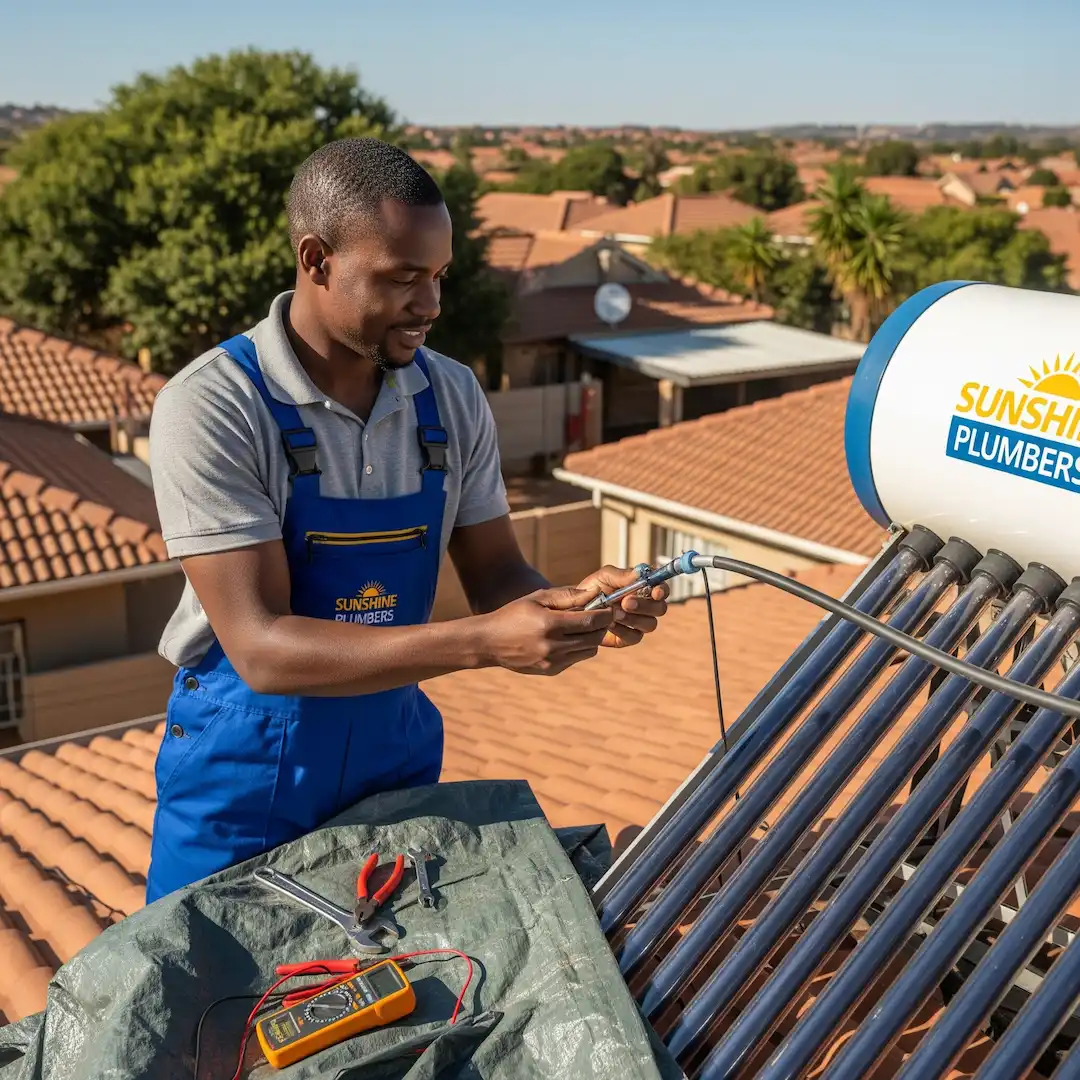
Solar Geyser Not Working? Why Specialised Repair Expertise is Key in South Africa
Solar geyser not working properly? Learn why specialised repair expertise is essential in South Africa to fix integrated solar systems correctly and avoid costly repeat failures.

Solar Geyser Not Working? Why Specialised Repair Expertise is Key in South Africa
The sun beats down, you’ve invested in a solar geyser to harness that free energy, but when you turn on the hot tap… nothing. Or worse, a lukewarm trickle. It’s a frustrating scenario many South African homeowners face. Your first instinct might be to call your trusted local plumber. While they are indispensable for many household issues, when it comes to a solar geyser, the problem often lies beyond a standard plumbing fix.
A solar water heating system isn’t just a geyser with a panel on the roof. It’s an integrated system that combines plumbing with solar thermal dynamics. Fixing it correctly requires a technician who understands how these two disciplines work together. Choosing the wrong person can lead to a temporary patch-up, recurring problems, or even damage to your expensive system. Let's break down why specialised expertise is not just a preference, but a necessity.
The Two Halves of a Solar Geyser: Plumbing and Solar Thermal
Think of your solar geyser system as having two distinct but interconnected parts. A general plumber is an expert in one, but a solar specialist is a master of both.
- The Plumbing System: This includes the geyser tank (storage vessel), pressure control valves, tempering valves (to mix hot and cold water to a safe temperature), and all the associated pipework. Problems here can look familiar: leaks, dripping overflows, and pressure issues.
- The Solar Thermal Circuit: This is the engine of your system. It consists of the solar collector panels (either flat plate or evacuated tubes), the circulation method (either natural thermosyphon or a pump in 'active' systems), and sometimes a controller that manages the system's operation.
One of our top-rated solar technicians shared a common story. A client in Pretoria had no hot water. They’d already had a plumber out who replaced the pressure valve, assuming it was a standard geyser fault. The problem persisted. When our specialist arrived, they immediately checked the solar collector panels. The issue wasn't the valve; it was a significant build-up of scale (calcification) inside the collector's pipes from years of exposure to hard water, which was completely blocking the flow. The system couldn't heat the water because it couldn't circulate. This required a specific chemical flush and system check-up—a solution a general plumber would likely not be equipped to diagnose or perform.
This is a perfect example of why a holistic view is critical. Fixing the plumbing part without understanding the solar part is like fixing a car's tyre when the engine has seized.
Common Solar Geyser Faults and Why They Need a Specialist
Because of this dual nature, the list of potential problems is more extensive than with a standard electric geyser. A specialist knows how to trace the symptom back to the correct root cause.
Issues on the Roof (The Solar Part)
- Inefficient Heating: This is the most common complaint. It could be caused by something as simple as dirty collector panels needing a clean, or something more complex like air trapped in the system (an airlock), poor orientation towards the sun, or degradation of the panel's internal coating.
- Leaks from the Collector: Evacuated tubes can crack, and seals on flat-plate collectors can perish over time due to harsh UV exposure and temperature fluctuations. Identifying and safely replacing these components on a roof requires specific experience.
- Pump or Controller Failure (Active Systems): In pumped systems, a circulation pump or the electronic controller can fail. A technician needs electrical and electronic diagnostic skills to troubleshoot these components, something outside the scope of traditional plumbing.
Issues with the Tank and Pipes (The Plumbing Part, with a Twist)
- No Hot Water Despite Sunshine: This could be a failed heating element (the electrical backup), a faulty thermostat, or a more complex solar issue like a thermosyphon stall, where the natural circulation of water has stopped.
- Water Leaking from the Geyser or Pipes: While this seems like a straightforward plumbing issue, a specialist will investigate why it happened. Was it due to excessive pressure or temperature generated by the solar circuit? A standard fix might not prevent a recurrence. According to SANS 10254 regulations, the system must have correctly installed safety valves to handle the high temperatures solar systems can generate. A specialist ensures these are not only present but also functioning correctly.
- Overheating and Steam Release: If the system is not drawing hot water (e.g., you're on holiday), it can overheat, causing the temperature and pressure (T&P) valve to release steam and hot water. While the valve is doing its job, a specialist can check if the system is correctly sized and if a heat-dissipation solution is needed.
Choosing the Right Professional: What to Ask
When your solar geyser is on the fritz, you’re in the decision-making stage. You need a fix, and you need it done right. To ensure you’re hiring a true solar expert, here’s what to look for:
- Ask About Their Experience with Solar Systems: Don't just ask if they are a plumber. Ask specifically, "How many years have you been installing and repairing solar geysers?" and "Are you familiar with my type of system (e.g., flat plate vs. evacuated tube, high-pressure vs. low-pressure)?"
- Enquire About Their Diagnostic Process: A good technician won't give you a quote over the phone without understanding the system. They should describe a process that involves inspecting the entire system—the collectors on the roof, the controller (if any), and the geyser tank and its valves.
- Check for Knowledge of Regulations: Casually ask if their work complies with SANS (South African National Standards) for solar installations, like SANS 1307. Their confident "yes" is a sign of professionalism and commitment to safety and quality.
- Look for Specific Tools: A solar thermal specialist may use tools a general plumber wouldn't carry, such as a pyranometer to measure solar irradiance or specific gauges to test the glycol/antifreeze in an indirect system.
Your solar geyser is a significant investment in saving energy and money. Protecting that investment means entrusting its care to someone who understands every facet of its operation. While a general plumber is a home maintenance hero, a solar geyser fault is a clear signal that it's time to call in the specialist.
Frequently Asked Questions (FAQs)
How can I tell if the problem is with the solar panel or the geyser tank itself?
A good rule of thumb is to check the electrical backup. If your system has an electrical element and you can get hot water by switching it on for an hour or two, but you get no hot water from the sun on a clear day, the problem is likely within the solar circuit (e.g., the panels, circulation, or controller). If you get no hot water using either solar or the electrical backup, the issue might be with the tank, its thermostat, or a plumbing component like the tempering valve.
Does my solar geyser need regular servicing?
Yes, absolutely. Most manufacturers recommend a professional service every 1 to 3 years, depending on your system type and local water quality (hard water areas may need more frequent checks). Servicing typically includes cleaning the collector panels, checking for leaks, testing the safety valves, checking the pump and controller (on active systems), and inspecting the sacrificial anode inside the tank, which prevents corrosion.
Will my solar geyser work on cloudy or overcast days?
A solar geyser works on solar radiation, not direct sunlight or heat. Therefore, it will still heat water on overcast days, though not as efficiently as on a clear, sunny day. Most systems installed in South Africa are sized to provide enough hot water even with a day or two of poor weather. For extended periods of rain or cloud, you will need to rely on the integrated electrical backup.
Is it normal for my solar geyser to drip from the overflow pipe?
It is normal for the Temperature & Pressure (T&P) safety valve to drip occasionally, especially during the hottest part of the day when the water in the tank expands as it heats up. This shows the valve is working correctly to relieve excess pressure. However, if it is a constant, steady flow of water, it indicates a problem such as a faulty valve, excessive system pressure, or a failed geyser tank, and you should have it inspected by a professional immediately.
Find a vetted plumber near you
Solar geyser repairs: find a pro near you
Suzette Meyer is the lead author and content creator for Kandua.com, South Africa’s #1 marketplace for home services. Suzette has made it her mission to help homeowners with advice on all aspects of home repair, maintenance and improvement, including how to choose the right Pro and how to make smart upgrades that improve your resale value or save costs.

Latest articles, advice and more
.webp)
.webp)
.jpeg)
Sinking Pavers, Weeds and Water That Pools: What Your Driveway Is Telling You
When your driveway starts sprouting weeds, pooling water, or sinking in patches, the bricks are not failing you. The layers underneath have moved, and they are trying to tell you exactly what went wrong.
.jpeg)
What Your Garage Door Motor Actually Does (And Why It Breaks)
Spoiler alert: your garage door motor isn't actually doing the heavy lifting. The torsion springs carry almost all the weight. The motor simply pushes, pulls, controls the descent so it doesn't slam, and acts as a lock when the door is shut. That’s why a relatively small box on your ceiling can move such a massive door. Want to test this? Pull the red manual release cord and lift the door by hand. If it glides up easily and stays put when you let go, your springs are doing their job, and the fault lies with the motor. If the door feels like dead weight or slams back down- stop. You’ve got a spring problem.
.jpeg)
4 Warning Signs Your Tiles Are Failing (And What They Mean)
Tiles rarely fail overnight. They warn you first. A hollow sound underfoot, grout that crumbles away, a tile that lifts at one edge, or a crack that runs across two tiles all point to something happening under the surface. Here is what each sign means, and how urgent it is.
.webp)
.webp)
Beyond the Unboxing: A Detailed Guide to Correct Washing Machine Plumbing & Setup
New washing machine in South Africa? Learn essential plumbing and setup tips to prevent leaks, ensure efficient operation, and extend your appliance’s lifespan - expert advice before your first load.
.webp)
New Washing Machine? Don't Plug It In Yet! Essential Installation Tips for SA Homes
Installing a new washing machine? Learn the essential setup steps South African homeowners often overlook to prevent leaks, noise, and damage—and ensure efficient, long-lasting performance from day one.
.webp)
.webp)
%25201200%2520x%25201200%2520(1).jpeg)
What Retiling a Bathroom Costs in 2026, Room by Room
Retiling a bathroom in South Africa costs between R230 and R800 per square metre in 2026, including materials and labour. A standard family bathroom, stripped and fully retiled, usually lands between R11,800 and R27,500. A guest toilet costs a fraction of that. A large porcelain en-suite costs a lot more.
How to Install a Horizontal Geyser | Step-by-Step Pro Guide
Want to install a geyser like a pro? This step-by-step tutorial shows you exactly how to do a horizontal Ariston Axios geyser installation, straight from the BluLever plumbing workshop. 🎥 Hosted by MK, BluLever’s technical facilitator, and supported by a qualified electrician, Life and a BluLever graduate artisan, Zinhle. This is your ultimate guide to a SANS 10254-compliant installation — from preparing the wall, to plumbing, electrical wiring, and pro troubleshooting tips.
How to Maintain a Geyser | Step-by-Step Pro Guide
Want to maintain a geyser like a pro? This step-by-step tutorial shows you exactly how to do the three core geyser maintenance checks on an Ariston Axios geyser installation, straight from the BluLever plumbing workshop. 🎥 Hosted by MK, BluLever’s technical facilitator, and supported by a qualified electrician, Life. This is your ultimate guide to geyser maintenance — from diagnosing the problem to checking the heat regulation of the geyser, to pressure regulation and then finally corrosion protection.
%201.avif)
Not just another newsletter. It's an advantage