
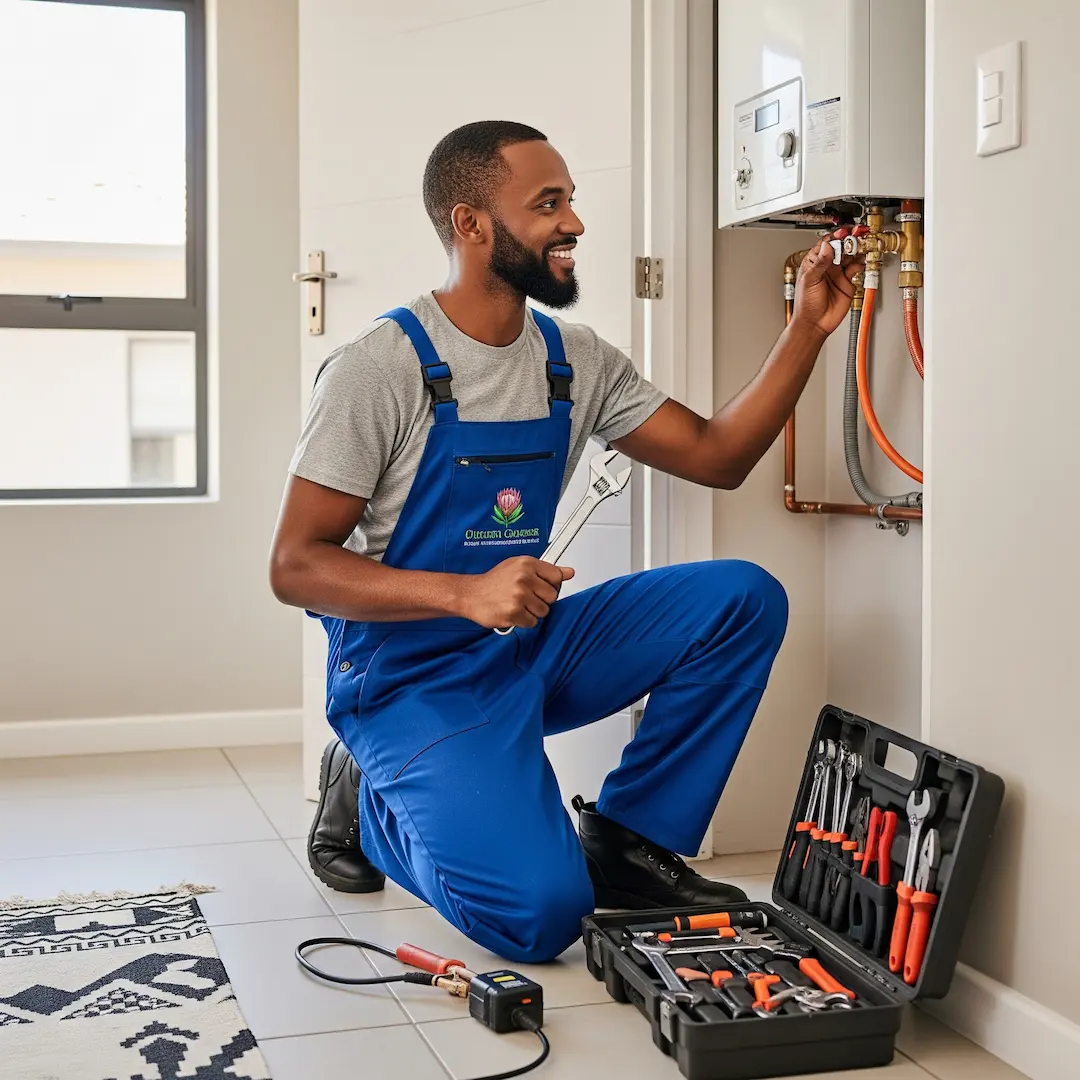
Troubleshooting Your Natural Gas Geyser: Common Problems and When to Seek Help
No hot water from your natural gas geyser? Learn common problems, safe troubleshooting tips, and when South African homeowners must call a qualified gas plumber to avoid serious safety risks.

Troubleshooting Your Natural Gas Geyser: Common Problems and When to Seek Help
A natural gas geyser provides a reliable and efficient way to get hot water on demand in many South African homes. When it's working perfectly, it's easy to forget it's even there. But what happens when you're suddenly faced with no hot water, strange noises, or a lingering smell? A malfunctioning natural gas geyser can be a real headache, and understanding the common issues can help you determine if it's a simple fix or time to call in the professionals.
Our expert plumbers often share stories of homeowners attempting DIY fixes that inadvertently worsen the problem or, more critically, compromise safety. While some minor issues can be addressed with a bit of know-how, natural gas systems require a high degree of caution and adherence to safety standards, like those outlined by SANS.
This guide will walk you through common natural gas geyser problems, offer troubleshooting tips where safe and appropriate, and, most importantly, tell you when to immediately seek the help of a qualified and registered natural gas plumber.
Is Your Natural Gas Geyser Not Providing Hot Water?
This is perhaps the most common and frustrating issue. Several factors can lead to a lack of hot water:
- No Gas Supply:The Scenario: "Just last week, a client called, frantic because their natural gas geyser wasn't igniting. Turns out, the main gas valve to their property had been inadvertently turned off during some garden work. It's a surprisingly common oversight!"
- Troubleshooting: Check if other gas appliances in your home (like a gas stove or heater) are working. If not, the issue might be with your main gas supply. Ensure the main gas valve to your property, and the isolation valve specifically for the geyser, are fully open.
- When to Call for Help: If the gas supply is off at the municipal level or you suspect an issue with your gas meter, contact your gas supplier. Do not attempt to tamper with the main gas line or meter yourself.
- Pilot Light (for older models) or Electronic Ignition Failure:The Scenario: "A common call we get is about geysers that just won't 'click' into action. Often, it's a pilot light that's blown out or a faulty igniter. It's usually a quick fix for us, but crucial to get it right."
- Troubleshooting (Pilot Light): If your geyser has a pilot light, check if it's lit. If not, refer to your geyser's manual for instructions on how to relight it safely. Some models have a simple push-button igniter.
- Troubleshooting (Electronic Ignition): For modern geysers with electronic ignition, listen for the clicking sound when you turn on a hot water tap. If you hear nothing, or if it clicks but doesn't ignite, the igniter or its power supply might be faulty. Check for tripped circuit breakers related to the geyser.
- When to Call for Help: If you can't relight the pilot light after a few attempts, or if the electronic ignition isn't working despite checking power, it's time for a professional. This could indicate a thermocouple issue (for pilot lights), a faulty igniter, or a problem with the geyser's control board.
- Low Water Pressure or Flow:The Scenario: "One of our technicians recently diagnosed a 'no hot water' complaint that turned out to be nothing to do with the gas itself, but simply a heavily clogged aerator on the showerhead. The geyser wasn't sensing enough flow to activate."
- Troubleshooting: Check the water pressure at various hot water taps in your home. If the hot water pressure is significantly lower than the cold, the issue might be with your water supply, a blocked filter in the geyser, or sediment build-up.
- When to Call for Help: If you suspect a blockage within the geyser's water lines or heat exchanger, a professional plumber will need to assess and clear it.
Your Natural Gas Geyser is Making Strange Noises
Unusual sounds from your natural gas geyser should never be ignored. They often indicate underlying problems that could worsen if left unaddressed.
- Rumbling or "Kettling" Sound:The Scenario: "That low rumbling sound? We hear it a lot. It's almost always due to sediment build-up at the bottom of the geyser tank. It's like a kettle boiling – the sediment traps the heat, causing the water to boil and rumble."
- Cause: This typically points to sediment build-up inside the geyser's heat exchanger. As water heats, minerals precipitate and settle, creating a layer that impedes efficient heat transfer. This can lead to overheating and damage over time.
- When to Call for Help: A professional can perform a power flush or descaling of the geyser to remove the sediment. This is not a DIY job for natural gas geysers due to the intricate components and potential for gas line issues.
- Clicking or Ticking Sounds (beyond initial ignition):The Scenario: "If you hear persistent clicking after the initial ignition sequence, it often suggests the igniter is trying to fire repeatedly, but the flame isn't establishing properly. It's the geyser's way of telling you it's trying, but failing."
- Cause: This could be due to a faulty igniter, a weak gas supply, or an issue with the flame sensor not detecting the flame.
- When to Call for Help: This requires a professional diagnosis. It could be a simple adjustment or the replacement of a key component.
- Whistling or Hissing:Cause: This can indicate a leak in the water lines or, more seriously, a gas leak.
- When to Call for Help: If you hear a hissing sound and suspect a gas leak (often accompanied by a distinct "rotten egg" smell), immediately turn off your main gas supply, open windows and doors for ventilation, evacuate the premises, and contact your gas supplier and a qualified gas technician from outside your home. Do not use any electrical appliances, switches, or phones inside the house if you suspect a gas leak.
You Smell Gas Near Your Natural Gas Geyser
This is a critical safety issue and requires immediate attention. Natural gas is odourised with a substance that smells like rotten eggs to make leaks detectable.
- What to Do Immediately:Do Not operate any electrical switches, lights, or phones.
- Turn off the main gas supply valve to your property if it is safe to do so and you know where it is located.
- Open all windows and doors to ventilate the area.
- Evacuate everyone from the premises immediately.
- From a safe distance outside, call your gas supplier and a qualified, registered natural gas technician.
- Why You Need a Professional: A gas leak, even a small one, is incredibly dangerous due to the risk of explosion or carbon monoxide poisoning. Only a qualified and registered gas practitioner, accredited with SAQCC Gas (South African Qualification & Certification Committee for Gas), is legally allowed and equipped to work on natural gas systems in South Africa. They have the tools and expertise to pinpoint the leak, repair it, and ensure the system is safe according to SANS 10087 standards.
Other Common Natural Gas Geyser Issues
- Pilot Light Keeps Going Out:Cause: This is often a sign of a faulty thermocouple (the safety device that senses the pilot flame and shuts off gas if it extinguishes) or a draft issue.
- When to Call for Help: A professional can easily diagnose and replace a faulty thermocouple. They can also assess if external factors are causing the pilot to blow out.
- Yellow or Orange Flame (instead of blue):Cause: A healthy natural gas flame should be crisp blue. A yellow or orange flame indicates incomplete combustion, often due to a dirty burner or insufficient oxygen supply. This can lead to the production of dangerous carbon monoxide.
- When to Call for Help: This is a serious issue requiring immediate attention from a qualified gas technician. They will clean or adjust the burner and ensure proper ventilation.
- Error Codes on Digital Display:Cause: Modern natural gas geysers often have digital displays that show error codes when a fault is detected. Each code corresponds to a specific issue.
- Troubleshooting: Consult your geyser's owner's manual for a list of error codes and their meanings. Sometimes, a simple reset (turning off and on the power/gas to the unit for a few minutes) can clear a temporary fault.
- When to Call for Help: If the error code persists after troubleshooting or points to a complex internal issue, a professional is needed to diagnose and repair the specific component.
When to Always Call a Professional Natural Gas Plumber
While some basic checks can be done by a homeowner, any issue involving the gas line, burner, heat exchanger, or any suspected gas leak must be handled by a qualified and registered natural gas technician. Trying to fix these yourself not only risks further damage to your expensive appliance but, more importantly, poses a significant safety hazard to your home and family.
In South Africa, it is a legal requirement that any work on natural gas installations be carried out by a gas practitioner registered with SAQCC Gas. They will issue a Certificate of Conformity (COC) for any new installation, major repair, or modification, ensuring the work complies with SANS 10087. This COC is crucial for insurance purposes and your peace of mind.
Prioritise safety and the long-term health of your natural gas geyser by trusting the experts when in doubt.
Frequently Asked Questions
How often should a natural gas geyser be serviced?
It is generally recommended to have your natural gas geyser serviced annually by a qualified technician. Regular servicing helps maintain efficiency, extends the lifespan of the unit, and ensures safe operation by identifying potential issues before they become major problems.
What is the typical lifespan of a natural gas geyser?
With proper installation and regular maintenance, a natural gas geyser can last anywhere from 10 to 20 years. Factors like water quality, usage patterns, and the initial quality of the unit can influence its lifespan.
Can I convert my LPG geyser to natural gas?
Converting an LPG (liquefied petroleum gas) geyser to run on natural gas is generally not recommended or even possible for all models. The two gases have different compositions and require different burner orifices and pressure regulators. Attempting such a conversion without specific manufacturer approval and professional modification is extremely dangerous and could lead to serious safety hazards. It's usually more practical and safer to install a geyser specifically designed for natural gas.
What are the benefits of a natural gas geyser compared to an electric one?
Natural gas geysers are often more energy-efficient and cost-effective to operate in the long run, especially with rising electricity costs in South Africa. They provide instant hot water on demand, meaning you don't run out of hot water, and they continue to work during power outages. They also have a smaller carbon footprint compared to electricity generated from fossil fuels.
Find a vetted plumber near you
Natural gas plumbing repairs: find a pro near you
Suzette Meyer is the lead author and content creator for Kandua.com, South Africa’s #1 marketplace for home services. Suzette has made it her mission to help homeowners with advice on all aspects of home repair, maintenance and improvement, including how to choose the right Pro and how to make smart upgrades that improve your resale value or save costs.

Latest articles, advice and more
.webp)
.webp)
.jpeg)
Sinking Pavers, Weeds and Water That Pools: What Your Driveway Is Telling You
When your driveway starts sprouting weeds, pooling water, or sinking in patches, the bricks are not failing you. The layers underneath have moved, and they are trying to tell you exactly what went wrong.
.jpeg)
What Your Garage Door Motor Actually Does (And Why It Breaks)
Spoiler alert: your garage door motor isn't actually doing the heavy lifting. The torsion springs carry almost all the weight. The motor simply pushes, pulls, controls the descent so it doesn't slam, and acts as a lock when the door is shut. That’s why a relatively small box on your ceiling can move such a massive door. Want to test this? Pull the red manual release cord and lift the door by hand. If it glides up easily and stays put when you let go, your springs are doing their job, and the fault lies with the motor. If the door feels like dead weight or slams back down- stop. You’ve got a spring problem.
.jpeg)
4 Warning Signs Your Tiles Are Failing (And What They Mean)
Tiles rarely fail overnight. They warn you first. A hollow sound underfoot, grout that crumbles away, a tile that lifts at one edge, or a crack that runs across two tiles all point to something happening under the surface. Here is what each sign means, and how urgent it is.
.webp)
.webp)
Beyond the Unboxing: A Detailed Guide to Correct Washing Machine Plumbing & Setup
New washing machine in South Africa? Learn essential plumbing and setup tips to prevent leaks, ensure efficient operation, and extend your appliance’s lifespan - expert advice before your first load.
.webp)
New Washing Machine? Don't Plug It In Yet! Essential Installation Tips for SA Homes
Installing a new washing machine? Learn the essential setup steps South African homeowners often overlook to prevent leaks, noise, and damage—and ensure efficient, long-lasting performance from day one.
.webp)
.webp)
%25201200%2520x%25201200%2520(1).jpeg)
What Retiling a Bathroom Costs in 2026, Room by Room
Retiling a bathroom in South Africa costs between R230 and R800 per square metre in 2026, including materials and labour. A standard family bathroom, stripped and fully retiled, usually lands between R11,800 and R27,500. A guest toilet costs a fraction of that. A large porcelain en-suite costs a lot more.
How to Install a Horizontal Geyser | Step-by-Step Pro Guide
Want to install a geyser like a pro? This step-by-step tutorial shows you exactly how to do a horizontal Ariston Axios geyser installation, straight from the BluLever plumbing workshop. 🎥 Hosted by MK, BluLever’s technical facilitator, and supported by a qualified electrician, Life and a BluLever graduate artisan, Zinhle. This is your ultimate guide to a SANS 10254-compliant installation — from preparing the wall, to plumbing, electrical wiring, and pro troubleshooting tips.
How to Maintain a Geyser | Step-by-Step Pro Guide
Want to maintain a geyser like a pro? This step-by-step tutorial shows you exactly how to do the three core geyser maintenance checks on an Ariston Axios geyser installation, straight from the BluLever plumbing workshop. 🎥 Hosted by MK, BluLever’s technical facilitator, and supported by a qualified electrician, Life. This is your ultimate guide to geyser maintenance — from diagnosing the problem to checking the heat regulation of the geyser, to pressure regulation and then finally corrosion protection.
%201.avif)
Not just another newsletter. It's an advantage