
.webp)
Understanding Electrical Load Shedding Risks at Home

Load shedding has become a daily reality for most South Africans. While we have all adapted to checking the schedule and charging our phones before the power cuts, many homeowners overlook the invisible damage happening inside their walls and appliances.
It is not just about the inconvenience of the lights going out. The real danger often lies in the moments when the power comes back on, or in the long-term wear and tear caused by constant on-and-off cycling.
In this guide, we break down the specific electrical risks associated with load shedding, from power surges to fire hazards, and offer practical advice from our network of vetted electricians to help you protect your home.
The Risk: Electrical Surges
The most immediate risk during load shedding is a power surge. When electricity is restored to your area, it often comes back with a momentary spike in voltage. This happens because the grid is suddenly energised, and thousands of appliances in your neighbourhood demand power simultaneously.
According to SANS 10142-1 (the South African standard for the wiring of premises), electrical installations must be safe, but standard household wiring does not automatically include high-level surge protection unless you have specifically installed it.
What happens during a surge? When the voltage spikes above the standard 230V, it rushes through your wiring into your appliances. Sensitive electronics are the first to suffer.
- Fridges and Freezers: The compressor is particularly vulnerable. A sudden surge can burn out the motor or the PC board controlling the temperature.
- TVs and Computers: Modern electronics use delicate microchips. A single spike can fry the motherboard or power supply unit.
- Gate Motors: This is a classic South African problem. The battery charger or the control board often blows after a surge, leaving your security compromised.
Expert Insight: "I see this constantly in older suburbs like Kensington or Observatory," says Mike, a qualified electrician on the Kandua platform. "Homeowners call me because their fridge stopped working. Often, the PC board has burnt out due to a 'dirty' power return after load shedding. A repair that could cost R2,500 could have been prevented with a R600 surge plug."
Fire Hazards from Unattended Appliances
One of the most dangerous risks isn't the electricity itself, but human error combined with erratic schedules. It is easy to forget that you left an appliance on when the power cuts at 6 PM.
If you were cooking, ironing, or using a heater, and you leave the house or go to sleep without switching those devices off at the wall, they will roar back to life when the power returns.
Common Risk Scenarios:
- Stoves and Hobs: A pot left on a stove can boil dry and ignite.
- Heaters: If a heater was moved or something fell on it in the dark, it can start a fire when it switches back on.
- Hair Straighteners and Irons: These heat up rapidly and can burn surfaces or catch nearby fabrics on fire.
Safety Tip: Make it a habit to do a "sweep" of your home 10 minutes before your scheduled slot. Switch off all heavy current appliances at the wall.
The Strain on Your Distribution Board (DB)
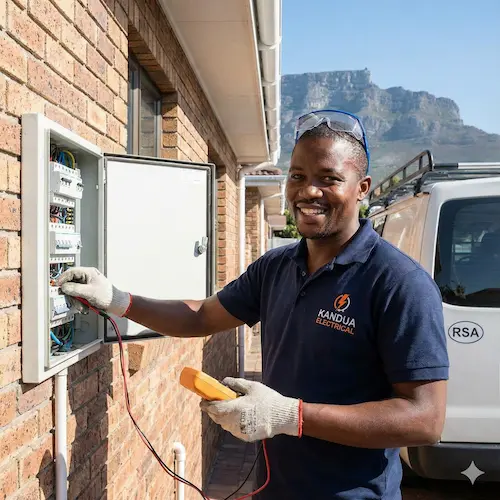
Your Distribution Board is the heart of your home's electrical system. Constant load shedding puts mechanical strain on the components inside this board, specifically the Earth Leakage unit and the circuit breakers.
While these components are designed to switch on and off, they are generally designed for occasional tripping, not daily switching for years on end.
- Loose Connections: The thermal expansion and contraction caused by wires heating up (power on) and cooling down (power off) can eventually lead to loose connections in your DB board. A loose connection creates resistance, which generates heat and can lead to electrical fires.
- Nuisance Tripping: You might find that your power trips immediately when load shedding ends. This is often because every appliance in your house tries to draw startup current at the exact same second, overloading the breaker.
Security Systems and Battery Fatigue
In South Africa, our security systems are our first line of defence. Load shedding degrades these systems significantly over time.
Most alarm systems and electric fences rely on 12V lead-acid or gel batteries. These batteries have a limited number of charge cycles. If you are in Stage 4 or Stage 6, the battery drains deeply and barely has time to recharge before the next outage.
The Risk:
- Sulfation: Batteries that sit uncharged or are constantly drained lose their ability to hold a charge.
- False Alarms: As battery voltage drops, alarm sensors often malfunction, triggering false alarms that annoy neighbours and desensitize you to genuine threats.
- Vulnerability: A dead battery means your electric fence is not shocking, and your alarm is not transmitting.
Replacing these batteries is a hidden cost of load shedding, often running between R300 and R1,200 depending on the system size.
How to Protect Your Home
You do not need to be an electrical engineer to mitigate these risks. Here are actionable steps recommended by industry professionals.
1. Install Surge Protection You have two main options here:
- Point-of-Use Protection: These are the plug adapters you buy at the hardware store. They are great for TVs and computers. Look for units that indicate they have a "Class 3" rating or higher.
- DB Board Protection: This is a more robust solution. A qualified electrician installs a surge arrestor directly into your DB board (Class 2 protection). This protects the entire house, including lights and plugs, from external voltage spikes.
2. The "30-Second" Rule If you don't have automatic protection, wait at least 30 seconds to a few minutes after the power returns before switching your appliances back on. This allows the voltage to stabilize.
3. Get an Electrical Compliance Check If you live in an older home and haven't had your wiring checked in over a decade, the stress of load shedding might expose weak points. An inspection can identify loose connections or outdated breakers that are fire hazards.
Note on Insurance: Many insurance policies now require you to have surge protection installed to claim for damages caused by power cuts. Check your specific policy wording (SASRIA or general household) to ensure you are covered.
Frequently Asked Questions
Does turning off the main switch during load shedding actually help? Yes, it is one of the most effective ways to protect your appliances. By manually switching off the main breaker on your DB board when the power goes out, you isolate your home from the grid. When power returns, wait 60 seconds, then flip the switch. This prevents the initial "inrush" current and voltage spike from hitting your electronics.
Why do my light bulbs blow so often now? This is a common symptom of voltage fluctuation. The repeated on/off switching and minor surges weaken the filament in incandescent and halogen bulbs. Even LED drivers can burn out faster. If this happens frequently, have an electrician check your neutral wire connection or install a surge arrestor, as it may indicate unstable voltage in your specific phase.
Can I install a generator changeover switch myself? No, this is illegal and dangerous. According to SANS 10142-1 regulations, any alternative power source (generator, inverter, or solar) that connects to your home's wiring must be installed by a registered person and issued with a Certificate of Compliance (CoC). Improper installation can cause "back-feeding," which electrocutes municipal workers fixing lines down the street.
Read more on certificate of compliance costs in South Africa.
Is a UPS better than a surge protector? They serve different purposes. A surge protector only stops high-voltage spikes. A UPS (Uninterruptible Power Supply) provides backup power and usually includes built-in voltage regulation. For very sensitive equipment like a desktop computer or a gaming console, a UPS is superior because it stabilises the power "sag" (undervoltage) as well as the surges.
Read our guide on UPS prices in South Africa.
This article was written with insights from Kandua’s network of vetted electricians. For professional advice on protecting your home's electrical system, always consult a registered professional.
Suzette Meyer is the lead author and content creator for Kandua.com, South Africa’s #1 marketplace for home services. Suzette has made it her mission to help homeowners with advice on all aspects of home repair, maintenance and improvement, including how to choose the right Pro and how to make smart upgrades that improve your resale value or save costs.

Related articles, advice and more
.webp)
How to Check If an Electrician Is Registered with ECB
The Electrical Conformance Board of South Africa (ECB) serves as a vital gatekeeper in this industry. If you are in the middle of a renovation or just need a new DB board installed, knowing how to verify your electrician’s registration is the most important step you can take.
What to Do If You Smell Burning from an Electrical Outlet
For South African homeowners, electrical faults are a leading cause of house fires. Whether it is caused by old wiring in heritage homes in suburbs like Melville or Observatory, or the strain placed on systems by post-load shedding surges, knowing exactly how to react can save your property and your life.This guide details the immediate steps you must take, the likely causes of the smell, and what to expect when you call in a professional.
.webp)
.webp)
Your Inverter is Repaired! Key Checks to Ensure Continued Backup Power in SA
This guide will walk you through the essential checks and maintenance tips to maximise the lifespan and efficiency of your recently repaired inverter and battery setup, straight from the insights of experienced electricians across South Africa.
.webp)
Natural Gas Stove Installation in SA: Choosing a Certified Expert for Safety and Connection Compliance
Connecting to a natural gas line is a specialised task with significant safety implications. Choosing the right person for the job is essential. Here's your A to Z guide on getting it right the first time.
.webp)
.webp)
.webp)
Latest articles, advice and more
.webp)
How To Fix A Damp Wall And What's Actually Causing It
If your walls are weeping, your plaster is flaking, or you can smell that musty, damp smell, you're not dealing with one problem; you're dealing with three possible ones. The fix depends entirely on the cause.
.webp)
Gutter Cleaning: How Often Should You Do It and What Does It Cost?
Clean your gutters at least twice a year, and always before your rainy season kicks in. In South Africa, a professional gutter clean usually costs somewhere between R450 and R2,500, depending on the size of your home, how high the roof is, and how blocked things have become. Here is how to work out the right frequency and a fair price.
.webp)
Why Are My Plug Points Not Working? A Troubleshooting Guide
If your plug points have suddenly gone dead, the usual culprits are a tripped earth leakage switch, a tripped circuit breaker, loose or burnt wiring, or a faulty appliance overloading the circuit. Work through the safety checks below before you call anyone, then understand when the job requires a registered electrician.
.webp)
How a Geyser Timer Can Cut Your Electricity Bill
If you've been staring at your Eskom bill and wondering where the money is going, your geyser might be the culprit. Here's the good news: a simple geyser timer can cut your hot water costs by up to 30% each month, which typically saves South African homeowners between R200 and R400 on their electricity bills, depending on their current usage.
%20(1).webp)
How To Treat and Paint Over Damp Walls (So It Doesn't Come Back)
You've noticed a patch on the bedroom wall: discoloured and maybe a bit soft to the touch, and you're wondering if a fresh coat of paint will simply cover the problem. The short answer: no, it won't. But the good news is that understanding what's happening beneath that stain, and treating it properly, is far simpler than you might think.
.webp)
Beyond the Unboxing: A Detailed Guide to Correct Washing Machine Plumbing & Setup
New washing machine in South Africa? Learn essential plumbing and setup tips to prevent leaks, ensure efficient operation, and extend your appliance’s lifespan - expert advice before your first load.
.webp)
New Washing Machine? Don't Plug It In Yet! Essential Installation Tips for SA Homes
Installing a new washing machine? Learn the essential setup steps South African homeowners often overlook to prevent leaks, noise, and damage—and ensure efficient, long-lasting performance from day one.
%20(1).webp)
.webp)
TV Repair Costs in South Africa: Diagnosing Screen, Power & Component Issues
Find out what TV repairs really cost in South Africa – from call-out and diagnosis fees to screen, power and main board fixes – and when it’s cheaper to replace your TV instead of repairing it.
.webp)
Septic Tank Leak Repair Cost in South Africa: Addressing Odours & Environmental Hazards
Learn typical septic tank leak repair costs in South Africa, what drives the price up, how to spot early warning signs (odours, soggy ground, backups), and when it’s safer and cheaper to get a professional in.
How to Install a Horizontal Geyser | Step-by-Step Pro Guide
Want to install a geyser like a pro? This step-by-step tutorial shows you exactly how to do a horizontal Ariston Axios geyser installation, straight from the BluLever plumbing workshop. 🎥 Hosted by MK, BluLever’s technical facilitator, and supported by a qualified electrician, Life and a BluLever graduate artisan, Zinhle. This is your ultimate guide to a SANS 10254-compliant installation — from preparing the wall, to plumbing, electrical wiring, and pro troubleshooting tips.
How to Maintain a Geyser | Step-by-Step Pro Guide
Want to maintain a geyser like a pro? This step-by-step tutorial shows you exactly how to do the three core geyser maintenance checks on an Ariston Axios geyser installation, straight from the BluLever plumbing workshop. 🎥 Hosted by MK, BluLever’s technical facilitator, and supported by a qualified electrician, Life. This is your ultimate guide to geyser maintenance — from diagnosing the problem to checking the heat regulation of the geyser, to pressure regulation and then finally corrosion protection.
%201.avif)
Not just another newsletter. It's an advantage


From problem to solved.


.svg)


.avif)
.avif)
.avif)


.avif)