
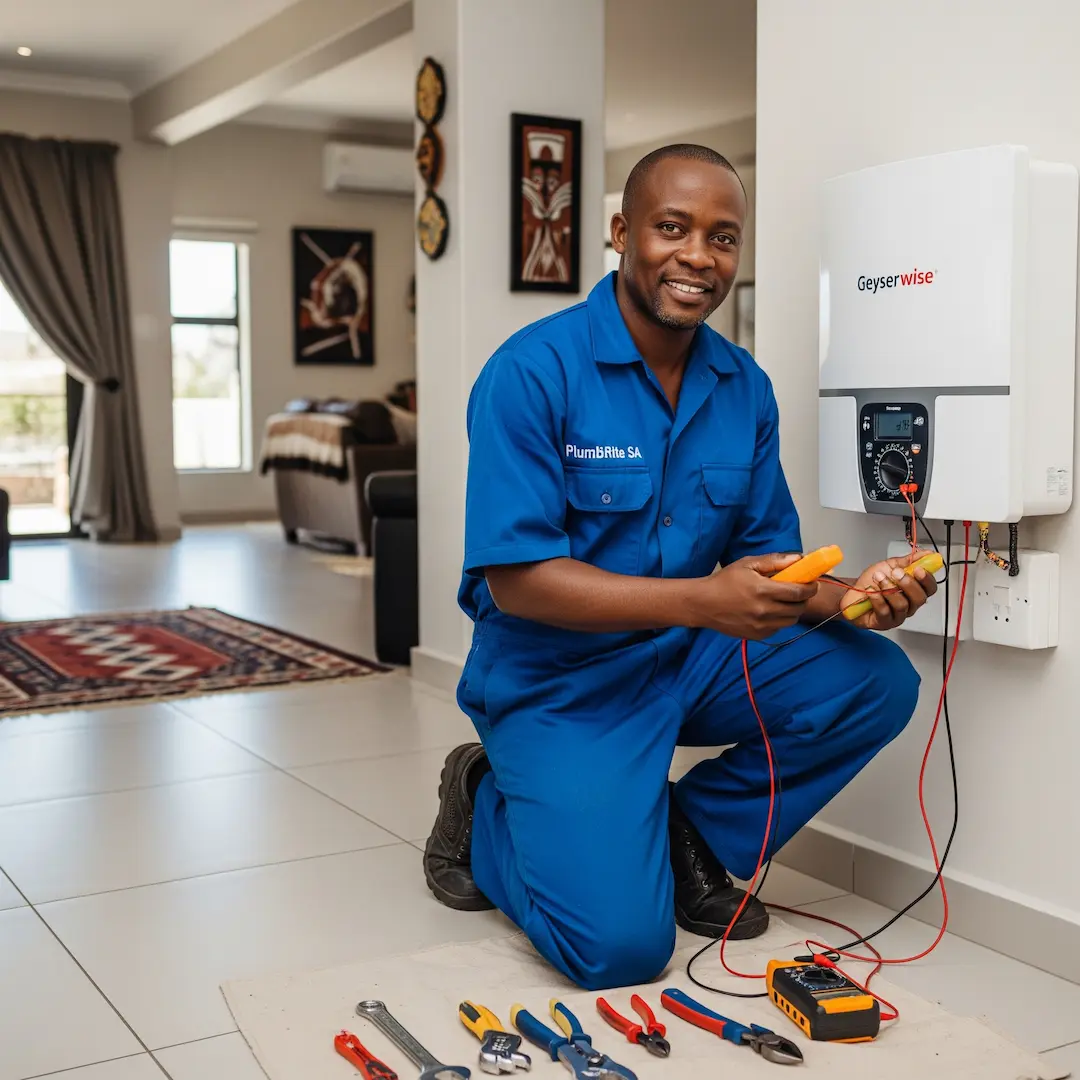
Understanding Your Geyserwise System: Common Faults and Error Codes Explained
Seeing error codes on your Geyserwise? This guide explains common faults and messages, helping South African homeowners understand what’s wrong and how to restore hot water fast.

Understanding Your Geyserwise System: Common Faults and Error Codes Explained
It's a familiar scenario for many South African homeowners: you wake up, head for a shower, and discover the water's stone cold. Your gaze falls on the Geyserwise display, and instead of the usual temperature reading, you're faced with a cryptic error code or a blinking message. Don't panic! While a malfunctioning Geyserwise can be frustrating, understanding what those messages mean is the first step towards getting your hot water back.
This guide, drawing on insights from seasoned plumbers and electrical experts across the country, will help you decode common Geyserwise issues and their associated error codes. We'll walk you through typical scenarios and explain what's likely happening inside your geyser system.
The Brain Behind Your Geyser: What is Geyserwise?
Before diving into faults, let's quickly recap what a Geyserwise system does. Essentially, it's an intelligent controller for your electric geyser. It allows you to:
- Set Temperatures: Precisely control your hot water temperature.
- Program Timers: Schedule heating cycles to save electricity.
- Monitor Performance: Get real-time feedback on your geyser's status.
- Detect Faults: Display error codes when something isn't right.
Think of it as the central nervous system for your hot water supply. When it's not working correctly, it's like a communication breakdown, leading to no hot water or inefficient heating.
Common Geyserwise Faults and Their Display Messages
While Geyserwise systems are generally robust, they can encounter issues. Here are some of the most frequently reported problems and how they typically manifest on the display:
1. No Display/Blank Screen
This is often the most alarming, as there's no information to go on.
- Scenario: You look at your Geyserwise display, and it's completely blank. No lights, no numbers, nothing.
- Possible Causes:No Power Supply: The most common culprit. It could be a tripped circuit breaker in your distribution board, a power outage in your area, or a loose connection to the Geyserwise unit itself.
- Faulty Geyserwise Unit: Less common, but the unit itself might have failed.
- Expert Insight: "I remember one call-out in Durbanville where the homeowner was convinced their Geyserwise was dead. Turns out, a new fridge they'd just plugged in had overloaded a circuit, tripping the breaker for the geyser. Always check your main distribution board first – it's often the simplest fix!" – shared by a plumber with over 15 years in the field.
2. Constant Beeping or Alarming Sound
A persistent beeping without a clear error code can be unsettling.
- Scenario: Your Geyserwise unit is constantly emitting a high-pitched beep.
- Possible Causes:High Temperature Alert: Some models beep to indicate the water temperature is exceeding a safe limit. This usually points to a thermostat or element issue.
- Sensor Fault: The temperature sensor might be malfunctioning, giving an inaccurate reading and triggering an alarm.
- Leak Detection (Specific Models): Newer, more advanced Geyserwise units might have a leak detection feature that triggers an alarm if water is detected where it shouldn't be.
- Expert Insight: "I've seen cases where a tiny leak in the geyser's overflow pipe was trickling onto the sensor wires, causing a continuous beep. It wasn't a major fault, but the alarm was persistent. It really highlighted the importance of regular checks around the geyser for any dampness."
3. Incorrect Temperature Readings
The displayed temperature doesn't match the actual water temperature.
- Scenario: The Geyserwise shows the water is, for instance, 80°C, but the water coming out of the tap is lukewarm, or vice versa.
- Possible Causes:Faulty Temperature Sensor: The sensor probe inserted into the geyser pocket might be damaged or giving inaccurate readings.
- Sensor Not Seated Correctly: If the sensor isn't fully inserted into its pocket, it won't accurately read the water temperature.
- Expert Insight: "Often, plumbers will find that the temperature sensor hasn't been properly inserted into the geyser's dry pocket during a previous service or installation. It's a quick fix but can lead to a lot of head-scratching for the homeowner!"
Understanding Geyserwise Error Codes
Geyserwise systems use specific error codes to help diagnose problems. While the exact codes can vary slightly between models (e.g., Geyserwise PTC, Geyserwise TSE), here are some of the most common and their general meanings:
E1: Temperature Sensor Fault / Open Circuit
- Meaning: The Geyserwise unit isn't receiving a correct temperature reading from the sensor. This usually means the sensor is either disconnected, damaged, or has an "open circuit" (a break in the wire).
- Impact: The geyser won't heat up, or it might heat erratically, as it doesn't know the current water temperature.
- Expert Insight: "This is probably the most common error code we see. Often, rats or mice chew through the sensor cable in the roof space, or the connection just corrodes over time. It's usually a straightforward sensor replacement."
E2: Over Temperature / High Temperature Alert
- Meaning: The water temperature inside the geyser has exceeded its safe limit (typically around 90°C). This is a critical safety mechanism.
- Impact: The Geyserwise will shut down the element to prevent overheating and potential damage or scalding. No more heating until the issue is resolved.
- Possible Causes:Faulty Thermostat: The geyser's internal thermostat might not be switching off the element at the set temperature.
- Faulty Element: The heating element could be continuously drawing power.
- Faulty Temperature Sensor: An inaccurate sensor reading could cause the controller to over-heat.
- Expert Insight: "When an E2 pops up, it's a red flag. It means something is causing the water to get dangerously hot. We prioritize these calls, as it's a safety concern. It often requires replacing the thermostat or, less commonly, the element itself."
E3: Leakage / Earth Leakage (Less Common, Model Dependent)
- Meaning: Some advanced Geyserwise models, particularly those integrated with smart home systems, might display an E3 code to indicate an electrical leakage, often related to an earth leakage trip at your distribution board. This is a serious safety concern.
- Impact: The entire electrical circuit for the geyser will trip, cutting off power.
- Possible Causes:Faulty Element: The most common cause of an earth leakage on a geyser is a cracked or compromised heating element, allowing water to come into contact with the electrical coil.
- Wiring Fault: Damaged or exposed wiring.
- Expert Insight: "An E3, if your system displays it, points directly to an electrical fault. If your earth leakage breaker keeps tripping, and your Geyserwise shows an E3, it’s almost certainly an element issue. Trying to ignore it is extremely dangerous."
E4: Low Voltage / Power Fluctuation (Less Common, Model Dependent)
- Meaning: This code can appear if the Geyserwise unit detects an unstable or insufficient power supply.
- Impact: The unit might behave erratically or shut down to protect itself.
- Possible Causes:Grid Fluctuations: Load shedding or unstable power from your municipal supply.
- Wiring Issues: Loose connections or inadequate wiring to the Geyserwise.
- Expert Insight: "We see E4 occasionally during periods of heavy load shedding or after power surges. Sometimes, the unit just needs a hard reset by switching off the geyser breaker for a few minutes and then switching it back on."
What to Do When Your Geyserwise Shows an Error
While it's always best to call a qualified professional for complex repairs, here are some initial troubleshooting steps you can take:
- Check Your Distribution Board: Look for any tripped circuit breakers, especially the one labelled "Geyser." If it's tripped, switch it off, wait a minute, and then switch it back on. If it trips again immediately, do not force it – there's a serious electrical fault.
- Power Cycle the Geyserwise: For a blank screen or a persistent beep, try switching off the main power to your geyser at the distribution board for about 5-10 minutes, then switch it back on. This can sometimes reset the unit.
- Inspect Visible Wiring (Carefully!): If you can safely access the Geyserwise unit, visually check for any obvious loose or damaged wires. Do not touch any wires or attempt electrical repairs if you are not qualified.
- Note the Error Code: Write down the exact error code or message displayed. This information is crucial for your plumber or electrician.
- Don't DIY Electrical Repairs: While you can check your circuit breaker, working with geysers and electrical systems can be extremely dangerous. Incorrect wiring or repairs can lead to electrocution, fire, or further damage. Always call a qualified professional, especially when dealing with internal geyser components or persistent electrical faults that trip breakers. Adhering to safety standards like SANS 10142 (the Wiring Code) is paramount.
When to Call a Professional
You should always call a qualified plumber or electrician if:
- You see any error code you don't understand or are unsure about.
- Your circuit breaker for the geyser keeps tripping.
- There's any sign of water leakage around the geyser.
- The Geyserwise display is blank, and a power cycle doesn't fix it.
- You suspect a faulty element or thermostat.
- You're uncomfortable or unsure about any step of the troubleshooting process.
A professional will have the right tools and expertise to accurately diagnose the problem, ensure all connections are secure, and replace faulty components safely and in accordance with South African safety standards.
Frequently Asked Questions
How long does a Geyserwise system typically last?
A Geyserwise system, like any electronic device, has a lifespan that can vary. Generally, with proper installation and a stable power supply, many units can last between 5 to 10 years, and sometimes even longer. Factors like power surges, lightning strikes, and environmental conditions (like excessive heat in the roof space) can impact its longevity.
Can a faulty Geyserwise cause my electricity bill to increase?
Yes, absolutely. If your Geyserwise unit is malfunctioning, it might not be controlling your geyser efficiently. For instance, if the temperature sensor is faulty, the geyser might overheat, leading to excessive power consumption. Similarly, if the timer function isn't working correctly, the geyser could be heating water unnecessarily throughout the day, significantly increasing your electricity usage.
Is it possible to bypass the Geyserwise system if it's faulty?
While technically possible for a qualified professional to bypass the Geyserwise unit to allow direct heating of the geyser, it is generally not recommended. The Geyserwise provides crucial safety features (like over-temperature protection) and energy-saving capabilities. Bypassing it means losing these benefits and potentially creating a less safe or less efficient setup. It should only be done as a temporary measure by an expert while awaiting a replacement or repair.
How often should I have my Geyserwise system checked?
It's a good idea to include a check of your Geyserwise system as part of your regular geyser maintenance, which should ideally be done every 3-5 years. During this check, a professional can inspect the sensor, wiring, and unit for any signs of wear or potential issues, ensuring it continues to operate safely and efficiently. If you notice any unusual behaviour or error codes, however, don't wait for your scheduled maintenance – call a professional immediately.
Find a vetted plumber near you
Geyserwise installation and repairs: find a pro near you
- Geyserwise installation and repairs near you
- Geyserwise installation and repairs in Johannesburg
- Geyserwise installation and repairs in Sandton
- Geyserwise installation and repairs in Midrand
- Geyserwise installation and repairs in Roodepoort
- Geyserwise installation and repairs in Randburg
- Geyserwise installation and repairs in Pretoria
- Geyserwise installation and repairs in Cape Town
Suzette Meyer is the lead author and content creator for Kandua.com, South Africa’s #1 marketplace for home services. Suzette has made it her mission to help homeowners with advice on all aspects of home repair, maintenance and improvement, including how to choose the right Pro and how to make smart upgrades that improve your resale value or save costs.

Latest articles, advice and more
.webp)
.webp)
.webp)
.webp)
.jpeg)
Sinking Pavers, Weeds and Water That Pools: What Your Driveway Is Telling You
When your driveway starts sprouting weeds, pooling water, or sinking in patches, the bricks are not failing you. The layers underneath have moved, and they are trying to tell you exactly what went wrong.
.webp)
.webp)
Beyond the Unboxing: A Detailed Guide to Correct Washing Machine Plumbing & Setup
New washing machine in South Africa? Learn essential plumbing and setup tips to prevent leaks, ensure efficient operation, and extend your appliance’s lifespan - expert advice before your first load.
.webp)
New Washing Machine? Don't Plug It In Yet! Essential Installation Tips for SA Homes
Installing a new washing machine? Learn the essential setup steps South African homeowners often overlook to prevent leaks, noise, and damage—and ensure efficient, long-lasting performance from day one.
.webp)
.webp)
%25201200%2520x%25201200%2520(1).jpeg)
What Retiling a Bathroom Costs in 2026, Room by Room
Retiling a bathroom in South Africa costs between R230 and R800 per square metre in 2026, including materials and labour. A standard family bathroom, stripped and fully retiled, usually lands between R11,800 and R27,500. A guest toilet costs a fraction of that. A large porcelain en-suite costs a lot more.
How to Install a Horizontal Geyser | Step-by-Step Pro Guide
Want to install a geyser like a pro? This step-by-step tutorial shows you exactly how to do a horizontal Ariston Axios geyser installation, straight from the BluLever plumbing workshop. 🎥 Hosted by MK, BluLever’s technical facilitator, and supported by a qualified electrician, Life and a BluLever graduate artisan, Zinhle. This is your ultimate guide to a SANS 10254-compliant installation — from preparing the wall, to plumbing, electrical wiring, and pro troubleshooting tips.
How to Maintain a Geyser | Step-by-Step Pro Guide
Want to maintain a geyser like a pro? This step-by-step tutorial shows you exactly how to do the three core geyser maintenance checks on an Ariston Axios geyser installation, straight from the BluLever plumbing workshop. 🎥 Hosted by MK, BluLever’s technical facilitator, and supported by a qualified electrician, Life. This is your ultimate guide to geyser maintenance — from diagnosing the problem to checking the heat regulation of the geyser, to pressure regulation and then finally corrosion protection.
%201.avif)
Not just another newsletter. It's an advantage