
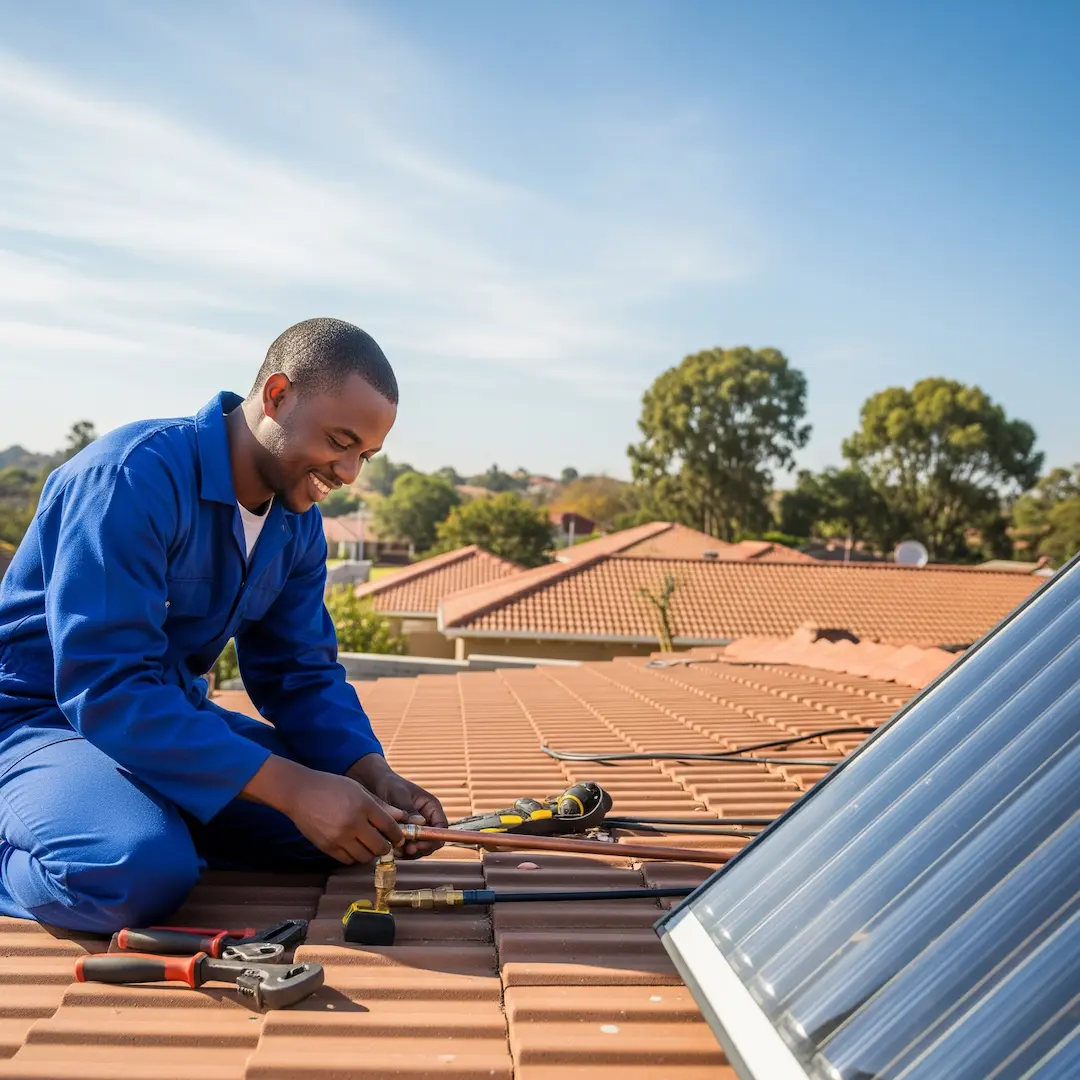
Direct vs. Indirect Solar Geysers: Choosing the Best System for Your Climate & Needs
Choosing a solar geyser in South Africa? This guide compares direct vs indirect systems, helping you understand the key differences so you can select the right option for your climate and home.

So, you're looking into solar geysers for your home in South Africa – brilliant choice! With our abundant sunshine, harnessing solar energy for hot water just makes sense. But as you start exploring, you'll quickly discover there isn't a one-size-fits-all solution. One of the primary decisions you'll face is between a direct and an indirect solar geyser system. Each has its strengths and weaknesses, and understanding these differences is key to picking the perfect fit for your specific climate and household needs.
Our trusted plumbers, who have years of experience installing and maintaining these systems across various South African regions, often highlight the importance of this choice. They've seen firsthand how the wrong system can lead to frustration and inefficiency, while the right one provides years of trouble-free hot water.
Understanding the Basics: How Solar Geysers Work
Before we dive into the nitty-gritty of direct versus indirect, let's quickly recap how solar geysers generally operate. At their core, all solar water heaters use solar collectors (often referred to as panels or evacuated tubes) to absorb heat from the sun. This heat is then transferred to a storage tank, providing you with hot water for your home. The difference lies in how that heat transfer occurs.
Direct Solar Geyser Systems: Simplicity and Efficiency in Sunny Climates
Imagine your garden hose lying in the sun on a hot day – the water inside gets warm, right? That's the basic principle of a direct solar geyser system, also known as an "open-loop" system.
How it Works: In a direct system, the potable water (the water you'll actually use for showering, washing, etc.) from your geyser circulates directly through the solar collectors. As the sun heats the collectors, the water inside them gets hot. This hot water then naturally rises back into the geyser tank, while cooler water from the bottom of the tank flows down to the collectors to be heated. This continuous natural circulation, known as thermosiphoning, is a significant advantage of direct systems.
When a direct system excels: Our expert installers often recommend direct systems for regions in South Africa that don't experience regular, severe frost. Think coastal areas or parts of the Lowveld where temperatures rarely drop below freezing. A plumber who recently completed an installation in Durban recounted how a family opting for a direct system was thrilled with the consistent hot water and minimal energy bills, especially given the warm climate.
Key Advantages:
- Simpler Design: Fewer components mean less complexity and potentially lower initial installation costs.
- Higher Efficiency (in ideal conditions): Since the water is heated directly, there's no intermediate heat exchange, which can lead to slightly better thermal efficiency under optimal sunny, frost-free conditions.
- Reduced Maintenance (for certain aspects): No heat transfer fluid to monitor or replace.
Considerations and Potential Drawbacks:
- Frost Risk: This is the big one for direct systems in South Africa. If temperatures drop below freezing, the water in the collectors and pipes can freeze, expand, and potentially burst the pipes, causing significant damage. While some direct systems include frost protection mechanisms (like drain-back systems or electric heating elements for anti-freeze), they add complexity and cost.
- Water Quality: In areas with "hard" water (high mineral content), mineral deposits can build up inside the collector tubes over time, reducing efficiency and potentially damaging the system.
Indirect Solar Geyser Systems: Robustness for Frost-Prone & Hard Water Areas
Now, let's look at the indirect system, often called a "closed-loop" system. This is where a heat transfer fluid comes into play.
How it Works: Instead of the household water flowing through the collectors, a special heat transfer fluid (typically a mixture of water and food-grade glycol, similar to antifreeze) circulates in a closed loop between the collectors and a heat exchanger located inside or around the geyser tank. The sun heats this fluid in the collectors, and then the hot fluid flows to the heat exchanger, transferring its heat to the potable water in the geyser without the two liquids ever mixing. The cooled fluid then returns to the collectors to be reheated.
When an indirect system is the better choice: For many parts of inland South Africa, particularly the Highveld and other regions prone to winter frosts (think Johannesburg, Pretoria, Bloemfontein, or parts of the Karoo), an indirect system is almost always the recommended solution. One installer shared a story about a homeowner in Clarens who initially installed a direct system, only to have pipes burst during a particularly harsh winter. After replacing it with an indirect system, they've had no issues, even with regular sub-zero temperatures. Indirect systems are also beneficial in areas with poor water quality, as the potable water doesn't flow through the collector, preventing mineral build-up.
Key Advantages:
- Frost Protection: The primary benefit. The glycol mixture has a much lower freezing point than water, protecting the system from frost damage.
- Corrosion Protection: The closed loop with the special fluid protects the collector and associated piping from the corrosive effects of hard or aggressive water.
- Longevity: Due to better protection against freezing and corrosion, indirect systems often have a longer lifespan, especially in challenging environments.
Considerations and Potential Drawbacks:
- Higher Initial Cost: The added components like the heat exchanger and the heat transfer fluid make indirect systems generally more expensive to install upfront.
- Maintenance of Heat Transfer Fluid: The glycol mixture needs to be checked and potentially topped up or replaced every few years (typically every 3-5 years, depending on the manufacturer's specifications). This is a specialised task that requires a qualified plumber.
- Slightly Lower Efficiency (due to heat exchange): There's a small energy loss during the heat transfer process, making them marginally less efficient than direct systems in perfectly ideal, frost-free conditions.
Making the Right Choice for Your South African Home
Here's a quick guide to help you decide, based on common South African scenarios:
- You live in a frost-free coastal area (e.g., Durban, parts of Cape Town, Wild Coast): A direct system could be a good, cost-effective option. Ensure you still consider mechanisms for overheating protection, such as a thermostatic mixing valve, as intense sun can cause water to reach very high temperatures.
- You live in an inland area with cold winters and regular frost (e.g., Johannesburg, Pretoria, Free State, parts of Eastern Cape highlands): An indirect system is strongly recommended to protect your investment from freezing damage. The slightly higher upfront cost is far outweighed by the protection and peace of mind it offers.
- You have "hard" water in your area: An indirect system can help prevent scale build-up in your collectors, maintaining efficiency and extending the system's life.
- You're looking for the most robust, long-term solution, even if it costs a bit more initially: An indirect system generally offers superior durability and less worry about extreme weather conditions.
Remember, regardless of the system type, proper installation by a qualified professional is paramount. They will ensure the system adheres to South African National Standards (SANS) such as SANS 10106 for installation, maintenance, repair, and replacement of domestic solar water heating systems, and SANS 1307 for the product itself. An experienced plumber will also advise on the optimal positioning of collectors for maximum sun exposure and discuss necessary safety features like pressure relief valves and thermostatic mixing valves to prevent scalding.
Ultimately, both direct and indirect solar geyser systems offer fantastic energy savings and contribute to a greener lifestyle. Your climate and specific household needs will guide you to the system that provides the most reliable and efficient hot water for years to come.
Important DIY Disclaimer
While understanding how solar geysers work is empowering, installing or servicing them is a complex task that involves plumbing, electrical connections, and working at heights. Attempting a DIY solar geyser installation or major repair can be extremely dangerous if you lack the proper training, tools, and experience. It can lead to burst pipes, scalding water, electrical shock, roof damage, and even serious injury. Always consult and hire a qualified, registered plumber and solar water heating specialist for any installation, repair, or significant maintenance work to ensure safety and compliance with all South African regulations.
Frequently Asked Questions
How much money can I save with a solar geyser in South Africa?
The savings vary based on factors like your household's hot water consumption, the size of the system, and your electricity tariff. However, homeowners typically report significant reductions in their electricity bills, often cutting hot water heating costs by 50% to 90%. Over the lifespan of the system, this can amount to substantial financial savings, often paying back the initial investment within a few years.
Do solar geysers work on cloudy days or in winter?
Yes, solar geysers still work on cloudy days, though their efficiency is reduced. The collectors absorb diffused sunlight, so you'll still get some heating. In winter, even with colder ambient temperatures, as long as there is sunlight, the system will generate hot water. Many systems also include an electrical backup element that can be used during prolonged overcast periods or exceptionally high demand to ensure you always have hot water.
What kind of maintenance does a solar geyser need?
Solar geysers generally require relatively low maintenance. For direct systems, routine checks involve cleaning the collector panels (if visibly dirty to ensure optimal sun absorption) and inspecting for any leaks. For indirect systems, it's crucial to periodically check the heat transfer fluid's level and condition, typically every 2-3 years, and replace it as recommended by the manufacturer. It's always a good idea to have a qualified plumber perform a comprehensive service every 2-3 years to ensure all components are functioning optimally and to address any minor issues before they become major problems.
How long does a solar geyser system typically last in South Africa?
A well-installed and properly maintained solar geyser system can last between 15 to 25 years, and even longer for high-quality components. The lifespan depends on the quality of the materials, the expertise of the installation, regular maintenance, and the local environmental conditions (e.g., severity of frost, water quality). Many reputable manufacturers offer warranties of 5 to 10 years on their tanks and collectors, reflecting their durability.
Find a vetted plumber near you
Solar geyser installation: find a pro near you
Suzette Meyer is the lead author and content creator for Kandua.com, South Africa’s #1 marketplace for home services. Suzette has made it her mission to help homeowners with advice on all aspects of home repair, maintenance and improvement, including how to choose the right Pro and how to make smart upgrades that improve your resale value or save costs.

Latest articles, advice and more
.webp)
.webp)
.jpeg)
Sinking Pavers, Weeds and Water That Pools: What Your Driveway Is Telling You
When your driveway starts sprouting weeds, pooling water, or sinking in patches, the bricks are not failing you. The layers underneath have moved, and they are trying to tell you exactly what went wrong.
.jpeg)
What Your Garage Door Motor Actually Does (And Why It Breaks)
Spoiler alert: your garage door motor isn't actually doing the heavy lifting. The torsion springs carry almost all the weight. The motor simply pushes, pulls, controls the descent so it doesn't slam, and acts as a lock when the door is shut. That’s why a relatively small box on your ceiling can move such a massive door. Want to test this? Pull the red manual release cord and lift the door by hand. If it glides up easily and stays put when you let go, your springs are doing their job, and the fault lies with the motor. If the door feels like dead weight or slams back down- stop. You’ve got a spring problem.
.jpeg)
4 Warning Signs Your Tiles Are Failing (And What They Mean)
Tiles rarely fail overnight. They warn you first. A hollow sound underfoot, grout that crumbles away, a tile that lifts at one edge, or a crack that runs across two tiles all point to something happening under the surface. Here is what each sign means, and how urgent it is.
.webp)
.webp)
Beyond the Unboxing: A Detailed Guide to Correct Washing Machine Plumbing & Setup
New washing machine in South Africa? Learn essential plumbing and setup tips to prevent leaks, ensure efficient operation, and extend your appliance’s lifespan - expert advice before your first load.
.webp)
New Washing Machine? Don't Plug It In Yet! Essential Installation Tips for SA Homes
Installing a new washing machine? Learn the essential setup steps South African homeowners often overlook to prevent leaks, noise, and damage—and ensure efficient, long-lasting performance from day one.
.webp)
.webp)
%25201200%2520x%25201200%2520(1).jpeg)
What Retiling a Bathroom Costs in 2026, Room by Room
Retiling a bathroom in South Africa costs between R230 and R800 per square metre in 2026, including materials and labour. A standard family bathroom, stripped and fully retiled, usually lands between R11,800 and R27,500. A guest toilet costs a fraction of that. A large porcelain en-suite costs a lot more.
How to Install a Horizontal Geyser | Step-by-Step Pro Guide
Want to install a geyser like a pro? This step-by-step tutorial shows you exactly how to do a horizontal Ariston Axios geyser installation, straight from the BluLever plumbing workshop. 🎥 Hosted by MK, BluLever’s technical facilitator, and supported by a qualified electrician, Life and a BluLever graduate artisan, Zinhle. This is your ultimate guide to a SANS 10254-compliant installation — from preparing the wall, to plumbing, electrical wiring, and pro troubleshooting tips.
How to Maintain a Geyser | Step-by-Step Pro Guide
Want to maintain a geyser like a pro? This step-by-step tutorial shows you exactly how to do the three core geyser maintenance checks on an Ariston Axios geyser installation, straight from the BluLever plumbing workshop. 🎥 Hosted by MK, BluLever’s technical facilitator, and supported by a qualified electrician, Life. This is your ultimate guide to geyser maintenance — from diagnosing the problem to checking the heat regulation of the geyser, to pressure regulation and then finally corrosion protection.
%201.avif)
Not just another newsletter. It's an advantage