
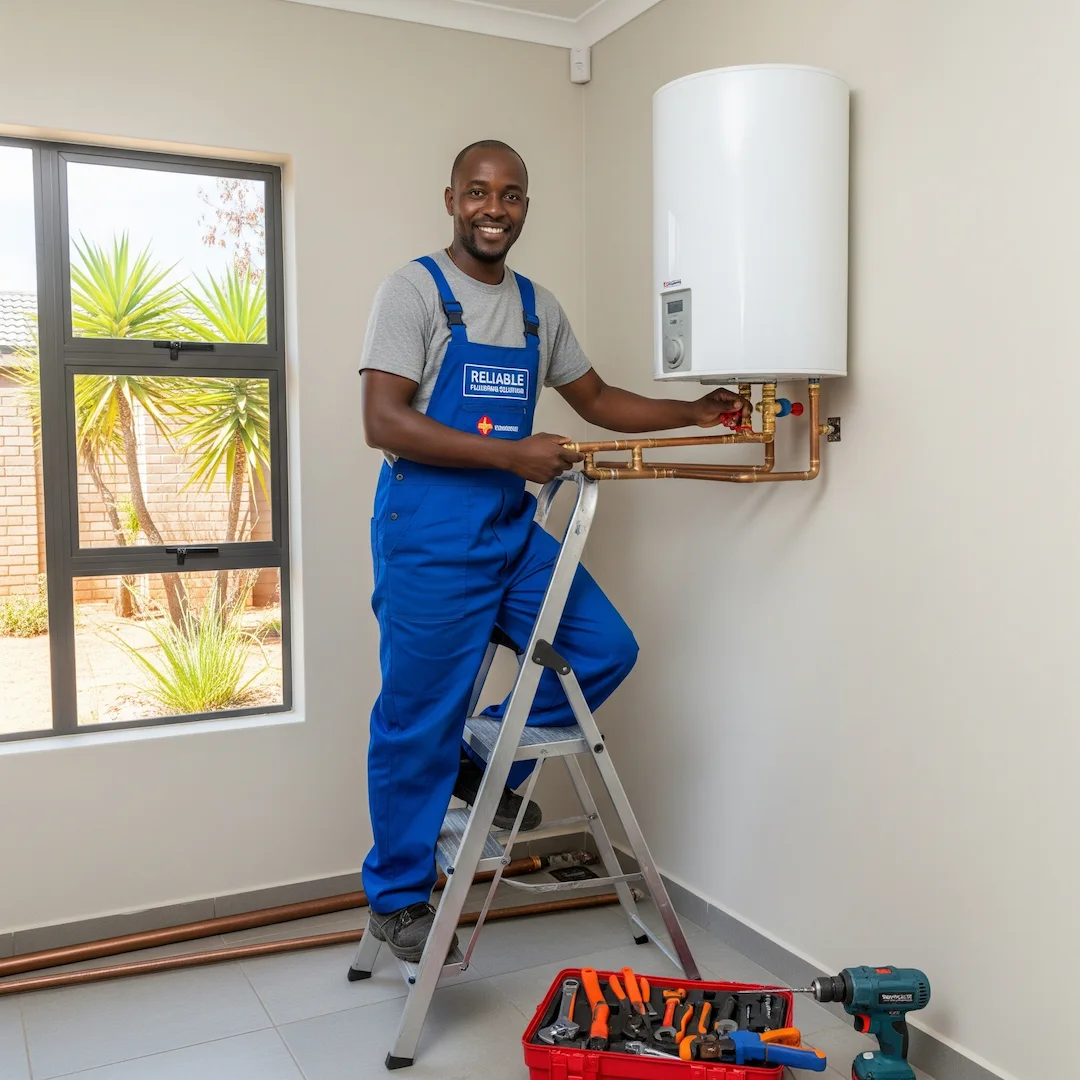
Geyser Installation in South Africa: Ensuring Safety, Efficiency, and Compliance
Planning a geyser installation? Learn why professional, SANS-compliant installation in South Africa is essential for safety, efficiency, and long-term reliable hot water in your home.

Geyser Installation in South Africa: Ensuring Safety, Efficiency, and Compliance
Your geyser is one of the hardest-working appliances in your home. It’s also one of the most potentially dangerous if not installed correctly. A burst geyser can cause catastrophic water damage, while faulty electrical connections pose a serious fire risk. This is why a professional, compliant geyser installation isn't just a "nice-to-have"—it's an absolute necessity for the safety of your family, the integrity of your home, and your financial peace of mind.
Choosing to install a new geyser is a significant decision. You're not just buying a unit; you're investing in a complex system that needs to integrate seamlessly and safely with your home's plumbing and electrical infrastructure. Getting it right from the start means decades of reliable hot water. Getting it wrong can lead to disaster.
This guide walks you through what a safe, compliant geyser installation in South Africa looks like, so you can confidently choose the right professional for the job.
Why a Professional Geyser Installation is Non-Negotiable
One of our top-rated plumbers recently shared a story that perfectly illustrates this point. He was called out to a home in Pretoria where the ceiling in the main bedroom had collapsed. The cause? A slow leak from a geyser that was installed without a drip tray or a properly routed overflow pipe. The homeowners had opted for a cheap, "cash" installation a year prior, and the R2,000 they saved upfront ended up costing them over R40,000 in ceiling, electrical, and water damage repairs—none of which their insurance would cover due to the non-compliant installation.
This isn't a scare tactic; it's the reality of cutting corners. A compliant installation is built on a foundation of safety standards and essential components.
The Bedrock of Safety: SANS 10254 Compliance
In South Africa, all fixed electrical storage water heater installations must comply with the South African National Standard (SANS) 10254. This isn't just a guideline; it's a legal requirement. Think of it as the official rulebook for geyser installation.
Adhering to SANS 10254 ensures:
- Safety: The system is installed to prevent over-pressurisation, overheating, and electrical faults.
- Functionality: The geyser operates as the manufacturer intended.
- Insurance Validity: Should something go wrong, your insurance company will see that the installation was done correctly and is far more likely to honour your claim. A non-compliant installation is one of the first things assessors look for to reject a claim.
Any professional plumber you hire must work according to these standards. If they seem unfamiliar with SANS 10254, that is a major red flag.
The Critical Safety Components Explained
A geyser isn't just a tank. It's a system of valves and safety features that work together. Here’s what a compliant installation must include:
- Pressure Control Valve (PCV): Municipal water pressure can be very high and fluctuate, often exceeding what a geyser tank is designed to handle. The PCV is installed on the cold water inlet to reduce and regulate this pressure, protecting the tank from stress and potential rupture. It’s the geyser's first line of defence.
- Temperature & Pressure Safety Valve (TP Valve): This is arguably the most critical safety feature. If the thermostat fails and the element continues to heat the water, the temperature and pressure inside the tank can rise to dangerous levels. The TP Valve is designed to automatically open and release water (and steam) if the temperature exceeds about 93°C or the pressure gets too high, preventing a catastrophic explosion. This valve must have a pipe leading from it to the outside of your home.
- Vacuum Breakers: These small but vital components are installed on the hot and cold water lines near the geyser. They prevent a vacuum from forming inside the tank if the water supply is shut off, which could cause the tank to collapse inward. They also prevent "back-siphonage" of hot water into the cold water line.
- The Drip Tray and Overflow Pipe: A metal or plastic drip tray must be installed directly underneath the geyser. This tray is designed to catch any leaks or discharge from the TP valve. Crucially, this tray must have its own dedicated, unobstructed pipe that leads the water to a visible point outside the building. If you ever see water dripping from this pipe, you know you have a problem and can call a plumber before your ceiling becomes a sponge.
- Electrical Installation & Isolator Switch: The geyser's electrical connection must be completed by a qualified and competent person. This involves fitting a dedicated electrical isolator switch within arm's reach (usually about 1 metre) of the geyser. This switch allows the power to the geyser to be safely turned off for maintenance or in an emergency, without having to shut off power to the whole house at the distribution board (DB). Upon completion, a licensed electrician should issue a Certificate of Compliance (CoC) for the electrical portion of the work.
Choosing the Right Geyser Installer: Your Vetting Checklist
Now that you know what a good installation looks like, how do you find the person to do it? Don't leave it to chance. Use this checklist to vet potential plumbers.
- Are they Qualified and Registered? Ask if they are a licensed plumber registered with the Plumbing Industry Registration Board (PIRB). PIRB registration shows a commitment to industry standards and ongoing professional development. A PIRB-registered plumber can issue a Plumbing Certificate of Compliance.
- Do they have Public Liability Insurance? Accidents happen, even with professionals. Ensure the installer has adequate public liability insurance. This protects you and your property in the unlikely event that something goes wrong during the installation.
- Request a Detailed, Itemised Quote: A vague quote that just says "Geyser Installation - RXXXX" is a warning sign. A professional quote will break down the costs:
- Cost of the geyser unit itself.
- Labour charges.
- Cost of all new components (Pressure valve, TP valve, vacuum breakers, drip tray, copper pipe, etc.).
- Sundry costs (fittings, solder, etc.).
- Cost for the electrical Certificate of Compliance (if they are providing it).
- Gauge their Knowledge of SANS 10254: You don't need to be an expert, but you can ask expert questions.
- "Will the installation be fully SANS 10254 compliant?" (The only answer is "yes").
- "Will you be installing a new pressure control valve and TP valve?"
- "Does the quote include a drip tray and an overflow pipe to the exterior?"
- "Will you be able to provide a plumbing Certificate of Compliance upon completion?"
- Don't Let Price Be the Only Factor: A cheap quote often means corners are being cut. An installer might reuse old valves (which is against regulations and dangerous), skip the drip tray, or use substandard materials. Fixing a botched job almost always costs more than doing it right the first time. The goal is value and safety, not just the lowest price.
The Long-Term Payoff: Peace of Mind and Savings
Investing in a compliant geyser installation pays dividends for years to come.
- Safety & Peace of Mind: Your number one benefit is knowing your family and home are protected from the significant risks of fire, electrical shock, and major water damage.
- Energy Efficiency: A correctly installed system with modern components operates more efficiently. There are no slow leaks wasting hot water and the system maintains pressure correctly, meaning the element isn't working harder than it needs to. For an extra efficiency boost, ask your installer to fit a geyser blanket at the same time.
- Guaranteed Insurance Validity: This is crucial. In the event of a burst or leak, your insurer will send an assessor. The first thing they will check is whether the installation is compliant with SANS 10254 and if a CoC was issued. A compliant installation is your ticket to a successful claim.
Your geyser is a vital part of your daily life. By ensuring it's installed by a qualified, vetted professional who adheres to all safety standards, you are making a smart, long-term investment in your home's safety, efficiency, and value.
Frequently Asked Questions (FAQs)
What is a Certificate of Compliance (CoC) for a geyser installation?
A Certificate of Compliance is a legal document confirming that an installation meets the required safety standards. For a geyser, there are two types. A Plumbing CoC is issued by a licensed plumber (like one registered with PIRB) and confirms the plumbing work (valves, pipes, drip tray) meets SANS 10254 standards. An Electrical CoC is issued by a registered electrician and confirms the electrical work (wiring, isolator switch, bonding) is safe and compliant. Both are essential for a fully compliant installation.
How often should my geyser be serviced after installation?
It is recommended to have your geyser serviced every 3 to 4 years by a qualified plumber. During a service, the plumber will check the anode rod (which prevents corrosion), flush out any sediment from the tank, test the thermostat and element, and ensure the safety valves are functioning correctly. Regular servicing can significantly extend the life of your geyser and prevent unexpected failures.
Can I install a geyser myself to save money?
No, this is strongly discouraged and, in South Africa, illegal. A geyser installation involves high-pressure water and high-voltage electricity, a dangerous combination for an untrained person. Furthermore, the installation must comply with SANS 10254 and an electrical CoC must be issued by a qualified electrician. A DIY installation will void your geyser's warranty and your home insurance will not cover any damage it causes.
My new geyser is making a hissing or dripping noise. Is this normal?
It can be. It is normal for the Temperature and Pressure (TP) valve to occasionally release a small amount of water as the geyser heats up and the water expands—this often creates a slight hissing or dripping sound from the overflow pipe outside. However, if the dripping is constant or excessive, or if you hear loud banging or boiling sounds, it could indicate a problem with the pressure valve or thermostat. In that case, you should contact a qualified plumber immediately to inspect it.
Find a vetted plumber near you
Geyser installation and repairs: find a pro near you
- Geyser installation and repairs near you
- Geyser installation and repairs in Johannesburg
- Geyser installation and repairs in Sandton
- Geyser installation and repairs in Midrand
- Geyser installation and repairs in Roodepoort
- Geyser installation and repairs in Randburg
- Geyser installation and repairs in Pretoria
- Geyser installation and repairs in Cape Town
Suzette Meyer is the lead author and content creator for Kandua.com, South Africa’s #1 marketplace for home services. Suzette has made it her mission to help homeowners with advice on all aspects of home repair, maintenance and improvement, including how to choose the right Pro and how to make smart upgrades that improve your resale value or save costs.

Latest articles, advice and more
.webp)
.webp)
.jpeg)
Sinking Pavers, Weeds and Water That Pools: What Your Driveway Is Telling You
When your driveway starts sprouting weeds, pooling water, or sinking in patches, the bricks are not failing you. The layers underneath have moved, and they are trying to tell you exactly what went wrong.
.jpeg)
What Your Garage Door Motor Actually Does (And Why It Breaks)
Spoiler alert: your garage door motor isn't actually doing the heavy lifting. The torsion springs carry almost all the weight. The motor simply pushes, pulls, controls the descent so it doesn't slam, and acts as a lock when the door is shut. That’s why a relatively small box on your ceiling can move such a massive door. Want to test this? Pull the red manual release cord and lift the door by hand. If it glides up easily and stays put when you let go, your springs are doing their job, and the fault lies with the motor. If the door feels like dead weight or slams back down- stop. You’ve got a spring problem.
.jpeg)
4 Warning Signs Your Tiles Are Failing (And What They Mean)
Tiles rarely fail overnight. They warn you first. A hollow sound underfoot, grout that crumbles away, a tile that lifts at one edge, or a crack that runs across two tiles all point to something happening under the surface. Here is what each sign means, and how urgent it is.
.webp)
.webp)
Beyond the Unboxing: A Detailed Guide to Correct Washing Machine Plumbing & Setup
New washing machine in South Africa? Learn essential plumbing and setup tips to prevent leaks, ensure efficient operation, and extend your appliance’s lifespan - expert advice before your first load.
.webp)
New Washing Machine? Don't Plug It In Yet! Essential Installation Tips for SA Homes
Installing a new washing machine? Learn the essential setup steps South African homeowners often overlook to prevent leaks, noise, and damage—and ensure efficient, long-lasting performance from day one.
.webp)
.webp)
%25201200%2520x%25201200%2520(1).jpeg)
What Retiling a Bathroom Costs in 2026, Room by Room
Retiling a bathroom in South Africa costs between R230 and R800 per square metre in 2026, including materials and labour. A standard family bathroom, stripped and fully retiled, usually lands between R11,800 and R27,500. A guest toilet costs a fraction of that. A large porcelain en-suite costs a lot more.
How to Install a Horizontal Geyser | Step-by-Step Pro Guide
Want to install a geyser like a pro? This step-by-step tutorial shows you exactly how to do a horizontal Ariston Axios geyser installation, straight from the BluLever plumbing workshop. 🎥 Hosted by MK, BluLever’s technical facilitator, and supported by a qualified electrician, Life and a BluLever graduate artisan, Zinhle. This is your ultimate guide to a SANS 10254-compliant installation — from preparing the wall, to plumbing, electrical wiring, and pro troubleshooting tips.
How to Maintain a Geyser | Step-by-Step Pro Guide
Want to maintain a geyser like a pro? This step-by-step tutorial shows you exactly how to do the three core geyser maintenance checks on an Ariston Axios geyser installation, straight from the BluLever plumbing workshop. 🎥 Hosted by MK, BluLever’s technical facilitator, and supported by a qualified electrician, Life. This is your ultimate guide to geyser maintenance — from diagnosing the problem to checking the heat regulation of the geyser, to pressure regulation and then finally corrosion protection.
%201.avif)
Not just another newsletter. It's an advantage