
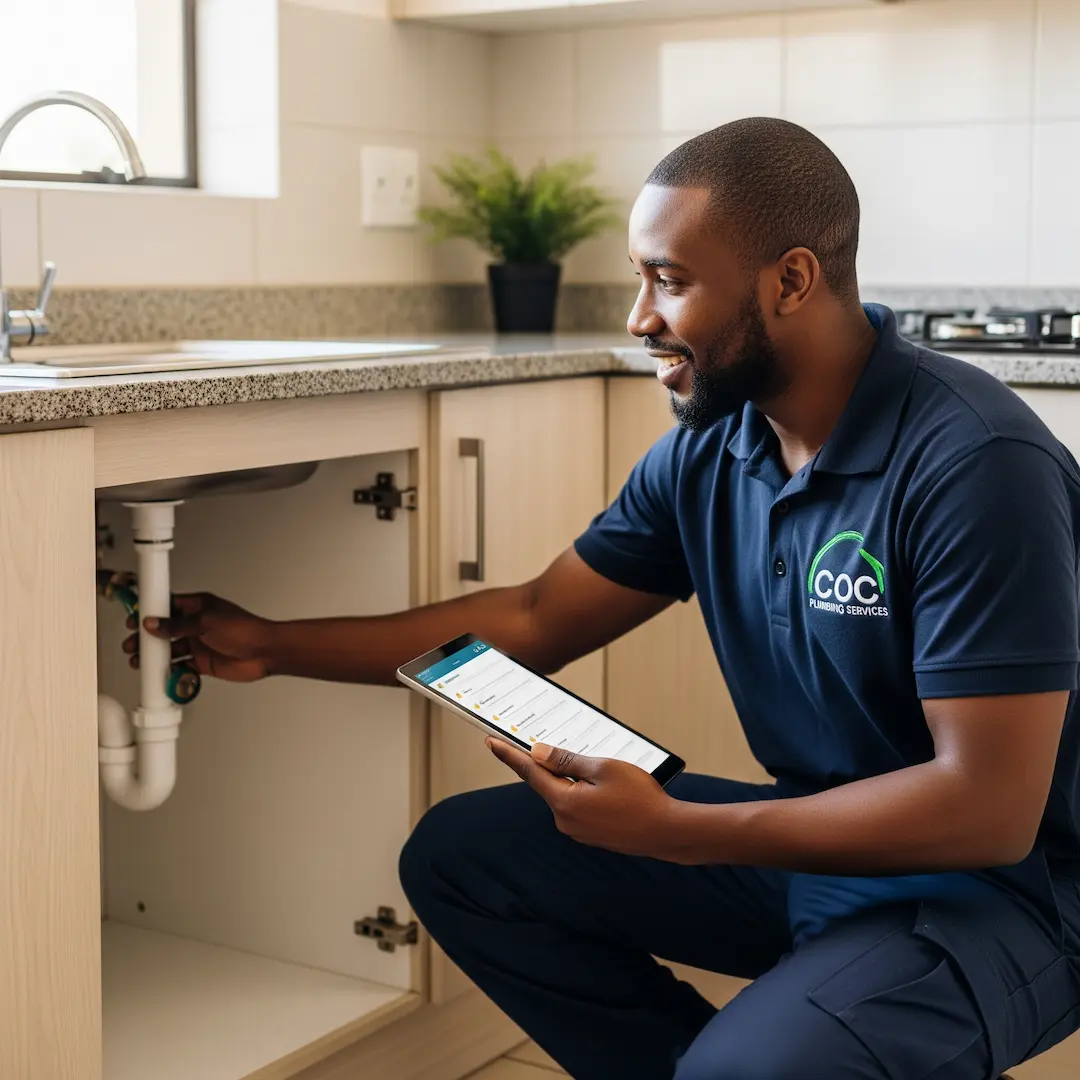
Securing Your Plumbing COC in South Africa: Ensuring Peace of Mind for Your Property
Need a Plumbing COC in South Africa? Learn why it’s essential for property sales, renovations, and legal compliance - and who’s qualified to issue a valid certificate with confidence.

Securing Your Plumbing COC in South Africa: Ensuring Peace of Mind for Your Property
Selling your home or completing a major renovation is a significant milestone. Amidst the flurry of paperwork and planning, there's one document that often comes up, especially in property transfers: the Plumbing Certificate of Compliance, or Plumbing COC. While it might seem like just another piece of admin, this certificate is a crucial safeguard for your property's value, your family's health, and your legal standing.
But what is it, really? Why is it so important, and most critically, who is actually qualified to issue one? Getting this wrong can lead to serious financial and legal headaches down the line. This guide will walk you through everything you need to know about securing a valid Plumbing COC in South Africa, ensuring your plumbing is safe, compliant, and ready for any scrutiny.
What Exactly is a Plumbing Certificate of Compliance (COC)?
Think of a Plumbing COC as an official declaration from a qualified professional. It certifies that the water installation on your property meets the required standards of safety and workmanship as laid out in South African National Standards (SANS).
It’s not just an invoice or a job card confirming a repair was done. A COC is a specific, formal document that confirms the following:
- The hot water cylinder installation is compliant.
- There are no cross-connections between the potable water supply and any greywater, stormwater, or sewerage systems.
- The water meter registers no movement when all taps and terminals are closed, indicating no leaks on the main line.
- Water pipes are correctly mounted and secure.
This certificate is most commonly required during the sale of a property, but it’s also essential after significant plumbing alterations or new installations.
Why a Plumbing COC is Non-Negotiable for South African Homeowners
Understanding the "why" behind the COC reinforces its importance beyond simple bureaucracy. It’s about safety, liability, and protecting your investment.
Legal & Contractual Requirement
In certain municipalities, like the City of Cape Town, a valid Plumbing COC is required by by-law before a property transfer can be finalised. Even in areas where it isn't a municipal law, it has become a standard clause in most property sale agreements (the Offer to Purchase). This protects the buyer from inheriting costly, dangerous, and non-compliant plumbing issues, and it protects the seller from future claims.
Insurance and Liability
Imagine a burst geyser floods your home, causing hundreds of thousands of rands in damage. If your insurance provider investigates and finds that the geyser was installed incorrectly and was non-compliant with SANS 10254, they have grounds to repudiate your claim. A valid COC serves as proof that you, the homeowner, exercised due diligence in ensuring your installation was safe and correct at the time of certification.
Health and Safety
This is perhaps the most critical reason. Compliant plumbing protects your family’s health. One of our vetted plumbers shared a story from an inspection in a leafy Johannesburg suburb. The homeowners were selling and needed a COC. During the inspection, he discovered a serious cross-connection where the garden's stormwater drain had been improperly linked to the main sewer line. In a heavy storm, this could have caused sewage to back up into the garden, creating a major health hazard. The COC inspection caught this hidden danger before it could affect the new owners.
Water Conservation
In a water-scarce country, every drop counts. A COC inspection verifies that there are no hidden leaks in the system. A small, persistent leak can waste thousands of litres of water over a year, running up your municipal bill and placing a strain on our resources.
Who is Qualified to Issue a Plumbing COC? (The Most Critical Question)
This is where homeowners must be most vigilant. Not just any plumber with a bakkie and a set of wrenches can issue a valid Plumbing COC.
The golden rule is this: Only a plumber registered and licensed with the Plumbing Industry Registration Board (PIRB) can legally issue a Plumbing COC.
The PIRB is the official, recognised professional body for plumbers in South Africa. Their role is to ensure that plumbers are qualified, adhere to standards, and act ethically.
How to Verify Your Plumber
Before you hire a plumber to issue a COC, you must verify their credentials. Here’s how:
- Ask for their PIRB registration number. A legitimate, professional plumber will have this readily available on their card, vehicle, or website and will gladly provide it.
- Verify their status online. Visit the PIRB website and use their "Find a Plumber" or verification tool to check that the registration number is valid and that the plumber is listed as a "Licensed Plumber". This is a crucial step to protect yourself.
Red Flags of a Fraudulent COC
Unfortunately, there are unscrupulous individuals who will offer to issue a cheap or "drive-by" certificate without a proper inspection. We’ve heard horror stories from pros who are called in to fix the mess. One such case involved a family in Durban who proudly presented their COC when a geyser problem arose just months after moving in. The certificate turned out to be fake, issued by an unregistered person. The geyser installation was dangerously non-compliant, and the new owners were faced with a R30,000+ bill for a complete re-installation, which their insurance refused to cover.
Watch out for these warning signs:
- The "plumber" is hesitant or unwilling to provide a PIRB number.
- The price seems too good to be true. A proper inspection takes time and expertise.
- They offer to issue the certificate without visiting the property or performing a thorough check.
- The certificate itself looks unprofessional or is missing key details like the plumber’s registration number, the property address, and a clear description of what was certified.
What Does a Plumber Check During a COC Inspection?
A PIRB-licensed plumber will conduct a systematic inspection of your property's water systems. While not exhaustive, the key areas of focus include:
- The Geyser Installation: This is a major component. The plumber will check if it complies with SANS 10254, which includes ensuring a drip tray is installed under the geyser (for indoor installations), the overflow pipes are correctly installed and made of appropriate materials (like copper or steel), and that safety valves (the Temperature and Pressure Valve) and vacuum breakers are present and correctly fitted.
- Water Meter: The plumber will ensure all taps are off and then check the municipal water meter. If it continues to run, it indicates a leak somewhere on the property which must be located and repaired.
- Water Pressure: The system's pressure will be checked. If it's too high (typically above 600kPa), a pressure control valve must be installed and functioning correctly to prevent damage to pipes and appliances.
- Correct Pipework: The inspection ensures that hot and cold water pipes are made of the correct materials and are properly secured to the walls to prevent water hammer (the banging noise you sometimes hear).
- No Cross-Connections: A check is performed to ensure that no part of the potable (drinkable) water system is connected to any other water source, such as a borehole, rainwater harvesting system, or greywater system, without the proper, compliant backflow prevention devices.
Once the inspection is complete, if everything is compliant, the plumber will issue the certificate. If not, they will provide you with a clear report of the defects that must be fixed before a COC can be issued.
Frequently Asked Questions
How long is a Plumbing COC valid for?
A Plumbing COC is a "snapshot in time." It certifies that on the date of inspection, the installation was compliant. It does not have a fixed expiry date like an electrical or gas COC. For property sales, it's generally accepted if it was issued within the last six months, but this can be negotiated in the Offer to Purchase. It doesn't guarantee against future issues like wear and tear.
Does a Plumbing COC cover drain blockages or appliance performance?
No. The COC is concerned with the safety and compliance of the permanent water installation—the pipes, geyser, and connections. It does not cover issues like slow drains, blocked toilets, or the functioning of appliances like dishwashers or washing machines (though it does certify their connection to the water supply is compliant).
What happens if I buy a property with a valid COC and later find plumbing defects?
If a defect is found that should have been identified during the COC inspection, the issuing plumber can be held liable. You can lodge a dispute through the PIRB. This is why using a registered plumber is your greatest protection. However, if a new problem (like a valve failing due to age) occurs after you’ve taken ownership, it is typically the new owner's responsibility to repair.
Is a Plumbing COC legally required for all property sales in South Africa?
The legal mandate based on municipal by-laws is not national. The City of Cape Town is the most well-known example where it is law. However, it has become best practice and a standard contractual requirement in property sale agreements across all provinces to protect both the buyer and the seller from disputes. It is highly recommended for all property transfers.
My geyser is old but works perfectly. Will it automatically fail a COC inspection?
Not necessarily. The inspection is focused on the compliance of the installation, not the age of the components. As long as the geyser and its surrounding pipework, valves, and overflow systems meet the SANS 10254 standards, it should pass. A plumber's job is not to fail a working geyser simply because it's old, but to ensure it is installed safely.
Suzette Meyer is the lead author and content creator for Kandua.com, South Africa’s #1 marketplace for home services. Suzette has made it her mission to help homeowners with advice on all aspects of home repair, maintenance and improvement, including how to choose the right Pro and how to make smart upgrades that improve your resale value or save costs.

Related articles, advice and more
.webp)
What Does a Plumbing Call-Out Fee Usually Include?
When that familiar drip-drip-drip starts under the kitchen sink or your geyser begins a slow weep in the ceiling, the first thing most South African homeowners do is pick up the phone. But before a wrench even touches a pipe, you’ll likely hear the term "call-out fee."
.jpg)
How to Choose Between Repair and Replacement for Your Geyser
Deciding between repairing and replacing isn't just about the immediate price tag. It is about safety, long-term electricity savings, and compliance with South African building regulations. Based on insights from vetted plumbers across Johannesburg, Cape Town, and Durban, this guide will help you navigate that decision with confidence.
.jpg)
What to Do If Your Electric Problem Comes Back After Repair
There are few things more frustrating than paying for a repair only to have the lights flicker, the breaker trip, or the plug point fail again a few days later. Here is a step-by-step guide to handling the situation professionally, safely, and effectively to get it sorted out for good.
.jpg)
Understanding Geyser Warranties in South Africa
For most South African households, the geyser is the hardest-working appliance in the home. To help you protect your investment, we have broken down exactly how Geyser warranties work in South Africa, drawing on insights from qualified plumbers who handle rejected claims daily.
.webp)
How Hard Water Damages Your Plumbing (and What to Do About It)
If you suspect you have hard water, you are in the "awareness" stage of a very important journey for your home's maintenance. Ignoring it can lead to burst geysers and clogged pipes. This guide, compiled with insights from top local plumbers, will explain exactly how hard water affects your plumbing and the practical steps you can take to fix it.
.webp)
.webp)
.webp)
Latest articles, advice and more
.webp)
How To Fix A Damp Wall And What's Actually Causing It
If your walls are weeping, your plaster is flaking, or you can smell that musty, damp smell, you're not dealing with one problem; you're dealing with three possible ones. The fix depends entirely on the cause.
.webp)
Gutter Cleaning: How Often Should You Do It and What Does It Cost?
Clean your gutters at least twice a year, and always before your rainy season kicks in. In South Africa, a professional gutter clean usually costs somewhere between R450 and R2,500, depending on the size of your home, how high the roof is, and how blocked things have become. Here is how to work out the right frequency and a fair price.
.webp)
Why Are My Plug Points Not Working? A Troubleshooting Guide
If your plug points have suddenly gone dead, the usual culprits are a tripped earth leakage switch, a tripped circuit breaker, loose or burnt wiring, or a faulty appliance overloading the circuit. Work through the safety checks below before you call anyone, then understand when the job requires a registered electrician.
.webp)
How a Geyser Timer Can Cut Your Electricity Bill
If you've been staring at your Eskom bill and wondering where the money is going, your geyser might be the culprit. Here's the good news: a simple geyser timer can cut your hot water costs by up to 30% each month, which typically saves South African homeowners between R200 and R400 on their electricity bills, depending on their current usage.
%20(1).webp)
How To Treat and Paint Over Damp Walls (So It Doesn't Come Back)
You've noticed a patch on the bedroom wall: discoloured and maybe a bit soft to the touch, and you're wondering if a fresh coat of paint will simply cover the problem. The short answer: no, it won't. But the good news is that understanding what's happening beneath that stain, and treating it properly, is far simpler than you might think.
.webp)
Beyond the Unboxing: A Detailed Guide to Correct Washing Machine Plumbing & Setup
New washing machine in South Africa? Learn essential plumbing and setup tips to prevent leaks, ensure efficient operation, and extend your appliance’s lifespan - expert advice before your first load.
.webp)
New Washing Machine? Don't Plug It In Yet! Essential Installation Tips for SA Homes
Installing a new washing machine? Learn the essential setup steps South African homeowners often overlook to prevent leaks, noise, and damage—and ensure efficient, long-lasting performance from day one.
%20(1).webp)
.webp)
TV Repair Costs in South Africa: Diagnosing Screen, Power & Component Issues
Find out what TV repairs really cost in South Africa – from call-out and diagnosis fees to screen, power and main board fixes – and when it’s cheaper to replace your TV instead of repairing it.
.webp)
Septic Tank Leak Repair Cost in South Africa: Addressing Odours & Environmental Hazards
Learn typical septic tank leak repair costs in South Africa, what drives the price up, how to spot early warning signs (odours, soggy ground, backups), and when it’s safer and cheaper to get a professional in.
How to Install a Horizontal Geyser | Step-by-Step Pro Guide
Want to install a geyser like a pro? This step-by-step tutorial shows you exactly how to do a horizontal Ariston Axios geyser installation, straight from the BluLever plumbing workshop. 🎥 Hosted by MK, BluLever’s technical facilitator, and supported by a qualified electrician, Life and a BluLever graduate artisan, Zinhle. This is your ultimate guide to a SANS 10254-compliant installation — from preparing the wall, to plumbing, electrical wiring, and pro troubleshooting tips.
How to Maintain a Geyser | Step-by-Step Pro Guide
Want to maintain a geyser like a pro? This step-by-step tutorial shows you exactly how to do the three core geyser maintenance checks on an Ariston Axios geyser installation, straight from the BluLever plumbing workshop. 🎥 Hosted by MK, BluLever’s technical facilitator, and supported by a qualified electrician, Life. This is your ultimate guide to geyser maintenance — from diagnosing the problem to checking the heat regulation of the geyser, to pressure regulation and then finally corrosion protection.
%201.avif)
Not just another newsletter. It's an advantage


From problem to solved.


.svg)


.avif)
.avif)
.avif)


.avif)