
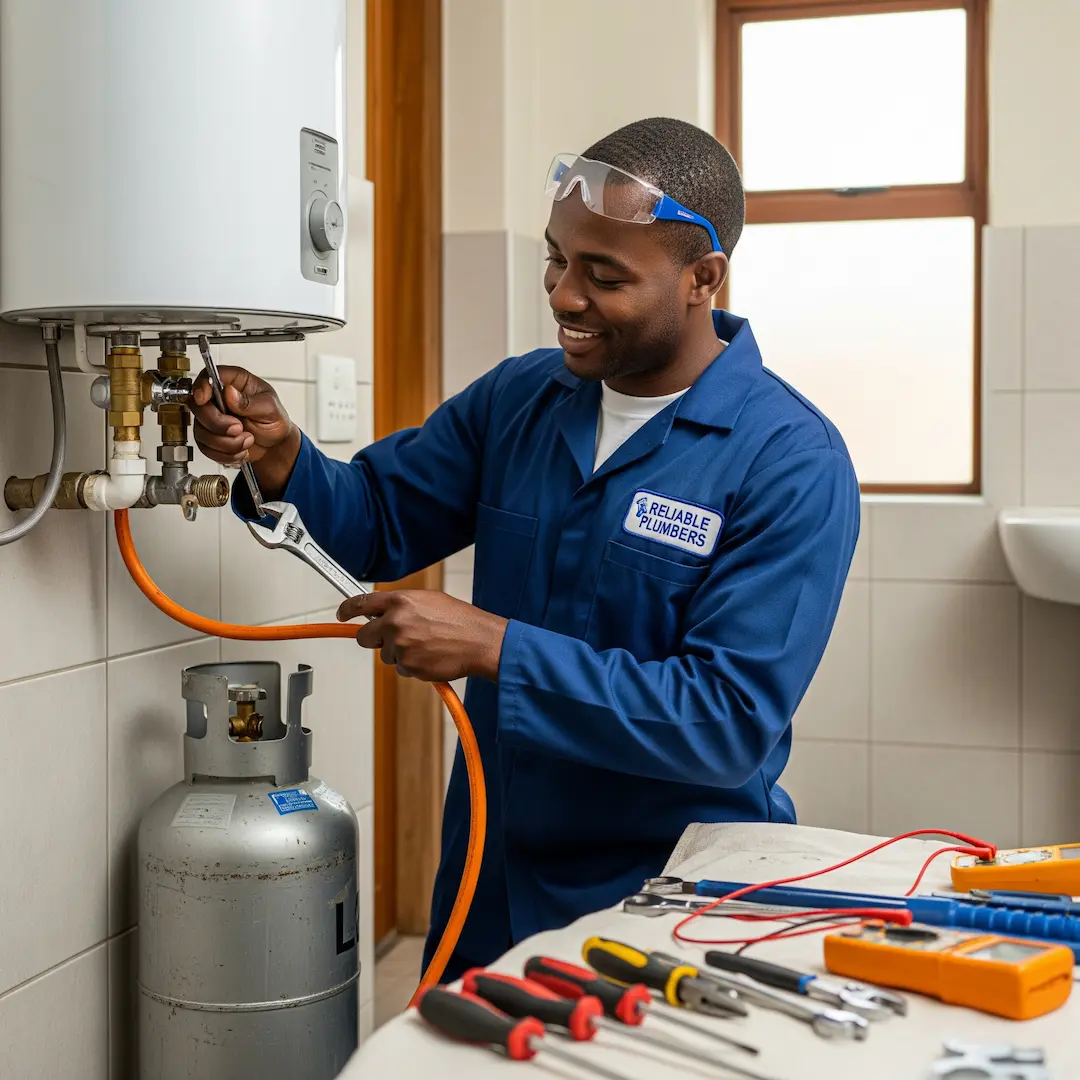
When Your Gas Geyser Needs Repair: Why Certified Expertise is Non-Negotiable in SA
Gas geyser broken? This guide explains why only certified gas practitioners in South Africa should handle repairs—protecting your safety, ensuring legal compliance, and preventing serious household hazards.

When Your Gas Geyser Needs Repair: Why Certified Expertise is Non-Negotiable in SA
The moment your gas geyser stops working is one of pure frustration. One minute you’re enjoying the blissful convenience of instant hot water, and the next, you’re facing an icy shower. In that moment, the temptation to get it fixed as quickly and cheaply as possible is strong. You might think of that local handyman who’s good with general plumbing, or even search for a quick DIY fix online.
When it comes to gas appliances, however, this is a critical mistake. A faulty gas geyser isn't just an inconvenience; it's a potential hazard lurking in your home. The decision of who repairs it is not one to be taken lightly. In South Africa, the only safe, legal, and responsible choice is a certified and registered gas practitioner. This isn't about upselling or unnecessary regulations; it's about protecting your property, your family, and your life.
The Hidden Dangers: Why Gas Geyser Repair is Not a Handyman's Job
Many homeowners underestimate the specific science and stringent safety protocols involved in gas systems. Unlike a dripping tap, a poorly repaired gas appliance carries invisible and potentially lethal risks.
- Carbon Monoxide (CO) Poisoning: Often called the "silent killer," carbon monoxide is an odourless, colourless gas produced when fuel, like LPG, doesn't burn completely. This can happen if a geyser’s burner is faulty, its ventilation is blocked, or the air-to-fuel mixture is incorrect. One of our vetted gas installers in Johannesburg recently shared a chilling story. He was called to a home where the family had been experiencing persistent headaches and nausea for weeks. He found their gas geyser, recently "fixed" by an uncertified tradesman, was installed in a poorly ventilated scullery with an incorrectly sized flue. The unit was slowly leaking CO into their home. The family was lucky to have realised something was wrong before tragedy struck.
- Gas Leaks and the Risk of Fire or Explosion: Liquefied Petroleum Gas (LPG) is highly flammable. The smallest leak from a poorly sealed joint, a cracked hose, or a damaged regulator can lead to a build-up of explosive gas. All it takes is a single spark—from a light switch, a static discharge, or another appliance—to cause a devastating fire or explosion. A certified professional doesn't just tighten a fitting; they use specialised equipment to test for microscopic leaks and ensure every connection is 100% secure according to national standards.
- Voiding Your Insurance and Manufacturer's Warranty: Here’s a risk that hits your wallet directly. If a fire or other damage is caused by a gas appliance that was installed or repaired by an uncertified individual, your home insurance provider is within their rights to reject your claim. Similarly, the manufacturer's warranty on the geyser itself will almost certainly be voided. The small amount you might save on a cheap repair is insignificant compared to the potential financial ruin of an uninsured disaster.
What Does "Certified" Actually Mean? Understanding SAQCC Gas Registration
When we talk about a "certified" gas professional, we’re referring to a specific, legally recognised qualification in South Africa.
The SAQCC Gas (South African Qualification & Certification Committee for Gas) is the official body, mandated by the Department of Labour, responsible for ensuring that anyone working on gas systems is properly trained, qualified, and competent.
A practitioner registered with SAQCC Gas has:
- Verified Skills: They have undergone rigorous training and passed assessments on the safe handling and installation of gas and gas appliances.
- Knowledge of Regulations: They are experts in the South African National Standards (SANS) that govern gas installations, including crucial aspects like ventilation, pipe sizing, and flue requirements.
- The Authority to Issue a CoC: After a new installation, or a modification or repair to an existing one, a registered practitioner will issue a Gas Certificate of Conformity (CoC). This document is your official proof that the work is safe, compliant, and has been performed to the legal standard. Without a valid CoC, your installation is considered illegal.
Hiring someone without this registration is like letting someone without a driver's license drive your family car. They might know how to make it go, but they lack the certified knowledge of the rules and safety procedures that prevent accidents.
Common Gas Geyser Problems and Why They Demand an Expert
Let's look at some common issues and why a specialist's diagnosis is vital.
- Pilot Light Keeps Going Out: This might seem simple, but it could be caused by a faulty thermocouple (a safety device), a blocked pilot injector, incorrect gas pressure, or even a strong draft caused by improper ventilation. An unqualified person might simply bypass the thermocouple to keep the flame lit, disabling a critical safety feature that shuts off the gas if the flame goes out.
- No Hot Water (or Only Lukewarm Water): The cause could range from a simple blockage in the water line to a more complex issue like a worn-out diaphragm, a faulty gas solenoid, or a dangerously scaled-up heat exchanger. One of our pros in the Western Cape, an area with particularly hard water, once opened a geyser to find the heat exchanger almost completely blocked with limescale. This not only prevented the water from heating but also put immense strain on the unit, creating a serious fire risk. A general handyman would likely miss this diagnosis.
- You Can Smell Gas: This is an emergency. A smell of gas, often like rotten eggs (an added odorant), means there is a leak. Do not try to find it yourself.
- Immediately shut off the gas supply at the cylinder.
- Open all windows and doors to ventilate the area.
- Do not operate any light switches, use your phone, or create any sparks.
- Leave the area if the smell is strong.
- From a safe location, call a certified SAQCC Gas practitioner immediately.
Disclaimer: Gas geyser repairs involve significant risks, including gas leaks, fire, and exposure to carbon monoxide. This guide is for informational purposes only. We strongly advise against any DIY repairs on gas appliances. All work on gas systems should be performed by a qualified and SAQCC Gas registered professional.
Your Quick Checklist Before Hiring a Gas Geyser Repair Pro
You’re convinced. You need a certified pro. Here’s how to make sure you’re hiring the right person for the job.
- Ask to see their SAQCC Gas card. Every registered practitioner must carry this card. It looks like a license card with their photo, name, registration number, and the specific types of gas work they are authorised to do (e.g., Domestic/LPG). Check the expiry date.
- Verify their registration. You can verify a practitioner's status on the official SAQCC Gas website by entering their registration number. This gives you absolute certainty.
- Request a detailed, written quote. The quote should clearly outline the suspected issue, the work to be done, and the cost of parts and labour.
- Discuss the Certificate of Conformity (CoC). Ask if the repair will require a new CoC to be issued. A professional and trustworthy practitioner will be transparent about this.
Choosing the right person to repair your gas geyser is about more than just getting the hot water back on. It’s a crucial decision that ensures the safety of your home, the legality of your installation, and your family's well-being. By insisting on a certified professional, you are investing in quality, safety, and most importantly, peace of mind.
Frequently Asked Questions (FAQs)
How often should my gas geyser be serviced?
It is highly recommended to have your gas geyser serviced at least once a year by a registered gas practitioner. Regular servicing ensures it runs efficiently, prolongs its lifespan, and allows a professional to spot potential safety issues like minor leaks or ventilation blockages before they become serious problems.
What is a Certificate of Conformity (CoC) and do I need one for a repair?
A Gas Certificate of Conformity (CoC) is a legal document issued by a registered gas practitioner certifying that your gas installation is safe and complies with South African National Standards (SANS). You must have a CoC for any new installation. For repairs, a new CoC may be required if the practitioner has to alter the system, replace a major component, or fix a previously non-compliant installation.
My gas geyser is installed inside my bathroom. Is this safe?
In South Africa, installing a standard gas geyser (Type A or B) inside a bathroom or bedroom is strictly against regulations and is extremely dangerous due to the risk of carbon monoxide poisoning in a confined space. Only a specific type of appliance known as a Type C (or forced draught) geyser, which draws its combustion air from outside and expels fumes outside through a sealed pipe, can be installed indoors. If you have a standard geyser in your bathroom, it is non-compliant and you should have it assessed by a certified installer immediately.
Can I repair a minor issue on my gas geyser myself, like relighting the pilot light?
While relighting a pilot light is often a straightforward process outlined in the manufacturer's manual, it is the absolute limit of what a homeowner should attempt. If the pilot light does not stay lit after one or two tries, it indicates an underlying problem. You should not attempt any further diagnosis or repair. It's crucial to call a certified professional to investigate the root cause, which could be a faulty safety device or a gas supply issue. Never bypass any safety features.
Suzette Meyer is the lead author and content creator for Kandua.com, South Africa’s #1 marketplace for home services. Suzette has made it her mission to help homeowners with advice on all aspects of home repair, maintenance and improvement, including how to choose the right Pro and how to make smart upgrades that improve your resale value or save costs.

Related articles, advice and more
.webp)
What Does a Plumbing Call-Out Fee Usually Include?
When that familiar drip-drip-drip starts under the kitchen sink or your geyser begins a slow weep in the ceiling, the first thing most South African homeowners do is pick up the phone. But before a wrench even touches a pipe, you’ll likely hear the term "call-out fee."
.jpg)
How to Choose Between Repair and Replacement for Your Geyser
Deciding between repairing and replacing isn't just about the immediate price tag. It is about safety, long-term electricity savings, and compliance with South African building regulations. Based on insights from vetted plumbers across Johannesburg, Cape Town, and Durban, this guide will help you navigate that decision with confidence.
.jpg)
What to Do If Your Electric Problem Comes Back After Repair
There are few things more frustrating than paying for a repair only to have the lights flicker, the breaker trip, or the plug point fail again a few days later. Here is a step-by-step guide to handling the situation professionally, safely, and effectively to get it sorted out for good.
.jpg)
Understanding Geyser Warranties in South Africa
For most South African households, the geyser is the hardest-working appliance in the home. To help you protect your investment, we have broken down exactly how Geyser warranties work in South Africa, drawing on insights from qualified plumbers who handle rejected claims daily.
.webp)
How Hard Water Damages Your Plumbing (and What to Do About It)
If you suspect you have hard water, you are in the "awareness" stage of a very important journey for your home's maintenance. Ignoring it can lead to burst geysers and clogged pipes. This guide, compiled with insights from top local plumbers, will explain exactly how hard water affects your plumbing and the practical steps you can take to fix it.
.webp)
.webp)
.webp)
Latest articles, advice and more
.webp)
How To Fix A Damp Wall And What's Actually Causing It
If your walls are weeping, your plaster is flaking, or you can smell that musty, damp smell, you're not dealing with one problem; you're dealing with three possible ones. The fix depends entirely on the cause.
.webp)
Gutter Cleaning: How Often Should You Do It and What Does It Cost?
Clean your gutters at least twice a year, and always before your rainy season kicks in. In South Africa, a professional gutter clean usually costs somewhere between R450 and R2,500, depending on the size of your home, how high the roof is, and how blocked things have become. Here is how to work out the right frequency and a fair price.
.webp)
Why Are My Plug Points Not Working? A Troubleshooting Guide
If your plug points have suddenly gone dead, the usual culprits are a tripped earth leakage switch, a tripped circuit breaker, loose or burnt wiring, or a faulty appliance overloading the circuit. Work through the safety checks below before you call anyone, then understand when the job requires a registered electrician.
.webp)
How a Geyser Timer Can Cut Your Electricity Bill
If you've been staring at your Eskom bill and wondering where the money is going, your geyser might be the culprit. Here's the good news: a simple geyser timer can cut your hot water costs by up to 30% each month, which typically saves South African homeowners between R200 and R400 on their electricity bills, depending on their current usage.
%20(1).webp)
How To Treat and Paint Over Damp Walls (So It Doesn't Come Back)
You've noticed a patch on the bedroom wall: discoloured and maybe a bit soft to the touch, and you're wondering if a fresh coat of paint will simply cover the problem. The short answer: no, it won't. But the good news is that understanding what's happening beneath that stain, and treating it properly, is far simpler than you might think.
.webp)
Beyond the Unboxing: A Detailed Guide to Correct Washing Machine Plumbing & Setup
New washing machine in South Africa? Learn essential plumbing and setup tips to prevent leaks, ensure efficient operation, and extend your appliance’s lifespan - expert advice before your first load.
.webp)
New Washing Machine? Don't Plug It In Yet! Essential Installation Tips for SA Homes
Installing a new washing machine? Learn the essential setup steps South African homeowners often overlook to prevent leaks, noise, and damage—and ensure efficient, long-lasting performance from day one.
%20(1).webp)
.webp)
TV Repair Costs in South Africa: Diagnosing Screen, Power & Component Issues
Find out what TV repairs really cost in South Africa – from call-out and diagnosis fees to screen, power and main board fixes – and when it’s cheaper to replace your TV instead of repairing it.
.webp)
Septic Tank Leak Repair Cost in South Africa: Addressing Odours & Environmental Hazards
Learn typical septic tank leak repair costs in South Africa, what drives the price up, how to spot early warning signs (odours, soggy ground, backups), and when it’s safer and cheaper to get a professional in.
How to Install a Horizontal Geyser | Step-by-Step Pro Guide
Want to install a geyser like a pro? This step-by-step tutorial shows you exactly how to do a horizontal Ariston Axios geyser installation, straight from the BluLever plumbing workshop. 🎥 Hosted by MK, BluLever’s technical facilitator, and supported by a qualified electrician, Life and a BluLever graduate artisan, Zinhle. This is your ultimate guide to a SANS 10254-compliant installation — from preparing the wall, to plumbing, electrical wiring, and pro troubleshooting tips.
How to Maintain a Geyser | Step-by-Step Pro Guide
Want to maintain a geyser like a pro? This step-by-step tutorial shows you exactly how to do the three core geyser maintenance checks on an Ariston Axios geyser installation, straight from the BluLever plumbing workshop. 🎥 Hosted by MK, BluLever’s technical facilitator, and supported by a qualified electrician, Life. This is your ultimate guide to geyser maintenance — from diagnosing the problem to checking the heat regulation of the geyser, to pressure regulation and then finally corrosion protection.
%201.avif)
Not just another newsletter. It's an advantage


From problem to solved.


.svg)


.avif)
.avif)
.avif)


.avif)