
Electrical

Connect
with
fast,
affordable
and
vetted
Electricians
for
all
your
Gate and garage motor repairs
needs

What do you need help with?
Tell us what you need... It takes 2 min and it's free
Find a Pro
Start here
How it works
play icon
85 000+ Pro Reviews
100% Vetted Pros
Fast response time
Image of a happy young African woman after hiring a Kandua Pro
Image of a satisfied man after hiring a Kandua Pro
Image of a happy young couple after hiring a Kandua Pro
4.2
Average Google Rating

How it works

How
much
does
it
cost
to
hire
an
a
Electrician
in
South
Africa?

Call out fee
R650 – R950
Emergency fee
R600 – R900+
Labour
R400 – R800 per hour
After hours
1.5× – 2× normal rate
Comprehensive Cost Guide
*Prices are estimates and can vary

Garage Door Repairs in South Africa

An automated garage or gate motor is a crucial part of any South African home's security and convenience. When it fails, it can be a major inconvenience and, more importantly, a significant security risk. A professional electrician is the right and legally required tradesperson for the job, as these systems involve both mechanical and electrical components that fall under national safety standards.

The cost to get a professional out to fix your gate or garage motor can vary significantly. You can expect to pay with easy jobs like remote programming costing as little as R500, while more complex repairs, such as a complete PC board replacement, can reach up to R4,500 or more. The time it takes can also range from under an hour for simple fixes to a few hours for more intricate issues.

Common Faults and Signs You Need a Repair

Recognising the early signs of a struggling gate or garage motor can prevent a complete breakdown and a potentially more expensive repair. Nick, a Kandua-vetted electrician from Durban, notes, "Most major failures don't happen overnight. The motor gives you warning signs. Listening to your gate is the first step in avoiding a crisis."

  • Intermittent Operation: Your gate opens perfectly in the morning but struggles in the evening. This could point to a power supply issue, an overheating motor, or a faulty sensor intermittently losing connection. In coastal areas like Durban or Gqeberha, high humidity and salt air can also corrode electrical contacts, leading to this kind of erratic behaviour.
  • Unusual Noises: A healthy motor should be relatively quiet. If you start hearing grinding, squealing, or loud clunking, it's a definite red flag. A grinding noise often means the internal gears are stripped, while a high-pitched squeal can indicate worn bearings. These are sounds the motor makes when it's under stress.
  • Slow or Jerky Movement: If your gate or garage door is moving sluggishly or stopping mid-way, it suggests a power delivery problem or significant resistance in the system. This could be caused by physical obstructions or a failing motor.
  • Overheating: If the motor unit is excessively hot to the touch after a few cycles, it's a serious sign of internal stress. This could be caused by the motor working too hard due to a mechanical issue or an electrical fault, and it can drastically reduce the motor's lifespan.
  • Incomplete Closure or Reversing: A gate or garage door that closes partway and then reverses often means its safety sensors are dirty, misaligned, or obstructed. This is a critical safety feature that needs to be addressed immediately.

Checklist: Before Your Installer Arrives

To make the repair process as smooth as possible, here are a few things you can do before your Kandua Pro arrives:

  • Clear the Area: Ensure there is easy access to the motor housing and the gate or garage door track. Remove any vehicles, pot plants, or other obstructions.
  • Find Your Remotes: Gather all the remotes for the system so the technician can test them after the repair.
  • Know Your Power Source: Be ready to show the technician which circuit breaker in your distribution board (DB) powers the gate or garage motor.
  • Note the Fault: Be prepared to describe the problem in detail. When did it start? Does it happen all the time or only sometimes? Are there any specific noises?

How a Professional Repair is Conducted

When you call a professional electrician or gate motor specialist, you're not just getting a person to tighten a few screws. You’re getting a trained expert with specific diagnostic tools who understands South African systems and regulations. They will follow a systematic process to get to the root of the problem.

First, they’ll conduct a thorough assessment, starting with the simplest checks, such as the power supply and fuses. They will then use specialised tools like a multimeter to test the electrical components, including the battery, charger, and the PC board. They will also inspect the mechanical parts, checking for physical obstructions, worn-out gears, or track damage. An expert will understand the specific error codes and diagnostic lights on major South African brands like Centurion and DTS.

Once the fault is pinpointed, they will explain the problem to you in clear terms and provide a detailed quote for the repair, including both parts and labour. For instance, if the main PC board is burnt out due to a power surge (a common issue during load shedding restoration), they will show you the damage and explain why a replacement is necessary. They will then perform the repair using the correct, high-quality parts, which is crucial for a lasting fix.

Finally, a true professional will not just finish the job and leave. They will test the entire system, ensuring the travel limits are set correctly, all remotes are working, and, most importantly, the safety features like the anti-crushing mechanism and safety beams are fully operational. They will ensure your gate operates smoothly, safely, and securely before they hand the project over to you.

The Risk of DIY and the Value of a Professional

Attempting to repair a gate or garage motor yourself can be extremely dangerous. These systems involve high-voltage electricity and heavy moving parts. A misstep can lead to severe injury, electrocution, or even fire.

  • Electrical Dangers: Working with a motor’s internal wiring or PC board without the proper knowledge can result in electric shocks or cause a short circuit that damages the motor beyond repair. SANS regulations for electrical work are in place for a reason. In South Africa, any work on fixed electrical machinery legally requires a qualified person, in line with the SANS 10142-1 wiring code. For more information on these regulations, you can refer to the Electrical Conformance Board of South Africa.
  • Mechanical Hazards: For garage doors, the tension springs hold immense force. One of our service providers recalled a scenario where a DIYer attempted to adjust a torsion spring and it snapped, luckily missing the person but shattering a window and proving how volatile these components are. These are not a DIY job. “We had a call-out in Benoni where a homeowner attempted to adjust a torsion spring and it snapped, shattering a window and embedding itself in the garage wall,” says Sipho M., a Kandua Pro. “It shows how volatile these components are. These are not a DIY job.”
  • Incorrect Diagnosis: Without the right diagnostic tools and expertise, you might only fix a symptom, not the underlying cause. For example, you might replace a blown fuse, only for it to blow again a week later because you failed to identify the shorting wire that caused the fuse to fail in the first place.

A professional will not only ensure the repair is done correctly and safely, but they also have access to genuine parts, which prevents a repeat failure. Their expertise guarantees that your home’s security is fully restored, providing invaluable peace of mind. Find out more about the costs of hiring a professional with our cost guide: The cost of hiring an electrician per hour.

What Happens After the Service?

Once your gate or garage motor is repaired, a little post-service care can prevent future issues. A professional will often provide advice, but it’s up to you to implement it.

  • Keep it Clean: Regularly sweep or brush the gate track to remove leaves, dirt, and stones that can obstruct the wheels and strain the motor.
  • Lubricate Moving Parts: Apply a silicone-based lubricant to the gate wheels, hinges, and the rack. This reduces friction and ensures the motor doesn't have to work harder than it needs to.
  • Inspect Safety Features: Regularly test the safety beams by placing an object in the gate's path as it closes. The gate should stop and reverse. If it doesn't, call a professional immediately.
  • Check the Battery: Your backup battery is the motor’s lifeline during load shedding. These batteries typically last 2 to 3 years. If your gate struggles during a power outage, it's time for a replacement.

Real-World Results

Colleen from Pretoria West had a gate motor that kept stopping halfway, frustrating their family and leaving their property exposed. Several handymen had tried and failed to fix it, suggesting they replace the entire motor at a cost of over R5,000. A Kandua professional was called in. Through a methodical diagnostic process, they discovered that the motor's limit switches were just dirty and misaligned. A quick clean and recalibration was all it took. The gate was back to working perfectly in under an hour, saving Colleen thousands of Rands and the stress of a full replacement.

In another instance in Johannesburg, Kevin's gate motor had stopped working completely. The family initially thought the power was out. The electrician discovered that ants had built a nest inside the motor's housing, causing a short circuit on the main PC board. After carefully clearing the nest and replacing the burnt board, the motor was as good as new. The technician also recommended a pest control strategy to prevent it from happening again, ensuring a lasting solution. <ins>For more preventative tips, check out our guide to essential home maintenance.

Frequently Asked Questions about Gate and Garage Motor Repairs

How long do garage and gate motors typically last in South Africa?
The lifespan of a well-maintained motor can be anywhere from 8 to 15 years. Factors like the frequency of use, exposure to harsh weather (especially in coastal areas with corrosive salt air), and regular maintenance all play a significant role.

Can load shedding damage my gate or garage motor?
Yes, load shedding can potentially damage your motor. The frequent on/off cycles and power surges can put immense strain on the motor’s sensitive electronic components, particularly the control board and battery.

How much does a new remote for my gate cost?
A new remote and the programming required to link it to your system usually costs between R350 and R750.

What maintenance can I do to extend the life of my motor?
Simple maintenance makes a huge difference. You can regularly clean the track of debris, lubricate moving parts with a silicone-based spray, and ensure the safety beams are clean and properly aligned. Having a professional service your motor annually can also prevent bigger issues.

My gate motor runs but the gate doesn't move. What could be wrong?
This is usually a mechanical problem. This almost always indicates a mechanical disconnection between the motor and the gate. For sliding gates, the pinion gear may no longer be engaging with the rack on the gate, often due to a loose mounting or a gearbox issue. This requires professional attention.

Is it cheaper to repair or replace my gate motor?
It depends on the age and cost. If the repair cost is more than 50-60% of the price of a new motor, or if your motor is over 10 years old and parts are scarce, replacement is often the better long-term solution. A new motor comes with a warranty and modern features.

How much is the call-out fee for a technician to just look at my motor?
A standard call-out fee for diagnostics generally ranges from R500 to R850. This fee often covers the first hour of labour.

Can a faulty gate motor damage my physical gate?
Yes. If the motor's limit switches fail, it may not know when to stop, causing it to ram the gate with considerable force and potentially bending the gate or damaging the track.

How often should I have my gate motor professionally serviced?
An annual service is highly recommended. Regular servicing can help identify potential issues early and prolong the lifespan of your system.

Why does my gate open on its own sometimes?
This can be caused by radio interference from other signals, a faulty remote control with a stuck button, or, more seriously, an issue with the motor’s electronic control board. A professional technician can diagnose the exact cause.


Why You Can Trust Kandua to Get it Right

At Kandua, getting your home projects done is simple, safe, and stress-free.

Tell us what you need – Or let our smart AI Home Companion help diagnose your problem if you’re not sure where to start.

Get answers as you go – While posting your job, you can ask our smart AI home companion anything, from understanding typical costs, to how the process works, to how long it might take. Ask questions whenever they pop up, and get clear, helpful answers instantly.

We match you with the best – All our pros are 100% vetted: ID-verified, criminal background checked, certification verified, and maintaining at least a 4.5-star rating. You don’t have to worry about picking the right person, we make sure the pro we send has the right skills and certification to get your job done right.

With Kandua, you can rest easy knowing you’re in safe hands from the first click to the final handshake.

Electricians in South Africa: what to know before you book

Electrical issues have a way of starting small… and turning serious fast. A plug that “sometimes trips” can become a melted socket. Flickering lights can point to loose connections. And if your earth leakage keeps going off, it’s often your home telling you something isn’t right.

Kandua helps you get it sorted by matching you with a vetted electrician for your job — whether it’s a repair, installation, inspection, upgrade, or an urgent call-out.

A few quick answers (so you don’t have to scroll)

How do I choose a good electrician?
Pick someone who explains the cause (not just the symptom), tests before they replace parts, prices transparently, and can issue the right compliance paperwork when it’s required.

Do I need an Electrical Certificate of Compliance (CoC) in South Africa?
Often, yes — especially for property transfer and for any additions/alterations to an installation. The Department of Employment and Labour has also warned against “paper CoCs” issued without proper testing, and urges homeowners to use legally registered electrical contractors.

What should electrical work cost?
Most electricians charge a call-out fee + labour + materials, with higher rates for after-hours, complex fault finding, DB work, or urgent callouts. (There’s a pricing guide further down.)

What should I do first in an electrical emergency?
If it’s safe, switch off power at the main breaker, keep people away from the affected area (especially if there’s water), and call an electrician. If there’s smoke/fire risk, treat it as an emergency immediately.

Common electrical problems (and what they usually mean)

You don’t need to diagnose like an electrician — but it helps to know what the usual “signals” point to.

“My plugs keep tripping / the power keeps going off”
Often caused by an overloaded circuit, a faulty appliance, a loose connection, or a problem at the DB (distribution board). If it’s frequent, don’t just keep resetting — you want proper testing to prevent heat build-up and damage.

“My earth leakage trips randomly (especially at night or when it rains)”
This can indicate moisture ingress, a faulty appliance, deteriorating insulation, outdoor circuits taking on water, or an earthing/bonding issue. It’s common — and it’s exactly the sort of thing that needs systematic fault finding.

“My lights flicker / dim when I use appliances”
Sometimes it’s a supply issue — but it can also point to loose connections, voltage drop, an overloaded circuit, or a stressed neutral. If you’re noticing it across multiple rooms, get it checked.

“I smell burning / a plug is warm / there’s buzzing at the DB”
Treat this as urgent. Heat + electrics is how small problems become big ones. Switch off the circuit (or main breaker if you’re unsure) and book an electrician.

“I get a small shock/tingle from taps or appliances”
That can be an earthing/bonding fault and should be investigated quickly — especially in kitchens, bathrooms, and anywhere near water.

When it’s a DIY job — and when it isn’t

DIY can be fine for low-risk, non-electrical basics (like replacing a light bulb, resetting a tripped breaker once, or unplugging an appliance to test if it’s the cause).

Call an electrician when:

  • a socket/switch is hot, crackling, discoloured, or smells burnt
  • breakers/earth leakage keep tripping
  • you suspect faulty wiring, water exposure, or a hidden issue
  • you’re touching the DB, adding circuits, or upgrading capacity
  • you’re installing high-load appliances (oven, hob, geyser, heat pump) or adding dedicated circuits
  • you’re adding solar/inverter equipment or changing the installation layout
  • you may need a CoC for compliance, insurance, or sale/transfer

Certifications, registrations & compliance in South Africa (what matters and when)

This is the part people usually discover too late. Here’s the simple version.

1) Electrical CoC (Certificate of Compliance)

A CoC is a legal document confirming an electrical installation has been inspected and tested and is compliant. It’s commonly required before property sale/transfer, and it’s also required when electrical work involves additions or alterations.

Also important: the Department of Employment and Labour explicitly warns that a registered contractor may only issue a CoC after proper inspection/testing, and may not issue on behalf of an unregistered person.

2) “Registered person” (who is actually allowed to certify)

In practice, certification is tied to being a properly registered/authorised person (often referred to as a wireman’s licence / registered person in the industry). If you need a CoC, ask upfront:
“Are you legally registered to inspect, test, and issue the CoC for this work?”

3) CoC validity (the part everyone argues about)

A useful way to think about it:

  • For transfer purposes, the regulations are commonly applied as “not older than 2 years”.
  • For day-to-day living, it remains relevant until changes are made — if you alter/add to the installation, you’ll typically need a supplementary CoC for that work.

4) Solar / inverter / PV additions (very common now)

If you’re adding solar PV or inverter equipment, treat it as a compliance-sensitive electrical project. Industry guidance stresses that PV work should be under the supervision of properly qualified electrical persons, and the City of Cape Town’s guidance notes you should request the original electrical CoC from the registered installation electrician.

Pricing: what to budget for an electrician in South Africa

Pricing varies by city, travel distance, urgency, and complexity — but most homeowners will see a familiar structure:

Typical cost structure

  • Call-out fee (travel + initial assessment)
  • Labour (hourly)
  • Materials/parts
  • After-hours premium (nights, weekends, public holidays)
  • Specialist testing / fault finding time (often where the real value is)

Typical ranges you’ll see (guideline)

  • Labour: roughly R350 – R700/hour for many standard jobs (average often around the mid-range), with higher rates for specialised work.
  • Emergency call-out: often around R600 – R900 (and may or may not include the first hour — always ask).

A realistic “small job” expectation
Even when it sounds simple, budget for a call-out + 1–2 hours labour plus parts. If you have a few small fixes, bundling them into one visit often saves money.

10 Genuinely helpful electrician FAQ's

  1. What’s the difference between “the power tripped” and “earth leakage tripped”?
    A normal breaker trip usually points to overload or a circuit fault. Earth leakage trips when it detects current leaking to earth (often moisture, insulation breakdown, or a faulty appliance). If earth leakage trips repeatedly, it needs proper fault finding.
  2. How do I figure out if it’s my appliance or the house wiring?
    A safe starting point is to unplug high-load appliances and see if the trip stops — but if trips continue (or you see heat/burning smells), stop testing and get an electrician. The correct method is measured testing, not guesswork.
  3. Why does my plug socket feel warm?
    Warmth can mean a loose connection, overload, poor contact, or damaged wiring — all of which can create heat and become dangerous. Book it in sooner rather than later.
  4. My lights flicker when I use the kettle/microwave — is that normal?
    Occasional minor dimming can happen, but persistent flickering/dimming can signal voltage drop, loose connections, overloaded circuits, or neutral issues. If it’s happening across rooms, get it checked.
  5. Do I need a dedicated circuit for an oven/hob/geyser/heat pump?
    Very often, yes — these are high-load items and are safer (and usually more reliable) with correct isolation and wiring sized for the load. An electrician should assess and advise based on your DB capacity.
  6. What’s involved in a DB (distribution board) upgrade?
    Typically: inspection of existing circuits, correcting unsafe/incorrect connections, adding/replacing breakers, ensuring earthing and bonding are correct, labelling circuits, and testing. DB work should be done carefully and properly documented.
  7. Do I need a new CoC after renovations?
    If the renovation involved electrical additions/alterations (new circuits, moved points, new DB work, solar/inverter additions), you’ll usually need a supplementary CoC for that work.
  8. How long does a CoC take to issue?
    It depends on how many defects are found. A proper CoC requires inspection and testing — if repairs are needed, it may take longer. Be wary of instant “paper CoCs” with no testing.
  9. Does an electrical CoC cover everything in the house?
    A CoC generally relates to the electrical installation and its safety/compliance (distribution, wiring, earthing, bonding, etc.). If you have specialised systems (like solar PV or an electric fence), ask what additional documentation is required for those.
  10. What should I ask an electrician before they start?
    Three questions cover most issues:
  • “What do you think is the likely cause, and how will you test it?”
  • “Is this priced as call-out + hourly + materials, and what counts as after-hours?”
  • “Will this work require a CoC or supplementary CoC — and are you registered to issue it?”
The avatar of Jess: Kandua's AI powered home companion
Meet Jess
The world's first AI powered home companion
Not sure what's actually wrong or who to hire? Don't stress, simply ask Jess
Talk to Jess - it's free
Image of a happy young African woman after hiring a Kandua Pro
Image of a happy young man after hiring a Kandua Pro
Image of a happy young couple after hiring a Kandua Pro

Here's what other clients are saying:

Image of a happy young African woman after hiring a Kandua Pro
Image of a satisfied man after hiring a Kandua Pro
Image of a happy young couple after hiring a Kandua Pro
4.2
Average Google Rating
Image of a happy senior lady after hiring a Kandua Pro
Image of a satisfied man after hiring a Kandua Pro
Image of a happy young woman after hiring a Kandua Pro
D
5 Stars
Plumbing Installation

“The plumber arrived on time, explained the options clearly, and finished the installation neatly. Everything works perfectly, and the place was left spotless.”

V
4 Stars
Electrical COC

“Super professional from start to finish. The electrician checked everything properly, flagged a couple of small issues, and issued the CoC quickly once it was safe and compliant.”

R
5 Stars
Pipe Fittings

“We had leaking pipe fittings that kept coming back. The pro diagnosed the real cause, replaced what was needed, and tested it properly. no leaks since.”

Why
use
Kandua
when
you
book
a
an
Electrician

When you book through Kandua, you’re not just finding a pro – you’re getting a safer, simpler and more reliable way to sort out jobs around your home
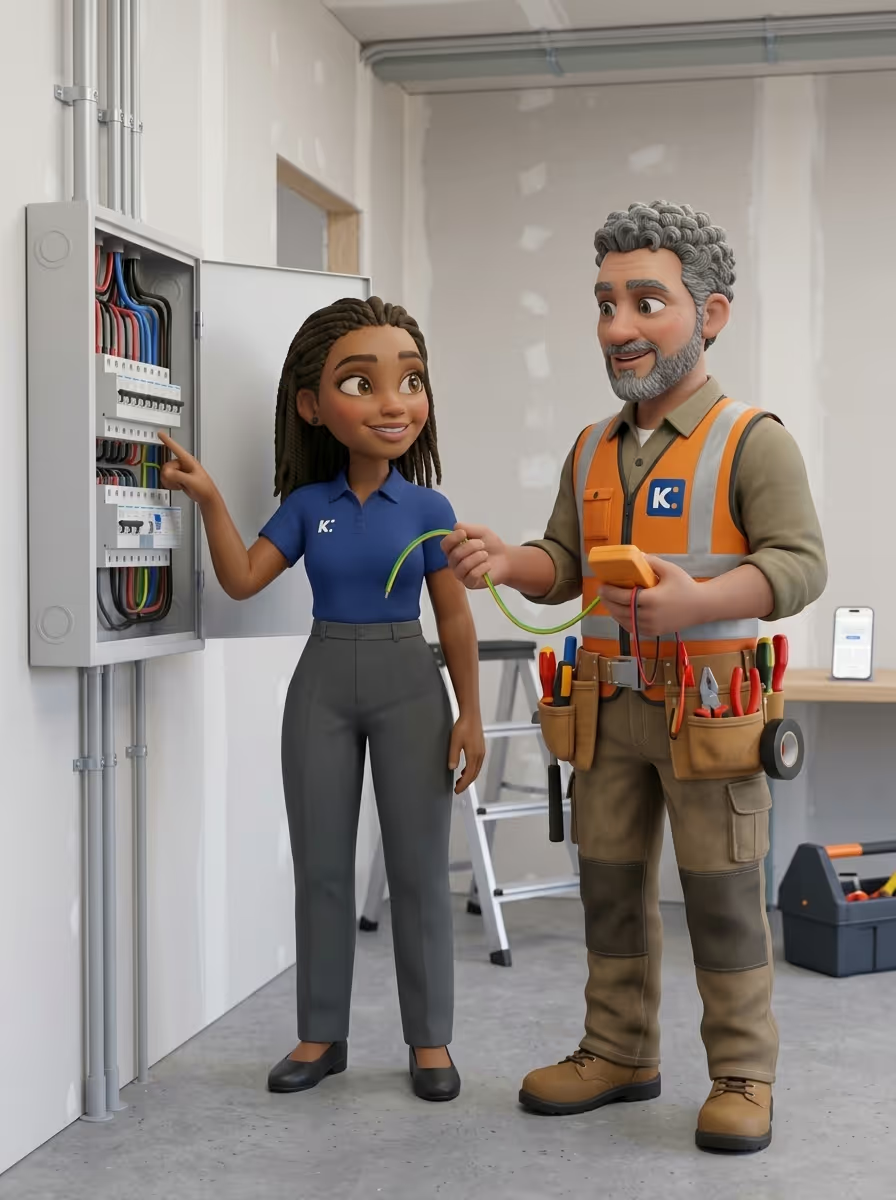
An image of a woman booking a trusted and vetted Pro on Kandua
Find a Pro

Your safety comes first

Every Pro on Kandua is background checked and vetted, with qualifications, certifications and documentation reviewed for your safety

AI that understands your home problems

Instead of guessing what to select from a long list, just explain the issue. We'll will find the best suited Pro for your specific need

Only top rated, vetted Pros

No more gambling with your privacy or juggling multiple quotes. We connect you with a single, fully-vetted Pro instead of flooding you with calls
like [#165dfb] Created with Sketch.

Less admin, more peace of mind

Review your quote, approve the work and pay your pro in one secure flow – no screenshots, no EFT slip-ups

Suggested
reads
about
Gate and garage motor repairs

View all