
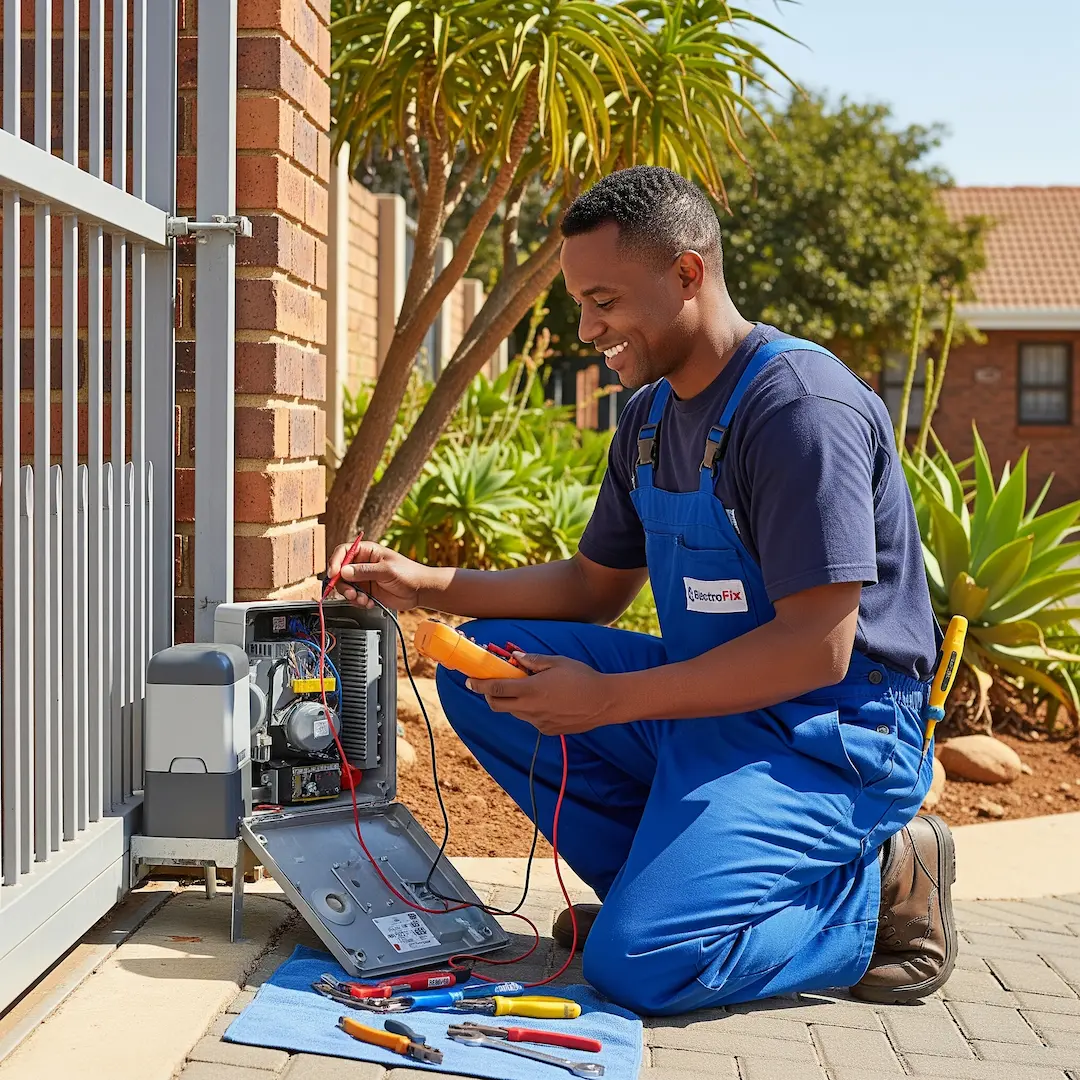
Gate Motor Malfunction? Diagnosing & Repairing Common Issues in South Africa
Gate motor not working in South Africa? Discover common causes, simple checks you can try, and clear signs it’s time to call a professional to restore security and convenience.

There's nothing quite as frustrating as arriving home after a long day, pushing your gate remote, and… nothing happens. Or worse, your gate starts to open, groans, and then jams halfway. A malfunctioning gate motor can throw a real spanner in your daily routine and compromise your home's security.
In South Africa, where gate motors are a standard security feature for many homes, understanding the common culprits behind a breakdown can save you a lot of headaches. While some issues might be simple DIY fixes, others definitely require the touch of a qualified professional. Let's delve into diagnosing and tackling those frustrating gate motor problems.
Understanding Your Gate Motor: The Basics
Before we jump into troubleshooting, it helps to know the main components of a typical gate motor system:
- The Motor Unit: This is the brains and brawn, housing the motor, gearbox, and control board.
- The Rack/Chain: The mechanism that actually moves the gate along its track.
- Remote Controls: Your primary way of sending signals to the motor.
- Limit Switches: These tell the motor when the gate is fully open or closed, preventing it from overrunning.
- Infrared Safety Beams (Photoelectric Sensors): Crucial safety features that stop the gate from closing if something (or someone) is in its path.
- Battery Backup: Most modern gate motors have a battery to ensure operation during power outages.
Diagnosing Common Gate Motor Issues
When your gate motor acts up, a systematic approach to diagnosis can help pinpoint the problem. Our professional technicians often follow a similar process.
1. The Gate Motor is Completely Unresponsive (No Lights, No Movement)
This is often the most worrying scenario – complete silence.
- Power Supply Check:Is there a power outage in your area? This might seem obvious, but it's the first thing to rule out. Check your lights, TV, or Eskom Se Push.
- Is the circuit breaker tripped? Head to your main distribution board (DB board) and look for the breaker labelled "Gate Motor" or "Outdoor Lights" – sometimes they are on the same circuit. If it's tripped, switch it off and then back on. If it trips again immediately, you have an electrical fault that needs professional attention.
- Is the motor unit receiving power? Look for any indicator lights on the motor's control board. If they're off, and there's no power outage or tripped breaker, the issue could be with the power cable leading to the motor, or the motor's fuse. This often requires a multimeter to test, and it's best left to an electrician.
- Battery Backup Issue: Even if the mains power is on, a dead or faulty backup battery can sometimes cause issues. Many motors rely on the battery for initial startup current. If your battery is old (typically lasts 2-3 years) or completely drained, the motor might not respond. Some motor models will indicate a low battery with a specific LED or beeping pattern. Trying to jump-start the motor directly from a car battery (observing correct polarity) can sometimes confirm if the battery is the culprit, but this is a temporary fix and the battery will need replacing.
2. The Gate Opens Partially, Jams, or Makes Grinding Noises
This suggests a mechanical issue or a problem with the gate's movement.
- Obstructions on the Track:Clear the path: Visually inspect the gate track. Are there stones, dirt, leaves, or even small toys blocking the wheels or the rack? A common scenario our installers encounter is a child's forgotten toy left in the gate's path.
- Damaged track or wheels: Look for bent sections of the track or damaged gate wheels. If the gate isn't moving smoothly by hand (when disengaged from the motor), this is likely the problem. Bent tracks often need professional repair or replacement.
- Motor Rack Alignment:The rack (the toothed strip on the gate) must mesh perfectly with the motor's pinion gear. If the rack has shifted, become loose, or has damaged teeth, the motor will struggle or jam. Check for any loose bolts securing the rack to the gate. A misaligned rack often causes a grinding noise as the motor tries to engage.
- Motor Gearbox/Internal Failure: If the motor hums but the gate doesn't move, or if you hear loud grinding noises from within the motor unit, it could indicate a stripped gear in the gearbox. This is an internal motor repair that definitely requires a specialist.
- Limit Switch Malfunction:Limit switches tell the motor when to stop. If they are dirty, damaged, or misaligned, the gate might stop prematurely or not stop at all. For example, a gate that opens a few feet and then stops abruptly often points to a limit switch issue. Sometimes, simply cleaning them or re-calibrating the motor's travel limits (refer to your motor's manual) can resolve this.
3. Remote Control Issues
Your remote is often the first point of interaction.
- Dead Batteries: The simplest fix! Replace the batteries in your remote.
- Remote Not Paired: If you've replaced batteries and it still doesn't work, or if it's a new remote, it might need to be "learned" or paired with the gate motor's receiver. The process varies by motor brand, so consult your manual.
- Receiver Issues: The receiver unit inside the motor's control box might be faulty or have a loose connection. This is less common but can happen. Ensure the antenna is not obstructed or damaged.
4. Gate Closes on Obstacles / Safety Beams Not Working
This is a critical safety concern.
- Blocked or Misaligned Safety Beams:The infrared safety beams consist of a transmitter and a receiver. They need a clear line of sight. Check for spiderwebs, dirt, plants, or anything physically blocking the beam.
- Even a slight misalignment can prevent them from working. If you're confident, you can try gently adjusting them to ensure they're perfectly aimed at each other. Some beams have indicator lights that illuminate when the beam is connected. If the light is off, they might be misaligned or faulty.
- Important Safety Note: Never disable your safety beams. They are there to prevent serious injury or damage. If they are not working, get them repaired immediately.
5. Gate Opens on Its Own (Ghost Opening)
While spooky, this usually has a logical explanation.
- Remote Interference: Nearby strong radio signals or another remote on the same frequency (less common with modern rolling code remotes) can sometimes trigger the gate.
- Faulty Remote: A remote with a stuck button or internal fault could be sending continuous signals. Try removing the batteries from all remotes for a few hours to see if the problem stops.
- Control Board Issues: This is a more serious underlying problem with the motor's electronic control board, which can cause erratic behaviour. This requires professional assessment and often a board replacement.
When to Call a Professional for Gate Motor Repairs
While some minor issues like replacing remote batteries or clearing track obstructions can be DIY, most other problems are best left to qualified gate motor technicians. Here's why and when to call them:
- Electrical Faults: Any issue involving wiring, fuses within the motor unit, or persistent circuit breaker trips should only be handled by a qualified electrician or gate motor specialist. Working with electricity is dangerous and can lead to severe injury or further damage. SANS regulations are in place for a reason, and proper electrical work is non-negotiable for safety.
- Internal Motor or Gearbox Problems: If the motor is humming but not turning the gate, or if you hear grinding noises from inside the unit, it indicates an internal mechanical failure. These repairs require specialized tools, parts, and expertise.
- Control Board Malfunctions: The control board is the "brain." If it's acting erratically, not receiving signals, or causing "ghost openings," it needs expert diagnosis and likely replacement. This is a delicate electronic component.
- Gate Misalignment or Track Damage: While you can clear obstructions, fixing a bent track, replacing gate wheels, or correcting severe gate alignment issues is a heavy-duty job that impacts the entire system's longevity and smooth operation.
- Safety Beam Issues: If your safety beams aren't working, your gate is a hazard. Get them repaired by a professional immediately. Don't attempt to bypass or disable them.
- Warranty Concerns: Attempting complex DIY repairs on a gate motor that is still under warranty can often void the warranty. Professionals ensure repairs are done to standard.
Based on our experience, attempting complex repairs yourself without the right knowledge and tools can often lead to further damage, more expensive repairs down the line, or even personal injury. A technician has the diagnostic equipment and the specific parts needed for various gate motor brands (Centurion, ET Systems, Gemini, etc.). They can quickly identify the root cause and provide a lasting solution, ensuring your gate operates safely and reliably.
Maintenance Tips to Keep Your Gate Motor Running Smoothly
Prevention is always better than cure. Regular, simple maintenance can significantly extend the life of your gate motor and prevent unexpected breakdowns.
- Keep the Track Clean: Regularly sweep or blow leaves, dirt, and debris off the gate track. A clean track ensures smooth movement for the gate wheels.
- Lubricate Moving Parts: Apply a silicone-based lubricant to the gate wheels and hinges periodically. Avoid using grease or oil on the rack itself, as it can attract dirt.
- Check the Rack: Ensure the rack is securely fastened to the gate and that all teeth are intact. Loose sections can cause jamming.
- Test Safety Beams: Every few months, test your safety beams by placing an object (like a bin) in the gate's path while it's closing. The gate should stop or reverse.
- Inspect Wiring: Visually check for any frayed or exposed wiring around the motor unit. If you spot any, call an electrician.
- Battery Check: Your gate motor's backup battery typically lasts 2-3 years. If you notice the gate struggling during power outages or if the motor indicates a low battery, it's time for a replacement.
By following these diagnostic steps and maintenance tips, you'll be well-equipped to understand your gate motor's behaviour. Remember, for anything beyond the simplest fixes, entrusting the job to a qualified professional ensures safety, reliability, and peace of mind.
Frequently Asked Questions
How long do gate motor batteries usually last?
Gate motor backup batteries typically last between 2 and 3 years, depending on usage, charging cycles, and environmental conditions. If your gate struggles during power outages or the motor indicates a low battery, it's likely time for a replacement.
Can I service my gate motor myself?
Basic maintenance like keeping the track clean, lubricating moving parts, and checking for obstructions can be done yourself. However, internal repairs, electrical issues, control board problems, or major mechanical adjustments should always be handled by a qualified gate motor technician due to safety risks and the complexity of the systems.
Why does my gate open and close on its own sometimes?
This "ghost opening" can be caused by several factors. It might be interference from other radio signals, a faulty remote control sending continuous signals, or, more seriously, an issue with the gate motor's electronic control board. A professional technician can diagnose the exact cause.
How often should I have my gate motor professionally serviced?
It's recommended to have your gate motor professionally serviced at least once a year, or every six months if it's a high-traffic gate. Regular servicing can help identify potential issues early, ensure all safety features are working correctly, and prolong the lifespan of your gate motor system.
Find a vetted gate and garage technician near you
Gate motor repair: find a pro near you
Suzette Meyer is the lead author and content creator for Kandua.com, South Africa’s #1 marketplace for home services. Suzette has made it her mission to help homeowners with advice on all aspects of home repair, maintenance and improvement, including how to choose the right Pro and how to make smart upgrades that improve your resale value or save costs.

Latest articles, advice and more
.webp)
.webp)
.jpeg)
Sinking Pavers, Weeds and Water That Pools: What Your Driveway Is Telling You
When your driveway starts sprouting weeds, pooling water, or sinking in patches, the bricks are not failing you. The layers underneath have moved, and they are trying to tell you exactly what went wrong.
.jpeg)
What Your Garage Door Motor Actually Does (And Why It Breaks)
Spoiler alert: your garage door motor isn't actually doing the heavy lifting. The torsion springs carry almost all the weight. The motor simply pushes, pulls, controls the descent so it doesn't slam, and acts as a lock when the door is shut. That’s why a relatively small box on your ceiling can move such a massive door. Want to test this? Pull the red manual release cord and lift the door by hand. If it glides up easily and stays put when you let go, your springs are doing their job, and the fault lies with the motor. If the door feels like dead weight or slams back down- stop. You’ve got a spring problem.
.jpeg)
4 Warning Signs Your Tiles Are Failing (And What They Mean)
Tiles rarely fail overnight. They warn you first. A hollow sound underfoot, grout that crumbles away, a tile that lifts at one edge, or a crack that runs across two tiles all point to something happening under the surface. Here is what each sign means, and how urgent it is.
.webp)
.webp)
Beyond the Unboxing: A Detailed Guide to Correct Washing Machine Plumbing & Setup
New washing machine in South Africa? Learn essential plumbing and setup tips to prevent leaks, ensure efficient operation, and extend your appliance’s lifespan - expert advice before your first load.
.webp)
New Washing Machine? Don't Plug It In Yet! Essential Installation Tips for SA Homes
Installing a new washing machine? Learn the essential setup steps South African homeowners often overlook to prevent leaks, noise, and damage—and ensure efficient, long-lasting performance from day one.
.webp)
.webp)
%25201200%2520x%25201200%2520(1).jpeg)
What Retiling a Bathroom Costs in 2026, Room by Room
Retiling a bathroom in South Africa costs between R230 and R800 per square metre in 2026, including materials and labour. A standard family bathroom, stripped and fully retiled, usually lands between R11,800 and R27,500. A guest toilet costs a fraction of that. A large porcelain en-suite costs a lot more.
How to Install a Horizontal Geyser | Step-by-Step Pro Guide
Want to install a geyser like a pro? This step-by-step tutorial shows you exactly how to do a horizontal Ariston Axios geyser installation, straight from the BluLever plumbing workshop. 🎥 Hosted by MK, BluLever’s technical facilitator, and supported by a qualified electrician, Life and a BluLever graduate artisan, Zinhle. This is your ultimate guide to a SANS 10254-compliant installation — from preparing the wall, to plumbing, electrical wiring, and pro troubleshooting tips.
How to Maintain a Geyser | Step-by-Step Pro Guide
Want to maintain a geyser like a pro? This step-by-step tutorial shows you exactly how to do the three core geyser maintenance checks on an Ariston Axios geyser installation, straight from the BluLever plumbing workshop. 🎥 Hosted by MK, BluLever’s technical facilitator, and supported by a qualified electrician, Life. This is your ultimate guide to geyser maintenance — from diagnosing the problem to checking the heat regulation of the geyser, to pressure regulation and then finally corrosion protection.
%201.avif)
Not just another newsletter. It's an advantage