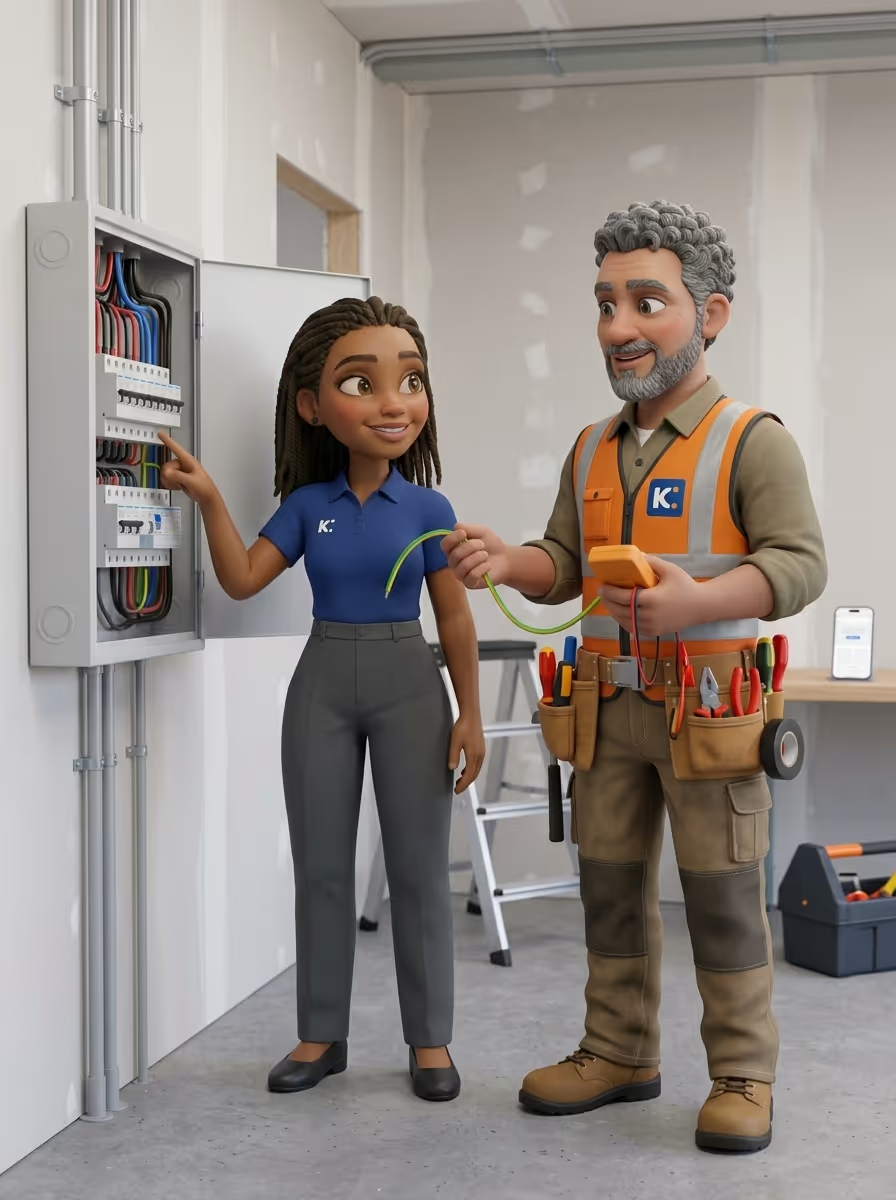
Your Guide to a Three Phase Electrical Certificate of Compliance (COC) in South Africa
When it comes to the heart of a large home, workshop, or commercial property, a three-phase electrical system is the undisputed powerhouse. This robust setup, unlike the standard single-phase power in most residential dwellings, is built to handle significant electrical loads with efficiency and stability. A Three Phase Electrical Certificate of Compliance (COC) is the official document that certifies this complex system is safe and fully compliant with South African safety standards.
A typical three-phase COC inspection and certification in South Africa costs anywhere from R1,500 to R4,000, with an average around R2,500 for the inspection itself. However, the total cost can vary dramatically, ranging up to R50,000 or more if the inspection uncovers major issues that require extensive repairs, such as distribution board replacement or full rewiring.
A complete inspection usually takes between two to four hours, but this can extend to days or weeks if significant remedial work is needed. This essential service must be carried out by a qualified and registered electrician, specifically an Installation Electrician or a Master Installation Electrician.
Written with insights from Kandua’s vetted Master Electricians.
Understanding a Three Phase Electrical COC for SA Homes & Businesses
Most South African homeowners are familiar with single-phase power, which is perfectly suited for their lights and appliances. However, for properties with high electrical demands, like large homes with multiple air conditioners and borehole pumps, or commercial spaces with industrial machinery, three-phase electricity is the standard. It is a more robust system that requires a specialised understanding and, crucially, a specific Certificate of Compliance (COC) as mandated by the SANS 10142-1 regulations.
The Power Difference: Single Phase vs. Three Phase
Think of single-phase power as electricity flowing through a single pipe. It's a continuous but relatively limited flow, making it cost-effective and perfectly adequate for standard residential use.
Three-phase electricity, on the other hand, is like having three separate, synchronised pipes delivering power. Because each "pipe" carries an alternating current that is offset from the others, the combined flow is more consistent, balanced, and powerful.
“A single-phase motor, like in your washing machine, has to work hard to get started,” explains David, a Master Installation Electrician from Gauteng. “A three-phase motor, however, receives a continuous, smooth flow of power. This makes it incredibly efficient for starting and running heavy machinery, large air conditioning units, or powerful borehole pumps without straining the system.”
Why is Three-Phase Power Necessary?
Three-phase power is all about efficiency and stability, particularly for high-load environments. It is commonly found in:
- Larger Residential Properties: Homes with extensive electrical demands, such as dedicated workshops, large swimming pools, boreholes, or multiple air-conditioning units.
- Commercial and Industrial Settings: This is where three-phase power truly shines, powering everything from industrial ovens and large refrigeration units to elevators and sophisticated IT infrastructure in factories, offices, and restaurants.
- Farms: Many agricultural operations rely on three-phase power for essential equipment like irrigation pumps and milking machines.
The primary advantages include higher power delivery, improved efficiency for motors and machinery, and a more stable and reliable power supply due to a balanced load.
What an Electrician Does During a Three-Phase COC Inspection
The process of issuing a three-phase COC is rigorous and requires specialised knowledge and equipment. It goes far beyond a simple visual check. A qualified electrician from Kandua will perform a thorough inspection and a series of tests to ensure the system is safe and compliant.
Here’s what the pro generally does:
- Verifies Phase Rotation: They ensure the correct sequence of phases, which is crucial for three-phase motors to run in the intended direction.
- Assesses Load Balancing: The electrician checks that the electrical load is evenly distributed across all three phases to prevent inefficiencies and overheating.
- Checks Neutral Conductor Sizing: The neutral conductor must be correctly sized to safely handle any unbalanced current, a key safety check.
- Inspects Protection Devices: All circuit breakers, fuses, and residual current devices (RCDs) are verified to ensure they are correctly rated and functioning for three-phase currents.
- Ensures Proper Earthing and Bonding: A crucial part of the inspection is confirming robust earthing is in place to prevent electric shock and ensure fault currents are safely dissipated.
- Confirms Cable Sizing and Insulation: The electrician will check that all cables are the correct size for the anticipated load and are properly insulated.
- Inspects the Distribution Board: The three-phase distribution board is meticulously inspected for proper labelling, secure connections, and overall integrity.
The Value of a Professional Electrician
Attempting DIY electrical work on a three-phase system is not only incredibly dangerous but also illegal in South Africa. The voltages and currents involved can be lethal. Without the necessary qualifications, experience, and tools, you risk:
- Severe Injury or Fatality: Electrocution is a very real and present danger.
- Electrical Fire: Improper wiring or overloaded circuits are a leading cause of electrical fires.
- Damage to Equipment: Incorrect connections can destroy expensive machinery and appliances.
- Legal Repercussions: Unlicensed electrical work is illegal, and any resulting damage could lead to severe penalties and a voided insurance policy.
A qualified and registered Installation Electrician has the expertise to do the job safely, ensuring your property is compliant and secure. [Find a vetted electrician near you.]
The Cost of a Three-Phase CoC: A Price Breakdown
Getting a three-phase Electrical Certificate of Compliance is a legal and safety requirement, but the costs can vary. The initial inspection fee is only part of the equation, as any non-compliant issues discovered will require repairs.
- Inspection Fee: This typically ranges from R1,500 to R4,000, covering the professional's time and expertise for a thorough inspection.
- Repairs: This is where costs can escalate. Common fixes include distribution board replacement (R5,000 – R15,000+), circuit breaker replacement (R350 – R800 per breaker), or earthing and bonding correction (R1,500 – R5,000). The total cost can quickly climb to R10,000 or more if the system is old or has multiple issues.
The key to managing these expenses is to work with a reputable electrician who provides a detailed, itemised quote for any necessary repairs. See our detailed Electrician Cost Guide for more information.
How to Keep Your Three-Phase CoC Valid
Getting a COC is a crucial first step, but keeping it valid is an ongoing commitment. A COC becomes null and void if any alterations or additions are made to the electrical installation.
- Engage a Professional for Any Changes: Always consult a qualified electrician for any new installations or alterations. They will issue a new COC or a supplementary certificate as required.
- Schedule Regular Inspections: While a COC doesn't have a formal expiry date unless you sell the property, it is highly recommended to have a professional inspection every two to five years, especially for a commercial property.
- Keep Comprehensive Records: Maintain a file for your COC and all records of maintenance and repair work. This documentation is invaluable for future inspections or a property transaction.
For more information on the official standards, you can refer to the South African National Standard SANS 10142-1, available from the SABS.
Real-World Examples from Kandua Customers
Priya, who runs a small printing company in Sandton, Johannesburg, needed a valid COC to renew her business insurance. The Kandua electrician she hired found an undersized main earth wire and incorrectly rated circuit breakers protecting her expensive printing machinery. She invested R8,500 in necessary repairs, preventing a potential fire and ensuring her business was both safe and insurable.
Mark was selling his home in Stellenbosch, which had a borehole, central air conditioning, and a separate workshop on a three-phase supply. An inspection revealed an outdated earth leakage system on the workshop's distribution board, posing a risk to the workshop machinery. Rectifying this cost R4,200, ensuring a smooth property transfer and giving the new owners peace of mind.
Checklist: Before Your Electrician Arrives
To make your COC inspection as smooth and cost-effective as possible, prepare ahead of time.
- Clear Access: Ensure the electrician can easily access the main distribution board, all plug sockets, and light switches.
- Know Your System: If you are aware of any existing electrical issues, like tripping breakers or flickering lights, make a list to show the electrician.
- Locate Documents: Have any previous COC documents or electrical diagrams available for the electrician to review.
- Secure Pets: For the safety of your pets and the electrician, please ensure they are in a secure area during the inspection.
FAQs about Three Phase Electrical COCs
1. What is a Three Phase Electrical COC?
A: It is a legal document in South Africa certifying that a property's three-phase electrical installation complies with the national safety standard, SANS 10142-1.
2. How is a three-phase system different from a single-phase system?
A: Single-phase is standard for most homes and delivers power via one waveform. Three-phase uses three waveforms to provide a more powerful and consistent flow of electricity, ideal for high-demand properties.
3. How often do I need a Three Phase Electrical COC?
A: A new COC is legally required when you sell the property or make major electrical changes. For safety, a professional inspection is recommended every two to five years, especially for commercial properties.
4. Can any electrician issue a Three Phase Electrical COC?
A: No. Only a qualified electrician registered as an "Installation Electrician" or a "Master Installation Electrician" can legally issue a COC for a three-phase system.
5. What happens if my property fails the CoC inspection?
A: The electrician will provide a detailed report of the defects. You must have these issues repaired by a qualified professional before a re-inspection can be done and the certificate issued.
6. Does a CoC cover my appliances and machinery?
A: No. A COC covers the fixed electrical installation like wiring, distribution boards, and outlets. It does not cover portable appliances or machinery that plug into the system.
7. Can a single-phase system be upgraded to three-phase?
A: Yes, but it is a complex and costly process. It requires significant changes to your infrastructure and must be done by a qualified electrician after getting approval from your local municipality or Eskom.
8. What are the main risks of a non-compliant three-phase system?
A: The risks include electrical fire, severe injury or electrocution, damage to expensive equipment, and legal liability. Your insurance policy may also be voided.
9. Why are three-phase electrical repairs more expensive?
A: Components for three-phase systems are more robust and costly than single-phase parts. The work also requires a higher level of technical expertise, which can increase labour rates.
10. How can I save money on my Three Phase Electrical COC?
A: Fix obvious issues like broken sockets beforehand. Ensure the electrician has clear access to all electrical points to avoid extra labour charges and get a detailed, itemised quote for any required repairs. [Read our tips on how to save on home repairs.
Why you can trust Kandua to get it right
At Kandua, getting your home projects done is simple, safe, and stress-free.
- Tell us what you need – Or let our smart AI Home Companion help diagnose your problem if you’re not sure where to start.
- Get answers as you go – While posting your job, you can ask our smart AI home companion anything, from understanding typical costs, to how the process works, to how long it might take. Ask questions whenever they pop up, and get clear, helpful answers instantly.
- We match you with the best – All our pros are 100% vetted: ID-verified, criminal background checked, certification verified, and maintaining at least a 4.5-star rating. You don’t have to worry about picking the right person, we make sure the pro we send has the right skills and certification to get your job done right.
With Kandua, you can rest easy knowing you’re in safe hands from the first click to the final handshake.
Electricians in South Africa: what to know before you book
Few home problems are as easy to ignore and as risky to leave as electrical faults. Warm switch plates, a burning smell near the DB, or breakers that trip for no obvious reason all deserve a professional look before they escalate.
That's where Kandua comes in, matching homeowners across South Africa with vetted electricians who diagnose the cause properly, quote upfront, and do the job to standard.
A few quick answers (so you don't have to scroll)
What separates a great electrician from an average one?
Diagnosis. The best pros test, isolate the actual fault, and fix the cause, instead of swapping parts until something works. They also quote clearly and handle compliance paperwork properly.
When is a CoC legally relevant?
Most commonly at property transfer, and whenever an installation is added to or altered. Only a registered person may issue one, so always check registration.
What should I budget?
Guide rates on Kandua start from around R450 for a call-out, about R750 for standard repairs including the first hour, and roughly R550 per hour for additional time, with flat prices for most installations. Your exact quote is confirmed upfront.
Across South Africa: what homes typically need from a electrician
South Africa's housing is wonderfully varied, spanning every kind of home, from heritage properties and family suburbs to complexes, estates and new builds. That variety shapes the work: what a electrician sees in Johannesburg differs from Cape Town or Pretoria, but the fundamentals of good diagnosis and honest quoting hold everywhere.
South African homes face a common set of electrical realities: ageing wiring in older suburbs, storm and surge damage in summer rainfall regions, salt corrosion at the coast, and nationwide demand for backup power. Wherever you are, the fix starts with proper fault finding by a vetted professional.
Wherever you are, the moments that trigger electrical work are the same: a property transfer needing its CoC, an outage that finally justifies backup power, a fault that stopped being intermittent. Kandua's vetted network covers those moments nationwide.
From Durban to the East Rand and every region between, Kandua's vetted network means a electrician who knows your kind of home is always within reach. Describe the job to Jess and the matching handles itself.
What common electrical symptoms usually mean
Wherever in the country you are, these are the symptoms electricians hear about most, and what they usually point to.
- Breakers or earth leakage that keep tripping: the system is protecting you from something, commonly an overload, a faulty appliance, or moisture. The fix is fault finding, not repeated resetting.
- Circuits that have gone dead: loose terminations and failed joints are typical culprits, especially in older installations.
- Heat where there should be none: warm plug points, discoloured switches or a hot smell near the board are urgent, book a professional promptly.
- Humming or buzzing at the distribution board: often a breaker on its way out, worth an inspection before it fails outright.
- Electronics failing after storms: lightning-season surges damage gate motors, appliances and sensitive equipment, and protection is cheaper than replacement.
When it's a DIY job, and when it isn't
Changing a plug top, replacing a light bulb, or resetting a tripped breaker once is fair game for a careful homeowner. Almost everything else on the electrical side is not, both for safety and because non-compliant work can invalidate insurance and complicate a future CoC.
Anything involving the distribution board, new wiring, new points, geyser connections, or repeated faults belongs with a qualified electrician. If a breaker trips again after one reset, stop resetting and book the professional.
Certifications, registrations and compliance in South Africa
Compliance rules apply nationally, so whether you're buying, selling or altering a home anywhere in South Africa, these are the certificates that matter.
1) Electrical CoC (Certificate of Compliance)
A CoC certifies that an electrical installation meets the required standard. It is standard practice for property transfer, and required whenever the installation is added to or altered. On Kandua, a CoC inspection runs at about R950 for single phase and around R1,650 for three phase as a guide.
2) Who may issue one
Only a registered person may lawfully test and certify an installation, so always confirm registration before booking compliance work. Every electrician on Kandua is vetted before they can quote.
3) CoC validity
For property transfer, the working rule most parties apply is that the certificate should not be older than two years and must still reflect the installation as it stands. Any alterations since issue mean a new or supplementary certificate.
4) Solar, inverter and PV additions
Backup power and solar additions change the installation, which means the paperwork must follow. Ensure your installer certifies the work correctly, both for safety and for the day you sell.
Pricing: what to budget for an electrician in South Africa
Here is what to budget for electrical work in South Africa, using Kandua's current guide rates. Treat every figure as an estimate: Pros use these rates to quote competitively, and you'll see your exact price before any work begins.
- Call-out: from around R450, covering the Pro's travel and time to assess and quote. It's all you pay if you decide not to go ahead.
- Standard repairs and fault finding: about R750 including the first hour of labour, with additional time at roughly R550 per hour.
- Small appliance repair: around R650 as a flat diagnostic and fix.
- Installations: typically flat-priced, from about R950 for a stove, oven or UPS install, around R1,850 for a garage or gate motor, up to about R3,950 for inverter and battery systems.
- Electrical CoC: about R950 for single phase and around R1,650 for three phase.
- After hours: typically around 1.5 to 2 times standard rates as a guide, with emergency pricing quoted upfront by your Pro.
- Materials: quoted separately for your specific job.
A realistic small-job budget is the standard repair rate plus parts. Grouping repairs into a single visit is the easiest saving available.
Genuinely helpful electrician FAQs for South Africa
How much should I budget for an electrician in South Africa?
Guide rates start from around R450 for a call-out, about R750 for standard repairs including the first hour, roughly R550 per hour thereafter, and flat installation prices from about R950 to around R3,950. Your exact quote is confirmed upfront, with materials separate.
Can I find an electrician near me anywhere in South Africa?
Kandua's network covers the major metros and beyond, including Johannesburg, Cape Town, Pretoria and the East Rand. Jess matches you with vetted electricians who actually work in your area.
Do Kandua electricians handle emergencies?
Many do, including after-hours and weekend work, typically at around 1.5 to 2 times standard rates as a guide. Emergency pricing is always confirmed upfront before the Pro heads out.
Is the call-out fee charged if I go ahead with the work?
The call-out from around R450 covers travel and the assessment so you can get a quote, and it's the only charge if you decide not to proceed. Once you go ahead, the work is priced per the service guide rates.
What will an Electrical CoC cost me?
Guide pricing is about R950 for a single phase inspection and around R1,650 for three phase. If the inspection surfaces faults, remedial work is quoted separately for your approval first.
What causes repeated earth leakage trips?
Usually a leaking-to-earth appliance, damp in an external fitting or circuit, or deteriorating wiring. If isolating appliances doesn't solve it, professional fault finding will.
Should I install an inverter or full solar?
It depends on budget and goals: an inverter and battery covers essentials through outages, while solar adds generation and long-term savings. Guide labour for inverter and battery installations is around R3,950, and your Pro can advise on sizing.
Can I supply my own light fittings or materials?
Usually yes, if you confirm specs with your electrician first. Pros often get trade pricing and know what's compliant, so a quick check before you buy avoids costly returns.
How do I prepare for the electrician's visit?
Note the symptoms, which rooms are affected, and roughly how old the installation is, and take a photo of your DB if it's safe to do so. The clearer the picture, the sharper the quote.
When you're ready, Kandua makes the next step easy: describe the job to Jess, get matched with vetted electricians serving wherever you are in South Africa, and book with your price confirmed upfront.




















.avif)