
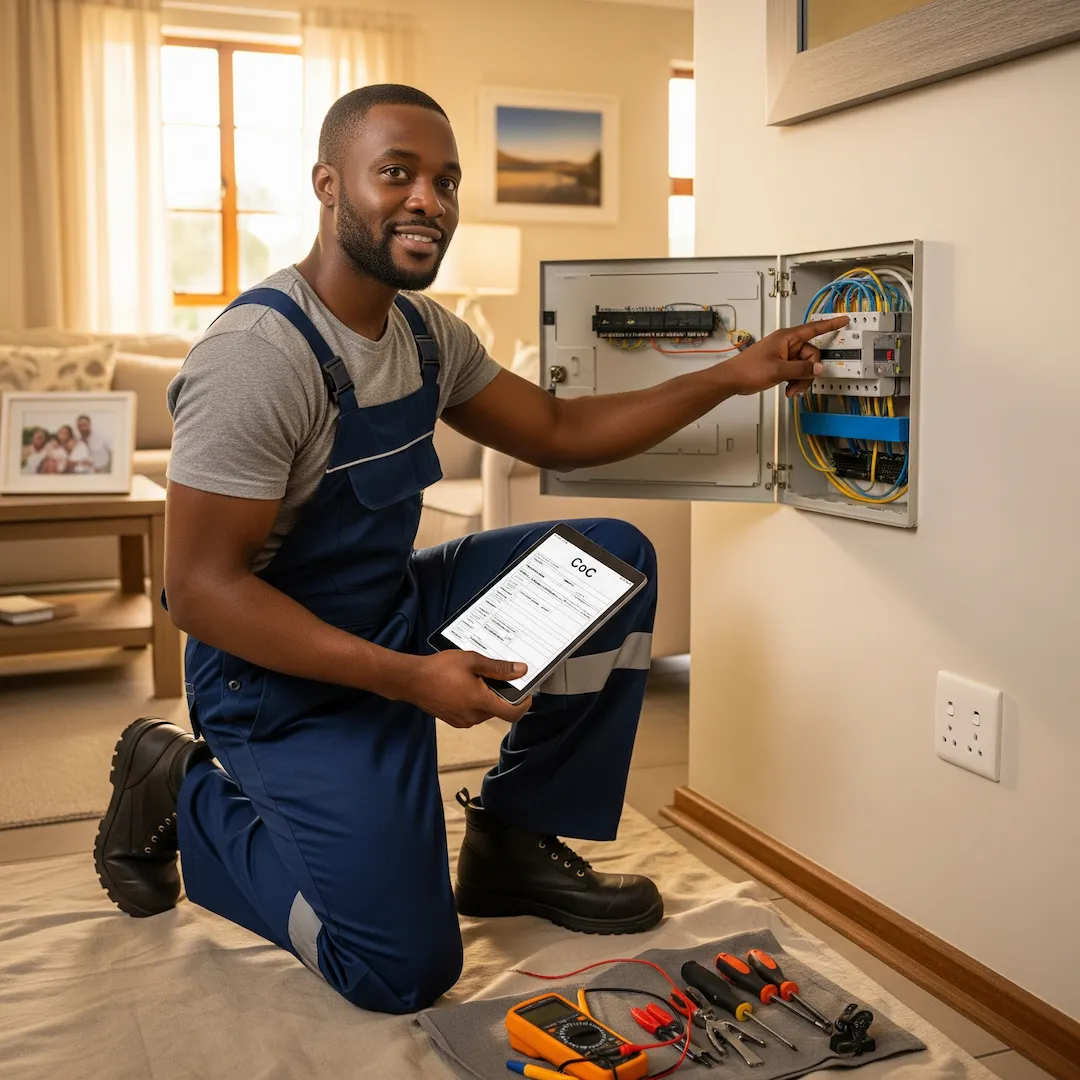
Your Single Phase Electrical COC in SA: Securing Your Home and Future Property Sales
Single-phase Electrical COC in South Africa explained. Learn why it’s essential for home safety, legal compliance, and smooth property sales - what a valid COC really means for homeowners.

Your Single Phase Electrical COC in SA: Securing Your Home and Future Property Sales
Navigating the world of property ownership in South Africa inevitably leads to three important letters: COC. For most homes, this means a single-phase Electrical Certificate of Compliance. While it might seem like just another piece of paperwork, this document is one of the most critical you’ll handle. It’s the cornerstone of your home’s electrical safety and a legal necessity for any property transaction.
But what does it really mean to have a valid COC? It’s more than a rubber stamp. It's a declaration by a qualified professional that the electrical installation in your home is safe and meets the standards designed to protect you, your family, and your investment. Understanding this process is key to ensuring a smooth property sale and, more importantly, a safe living environment.
Why a Valid Electrical COC is Non-Negotiable
A COC is not just a 'nice-to-have'; it's a legal and safety imperative. Homeowners often only think about it when they decide to sell, but its importance extends far beyond the transfer of property.
- It's the Law: The Occupational Health and Safety Act (OHSA), specifically the Electrical Installation Regulations, mandates that every property owner must have a valid Electrical Certificate of Compliance. When you sell your property, you are required to provide the new owner with a valid COC that is not older than two years, assuming no alterations have been made to the installation during that time.
- It's Your Safety Net: At its core, a COC is proof that your home's electrical system is free from immediate danger. A qualified electrician inspects your wiring, distribution board, and fixtures to ensure they comply with the SANS 10142-1 standard, "The wiring of premises." This standard is South Africa's electrical safety bible, designed to prevent electrical shocks, fires, and system failures.
- It's an Insurance Requirement: In the unfortunate event of an electrical fire or damage caused by a power surge, your insurance company will almost certainly ask for a valid COC. If you cannot produce one, or if the fire is traced back to a non-compliant electrical fault, your insurer may have grounds to reject your claim, leaving you with a massive financial burden.
- It's Essential for Property Sales: A missing or invalid COC can bring a property sale to a screeching halt. No bank will finance a property without it, and no savvy buyer will proceed. We've heard directly from conveyancing attorneys who have seen deals collapse days before transfer because a seller’s COC was found to be fraudulent. The seller was then forced to pay for urgent, and often expensive, remedial work, delaying the sale and causing immense stress for everyone involved.
What Does a Single-Phase COC Inspection Actually Cover?
When a registered electrician arrives to conduct a COC inspection, they aren't just taking a quick look around. They are performing a detailed, systematic check of your entire electrical installation. Think of it as a doctor's check-up for your home's electrical "nervous system."
Based on insights from top-tier electricians, here is a breakdown of what they meticulously examine:
- The Distribution Board (DB Board): This is the heart of your electrical system. The electrician will check that the circuit breakers are correctly rated for the wires they protect, that the wiring is neat and secure, and that the board is properly labelled. They will also ensure the main switch is accessible and functional, and that an Earth Leakage unit is installed and working correctly.
- Wiring and Conduits: They will inspect the condition of the visible wiring in the roof space and elsewhere, checking for signs of damage, perishing insulation, or unsafe joints. All wiring must be correctly enclosed in conduits or trunking.
- Earthing and Bonding: This is a critical safety feature. The electrician verifies that the entire installation is properly earthed. This includes checking the main earth connection and ensuring that metallic components like geysers, pipes, and satellite dishes are bonded to the earth to prevent electric shocks.
- Sockets, Switches, and Light Fittings: All plug points and light switches must be secure, undamaged, and functioning correctly. They will check for correct polarity and ensure all connections are safe.
- Isolators for Fixed Appliances: Fixed appliances like your geyser, stove, and air conditioning units must have a dedicated, accessible isolator switch nearby. This allows you to safely switch off the power to the appliance for maintenance or in an emergency, without shutting off power to the whole house.
If every single one of these points (and more) meets the required SANS 10142-1 standards, the electrician can issue a COC.
The Dangers of a "Cheap" or Fraudulent COC
In an effort to save money or time, some homeowners are tempted by offers of a "drive-by" COC—a certificate issued without a proper inspection. This is one of the most dangerous and costly mistakes you can make.
An electrician we spoke to in Johannesburg shared a story about a family who bought a home with what looked like a perfectly valid COC. A few months later, a fault in the roof wiring, which had been chewed by rodents and never checked by the previous electrician, caused a fire. The insurance investigation quickly revealed the non-compliance, and the COC was proven fraudulent. The family not only faced devastating fire damage but was also left without an insurance payout.
A fraudulent certificate gives you a false sense of security while leaving your family exposed to:
- Severe Safety Risks: Hidden faults remain, posing a constant threat of fire or electrocution.
- Legal Liability: If an incident occurs, you, the homeowner who procured the fake certificate, could be held liable.
- Voided Property Sale: A buyer's own inspection will uncover the fraud, potentially cancelling the sale and opening you up to legal action.
- Zero Insurance Cover: Your policy becomes worthless in the face of a non-compliant installation.
A legitimate COC inspection takes time and expertise. An offer that seems too good (or too cheap) to be true, almost certainly is.
How to Ensure You Get a Legitimate Electrical COC
Finding the right professional is the most important step in this process. You need an electrician who is not just capable, but also officially accredited and ethical.
Here’s how to vet a professional for this critical job:
- Verify Their Registration: A valid COC can only be issued by a "Registered Person"—an electrician who is registered with the Department of Employment and Labour. They must be an Installation Electrician (IE) or a Master Installation Electrician (MIE).
- Ask for Proof: Don't be shy. Ask to see their registration card and confirm their credentials. A professional will be happy to provide this.
- Check Their Experience: Look for an electrician with a proven track record in issuing COCs for residential properties.
- Request a Clear Process: A trustworthy electrician will explain their inspection process clearly. They will tell you that if they find any faults, they will issue a report detailing the necessary remedial work and provide a separate quote for those repairs. The COC can only be issued after all issues are fixed and the installation is 100% compliant.
Securing a valid single-phase Electrical COC is a fundamental responsibility of homeownership in South Africa. It protects your property, ensures your family's safety, and enables a clean, legal property transaction. By choosing a qualified, reputable professional, you are investing in peace of mind and securing the true value of your home.
Frequently Asked Questions
How long is a single-phase Electrical COC valid for?
An Electrical COC is valid for two years from the date of issue, as long as no alterations or additions have been made to the electrical installation during that period. If you add a new circuit, change the DB board, or perform any other significant electrical work, a supplementary COC will need to be issued for that new work.
What happens if faults are found during my COC inspection?
If the electrician discovers any part of your installation that does not comply with SANS 10142-1 standards, they cannot issue a COC. Instead, they will provide you with a detailed report outlining all the defects. They will also give you a separate quote to perform the necessary remedial work. The COC can only be issued once these faults have been corrected and the installation is fully compliant.
Can I do some of the electrical repairs myself to save money before the inspection?
No, this is strongly discouraged and illegal. All electrical work in South Africa must be carried out by a qualified and registered electrician. Attempting DIY electrical repairs is extremely dangerous and can lead to electric shock, fires, and further damage. Furthermore, an inspector will be able to tell if work is not professionally done, and it will still need to be rectified by a qualified person before a COC can be issued.
Does a COC cover my electrical appliances, like my oven or fridge?
A COC covers the permanent electrical installation of the property—this includes the wiring, sockets, switches, DB board, and fixed appliances like geysers, stoves, or pool pumps. It does not cover the appliances themselves (e.g., your toaster, television, or refrigerator). It ensures that the plug point you connect your fridge to is safe, but it does not certify the internal workings of the fridge itself.
Suzette Meyer is the lead author and content creator for Kandua.com, South Africa’s #1 marketplace for home services. Suzette has made it her mission to help homeowners with advice on all aspects of home repair, maintenance and improvement, including how to choose the right Pro and how to make smart upgrades that improve your resale value or save costs.

Related articles, advice and more
.webp)
How to Check If an Electrician Is Registered with ECB
The Electrical Conformance Board of South Africa (ECB) serves as a vital gatekeeper in this industry. If you are in the middle of a renovation or just need a new DB board installed, knowing how to verify your electrician’s registration is the most important step you can take.
What to Do If You Smell Burning from an Electrical Outlet
For South African homeowners, electrical faults are a leading cause of house fires. Whether it is caused by old wiring in heritage homes in suburbs like Melville or Observatory, or the strain placed on systems by post-load shedding surges, knowing exactly how to react can save your property and your life.This guide details the immediate steps you must take, the likely causes of the smell, and what to expect when you call in a professional.
.webp)
.webp)
.webp)
Your Inverter is Repaired! Key Checks to Ensure Continued Backup Power in SA
This guide will walk you through the essential checks and maintenance tips to maximise the lifespan and efficiency of your recently repaired inverter and battery setup, straight from the insights of experienced electricians across South Africa.
.webp)
.webp)
.webp)
Latest articles, advice and more
.webp)
How To Fix A Damp Wall And What's Actually Causing It
If your walls are weeping, your plaster is flaking, or you can smell that musty, damp smell, you're not dealing with one problem; you're dealing with three possible ones. The fix depends entirely on the cause.
.webp)
Gutter Cleaning: How Often Should You Do It and What Does It Cost?
Clean your gutters at least twice a year, and always before your rainy season kicks in. In South Africa, a professional gutter clean usually costs somewhere between R450 and R2,500, depending on the size of your home, how high the roof is, and how blocked things have become. Here is how to work out the right frequency and a fair price.
.webp)
Why Are My Plug Points Not Working? A Troubleshooting Guide
If your plug points have suddenly gone dead, the usual culprits are a tripped earth leakage switch, a tripped circuit breaker, loose or burnt wiring, or a faulty appliance overloading the circuit. Work through the safety checks below before you call anyone, then understand when the job requires a registered electrician.
.webp)
How a Geyser Timer Can Cut Your Electricity Bill
If you've been staring at your Eskom bill and wondering where the money is going, your geyser might be the culprit. Here's the good news: a simple geyser timer can cut your hot water costs by up to 30% each month, which typically saves South African homeowners between R200 and R400 on their electricity bills, depending on their current usage.
%20(1).webp)
How To Treat and Paint Over Damp Walls (So It Doesn't Come Back)
You've noticed a patch on the bedroom wall: discoloured and maybe a bit soft to the touch, and you're wondering if a fresh coat of paint will simply cover the problem. The short answer: no, it won't. But the good news is that understanding what's happening beneath that stain, and treating it properly, is far simpler than you might think.
.webp)
Beyond the Unboxing: A Detailed Guide to Correct Washing Machine Plumbing & Setup
New washing machine in South Africa? Learn essential plumbing and setup tips to prevent leaks, ensure efficient operation, and extend your appliance’s lifespan - expert advice before your first load.
.webp)
New Washing Machine? Don't Plug It In Yet! Essential Installation Tips for SA Homes
Installing a new washing machine? Learn the essential setup steps South African homeowners often overlook to prevent leaks, noise, and damage—and ensure efficient, long-lasting performance from day one.
%20(1).webp)
.webp)
TV Repair Costs in South Africa: Diagnosing Screen, Power & Component Issues
Find out what TV repairs really cost in South Africa – from call-out and diagnosis fees to screen, power and main board fixes – and when it’s cheaper to replace your TV instead of repairing it.
.webp)
Septic Tank Leak Repair Cost in South Africa: Addressing Odours & Environmental Hazards
Learn typical septic tank leak repair costs in South Africa, what drives the price up, how to spot early warning signs (odours, soggy ground, backups), and when it’s safer and cheaper to get a professional in.
How to Install a Horizontal Geyser | Step-by-Step Pro Guide
Want to install a geyser like a pro? This step-by-step tutorial shows you exactly how to do a horizontal Ariston Axios geyser installation, straight from the BluLever plumbing workshop. 🎥 Hosted by MK, BluLever’s technical facilitator, and supported by a qualified electrician, Life and a BluLever graduate artisan, Zinhle. This is your ultimate guide to a SANS 10254-compliant installation — from preparing the wall, to plumbing, electrical wiring, and pro troubleshooting tips.
How to Maintain a Geyser | Step-by-Step Pro Guide
Want to maintain a geyser like a pro? This step-by-step tutorial shows you exactly how to do the three core geyser maintenance checks on an Ariston Axios geyser installation, straight from the BluLever plumbing workshop. 🎥 Hosted by MK, BluLever’s technical facilitator, and supported by a qualified electrician, Life. This is your ultimate guide to geyser maintenance — from diagnosing the problem to checking the heat regulation of the geyser, to pressure regulation and then finally corrosion protection.
%201.avif)
Not just another newsletter. It's an advantage


From problem to solved.


.svg)


.avif)
.avif)
.avif)


.avif)