
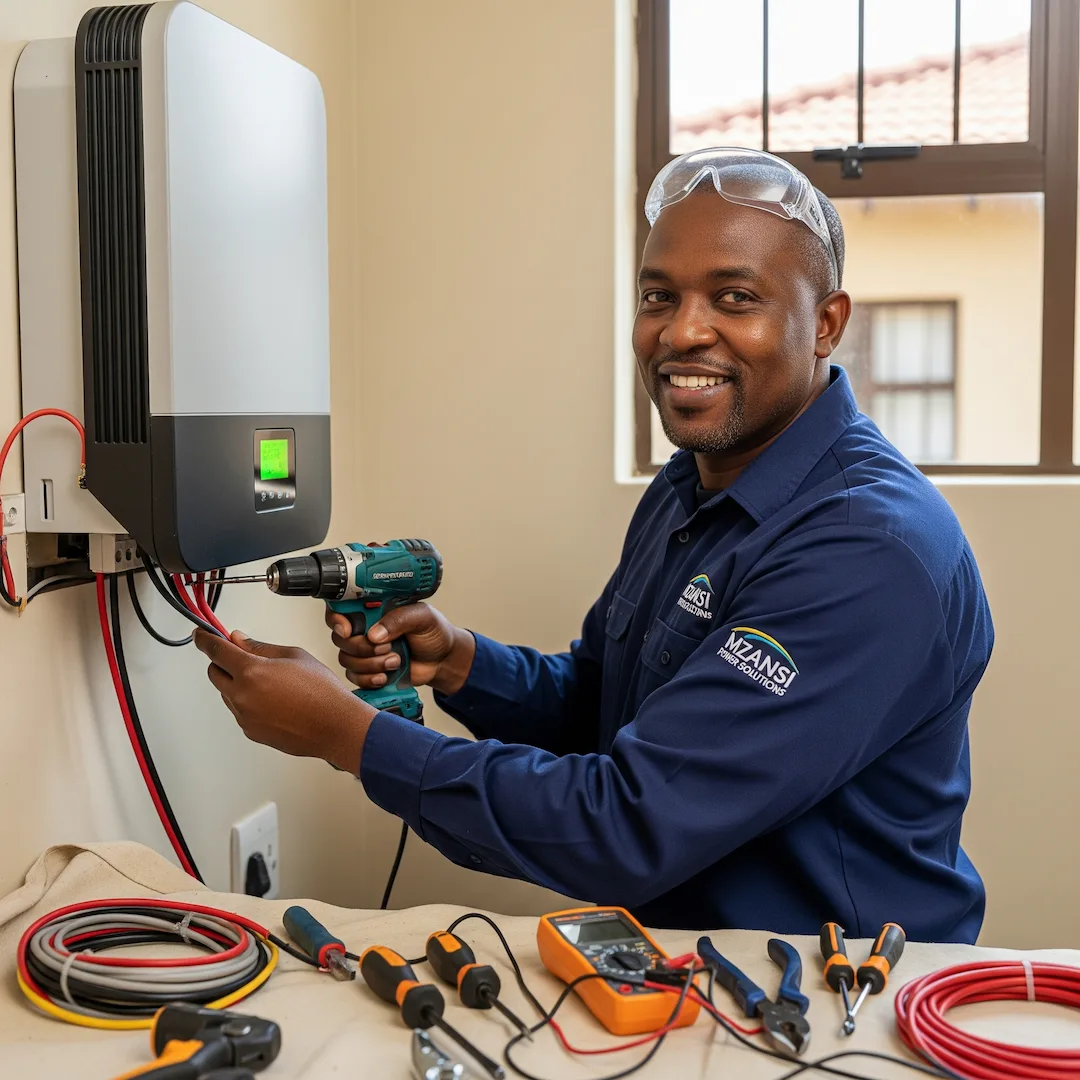
Choosing Your Load Shedding Solution: Why Professional Inverter Installation Guarantees Reliability in SA
Installing an inverter in South Africa? Learn why professional installation is essential for safe, reliable load shedding protection, optimal performance, and long-term peace of mind.

Choosing Your Load Shedding Solution: Why Professional Inverter Installation Guarantees Reliability in SA
You’ve done the research. You’ve compared inverter types, debated battery chemistries, and decided that a backup power system is no longer a luxury but a necessity for surviving load shedding in South Africa. Now you’ve reached the most critical stage: installation. While the temptation to save a few Rand by hiring a general handyman or attempting a DIY job is understandable, the long-term reliability, safety, and efficiency of your entire system hinge on one thing – professional installation.
Making the right choice here is the difference between seamless, automatic power during an outage and a frustrating, unreliable system that could damage your appliances or, worse, become a safety hazard. This guide explains why a qualified electrician is the only person who should install your inverter and what that professional process looks like, ensuring your investment gives you the peace of mind you're paying for.
The Heart of Your Backup System: It's More Than Just a Box on the Wall
Many homeowners think of the inverter as the sole component of their load shedding solution. In reality, it's the central processing unit of a carefully balanced system. An effective system relies on the perfect synergy between three core elements:
- The Inverter: This is the brain. It converts the Direct Current (DC) power stored in your batteries into the Alternating Current (AC) that your home’s lights and appliances use.
- The Batteries: These are the fuel tank. They store the energy your system will use when Eskom’s grid goes down. The capacity and type of battery determine how long you can keep your essentials running.
- The Wiring and Integration: This is the circulatory system. It connects the inverter to the batteries and, crucially, to your home's main distribution board (DB board). This wiring must be of the correct gauge and properly fused to handle the electrical load safely.
One of our top-rated electricians from Johannesburg often uses this analogy: "Installing an inverter system is like building a custom performance car. You can't just drop a massive engine (inverter) into a car with a tiny fuel tank (batteries) and expect it to go far. Everything has to be matched. The inverter must be powerful enough to run your desired appliances, and the battery bank must have enough capacity to sustain that power for the duration of a load shedding slot."
If these components are mismatched—for example, if an inverter is too powerful for the battery bank or the battery bank is too small for the load—you'll get poor performance, drastically reduced battery life, and a system that fails when you need it most.
Why Professional Installation is Non-Negotiable
Beyond simply making the system work, professional installation is about safety and compliance. In South Africa, any work that involves your home's fixed electrical wiring, including integrating an inverter into your DB board, legally requires a qualified and registered electrician.
Here’s what a professional brings to the table that a handyman or DIY approach simply cannot:
- Safety First: Electricity is inherently dangerous. A qualified electrician understands the risks of incorrect wiring, poor earthing, and overloading circuits. They work to prevent potential fire hazards and electric shocks, ensuring your family and property are safe.
- Regulatory Compliance: A correctly installed inverter system must comply with South African National Standards (SANS 10142-1). After the installation is complete and tested, the electrician will issue a Certificate of Compliance (CoC). This document is your proof that the installation is safe and up to code.
- Insurance Validity: Most home insurance policies in South Africa will not cover damages, such as fire or appliance surge damage, caused by non-compliant electrical work. Without a valid CoC for your inverter installation, you risk having your claim rejected, turning a cost-saving shortcut into a massive financial loss.
- System Longevity: Professionals ensure every component works in harmony. They use the correct cable thicknesses to minimise energy loss and prevent overheating. They install the correct fuses and breakers to protect your inverter and batteries. This attention to detail prevents premature failure and maximises the lifespan of your expensive equipment.
What a Qualified Installer Does: A Look Behind the Scenes
So, what does a proper, professional installation actually involve? It’s far more than just mounting the inverter and plugging it in. Here is the process a certified electrician will typically follow:
- The Essential Load Audit: Before touching a single wire, an expert will conduct a thorough assessment of your needs. They won't just ask, "What do you want to run?" They will calculate the exact power consumption (in Watts) of the specific circuits you want to back up. This includes your lights, Wi-Fi router, TV, security systems, and perhaps a fridge. This detailed audit is non-negotiable and determines the correct size of the inverter and battery bank.
- Strategic Placement: The electrician will identify a suitable location for the system. Inverters and batteries need to be in a well-ventilated, cool, and dry area, away from living spaces, as batteries can emit gases during charging. They'll ensure the wall can support the weight of the inverter and that the unit is easily accessible for future maintenance.
- Correct Battery Connection: One of the most common issues seen in faulty installations is incorrect battery wiring. A pro will connect the batteries in series or parallel as required by the inverter's voltage specification (e.g., 12V, 24V, or 48V). They will use thick, high-quality cables and lugs to ensure a solid connection that can handle the high DC amperage without melting or causing a fire risk.
- DB Board Integration: This is where true expertise is vital. The electrician will isolate the essential circuits identified during the load audit. They will then wire the inverter into your DB board through a dedicated changeover switch. This switch safely disconnects your home's backed-up circuits from the Eskom grid during an outage to prevent "back-feeding," a highly dangerous situation that can electrocute municipal workers repairing grid faults.
- Testing and Handover: Once everything is connected, the system is thoroughly tested. The installer will simulate a power outage to ensure a seamless switchover. They will check voltages, confirm the battery is charging correctly, and ensure there are no issues. Finally, they will walk you through the system, explaining how it works, what the indicator lights mean, and any maintenance required before issuing the Certificate of Compliance.
The Risks of a Botched Installation: Real-World Scenarios
Our network of electricians is frequently called out to fix installations gone wrong. These aren't just minor inconveniences; they often involve costly damage and serious safety risks.
- Scenario 1: The Melted Wires. A homeowner in Pretoria noticed a strong burning smell coming from their garage. A "guy-with-a-bakkie" installer had used wire that was far too thin to connect the batteries to the inverter. Under the heavy load of a 2.5-hour load shedding slot, the wires overheated and melted their insulation, coming dangerously close to starting a fire. A professional would have calculated the required cable gauge based on the current and distance.
- Scenario 2: The Year-Old Dead Batteries. In Cape Town, a family found their R20,000 battery bank was barely lasting 20 minutes after just one year of use. The problem? The installer had paired the batteries with an inverter that had an incorrect charging profile. The inverter was consistently overcharging the batteries, effectively "cooking" them and destroying their capacity. A qualified installer ensures the inverter's charger is correctly configured for the specific battery chemistry (e.g., Lead-Acid, AGM, Lithium-ion).
- Scenario 3: Flickering Lights and Damaged Appliances. Every time load shedding hit, a homeowner in Durban experienced flickering lights and eventually a damaged TV motherboard. The amateur installer had created a poor neutral connection at the DB board. This caused an unstable voltage supply to the backed-up circuits, damaging sensitive electronics over time. This is a classic fault a certified electrician would spot and rectify during testing.
These stories all share a common theme: an attempt to cut corners on installation led to greater expense, frustration, and danger down the line.
Frequently Asked Questions
Do I legally need a Certificate of Compliance (CoC) for an inverter installation?
Yes. If the inverter is wired into your property's electrical distribution board, it is considered a fixed electrical installation. South African law (SANS 10142-1) requires that a valid CoC be issued by a registered electrician for any such work. This is crucial for safety and for your home insurance policy to remain valid.
Can I add more batteries to my system later on?
It depends. While you can often add more batteries to increase your backup time, they must be of the same type, chemistry, and age as your existing batteries. Mixing old and new batteries can cause charging imbalances that damage the entire bank. Furthermore, your inverter has a maximum battery capacity it can effectively manage and charge. It is always best to consult with a professional before expanding your system.
How long should my batteries actually last during load shedding?
This depends entirely on two factors: the capacity of your battery bank (measured in Amp-hours or Watt-hours) and the size of the electrical load you are running. A professional installer performs a load audit to calculate this. For example, a system designed to run 500W of load might last over 4 hours, but if you add a 1000W appliance like a microwave, that time will be cut by more than half.
What is the difference between a pure sine wave and a modified sine wave inverter?
A pure sine wave inverter produces AC power that is identical to or even cleaner than the power you get from the grid. This is essential for sensitive electronics like modern TVs, computers, Wi-Fi routers, and appliances with motors. A modified sine wave inverter produces a choppier, blockier electrical signal. While cheaper, it can cause some devices to buzz, run hot, or fail to work at all. For a reliable home backup system, a pure sine wave inverter is always the recommended choice.
Find a vetted electrician near you
Inverter and battery installation: find a pro near you
- Inverter and battery installation near you
- Inverter and battery installation in Johannesburg
- Inverter and battery installation in Sandton
- Inverter and battery installation in Midrand
- Inverter and battery installation in Roodepoort
- Inverter and battery installation in Randburg
- Inverter and battery installation in Pretoria
- Inverter and battery installation in Cape Town
Suzette Meyer is the lead author and content creator for Kandua.com, South Africa’s #1 marketplace for home services. Suzette has made it her mission to help homeowners with advice on all aspects of home repair, maintenance and improvement, including how to choose the right Pro and how to make smart upgrades that improve your resale value or save costs.

Latest articles, advice and more
.webp)
.webp)
.webp)
.webp)
.jpeg)
Sinking Pavers, Weeds and Water That Pools: What Your Driveway Is Telling You
When your driveway starts sprouting weeds, pooling water, or sinking in patches, the bricks are not failing you. The layers underneath have moved, and they are trying to tell you exactly what went wrong.
.webp)
.webp)
Beyond the Unboxing: A Detailed Guide to Correct Washing Machine Plumbing & Setup
New washing machine in South Africa? Learn essential plumbing and setup tips to prevent leaks, ensure efficient operation, and extend your appliance’s lifespan - expert advice before your first load.
.webp)
New Washing Machine? Don't Plug It In Yet! Essential Installation Tips for SA Homes
Installing a new washing machine? Learn the essential setup steps South African homeowners often overlook to prevent leaks, noise, and damage—and ensure efficient, long-lasting performance from day one.
.webp)
.webp)
%25201200%2520x%25201200%2520(1).jpeg)
What Retiling a Bathroom Costs in 2026, Room by Room
Retiling a bathroom in South Africa costs between R230 and R800 per square metre in 2026, including materials and labour. A standard family bathroom, stripped and fully retiled, usually lands between R11,800 and R27,500. A guest toilet costs a fraction of that. A large porcelain en-suite costs a lot more.
How to Install a Horizontal Geyser | Step-by-Step Pro Guide
Want to install a geyser like a pro? This step-by-step tutorial shows you exactly how to do a horizontal Ariston Axios geyser installation, straight from the BluLever plumbing workshop. 🎥 Hosted by MK, BluLever’s technical facilitator, and supported by a qualified electrician, Life and a BluLever graduate artisan, Zinhle. This is your ultimate guide to a SANS 10254-compliant installation — from preparing the wall, to plumbing, electrical wiring, and pro troubleshooting tips.
How to Maintain a Geyser | Step-by-Step Pro Guide
Want to maintain a geyser like a pro? This step-by-step tutorial shows you exactly how to do the three core geyser maintenance checks on an Ariston Axios geyser installation, straight from the BluLever plumbing workshop. 🎥 Hosted by MK, BluLever’s technical facilitator, and supported by a qualified electrician, Life. This is your ultimate guide to geyser maintenance — from diagnosing the problem to checking the heat regulation of the geyser, to pressure regulation and then finally corrosion protection.
%201.avif)
Not just another newsletter. It's an advantage