
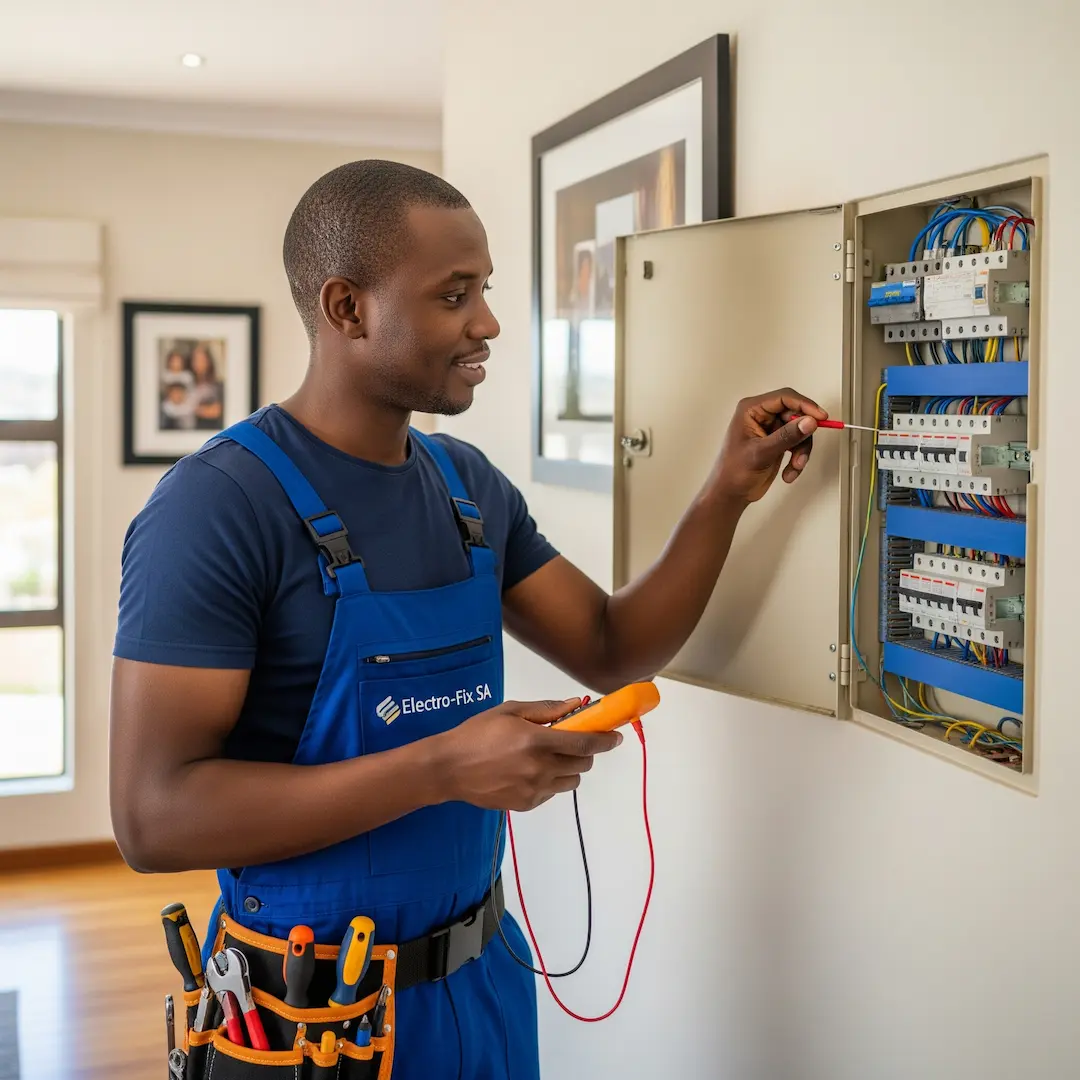
DB Board Repairs in South Africa: Understanding Common Faults & Solutions for Your Electrical Panel
DB board acting up in your South African home? Learn common causes of DB board problems, why they’re dangerous, and when professional electrical repair is essential to keep your home safe.

Your home's electrical panel, often called a distribution board (DB board), is the heart of your electrical system. It safely distributes electricity throughout your property, protecting circuits and appliances from overloads and short circuits. When your DB board acts up, it's not just an inconvenience; it can be a serious safety hazard. Understanding common DB board problems and their solutions is crucial for any South African homeowner.
What Causes DB Board Problems?
DB board issues can stem from a variety of sources, ranging from minor annoyances to significant safety concerns. Expert electricians in South Africa often highlight several key culprits:
Tripping Circuit Breakers
This is perhaps the most common symptom homeowners experience. While a breaker tripping occasionally might just mean an overloaded circuit (too many appliances plugged into one outlet), frequent tripping points to a deeper issue.
- Overloaded Circuits: As one expert electrician shared, "We often see cases where a homeowner has added several new high-wattage appliances, like an air fryer, a microwave, and a kettle, all to one kitchen circuit. The circuit breaker is just doing its job by cutting power to prevent overheating and potential fires."
- Short Circuits: This occurs when a live wire touches a neutral or earth wire, creating a direct path for electricity and a sudden surge in current. This could be due to damaged appliance cords, faulty wiring within walls, or even a nail accidentally driven through a cable during renovations.
- Earth Leakage Faults: An earth leakage trip indicates that electricity is escaping the intended circuit and finding a path to earth, potentially through a person. This is a critical safety device designed to prevent electrocution. Common causes include damaged appliance elements (like in a geyser or oven), water ingress near electrical components, or damaged insulation on wiring.
Burnt Smells or Visible Scorching
If you detect a burning smell emanating from your DB board or notice any discolouration or charring on the panel itself, it's an immediate red flag.
- Loose Connections: Over time, screws holding wires in terminals can loosen due to vibrations, temperature changes, or improper initial installation. A loose connection increases electrical resistance, leading to heat build-up. An experienced professional recalled a situation where a client complained of intermittent power to their kitchen. Upon inspection of the DB board, they found a main neutral wire that was barely making contact, causing significant arcing and a distinct burning smell when under load.
- Overheating Components: Circuit breakers or wiring can overheat if they are undersized for the current they are carrying, or if there's a persistent overload. This can melt insulation and lead to fire risks.
- Arcing: When current jumps across a gap due to a loose connection or damaged insulation, it creates an electrical arc, generating intense heat and a burning smell.
Flickering Lights or Intermittent Power
These symptoms suggest an inconsistent power supply, which can be frustrating and potentially damaging to appliances.
- Loose Wiring: Similar to the cause of burning smells, loose wiring anywhere in the system, including within the DB board, can lead to intermittent contact and power fluctuations.
- Faulty Breakers: Sometimes, a circuit breaker itself can become faulty, failing to maintain a consistent connection even when not tripped.
- Main Switch Issues: Problems with the main switch that controls all power to your home can also result in widespread flickering or complete power loss.
How are DB Board Issues Fixed?
Addressing DB board problems requires expertise and adherence to strict safety protocols. This is not a DIY job. In South Africa, all electrical work must comply with SANS 10142-1 (The Wiring Code), which dictates safety standards and practices. Here’s a general overview of how professionals approach these repairs:
Diagnosing the Problem
Before any repair, a qualified electrician will first thoroughly diagnose the issue.
- Visual Inspection: They'll start by looking for obvious signs of damage, such as burnt components, loose wires, or tripped breakers.
- Testing with Specialised Equipment: Electricians use multi-meters and other testing devices to check voltage, current, and continuity across various circuits and components. This helps pinpoint the exact location and nature of the fault, whether it's an overload, a short, or an earth leakage. As one professional explained, "You can't just guess with electricity. Proper testing is non-negotiable to ensure we're not just treating a symptom but addressing the root cause."
- Load Testing: In some cases, they might perform load tests to see how the system behaves under typical operating conditions.
Typical Repair Processes
Once the fault is identified, the electrician will proceed with the appropriate repair.
- Circuit Breaker Replacement: If a breaker is consistently tripping due to an internal fault, or if it's damaged, it will be replaced with a new one of the correct rating. It's crucial that the replacement breaker matches the specifications of the circuit it protects.
- Earth Leakage Unit (ELU) Replacement/Repair: A faulty earth leakage unit is a serious safety concern. If it's not holding or is tripping unnecessarily, it will be replaced. Electricians will also investigate the cause of the earth leakage fault itself, which often involves isolating the faulty appliance or section of wiring.
- Wiring Overhaul or Repair: Loose or damaged wiring within the DB board needs immediate attention. This involves tightening connections, replacing damaged sections of wire, or re-routing if necessary. If the insulation on wires is compromised due to heat, the affected wiring will be replaced entirely.
- Busbar and Terminal Block Repair: The busbars distribute power within the DB board, and terminal blocks secure the wiring. Damage or corrosion to these components can lead to poor connections and overheating. Repairs might involve cleaning, tightening, or replacing these parts.
- Component Upgrades: Sometimes, the issue might be that the existing components are simply not adequate for the home's power demands. In such cases, an electrician might recommend upgrading certain breakers or even the main switch to safely accommodate the electrical load.
- Identification and Rectification of External Faults: Often, the problem lies not within the DB board itself, but in an appliance or a section of wiring elsewhere in the house. For example, a tripping earth leakage might be caused by a faulty geyser element. The electrician will work to isolate and rectify these external faults.
The Critical Role of Safety
It cannot be stressed enough: DIY electrical work, especially involving the DB board, is extremely dangerous and illegal in South Africa unless you are a qualified electrician. Attempting repairs yourself can lead to severe electric shock, fire, and even fatalities.
- Qualified Professionals Only: All electrical repairs must be carried out by a qualified and registered electrician. They have the training, tools, and experience to safely diagnose and fix electrical issues.
- Compliance with SANS Standards: A reputable electrician will ensure all work complies with the South African National Standards (SANS) 10142-1. This ensures the installation is safe and meets legal requirements.
- Certificate of Compliance (CoC): For significant repairs or alterations to your electrical installation, a Certificate of Compliance (CoC) may be required. This document, issued by a qualified electrician, verifies that the electrical installation meets the required safety standards. While not every small repair needs a new CoC, it's essential for peace of mind and for insurance purposes when selling a property.
Frequently Asked Questions
Why does my earth leakage keep tripping?
An earth leakage unit (ELU) trips when it detects an imbalance in the electrical current, meaning electricity is leaking out of the circuit to the earth. Common causes include faulty elements in appliances (like geysers, ovens, or kettles), damaged insulation on wiring, or water ingress near electrical components. It's a critical safety feature designed to prevent electrocution.
How often should my DB board be inspected?
It's generally recommended to have your electrical installation, including your DB board, inspected by a qualified electrician every five to ten years, or sooner if you notice any unusual electrical symptoms. Regular inspections can identify potential hazards before they become serious problems.
What's the difference between an MCB and an ELCB?
An MCB (Miniature Circuit Breaker) protects circuits from overcurrents (overloads or short circuits). An ELCB (Earth Leakage Circuit Breaker), also often referred to as an RCD (Residual Current Device) in modern installations, is specifically designed to protect against electric shock by detecting small leakages of current to earth. Your DB board will typically contain both types of devices.
Can I reset a tripped breaker myself?
Yes, you can typically reset a tripped circuit breaker yourself by flipping the switch firmly to the "off" position and then back to the "on" position. However, if the breaker trips immediately again, or if it trips frequently, it indicates an underlying fault that requires investigation by a qualified electrician. Do not repeatedly reset a tripping breaker without addressing the cause.
Find a vetted electrician near you
Electrical repairs and fault-finding: find a pro near you
Suzette Meyer is the lead author and content creator for Kandua.com, South Africa’s #1 marketplace for home services. Suzette has made it her mission to help homeowners with advice on all aspects of home repair, maintenance and improvement, including how to choose the right Pro and how to make smart upgrades that improve your resale value or save costs.

Latest articles, advice and more
.webp)
.webp)
.jpeg)
Sinking Pavers, Weeds and Water That Pools: What Your Driveway Is Telling You
When your driveway starts sprouting weeds, pooling water, or sinking in patches, the bricks are not failing you. The layers underneath have moved, and they are trying to tell you exactly what went wrong.
.jpeg)
What Your Garage Door Motor Actually Does (And Why It Breaks)
Spoiler alert: your garage door motor isn't actually doing the heavy lifting. The torsion springs carry almost all the weight. The motor simply pushes, pulls, controls the descent so it doesn't slam, and acts as a lock when the door is shut. That’s why a relatively small box on your ceiling can move such a massive door. Want to test this? Pull the red manual release cord and lift the door by hand. If it glides up easily and stays put when you let go, your springs are doing their job, and the fault lies with the motor. If the door feels like dead weight or slams back down- stop. You’ve got a spring problem.
.jpeg)
4 Warning Signs Your Tiles Are Failing (And What They Mean)
Tiles rarely fail overnight. They warn you first. A hollow sound underfoot, grout that crumbles away, a tile that lifts at one edge, or a crack that runs across two tiles all point to something happening under the surface. Here is what each sign means, and how urgent it is.
.webp)
.webp)
Beyond the Unboxing: A Detailed Guide to Correct Washing Machine Plumbing & Setup
New washing machine in South Africa? Learn essential plumbing and setup tips to prevent leaks, ensure efficient operation, and extend your appliance’s lifespan - expert advice before your first load.
.webp)
New Washing Machine? Don't Plug It In Yet! Essential Installation Tips for SA Homes
Installing a new washing machine? Learn the essential setup steps South African homeowners often overlook to prevent leaks, noise, and damage—and ensure efficient, long-lasting performance from day one.
.webp)
.webp)
%25201200%2520x%25201200%2520(1).jpeg)
What Retiling a Bathroom Costs in 2026, Room by Room
Retiling a bathroom in South Africa costs between R230 and R800 per square metre in 2026, including materials and labour. A standard family bathroom, stripped and fully retiled, usually lands between R11,800 and R27,500. A guest toilet costs a fraction of that. A large porcelain en-suite costs a lot more.
How to Install a Horizontal Geyser | Step-by-Step Pro Guide
Want to install a geyser like a pro? This step-by-step tutorial shows you exactly how to do a horizontal Ariston Axios geyser installation, straight from the BluLever plumbing workshop. 🎥 Hosted by MK, BluLever’s technical facilitator, and supported by a qualified electrician, Life and a BluLever graduate artisan, Zinhle. This is your ultimate guide to a SANS 10254-compliant installation — from preparing the wall, to plumbing, electrical wiring, and pro troubleshooting tips.
How to Maintain a Geyser | Step-by-Step Pro Guide
Want to maintain a geyser like a pro? This step-by-step tutorial shows you exactly how to do the three core geyser maintenance checks on an Ariston Axios geyser installation, straight from the BluLever plumbing workshop. 🎥 Hosted by MK, BluLever’s technical facilitator, and supported by a qualified electrician, Life. This is your ultimate guide to geyser maintenance — from diagnosing the problem to checking the heat regulation of the geyser, to pressure regulation and then finally corrosion protection.
%201.avif)
Not just another newsletter. It's an advantage