
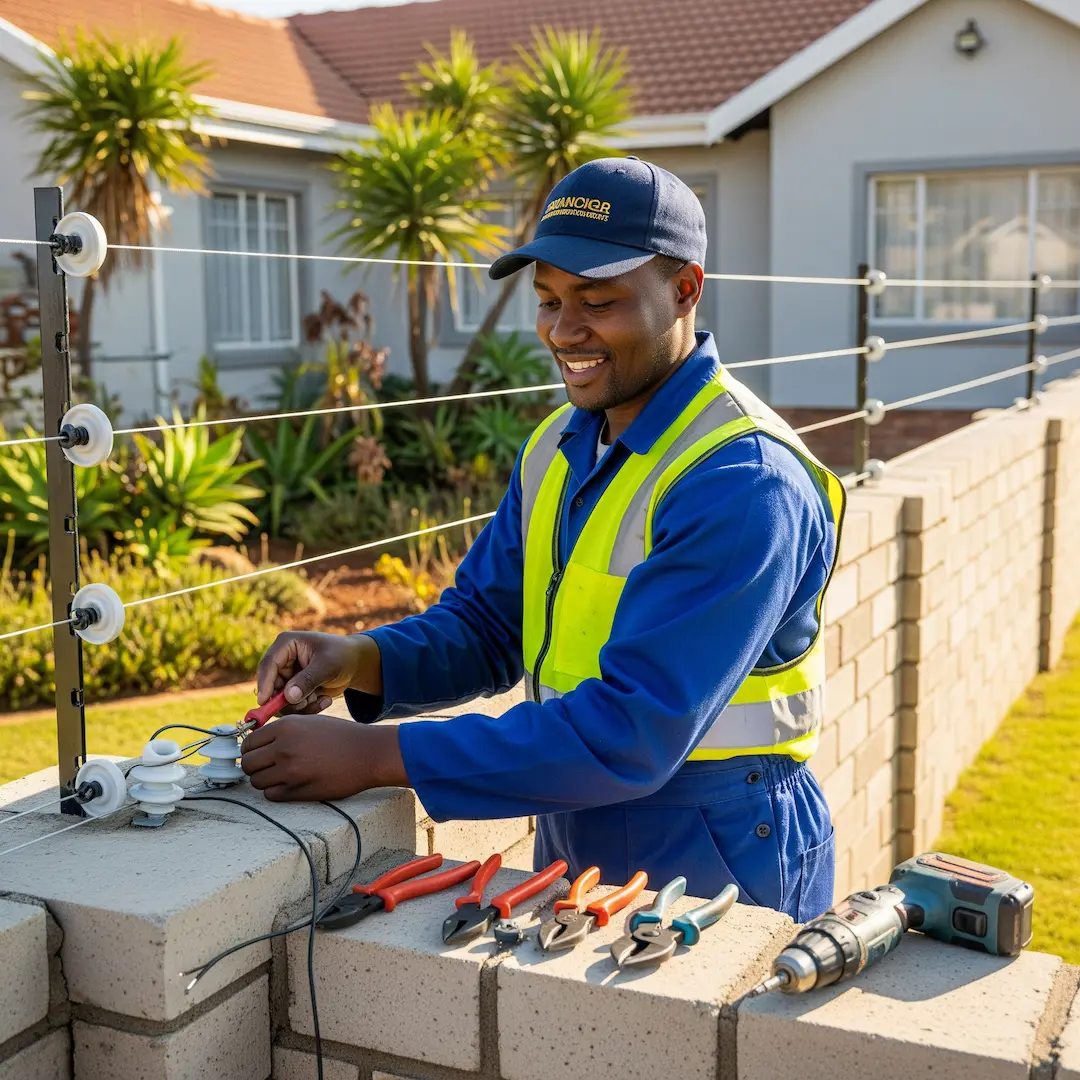
Electric Fencing Installation in SA: Choosing the Right Design for Your Property's Security Needs
Planning electric fencing in South Africa? Learn how to choose the right design, components, and safety-compliant setup to secure your property effectively and legally.

In South Africa, where security is a top priority for homeowners, electric fencing stands as a formidable first line of defence. It's more than just a deterrent; a well-designed and installed electric fence can actively safeguard your property and loved ones. But with various options available, how do you choose the right design to meet your specific security requirements?
This guide will walk you through the key considerations for electric fencing installation in South Africa, focusing on design types, essential components, and crucial safety regulations.
Understanding Your Property's Security Landscape
Before diving into fence designs, it's vital to assess your property's unique characteristics and security vulnerabilities. Are you in a quiet suburban area or a more high-risk zone? Do you have existing boundary walls, or is your property open? Consider the lay of the land, any blind spots, and potential entry points. Our expert installers often share stories of initial client assessments where they identify overlooked weaknesses, like a low-lying section of wall near a thick bush, which a well-chosen fence design can then effectively address.
Key Electric Fence Design Configurations
In South Africa, you'll primarily encounter two main types of electric fence configurations: wall-top and free-standing. Each has its advantages and is suited to different property layouts.
1. Wall-Top Electric Fencing
This is perhaps the most common type for residential properties in South Africa. As the name suggests, wall-top electric fencing is installed on top of existing boundary walls.
- How it Works: Stainless steel wires are mounted on insulators attached to brackets, typically spaced at three-metre intervals along the top of your existing wall. These wires are then electrified by an energizer, delivering a non-lethal but highly effective shock to any intruder attempting to climb over.
- Ideal for: Homes with existing brick, vibracrete, or pre-cast walls. It acts as an extension to your current perimeter, significantly increasing its height and deterrent value.
- Advantages:Cost-effective: Generally more affordable than free-standing fences as it leverages existing structures.
- Visually less intrusive: Blends more seamlessly with existing architecture.
- Strong deterrent: The visible wires and warning signs act as a clear signal to potential intruders.
- Considerations:The existing wall must be in good condition and at a minimum height of 1.5 metres to comply with safety regulations. If your wall is lower, it might need to be raised or another solution considered.
- If angled brackets are used, they must be installed on the inside of the boundary wall, with a maximum outward angle of 45 degrees. Neighbour consent is legally required if these brackets extend into their property.
2. Free-Standing Electric Fencing
Free-standing electric fences are independent structures, supported by their own posts, and are not reliant on existing walls.
- How it Works: Posts are installed at regular intervals, and multiple strands of electrified wire are strung between them, creating a complete perimeter barrier. These often have more strands than wall-top fences, offering a more robust physical and electrical barrier.
- Ideal for: Properties without existing boundary walls, large estates, farms, or areas where a full-height, standalone security barrier is required. They can also be used to section off specific areas within a larger property.
- Advantages:Greater flexibility: Can be installed almost anywhere, regardless of existing structures.
- Enhanced security: Often features more strands and can be installed at greater heights, providing a more formidable barrier.
- Effective for large perimeters: Ideal for securing expansive areas.
- Considerations:Generally more expensive due to the need for additional posts and materials.
- May be more visually prominent than wall-top options.
- Requires careful planning to ensure compliance with SANS regulations regarding distance from public pathways. For instance, free-standing fences near public areas often require an additional barrier fence to prevent inadvertent contact.
Essential Components of an Electric Fencing System
Regardless of the design you choose, a robust electric fencing system relies on several key components working in harmony:
- Energizer: This is the heart of your electric fence. It converts mains power (or battery/solar power) into high-voltage pulses that run through the fence wires. Energizers are rated in Joules, which indicates their power output. For residential use, a non-lethal energizer that delivers a strong enough shock to deter an intruder without causing severe harm is essential and legally mandated. Leading South African brands like Nemtek and JVA offer a range of certified energizers. Our expert providers often advise selecting an energizer suitable for the length of your fence and property conditions, explaining that a fence that's too long for its energizer will have a weakened shock along its length.
- Fence Wires: Typically made from stainless steel or galvanised steel for durability and conductivity. The number of strands depends on the desired security level and fence type.
- Insulators: These crucial components prevent the electric current from earthing to the posts or wall, ensuring the power is contained within the fence wires. UV-resistant insulators are vital for longevity in the South African climate.
- Posts/Brackets: Provide the structural support for the fence wires. Brackets for wall-top fences come in various designs (straight, angled), while free-standing fences utilise sturdy posts.
- Warning Signs: Legally required and absolutely critical for safety. These bright yellow signs with a black hand touching a wire with flashes must be visible on all gates, access points, and at regular intervals (not more than 10 metres apart in urban areas) along the fence line.
- Earth Spikes: Essential for proper earthing of the system, directing the electric pulse safely back to the energizer when contact is made. South African regulations stipulate a minimum of three earth spikes for every 30 metres of fencing.
- Siren/Alarm System: Many modern energizers integrate with alarm systems, triggering an audible alarm when the fence is tampered with or breached. This can also be linked to armed response services.
- Battery Backup: Given load shedding, a reliable battery backup is crucial to ensure your electric fence remains operational during power outages. Most quality energizers come with or can be fitted with a battery backup system, providing several hours of operation.
Compliance with South African Safety Regulations (SANS)
This is perhaps the most critical aspect of electric fence installation in South Africa. The Electrical Machinery Regulations, promulgated under the Occupational Health and Safety Act, and specifically SANS 10222-3, govern electric fencing. Non-compliance can lead to serious legal repercussions, including fines and imprisonment, especially if an injury occurs due to a non-compliant fence.
Here are some key regulatory points that our experienced installers always emphasise:
- Certificate of Compliance (EFSCoC): Every electric fence installation must have a separate Electric Fence System Certificate of Compliance (EFSCoC) issued by a registered Electric Fence System Installer (EFSI). This is distinct from your property's general electrical CoC. Without this, your fence is not legal, and your insurance claims may be rejected.
- Minimum Height: Wall-top electric fences must be installed on a wall with a minimum height of 1.5 metres. Live wires must be at least 1.8 metres above natural ground level at any point.
- Warning Signs: As mentioned, clear yellow warning signs (minimum 100mm x 200mm) with the prescribed symbol must be placed at all gates and access points, and at maximum 10-meter intervals along the fence in urban areas.
- Angled Brackets: If angled brackets are used, their maximum outward angle must not exceed 45 degrees, and they must be positioned on the inside of the boundary wall. Neighbour consent is essential if they extend over the property line.
- No Barbed or Razor Wire Electrification: It is illegal to electrify barbed or razor wire. Electric fences are designed to deter, not to cause grievous injury or entanglement.
- Earth Spikes: A minimum of three earth spikes must be installed for every 30 metres of fencing. Cables from the fence to earth spikes should be run through conduits and not buried for inspection purposes.
- Electrified Gates: Any electric gate must be designed so a person can open and close it without receiving a shock.
- Non-Hazardous Operation: The fence must be installed and operated in a way that does not create a hazard or allow people or animals to become tangled in its wires.
A registered EFSI will ensure your installation adheres to all these regulations, offering you peace of mind and legal protection.
Factors Influencing Your Design Choice
When deciding on the best electric fence design for your property, consider these factors:
- Existing Boundary Structures: If you have sturdy walls, a wall-top system is often the most practical and economical choice. For open perimeters, free-standing is necessary.
- Property Size and Layout: Larger properties, especially those with uneven terrain, might benefit more from a custom free-standing solution.
- Security Risk Assessment: In higher-risk areas, a multi-strand, higher-joule energizer system might be more appropriate.
- Budget: Wall-top fences are generally less expensive upfront.
- Aesthetics: While security is paramount, the visual impact of the fence might be a consideration for some homeowners.
A professional electric fencing installer will conduct a thorough site assessment and recommend the most suitable design, taking all these factors into account. They'll also be able to advise on integrating your electric fence with other security systems, such as alarm monitoring or CCTV, to create a comprehensive security solution.
Ultimately, choosing the right electric fence design is about balancing your security needs with your property's specific characteristics and ensuring full compliance with South African regulations. By making an informed decision, you invest in a robust and reliable security barrier for your home.
Frequently Asked Questions
How often should an electric fence be serviced?
Regular maintenance is crucial for the optimal functioning and compliance of your electric fence. It's recommended to have your electric fence inspected and serviced by a professional at least once a year. This helps identify and address any issues like faulty insulators, damaged wires, vegetation growth interfering with the fence, or energizer problems before they compromise your security.
Can an electric fence work during load shedding?
Yes, a properly installed electric fence system should have a battery backup. Most modern energizers come with a built-in battery or can accommodate one. This battery is continuously charged by your mains power and automatically takes over when load shedding occurs, ensuring your fence remains active and your property secure during power outages.
What is the typical lifespan of an electric fence?
With proper installation and regular maintenance, an electric fence system can last for many years, often 10 to 15 years or even longer. The lifespan of individual components like the energizer, wires, and insulators can vary, but regular servicing helps to extend the overall life of the system by replacing worn-out parts as needed.
Can I install an electric fence myself?
While basic DIY might seem tempting, it is strongly advised not to install an electric fence yourself in South Africa. Electric fence installations are governed by strict safety regulations (SANS 10222-3) and require a separate Electric Fence System Certificate of Compliance (EFSCoC). Only a registered Electric Fence System Installer (EFSI) can legally issue this certificate. Attempting a DIY installation can be dangerous, lead to legal liabilities if someone is injured, and result in your system being non-compliant and potentially ineffective.
Find a vetted electrician near you
Electric fencing installation: find a pro near you
- Electric fencing installation near you
- Electric fencing installation in Johannesburg
- Electric fencing installation in Sandton
- Electric fencing installation in Midrand
- Electric fencing installation in Roodepoort
- Electric fencing installation in Randburg
- Electric fencing installation in Pretoria
- Electric fencing installation in Cape Town
Suzette Meyer is the lead author and content creator for Kandua.com, South Africa’s #1 marketplace for home services. Suzette has made it her mission to help homeowners with advice on all aspects of home repair, maintenance and improvement, including how to choose the right Pro and how to make smart upgrades that improve your resale value or save costs.

Latest articles, advice and more
.webp)
.webp)
.jpeg)
Sinking Pavers, Weeds and Water That Pools: What Your Driveway Is Telling You
When your driveway starts sprouting weeds, pooling water, or sinking in patches, the bricks are not failing you. The layers underneath have moved, and they are trying to tell you exactly what went wrong.
.jpeg)
What Your Garage Door Motor Actually Does (And Why It Breaks)
Spoiler alert: your garage door motor isn't actually doing the heavy lifting. The torsion springs carry almost all the weight. The motor simply pushes, pulls, controls the descent so it doesn't slam, and acts as a lock when the door is shut. That’s why a relatively small box on your ceiling can move such a massive door. Want to test this? Pull the red manual release cord and lift the door by hand. If it glides up easily and stays put when you let go, your springs are doing their job, and the fault lies with the motor. If the door feels like dead weight or slams back down- stop. You’ve got a spring problem.
.jpeg)
4 Warning Signs Your Tiles Are Failing (And What They Mean)
Tiles rarely fail overnight. They warn you first. A hollow sound underfoot, grout that crumbles away, a tile that lifts at one edge, or a crack that runs across two tiles all point to something happening under the surface. Here is what each sign means, and how urgent it is.
.webp)
.webp)
Beyond the Unboxing: A Detailed Guide to Correct Washing Machine Plumbing & Setup
New washing machine in South Africa? Learn essential plumbing and setup tips to prevent leaks, ensure efficient operation, and extend your appliance’s lifespan - expert advice before your first load.
.webp)
New Washing Machine? Don't Plug It In Yet! Essential Installation Tips for SA Homes
Installing a new washing machine? Learn the essential setup steps South African homeowners often overlook to prevent leaks, noise, and damage—and ensure efficient, long-lasting performance from day one.
.webp)
.webp)
%25201200%2520x%25201200%2520(1).jpeg)
What Retiling a Bathroom Costs in 2026, Room by Room
Retiling a bathroom in South Africa costs between R230 and R800 per square metre in 2026, including materials and labour. A standard family bathroom, stripped and fully retiled, usually lands between R11,800 and R27,500. A guest toilet costs a fraction of that. A large porcelain en-suite costs a lot more.
How to Install a Horizontal Geyser | Step-by-Step Pro Guide
Want to install a geyser like a pro? This step-by-step tutorial shows you exactly how to do a horizontal Ariston Axios geyser installation, straight from the BluLever plumbing workshop. 🎥 Hosted by MK, BluLever’s technical facilitator, and supported by a qualified electrician, Life and a BluLever graduate artisan, Zinhle. This is your ultimate guide to a SANS 10254-compliant installation — from preparing the wall, to plumbing, electrical wiring, and pro troubleshooting tips.
How to Maintain a Geyser | Step-by-Step Pro Guide
Want to maintain a geyser like a pro? This step-by-step tutorial shows you exactly how to do the three core geyser maintenance checks on an Ariston Axios geyser installation, straight from the BluLever plumbing workshop. 🎥 Hosted by MK, BluLever’s technical facilitator, and supported by a qualified electrician, Life. This is your ultimate guide to geyser maintenance — from diagnosing the problem to checking the heat regulation of the geyser, to pressure regulation and then finally corrosion protection.
%201.avif)
Not just another newsletter. It's an advantage