
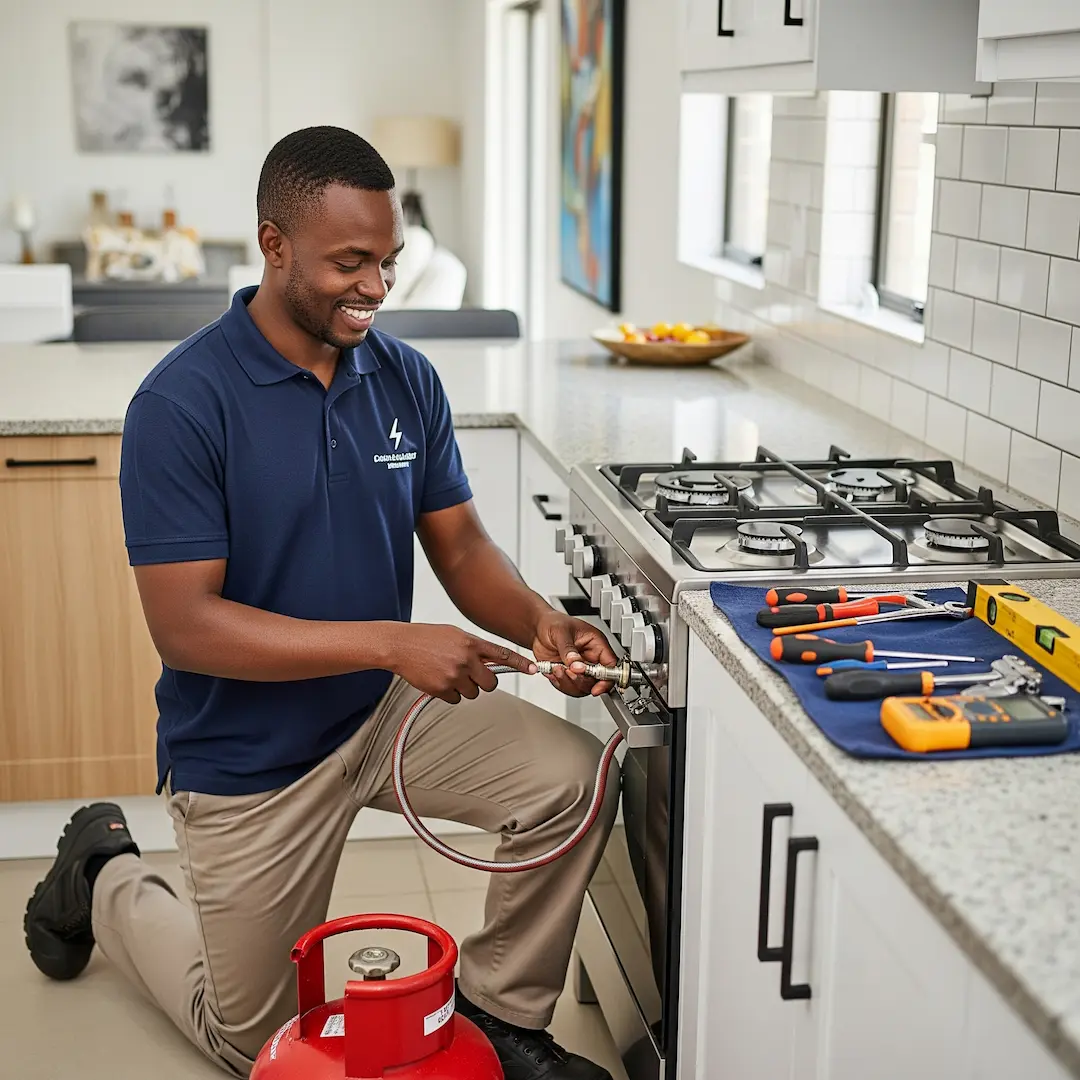
Installing an LPG Gas Appliance in SA: Safety, Compliance & What You Need to Know
Installing an LPG gas appliance in South Africa? Learn essential safety rules, compliance requirements, and why certified installation is critical for reliable, legal, and risk-free gas use at home.

Installing an LPG Gas Appliance in SA: Safety, Compliance & What You Need to Know
Gas appliances, particularly those running on Liquid Petroleum Gas (LPG), offer a fantastic alternative for cooking, heating, and even water heating in South African homes. They can be incredibly efficient and provide a reliable solution, especially during power outages. However, the installation of any gas appliance is not a DIY task; it's a job that demands precision, adherence to strict safety standards, and the expertise of a qualified professional. This guide will walk you through the essential aspects of installing an LPG gas appliance in your home, focusing on safety, compliance, and what you need to know to ensure a smooth and secure setup.
Understanding LPG and Why Professional Installation is Crucial
LPG is a highly flammable fuel, and while safe when handled correctly, improper installation can lead to serious risks, including gas leaks, fires, or even explosions. This isn't about scaring anyone, but rather highlighting the critical importance of respecting the fuel and the installation process.
Our expert service providers often share stories of call-outs to homes where homeowners have attempted to connect a gas stove themselves. One particular instance comes to mind: a family had just bought a new gas hob and, keen to get it working, tried to connect it to a gas cylinder using standard hose clamps. When the gas was turned on, a strong smell of gas filled the kitchen almost immediately. Fortunately, they reacted quickly, turned off the gas, opened windows, and called a professional. The installer found multiple leaks at the connections due to incorrect fittings and inadequate sealing. This kind of scenario, though thankfully resolved without incident, underscores why the work must be left to someone with the right training and equipment.
The Role of SANS Regulations in South Africa
In South Africa, the installation of gas appliances is governed by strict national standards, primarily SANS 10087-1:2013 (The handling, storage, distribution and filling of liquefied petroleum gas (LPG) in cylinders and the design, construction and maintenance of installations for LPG supplied from cylinders). These regulations are in place to protect you, your family, and your property. They cover everything from the type of piping and fittings to ventilation requirements and the placement of cylinders.
An experienced installer will be intimately familiar with these regulations. For instance, did you know there are specific rules about how far an LPG cylinder must be from an electrical point or an open flame? Or that certain types of flexible hoses are only approved for specific applications and lengths? These details might seem minor, but they are crucial for safety and compliance.
The Non-Negotiable: An SAQCC Gas Registered Installer
This is perhaps the most critical point: only an SAQCC Gas registered installer is legally permitted to install LPG gas appliances in South Africa. SAQCC Gas (South African Qualification and Certification Committee for Gas) is the body responsible for ensuring that gas installers are properly trained, assessed, and certified to work with various gas types, including LPG.
When you engage a professional, always ask to see their SAQCC Gas registration card. This isn't being difficult; it's being responsible. A legitimate installer will be happy to present it. Their registration ensures they have the necessary knowledge of SANS regulations, understand the properties of LPG, and are competent in all aspects of installation, testing, and commissioning.
The Certificate of Conformity (COC): Your Proof of Safety
Upon completion of a new LPG gas appliance installation, the SAQCC Gas registered installer is required to issue you with a Certificate of Conformity (COC). This document is your official proof that the installation complies with all relevant SANS standards and is safe for use.
Think of it like the electrical compliance certificate for your home's wiring. The COC is not just a piece of paper; it's a vital safety document that:
- Confirms compliance: It verifies that the installation meets the national safety standards.
- Is required by insurers: Many insurance companies will not pay out claims related to gas incidents if a valid COC cannot be produced.
- Is necessary for resale: When you sell your property, a valid gas COC is often required as part of the sales agreement.
The COC will detail the scope of the installation, the components used, and confirm that all necessary tests (like leak detection) have been performed. It's valid for a certain period, and if significant alterations are made to the installation, or if the appliance is moved, a new COC may be required.
Key Considerations for Your LPG Gas Appliance Installation
When planning your installation, a qualified installer will assess several factors to ensure safety and optimal performance:
- Appliance Type: Whether it's a gas stove, oven, hob, water heater (geyser), or heater, each has specific installation requirements.
- Ventilation: Proper ventilation is paramount, especially for indoor appliances, to ensure adequate combustion air and to disperse any potential minor leaks. SANS regulations specify minimum ventilation requirements based on the appliance's heat output and the room size. An installer will determine if additional ventilation, such as an extractor fan or dedicated vents, is needed.
- Gas Cylinder Placement:Outdoor: This is generally preferred for safety. Cylinders must be placed on a solid, level surface, protected from direct sunlight and tampering, and comply with minimum distances from windows, doors, drains, and electrical points. They also need to be adequately secured to prevent tipping.
- Indoor: Smaller cylinders for specific appliances (like portable heaters or small hobs) can be stored indoors, but strict limits apply to the maximum quantity of gas permitted indoors, and again, ventilation is key.
- Piping and Fittings: Only approved copper or flexible gas piping should be used. The installer will determine the correct pipe size to ensure adequate gas flow to the appliance and will use certified fittings and valves designed for LPG.
- Isolation Valves: Every gas appliance must have an easily accessible isolation valve to shut off the gas supply immediately in case of an emergency or for maintenance.
- Leak Detection: After installation, the installer will perform rigorous leak tests using specialised equipment to ensure there are absolutely no gas escapes. This is a critical step and should never be skipped.
- Carbon Monoxide Detectors: While not always mandatory, our expert installers often recommend the installation of carbon monoxide detectors, especially for indoor gas appliances. Carbon monoxide is an odourless, colourless gas produced by incomplete combustion and can be fatal. A detector provides an added layer of safety.
What to Expect During the Installation Process
A professional LPG gas appliance installation typically involves these steps:
- Site Assessment: The installer will visit your property to assess the best location for the appliance and the gas cylinder, taking into account ventilation, safety clearances, and existing infrastructure.
- Quotation: Based on the assessment, they will provide a detailed quote outlining the scope of work, materials, and labour costs.
- Preparation: This may involve preparing the space for the appliance, ensuring adequate ventilation, and securing the cylinder cage (if applicable).
- Piping and Connection: The installer will run the gas piping from the cylinder to the appliance, ensuring all connections are secure and sealed correctly.
- Appliance Connection: The appliance will be properly connected to the gas supply.
- Testing and Commissioning: Rigorous leak tests will be performed on all connections. The appliance will then be tested to ensure it's functioning correctly and safely.
- Client Handover and Education: The installer will explain the safe operation of your new appliance, advise on routine checks you can do, and provide you with the essential Certificate of Conformity (COC).
Important Disclaimer: Attempting to install an LPG gas appliance yourself can be extremely dangerous and voids any warranties or insurance coverage. Always use an SAQCC Gas registered professional. If you are unsure about any aspect of your existing gas installation, or if you ever smell gas, immediately turn off the main gas supply if safe to do so, ventilate the area, and contact a qualified gas installer for an emergency inspection.
Frequently Asked Questions
How often does a gas installation need to be inspected?
While there's no fixed legal requirement for annual inspections of existing domestic LPG installations in South Africa, it is highly recommended by gas professionals that you have your gas installation inspected every 3 to 5 years, or if you notice any changes in appliance performance, smell gas, or after any renovations that might affect the gas lines. The Certificate of Conformity (COC) itself doesn't "expire" in the same way, but it confirms the state of the installation at the time it was issued.
Can I connect my existing gas hob to a different size gas cylinder?
Yes, generally you can connect your gas hob to a different size gas cylinder, provided that the regulator attached to the cylinder is appropriate for the appliance's pressure requirements and the cylinder's output, and all connections are made with approved fittings. However, the installation and connection process must still be done by an SAQCC Gas registered installer to ensure safety and compliance with SANS regulations, especially if it involves changing components or the setup.
What are the signs of a gas leak I should be aware of?
The most common sign of an LPG gas leak is a distinct rotten egg smell (a chemical odourant is added to the gas for this purpose). Other signs include a hissing sound near gas lines or appliances, a visible cloud of gas, dead vegetation near outdoor gas lines, or an unexplained increase in your gas usage. If you suspect a leak, immediately open windows and doors for ventilation, turn off the main gas supply if safe to do so, extinguish any open flames, and call a qualified gas installer from a safe location.
Can I move my gas stove to a different part of the kitchen myself?
No, moving a gas stove, even within the same kitchen, typically requires the disconnection and re-connection of gas lines, which must only be performed by an SAQCC Gas registered installer. Any alteration to a gas installation, no matter how minor it seems, necessitates re-assessment for compliance with SANS standards and often requires a new Certificate of Conformity (COC) to ensure ongoing safety and validity for insurance purposes.
Find a vetted electrician near you
LPG gas appliance installation: find a pro near you
- LPG gas appliance installation near you
- LPG gas appliance installation in Johannesburg
- LPG gas appliance installation in Sandton
- LPG gas appliance installation in Midrand
- LPG gas appliance installation in Roodepoort
- LPG gas appliance installation in Randburg
- LPG gas appliance installation in Pretoria
- LPG gas appliance installation in Cape Town
Suzette Meyer is the lead author and content creator for Kandua.com, South Africa’s #1 marketplace for home services. Suzette has made it her mission to help homeowners with advice on all aspects of home repair, maintenance and improvement, including how to choose the right Pro and how to make smart upgrades that improve your resale value or save costs.

Latest articles, advice and more
.webp)
.webp)
.jpeg)
Sinking Pavers, Weeds and Water That Pools: What Your Driveway Is Telling You
When your driveway starts sprouting weeds, pooling water, or sinking in patches, the bricks are not failing you. The layers underneath have moved, and they are trying to tell you exactly what went wrong.
.jpeg)
What Your Garage Door Motor Actually Does (And Why It Breaks)
Spoiler alert: your garage door motor isn't actually doing the heavy lifting. The torsion springs carry almost all the weight. The motor simply pushes, pulls, controls the descent so it doesn't slam, and acts as a lock when the door is shut. That’s why a relatively small box on your ceiling can move such a massive door. Want to test this? Pull the red manual release cord and lift the door by hand. If it glides up easily and stays put when you let go, your springs are doing their job, and the fault lies with the motor. If the door feels like dead weight or slams back down- stop. You’ve got a spring problem.
.jpeg)
4 Warning Signs Your Tiles Are Failing (And What They Mean)
Tiles rarely fail overnight. They warn you first. A hollow sound underfoot, grout that crumbles away, a tile that lifts at one edge, or a crack that runs across two tiles all point to something happening under the surface. Here is what each sign means, and how urgent it is.
.webp)
.webp)
Beyond the Unboxing: A Detailed Guide to Correct Washing Machine Plumbing & Setup
New washing machine in South Africa? Learn essential plumbing and setup tips to prevent leaks, ensure efficient operation, and extend your appliance’s lifespan - expert advice before your first load.
.webp)
New Washing Machine? Don't Plug It In Yet! Essential Installation Tips for SA Homes
Installing a new washing machine? Learn the essential setup steps South African homeowners often overlook to prevent leaks, noise, and damage—and ensure efficient, long-lasting performance from day one.
.webp)
.webp)
%25201200%2520x%25201200%2520(1).jpeg)
What Retiling a Bathroom Costs in 2026, Room by Room
Retiling a bathroom in South Africa costs between R230 and R800 per square metre in 2026, including materials and labour. A standard family bathroom, stripped and fully retiled, usually lands between R11,800 and R27,500. A guest toilet costs a fraction of that. A large porcelain en-suite costs a lot more.
How to Install a Horizontal Geyser | Step-by-Step Pro Guide
Want to install a geyser like a pro? This step-by-step tutorial shows you exactly how to do a horizontal Ariston Axios geyser installation, straight from the BluLever plumbing workshop. 🎥 Hosted by MK, BluLever’s technical facilitator, and supported by a qualified electrician, Life and a BluLever graduate artisan, Zinhle. This is your ultimate guide to a SANS 10254-compliant installation — from preparing the wall, to plumbing, electrical wiring, and pro troubleshooting tips.
How to Maintain a Geyser | Step-by-Step Pro Guide
Want to maintain a geyser like a pro? This step-by-step tutorial shows you exactly how to do the three core geyser maintenance checks on an Ariston Axios geyser installation, straight from the BluLever plumbing workshop. 🎥 Hosted by MK, BluLever’s technical facilitator, and supported by a qualified electrician, Life. This is your ultimate guide to geyser maintenance — from diagnosing the problem to checking the heat regulation of the geyser, to pressure regulation and then finally corrosion protection.
%201.avif)
Not just another newsletter. It's an advantage