
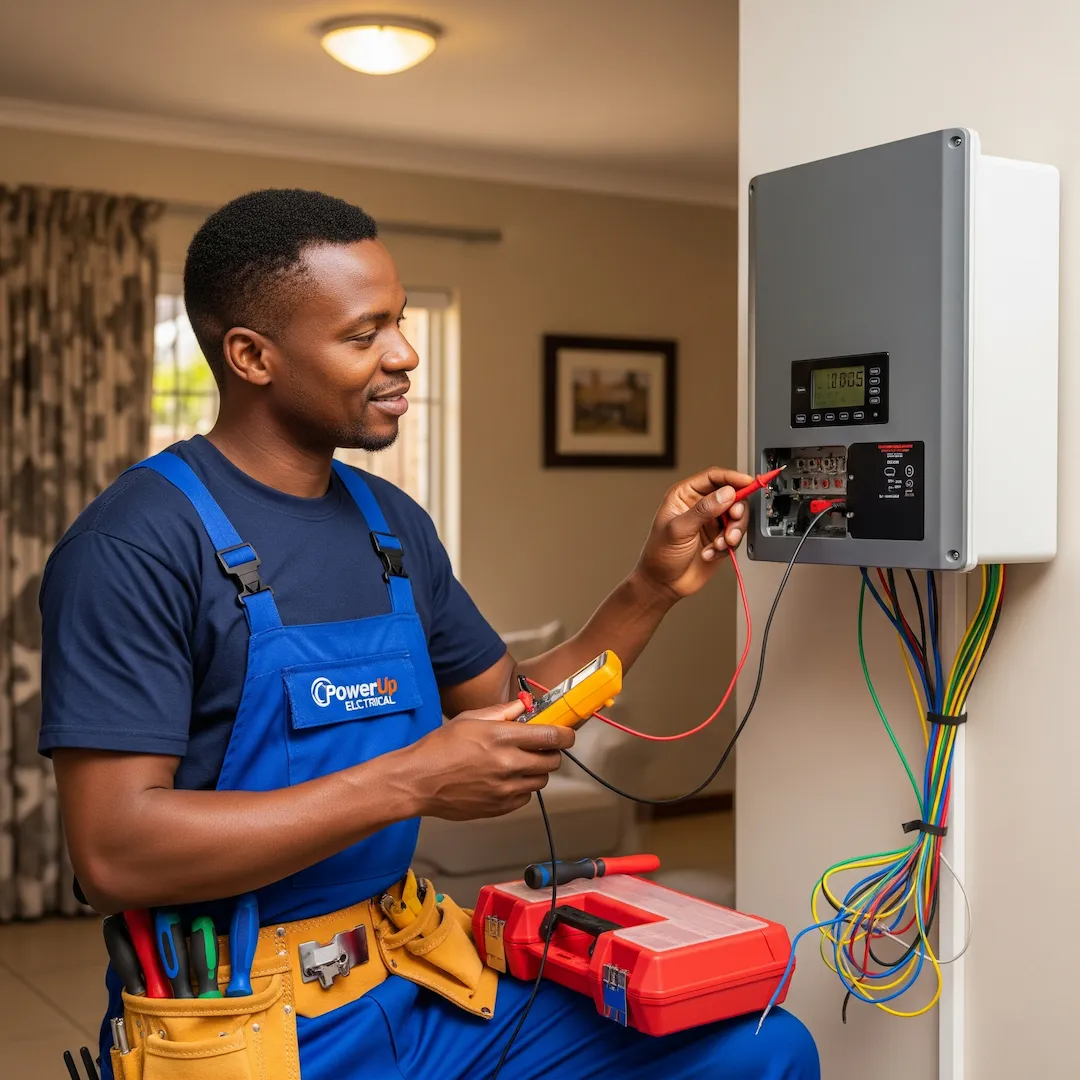
Inverter Not Performing? Why Certified Repair Expertise is Crucial for Your Power Security in SA
Inverter failing during load shedding? Learn common repairable signs, why DIY fixes are risky, and how certified inverter specialists can safely restore your backup power and protect your investment.

Of all the investments South African homeowners have made to combat load shedding, the humble inverter stands as the silent hero. It’s the brain of your backup system, faithfully switching on when the grid switches off. But what happens when that hero falters? When the lights stay off, the tell-tale beep becomes a constant annoyance, or it simply refuses to kick in, a feeling of dread can set in. Your investment, and your power security, suddenly feels vulnerable.
If your inverter is on the fritz, your first questions are likely: "Can this even be fixed?" and "Who can I possibly trust to repair it correctly?". These are critical questions. An inverter isn't a simple appliance like a toaster; it's a complex piece of power electronics. Attempting a DIY fix or calling a general handyman can be a recipe for disaster. This is where certified, specialist expertise becomes not just a preference, but a necessity for safeguarding your home and your investment.
Is My Inverter Even Repairable? Common Signs and Symptoms
Before you write it off, it's important to know that many common inverter failures are indeed repairable by a qualified technician. If you’re experiencing any of the following, it’s a clear signal to call in a professional for a diagnosis:
- No Power or Failure to Turn On: The unit is completely dead, with no lights or display, even when grid power is on.
- Constant, Unfamiliar Beeping: Beyond the normal short beep when it switches over, a continuous or patterned beeping often indicates a specific fault. Check your user manual for error codes, but don't attempt to clear them without understanding the root cause.
- Failure to Switch to Battery Power: Load shedding hits, and... nothing happens. The inverter doesn't take over, leaving you in the dark.
- Batteries Not Charging: You notice that even after hours of mains power, your battery level indicator doesn't increase. The inverter isn't properly managing the charging cycle.
- A Burning Smell or Loud Humming: Any unusual smells, especially of hot plastic or electronics, or a sudden increase in the volume of the humming or buzzing sound from the unit are urgent red flags. Switch it off immediately (if safe to do so) and call an expert.
- Error Codes on the Display: Modern inverters are smart. They will often display a fault code (e.g., "F07," "Err 12") that points a technician towards the problem area.
Recognising these signs is the first step. The crucial next step is understanding that a symptom can have many different causes, which is why professional diagnosis is key.
Why a "Quick Fix" Can Cost You More: The Dangers of Unqualified Repairs
In a pinch, it can be tempting to call a general handyman who promises a cheap, fast solution. However, with inverters, this approach is fraught with risk and can lead to far greater expenses down the line.
One of our partner technicians in Gauteng recently shared a story that perfectly illustrates this. He was called out to a home in Sandton where the inverter had completely failed. The homeowner explained that it had been beeping a few weeks prior, so they had a local handyman take a look. The handyman found a blown fuse, replaced it, and the unit powered on. A week later, a burning smell filled the room and the inverter died completely. The technician’s diagnosis was sobering: the initial blown fuse was a symptom of a failing component on the main circuit board. By simply replacing the fuse without diagnosing the underlying short circuit, the handyman allowed the fault to escalate, which fried the entire board. What might have been a R2,500 component-level repair was now a R9,000+ board replacement—and the inverter was out of warranty.
This scenario highlights the key dangers of unqualified repairs:
- Making the Problem Worse: Misdiagnosing a fault can lead to catastrophic failure of other components, turning a minor issue into a major one.
- Voiding Your Warranty: The moment an unauthorised person opens the inverter casing, you can kiss your manufacturer's warranty goodbye.
- Serious Safety Hazards: Inverters manage high DC voltage from batteries and 230V AC voltage to your home. An incorrect repair can create a fire risk or a serious shock hazard. This is not a place for guesswork.
- Damaging Your Batteries: Your batteries are often the most expensive part of your system. A faulty inverter can overcharge or undercharge them, dramatically reducing their lifespan and costing you thousands in premature replacement costs.
Inside the Mind of a Certified Technician: What a Professional Diagnosis Looks Like
When you hire a specialist, you're not just paying for a pair of hands; you're paying for a deep understanding of power electronics and a systematic, safe approach. They see far beyond the obvious symptoms.
Here’s a glimpse into what a proper diagnostic process involves:
- Safety First & Information Gathering: The technician will always start by safely isolating the inverter from the grid power and the batteries. They will then ask you detailed questions about what happened—when the problem started, what sounds you heard, and what was running at the time.
- External Checks & Error Codes: They will examine the unit for any external signs of damage, check that the cooling fans aren't blocked, and carefully record any error codes displayed on the screen.
- Specialised Tooling in Action: This is where true expertise shines. Using professional equipment like a digital multimeter and sometimes an oscilloscope, they will perform a series of tests:
- Voltage and Current Checks: Measuring the DC voltage from the batteries and the AC voltage output to ensure they are within the correct specifications.
- Component-Level Inspection: They will open the unit and inspect the Printed Circuit Boards (PCBs) for visible damage, such as burnt resistors, leaking or swollen capacitors, or damaged tracks.
- Testing Key Components: They can test individual electronic components like MOSFETs and IGBTs (the high-power switches that do the heavy lifting) to see if they have failed.
- Identifying the Root Cause: A true professional doesn't just find the broken part; they find out why it broke. Was it a power surge? Overheating due to a failed fan? Or simply component failure due to age? This prevents the same problem from happening again.
This methodical approach ensures that the repair is accurate, safe, and durable, protecting your entire backup power system.
Choosing the Right Expert: What to Look For in an Inverter Repair Specialist
Now that you understand the "why," the "who" becomes much clearer. You need a specialist, not a generalist. When vetting a technician or company to repair your inverter, here’s a checklist to guide you:
- Proven Experience with Your Inverter Brand: Ask if they frequently work on your specific brand, whether it's Sunsynk, Deye, Victron, Axpert, Growatt, or another. Different brands have unique architectures and common fail points.
- Focus on Component-Level Repairs: A technician who can diagnose and replace individual components on a circuit board is far more skilled (and often more cost-effective) than one who can only swap out entire expensive boards.
- Transparent Quoting Process: A reputable expert will insist on performing a diagnosis before giving a final quote. They should provide a clear breakdown of the costs for parts and labour. Be wary of anyone who gives a firm price over the phone without seeing the unit.
- Positive Reviews and Traceable References: Look for feedback from other homeowners in your area. Genuine positive reviews are a strong indicator of reliable service.
- Warranty on Workmanship and Parts: A professional who is confident in their work will always offer a warranty on their repair. This gives you peace of mind that if the same issue reoccurs, they will stand by their service.
Your inverter is the heart of your home's energy resilience. Entrusting its health to a qualified, experienced, and trustworthy professional is the best way to ensure it keeps beating strong through every stage of load shedding.
Frequently Asked Questions
Is it sometimes more cost-effective to replace an inverter than to repair it?
Yes, sometimes it is. A qualified technician will be able to advise you on this after a thorough diagnosis. Generally, if the repair cost (including parts and labour) exceeds 50-60% of the price of a new, comparable unit, or if the inverter is very old and technologically outdated, replacement might be the more sensible long-term option.
How long does a typical inverter repair take?
The timeline depends heavily on the fault and the availability of parts. A simple repair where the technician has the part on hand could be done within a day. However, if a specific component or a new circuit board needs to be ordered, it could take several days to a couple of weeks. A good technician will give you an estimated timeline after the diagnosis.
My inverter seems to be working, but the battery backup time is much shorter. Is this an inverter or a battery problem?
This is a classic issue that requires professional diagnosis. While it's often a sign of degraded or failing batteries, it can also be caused by an inverter fault. The inverter might not be charging the batteries to their full capacity due to an incorrect setting or a faulty charging circuit. A technician can test both the inverter's charging function and the health of the batteries to pinpoint the exact cause.
Will a professional repair affect my original manufacturer's warranty?
If your inverter is still under its original manufacturer's warranty, your first port of call should always be the company you bought it from or an authorised service centre for that brand. A third-party repair, even by a professional, will almost certainly void the manufacturer's warranty. Professional repairs are typically for units that are already out of warranty.
Find a vetted electrician near you
Inverter and battery repair: find a pro near you
- Inverter and battery repair near you
- Inverter and battery repair in Johannesburg
- Inverter and battery repair in Sandton
- Inverter and battery repair in Midrand
- Inverter and battery repair in Roodepoort
- Inverter and battery repair in Randburg
- Inverter and battery repair in Pretoria
- Inverter and battery repair in Cape Town
Suzette Meyer is the lead author and content creator for Kandua.com, South Africa’s #1 marketplace for home services. Suzette has made it her mission to help homeowners with advice on all aspects of home repair, maintenance and improvement, including how to choose the right Pro and how to make smart upgrades that improve your resale value or save costs.

Latest articles, advice and more
.webp)
.webp)
.jpeg)
Sinking Pavers, Weeds and Water That Pools: What Your Driveway Is Telling You
When your driveway starts sprouting weeds, pooling water, or sinking in patches, the bricks are not failing you. The layers underneath have moved, and they are trying to tell you exactly what went wrong.
.jpeg)
What Your Garage Door Motor Actually Does (And Why It Breaks)
Spoiler alert: your garage door motor isn't actually doing the heavy lifting. The torsion springs carry almost all the weight. The motor simply pushes, pulls, controls the descent so it doesn't slam, and acts as a lock when the door is shut. That’s why a relatively small box on your ceiling can move such a massive door. Want to test this? Pull the red manual release cord and lift the door by hand. If it glides up easily and stays put when you let go, your springs are doing their job, and the fault lies with the motor. If the door feels like dead weight or slams back down- stop. You’ve got a spring problem.
.jpeg)
4 Warning Signs Your Tiles Are Failing (And What They Mean)
Tiles rarely fail overnight. They warn you first. A hollow sound underfoot, grout that crumbles away, a tile that lifts at one edge, or a crack that runs across two tiles all point to something happening under the surface. Here is what each sign means, and how urgent it is.
.webp)
.webp)
Beyond the Unboxing: A Detailed Guide to Correct Washing Machine Plumbing & Setup
New washing machine in South Africa? Learn essential plumbing and setup tips to prevent leaks, ensure efficient operation, and extend your appliance’s lifespan - expert advice before your first load.
.webp)
New Washing Machine? Don't Plug It In Yet! Essential Installation Tips for SA Homes
Installing a new washing machine? Learn the essential setup steps South African homeowners often overlook to prevent leaks, noise, and damage—and ensure efficient, long-lasting performance from day one.
.webp)
.webp)
%25201200%2520x%25201200%2520(1).jpeg)
What Retiling a Bathroom Costs in 2026, Room by Room
Retiling a bathroom in South Africa costs between R230 and R800 per square metre in 2026, including materials and labour. A standard family bathroom, stripped and fully retiled, usually lands between R11,800 and R27,500. A guest toilet costs a fraction of that. A large porcelain en-suite costs a lot more.
How to Install a Horizontal Geyser | Step-by-Step Pro Guide
Want to install a geyser like a pro? This step-by-step tutorial shows you exactly how to do a horizontal Ariston Axios geyser installation, straight from the BluLever plumbing workshop. 🎥 Hosted by MK, BluLever’s technical facilitator, and supported by a qualified electrician, Life and a BluLever graduate artisan, Zinhle. This is your ultimate guide to a SANS 10254-compliant installation — from preparing the wall, to plumbing, electrical wiring, and pro troubleshooting tips.
How to Maintain a Geyser | Step-by-Step Pro Guide
Want to maintain a geyser like a pro? This step-by-step tutorial shows you exactly how to do the three core geyser maintenance checks on an Ariston Axios geyser installation, straight from the BluLever plumbing workshop. 🎥 Hosted by MK, BluLever’s technical facilitator, and supported by a qualified electrician, Life. This is your ultimate guide to geyser maintenance — from diagnosing the problem to checking the heat regulation of the geyser, to pressure regulation and then finally corrosion protection.
%201.avif)
Not just another newsletter. It's an advantage