
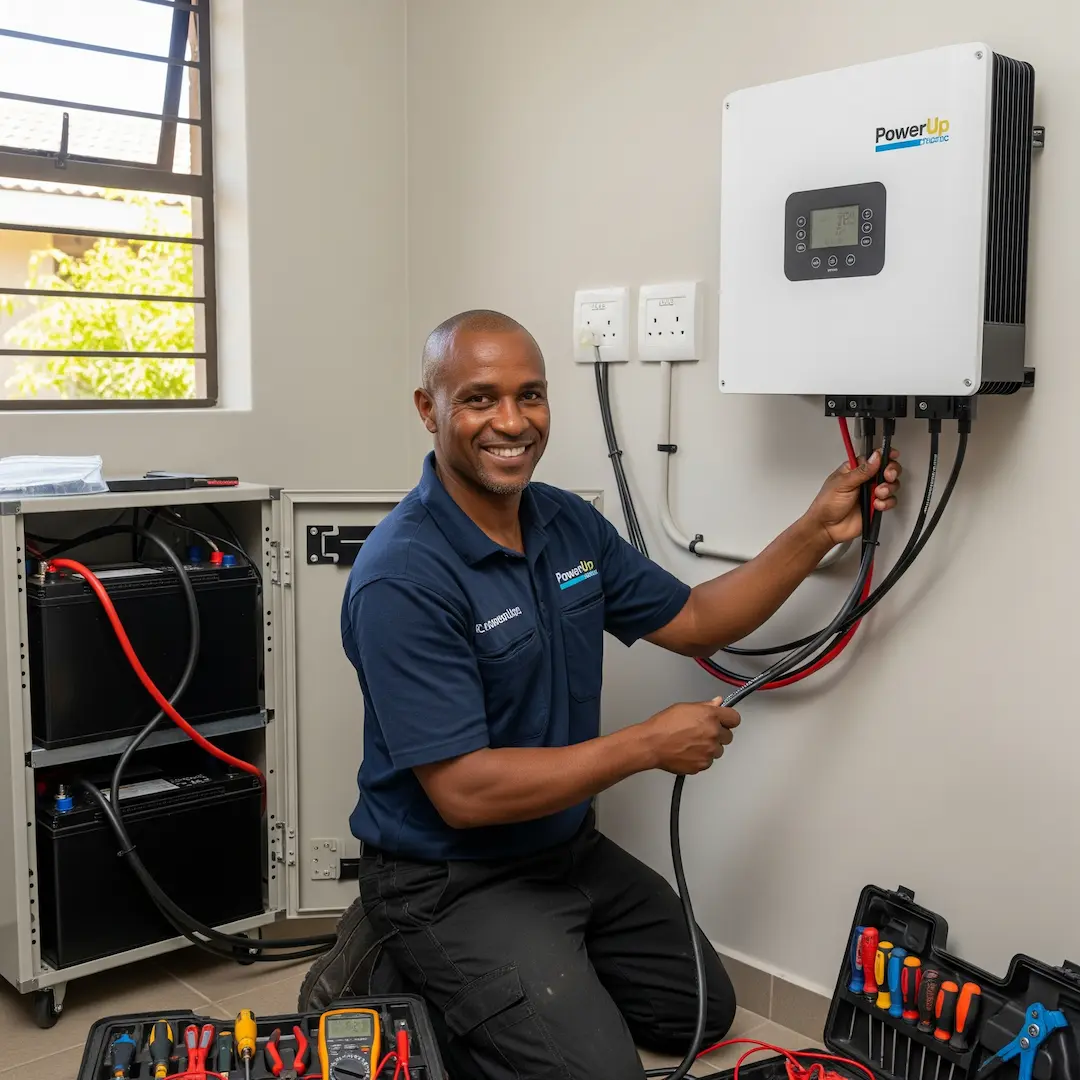
Load Shedding Solution: What is an Inverter & Battery System and How Does It Work in SA?
New to inverter and battery systems? This guide explains how they work in South Africa and why they’re one of the most reliable load shedding backup power solutions.

Load Shedding Solution: What is an Inverter & Battery System and How Does It Work in SA?
Load shedding has become an unfortunate reality for many South African households and businesses. As the power cuts continue, more and more people are looking for reliable backup solutions. Among the most popular and effective options is an inverter and battery system. But what exactly is it, and how does it keep your lights on when Eskom switches off? Let's break it down.
Understanding the Core Components: Inverter and Battery
At its heart, an inverter and battery system is designed to seamlessly provide electricity to your home when the main power supply fails. It achieves this through the intelligent interplay of two primary components: the inverter and the battery.
The Inverter: Your Power Translator
Think of the inverter as the brain of the operation, or perhaps more accurately, the translator. The electricity stored in batteries is Direct Current (DC) – the same type of power used in your car battery. However, most appliances in your home run on Alternating Current (AC) – the type of power supplied by the national grid.
This is where the inverter comes in. Its fundamental job is to convert the DC power from your batteries into usable AC power for your household appliances. When the power goes out, the inverter swiftly kicks into action, taking the stored energy from the batteries and transforming it into the electricity your fridge, TV, lights, and other essential devices need to operate.
Our expert electricians often explain this with a simple analogy: "Imagine you have a conversation in isiXhosa, but your friend only understands English. The inverter is like that translator, making sure the battery's 'language' (DC) can be understood by your appliances' 'language' (AC)."
The Battery: Your Energy Reservoir
The battery is your power reservoir – it's where the electrical energy is stored for later use. During periods when the grid is operational, the inverter, acting as a charger, takes AC power from the grid and converts it into DC power to top up your batteries. This ensures they are ready and waiting to supply power when load shedding hits.
There are various types of batteries used in these systems, with the most common in South Africa being lead-acid and lithium-ion. Lithium-ion batteries, while generally more expensive upfront, offer a longer lifespan, faster charging, and a higher depth of discharge, making them a popular choice for long-term reliability.
How an Inverter and Battery System Works During Load Shedding
The magic of an inverter and battery system lies in its automated and seamless operation. Here's a step-by-step look at what happens when the power goes out and comes back on:
- Grid Power is Present: When there's no load shedding, your home is powered by the national grid. During this time, the inverter acts as a charger, using a small portion of the grid's power to keep your batteries fully charged.
- Load Shedding Kicks In: The moment the grid power is interrupted (i.e., load shedding begins), the inverter immediately detects this loss.
- Automatic Switchover: Within milliseconds, the inverter automatically switches from drawing power from the grid to drawing power from the connected batteries. This transition is usually so fast that you won't even notice a flicker in your lights.
- Battery Power Supplies Your Home: The inverter then converts the DC power from the batteries into AC power, supplying electricity to the appliances connected to the backup circuit. Depending on the size of your system and the number of appliances you want to power, you can keep essential items like lights, fridges, TVs, Wi-Fi routers, and even some kitchen appliances running.
- Grid Power Restored: When Eskom restores power, the inverter detects the return of the grid supply.
- Seamless Reversion and Recharging: The system automatically switches back to drawing power from the grid. At the same time, the inverter reverts to its charging function, topping up the batteries in preparation for the next load shedding cycle.
One professional installer shared a recent experience: "We had a client in Fourways who didn't even realise load shedding had started because their inverter system kicked in so smoothly. They only noticed when their neighbour's lights went out! That's the beauty of these automated systems."
Key Benefits for South African Homeowners
Investing in an inverter and battery system offers several significant advantages for South Africans grappling with unreliable power:
- Uninterrupted Power: The most obvious benefit is continuous power supply during outages, ensuring your essential appliances remain operational.
- Convenience: No more fumbling for candles or struggling with noisy generators. The system operates silently and automatically.
- Protection for Appliances: Sudden power outages and surges when power returns can damage sensitive electronics. An inverter provides a stable power supply, helping to protect your appliances.
- Scalability: Many systems can be expanded later by adding more batteries if your power needs increase.
- Reduced Stress: Knowing you have a reliable backup plan can significantly reduce the anxiety and disruption caused by load shedding.
Important Considerations for Your System
While the concept is straightforward, the actual implementation requires careful planning. Here are a few things to keep in mind, as advised by our network of trusted electricians:
- Sizing Your System: This is crucial. An electrician will help you determine the right size (kilovolt-amps or kVA for the inverter, and kilowatt-hours or kWh for the battery capacity) based on your specific power needs – what appliances you want to run and for how long. Over-sizing can be costly, while under-sizing will leave you in the dark.
- Installation by Qualified Professionals: Inverter and battery installations involve high voltage DC and AC electricity. It is absolutely essential to have a qualified and certified electrician handle the installation to ensure safety and compliance with South African National Standards (SANS). Attempting DIY installation can be extremely dangerous.
- Placement: Batteries need a well-ventilated, cool, and dry space, away from direct sunlight or extreme temperatures.
- Maintenance: While generally low maintenance, regular checks by a professional electrician can ensure optimal performance and longevity of your system.
By understanding how an inverter and battery system works, you can make an informed decision about investing in a reliable power solution for your South African home, bringing peace of mind during unpredictable load shedding schedules.
Frequently Asked Questions
How long will an inverter and battery system power my home during load shedding?
The duration depends entirely on the size of your battery bank and the amount of power your connected appliances consume. A well-sized system for a typical South African home can power essential appliances (lights, Wi-Fi, TV, fridge) for 4-8 hours, covering most load shedding slots.
Can an inverter and battery system power my entire house?
It depends on the system's capacity. While some larger, more expensive systems can power most or all household appliances, many homeowners opt for smaller systems that only power essential circuits (e.g., lights, entertainment, fridge, and Wi-Fi) to manage costs and battery life.
What's the difference between an inverter system and a generator?
An inverter system provides quiet, automatic, and seamless power backup with no fumes and minimal maintenance. Generators, on the other hand, are typically louder, require fuel, produce emissions, and often involve manual startup, though they can provide higher power output for very large loads.
Do inverter systems require maintenance?
While modern inverter and battery systems are relatively low-maintenance, it's advisable to have them inspected annually by a qualified electrician. This ensures the components are functioning optimally, connections are secure, and battery health is maintained, prolonging the system's lifespan.
Find a vetted electrician near you
Inverter and battery installation: find a pro near you
- Inverter and battery installation near you
- Inverter and battery installation in Johannesburg
- Inverter and battery installation in Sandton
- Inverter and battery installation in Midrand
- Inverter and battery installation in Roodepoort
- Inverter and battery installation in Randburg
- Inverter and battery installation in Pretoria
- Inverter and battery installation in Cape Town
Suzette Meyer is the lead author and content creator for Kandua.com, South Africa’s #1 marketplace for home services. Suzette has made it her mission to help homeowners with advice on all aspects of home repair, maintenance and improvement, including how to choose the right Pro and how to make smart upgrades that improve your resale value or save costs.

Latest articles, advice and more
.webp)
.webp)
.webp)
.webp)
.jpeg)
Sinking Pavers, Weeds and Water That Pools: What Your Driveway Is Telling You
When your driveway starts sprouting weeds, pooling water, or sinking in patches, the bricks are not failing you. The layers underneath have moved, and they are trying to tell you exactly what went wrong.
.webp)
.webp)
Beyond the Unboxing: A Detailed Guide to Correct Washing Machine Plumbing & Setup
New washing machine in South Africa? Learn essential plumbing and setup tips to prevent leaks, ensure efficient operation, and extend your appliance’s lifespan - expert advice before your first load.
.webp)
New Washing Machine? Don't Plug It In Yet! Essential Installation Tips for SA Homes
Installing a new washing machine? Learn the essential setup steps South African homeowners often overlook to prevent leaks, noise, and damage—and ensure efficient, long-lasting performance from day one.
.webp)
.webp)
%25201200%2520x%25201200%2520(1).jpeg)
What Retiling a Bathroom Costs in 2026, Room by Room
Retiling a bathroom in South Africa costs between R230 and R800 per square metre in 2026, including materials and labour. A standard family bathroom, stripped and fully retiled, usually lands between R11,800 and R27,500. A guest toilet costs a fraction of that. A large porcelain en-suite costs a lot more.
How to Install a Horizontal Geyser | Step-by-Step Pro Guide
Want to install a geyser like a pro? This step-by-step tutorial shows you exactly how to do a horizontal Ariston Axios geyser installation, straight from the BluLever plumbing workshop. 🎥 Hosted by MK, BluLever’s technical facilitator, and supported by a qualified electrician, Life and a BluLever graduate artisan, Zinhle. This is your ultimate guide to a SANS 10254-compliant installation — from preparing the wall, to plumbing, electrical wiring, and pro troubleshooting tips.
How to Maintain a Geyser | Step-by-Step Pro Guide
Want to maintain a geyser like a pro? This step-by-step tutorial shows you exactly how to do the three core geyser maintenance checks on an Ariston Axios geyser installation, straight from the BluLever plumbing workshop. 🎥 Hosted by MK, BluLever’s technical facilitator, and supported by a qualified electrician, Life. This is your ultimate guide to geyser maintenance — from diagnosing the problem to checking the heat regulation of the geyser, to pressure regulation and then finally corrosion protection.
%201.avif)
Not just another newsletter. It's an advantage