
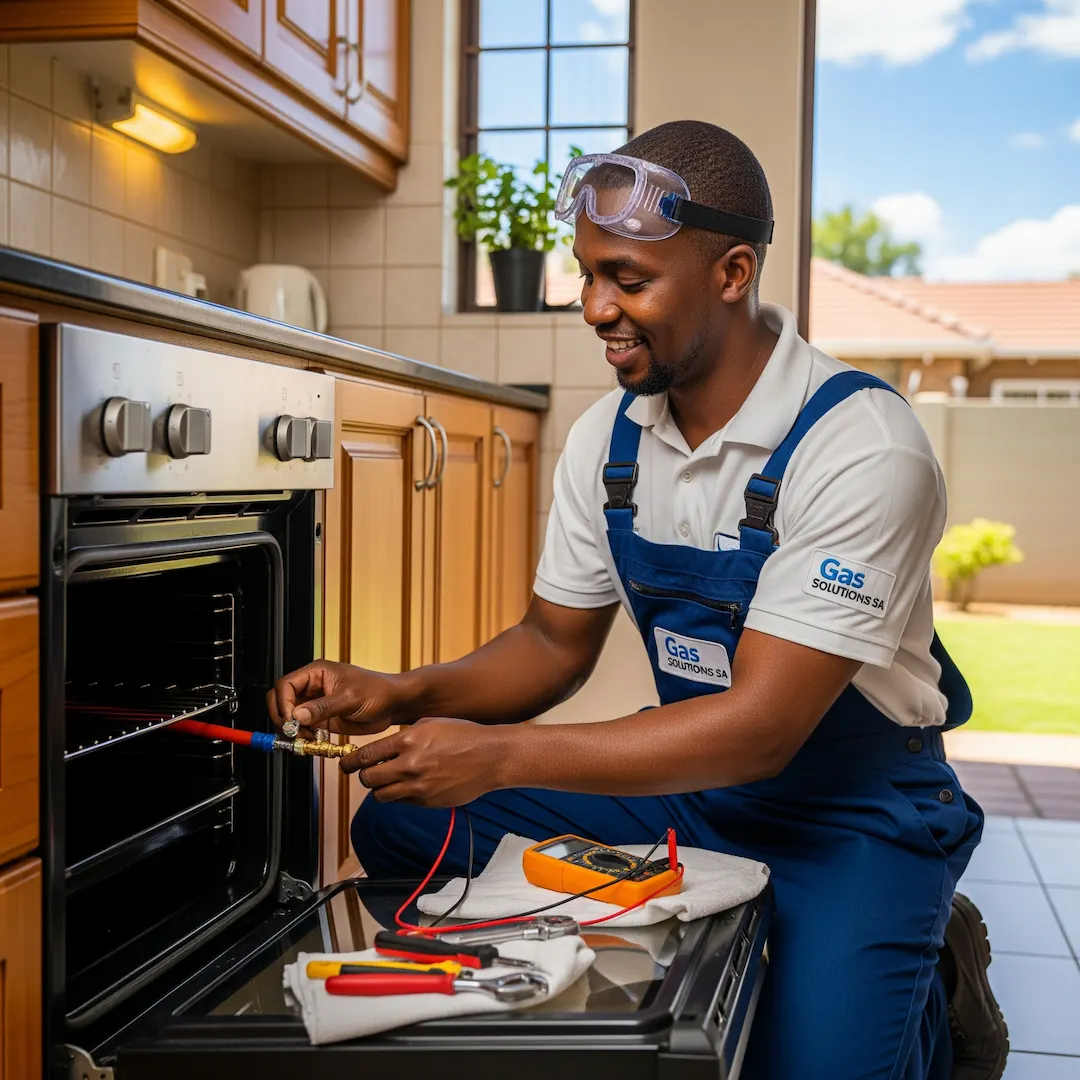
Natural Gas Oven Malfunction? Why Only SAQCC Gas Certified Repair Guarantees Safety in SA
Gas oven malfunctioning in South Africa? Learn why only SAQCC Gas certified technicians can legally and safely repair natural gas ovens - protecting your family, home, and ensuring full compliance with SA safety regulations.

Natural Gas Oven Malfunction? Why Only SAQCC Gas Certified Repair Guarantees Safety in SA
There are few kitchen frustrations as disruptive as an oven that won’t light, won’t stay lit, or just isn’t heating correctly—especially when you’ve got a family dinner or a Sunday roast planned. When that appliance is a natural gas oven, however, the frustration can quickly turn into a serious safety concern. That faint, unfamiliar smell or the clicking of an ignitor that never catches is your home’s way of telling you to proceed with extreme caution.
If you're wondering whether a faulty gas oven is dangerous and who you can trust to fix it, you're asking the right questions. The answer is unequivocal: natural gas appliance repair is not a DIY job or a task for a general handyman. In South Africa, it is a specialised field governed by strict safety regulations, and only one type of professional is legally qualified to do the work: an SAQCC Gas registered technician.
The Hidden Dangers of a Faulty Natural Gas Oven
A malfunctioning gas oven isn't just an inconvenience; it's a potential hazard lurking in the heart of your home. The risks are significant and go beyond the obvious fear of fire.
- Carbon Monoxide (CO) Poisoning: This is perhaps the most insidious danger. Carbon monoxide is a colourless, odourless gas produced when natural gas doesn't burn completely—a common symptom of a faulty burner or ventilation issue. Because you can't see or smell it, it can build up in your home undetected. Early symptoms of CO poisoning are often mistaken for the flu (headache, dizziness, nausea), but prolonged exposure can be lethal. It is rightfully known as the "silent killer."
- Gas Leaks and Fire Risk: A worn-out seal, a cracked hose, or a poorly fitted connection can lead to a natural gas leak. Natural gas is highly combustible, and it doesn't take much for a small leak to create a dangerous situation. A simple spark from a light switch, a refrigerator motor kicking in, or even static electricity could be enough to ignite the accumulated gas, leading to a flash fire or, in the worst-case scenario, an explosion.
- Invalidated Home Insurance: Here’s a crucial point many homeowners overlook. Should an incident occur—be it a fire or other damage—and your insurance provider discovers that the repair or installation was performed by an uncertified individual, they are highly likely to repudiate your claim. The financial consequences could be devastating.
Why Your Local Handyman (or a DIY Attempt) is Not the Answer
It can be tempting to call your trusted local handyman who has fixed a leaky tap or a faulty light before. Or maybe you've watched a few online videos and think you can tackle the problem yourself. When it comes to gas, this is a gamble you cannot afford to take.
One of our vetted gas professionals recently shared a story from a call-out in a Pretoria suburb. A homeowner had tried to save a few rand by replacing their oven’s thermocouple themselves. The part seemed to fit, but they had used standard plumbing tape from a hardware store, not the yellow gas-rated PTFE tape required for gas fittings. This created an imperfect seal, resulting in a slow, continuous leak. The family had been getting unexplained headaches for over a week—a classic sign of low-level carbon monoxide exposure from the incomplete combustion that was also occurring. The technician’s gas detector confirmed critically high levels of both natural gas and CO in the kitchen. They were living in a ticking time bomb, all to save a couple of hundred rand.
This is a stark reminder that gas work requires:
- Specialised Knowledge: Understanding gas pressures, combustion ratios, and ventilation requirements.
- Specialised Tools: Using calibrated gas leak detectors and manometers to test pressure, not just soap and water.
- Specialised Parts: Knowing the correct fittings, seals, and components that are rated for natural gas.
The Gold Standard in Gas Safety: The SAQCC Gas Certification
So, who is the right person for the job? In South Africa, the law is clear. The South African Qualification & Certification Committee for Gas (SAQCC Gas) is the body legally mandated by the Department of Employment and Labour to register all gas practitioners.
Working on any gas system—including your natural gas oven—without being registered with SAQCC Gas is illegal.
When you hire an SAQCC Gas registered technician, you are hiring a professional who has proven their competence through:
- Rigorous Training: They have completed extensive training and assessments on gas properties, appliance-specific systems, and all relevant safety protocols.
- Knowledge of National Standards: They work according to the South African National Standards (SANS), such as SANS 10087, which governs gas installations. This ensures the work is not just functional but compliant and safe.
- Possession of a Valid Licence: They must carry a registration card that specifies the type of gas work they are authorised to perform (e.g., domestic, commercial, natural gas, LPG).
Crucially, you must always ask to see their card before any work begins. This card is your proof that they are qualified, registered, and accountable.
What to Expect During a Professional Natural Gas Oven Repair
A certified technician’s approach is methodical and prioritises safety above all else. Here’s what a professional service call should look like:
- Initial Safety Assessment: The first step will be to ensure the area is safe. This may involve shutting off the gas supply at the isolation valve and ventilating the kitchen.
- Verification of Credentials: The technician should willingly present their SAQCC Gas card. Check their photo, the expiry date, and that the authorisation covers domestic natural gas appliances.
- Systematic Diagnosis: They won’t just start swapping parts. They will use proper equipment to test for leaks, check the gas pressure being supplied to the oven, inspect the burners for blockages, and test electronic components like the ignitor and safety devices like the thermocouple or flame failure device.
- Clear Explanation and Quote: Once the fault is identified, they will explain the problem to you in clear terms, outline the necessary solution, and provide a detailed quote for the repair.
- Professional Repair: The work will be carried out using the correct, manufacturer-approved parts and industry-best practices.
- Post-Repair Testing: After the repair, the technician will perform a final series of checks. This includes a pressure test to confirm there are no leaks in the system and a combustion analysis, ensuring the flame is a steady, crisp blue—not a yellow, sooty, or lifting flame, which indicates poor combustion.
The Critical Importance of the Certificate of Conformity (CoC)
While a repair might not always require a new Certificate of Conformity, the technician's ability to issue one is the ultimate proof of their legitimacy. A Gas CoC is a legal document that declares a gas installation to be safe and compliant with South African regulations. It’s mandatory for all new installations, modifications, and when selling a property.
If the person you hire is not qualified to issue a CoC, they are not legally qualified to work on your gas oven. It’s that simple.
Your family’s safety and the integrity of your home are paramount. When your natural gas oven plays up, don't take a chance. The peace of mind that comes from knowing the job was done safely and correctly by a legally certified professional is priceless. Always insist on an SAQCC Gas registered technician.
Frequently Asked Questions
What does the SAQCC Gas registration card look like and what should I check?
The card is a plastic, credit-card-sized ID. You should check four key things: the technician's photo and name, the expiry date to ensure it's current, the SAQCC Gas logo, and the "Authorised To" section on the back, which must specify "Natural Gas" for your type of oven and "Domestic" for a home appliance.
My gas oven flame is yellow or orange instead of blue. Is this dangerous?
Yes, this is a sign of a problem that needs immediate attention from a certified technician. A blue flame indicates complete and efficient combustion. A yellow or orange flame means the gas is not burning properly, which can produce soot and, more dangerously, lead to the creation of carbon monoxide (CO). Do not use the oven and call a professional.
I smell gas near my oven even when it's off. What should I do immediately?
Your safety is the top priority. Do not operate any electrical switches (don't turn lights on or off), do not use your phone in the area, and do not create any sparks. Immediately extinguish any open flames like candles. If possible, open all windows and doors to ventilate the area. Shut off the gas supply at the main valve or the valve near the appliance if you know how to do so safely. Then, from a safe location outside your home, call a registered SAQCC Gas technician for an emergency repair.
How often should my natural gas oven be serviced?
Most manufacturers and gas professionals recommend having your natural gas appliances, including your oven, serviced at least once every 12 to 18 months. Regular servicing by a certified technician ensures it operates efficiently, helps prevent unexpected breakdowns, and, most importantly, allows a professional to check for potential safety issues like minor leaks or poor combustion before they become serious hazards.
Find a vetted electrician near you
Natural gas appliance repair: find a pro near you
Suzette Meyer is the lead author and content creator for Kandua.com, South Africa’s #1 marketplace for home services. Suzette has made it her mission to help homeowners with advice on all aspects of home repair, maintenance and improvement, including how to choose the right Pro and how to make smart upgrades that improve your resale value or save costs.

Latest articles, advice and more
.webp)
.webp)
.jpeg)
Sinking Pavers, Weeds and Water That Pools: What Your Driveway Is Telling You
When your driveway starts sprouting weeds, pooling water, or sinking in patches, the bricks are not failing you. The layers underneath have moved, and they are trying to tell you exactly what went wrong.
.jpeg)
What Your Garage Door Motor Actually Does (And Why It Breaks)
Spoiler alert: your garage door motor isn't actually doing the heavy lifting. The torsion springs carry almost all the weight. The motor simply pushes, pulls, controls the descent so it doesn't slam, and acts as a lock when the door is shut. That’s why a relatively small box on your ceiling can move such a massive door. Want to test this? Pull the red manual release cord and lift the door by hand. If it glides up easily and stays put when you let go, your springs are doing their job, and the fault lies with the motor. If the door feels like dead weight or slams back down- stop. You’ve got a spring problem.
.jpeg)
4 Warning Signs Your Tiles Are Failing (And What They Mean)
Tiles rarely fail overnight. They warn you first. A hollow sound underfoot, grout that crumbles away, a tile that lifts at one edge, or a crack that runs across two tiles all point to something happening under the surface. Here is what each sign means, and how urgent it is.
.webp)
.webp)
Beyond the Unboxing: A Detailed Guide to Correct Washing Machine Plumbing & Setup
New washing machine in South Africa? Learn essential plumbing and setup tips to prevent leaks, ensure efficient operation, and extend your appliance’s lifespan - expert advice before your first load.
.webp)
New Washing Machine? Don't Plug It In Yet! Essential Installation Tips for SA Homes
Installing a new washing machine? Learn the essential setup steps South African homeowners often overlook to prevent leaks, noise, and damage—and ensure efficient, long-lasting performance from day one.
.webp)
.webp)
%25201200%2520x%25201200%2520(1).jpeg)
What Retiling a Bathroom Costs in 2026, Room by Room
Retiling a bathroom in South Africa costs between R230 and R800 per square metre in 2026, including materials and labour. A standard family bathroom, stripped and fully retiled, usually lands between R11,800 and R27,500. A guest toilet costs a fraction of that. A large porcelain en-suite costs a lot more.
How to Install a Horizontal Geyser | Step-by-Step Pro Guide
Want to install a geyser like a pro? This step-by-step tutorial shows you exactly how to do a horizontal Ariston Axios geyser installation, straight from the BluLever plumbing workshop. 🎥 Hosted by MK, BluLever’s technical facilitator, and supported by a qualified electrician, Life and a BluLever graduate artisan, Zinhle. This is your ultimate guide to a SANS 10254-compliant installation — from preparing the wall, to plumbing, electrical wiring, and pro troubleshooting tips.
How to Maintain a Geyser | Step-by-Step Pro Guide
Want to maintain a geyser like a pro? This step-by-step tutorial shows you exactly how to do the three core geyser maintenance checks on an Ariston Axios geyser installation, straight from the BluLever plumbing workshop. 🎥 Hosted by MK, BluLever’s technical facilitator, and supported by a qualified electrician, Life. This is your ultimate guide to geyser maintenance — from diagnosing the problem to checking the heat regulation of the geyser, to pressure regulation and then finally corrosion protection.
%201.avif)
Not just another newsletter. It's an advantage