

Navigating the Three Phase Electrical COC in South Africa: Key Differences & Compliance Requirements
Have a three-phase electrical supply in South Africa? Learn what it is, why it matters for your Electrical CoC, and how to keep your business or property fully compliant.

If you own a business, manage an industrial property, or even have a larger home in South Africa that relies on a three-phase electrical supply, you'll know that your electrical system is a different beast compared to standard single-phase setups. And when it comes to compliance, specifically the Electrical Certificate of Compliance (CoC), those differences become critically important. This guide will help you understand what sets a three-phase CoC apart and how to ensure your property remains compliant.
What is a Three-Phase Electrical Supply, and Why Does it Matter for a CoC?
Before we dive into the CoC, let's briefly touch on what three-phase power is. In simple terms, a single-phase supply delivers electricity using one alternating current waveform. It's perfectly adequate for most homes with typical appliances. A three-phase supply, however, uses three alternating current waveforms, each out of sync with the others.
Why does this matter?
- Heavier Loads: Three-phase power is designed to handle significantly heavier electrical loads. This makes it ideal for industrial machinery, large commercial air conditioning units, powerful workshop tools, and even large residential properties with numerous high-demand appliances.
- Efficiency: It's more efficient for delivering large amounts of power, which can translate to cost savings for big consumers.
- Constant Power: The staggered waveforms provide a more constant and smoother power delivery, reducing vibrations in motors and extending the life of equipment.
From a CoC perspective, the increased complexity and potential for higher current flows mean that the inspection and testing process is far more rigorous. Our expert electricians often share how critical it is to understand these distinctions. "When we're doing a three-phase CoC, we're not just looking at the lights and plugs," one seasoned professional recently explained. "We're scrutinising the entire distribution network, from the incoming supply to every motor and high-demand circuit."
Key Differences in a Three-Phase CoC Inspection
While the core purpose of any Electrical CoC is to certify that an electrical installation is safe and compliant with the SANS 10142-1 standard, the approach for a three-phase system has distinct differences:
1. Distribution Boards (DBs) and Panel Configurations
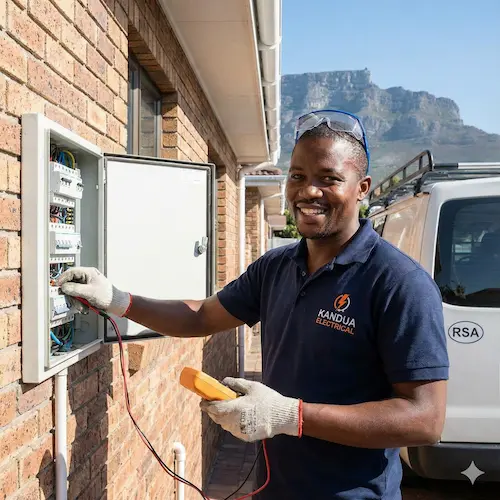
Three-phase installations feature more complex distribution boards. These aren't your typical home DBs with a few circuit breakers. They often contain:
- Larger Circuit Breakers: Designed to handle higher currents, often industrial-grade.
- Phase Balancing: Electricians will pay close attention to how loads are distributed across the three phases. Imbalance can lead to inefficiencies, overheating, and even damage to equipment. "We've seen cases where poor phase balancing has caused motors to burn out prematurely," an industrial electrician recounted. "It's a common oversight that a CoC inspection will definitely pick up."
- Motor Control Centres (MCCs): In industrial settings, these are dedicated panels for controlling multiple motors, and their wiring and safety mechanisms are a crucial part of the CoC inspection.
- Busbar Systems: Larger installations might use busbar systems instead of traditional wiring within the main distribution board, requiring specific expertise for inspection.
2. Earthing and Bonding Requirements
While earthing and bonding are critical for all electrical installations, for three-phase systems, the requirements can be more stringent due to the higher fault currents involved.
- Larger Earth Conductors: The size of earth conductors must be adequate to safely dissipate fault currents.
- Equipotential Bonding: Comprehensive bonding of all exposed conductive parts, machinery, and metallic structures is paramount to prevent dangerous potential differences.
- Earth Leakage Protection: While standard earth leakage devices protect against shock hazards, for three-phase systems, specific three-phase earth leakage units are often required, or individual phase protection is implemented according to load requirements.
3. Load Calculations and Capacity
An essential part of a three-phase CoC is verifying that the entire system, from the main incoming supply to individual circuits, is correctly sized for the connected load.
- Demand Factor: Calculating the actual demand factor for a commercial or industrial property involves understanding simultaneous usage of machinery, lighting, and other equipment.
- Cable Sizing: Cables must be correctly sized to carry the maximum anticipated current without overheating. Undersized cables are a major fire hazard.
- Transformer Sizing: For properties with their own transformers, the CoC will also consider its capacity relative to the connected load.
4. Specialized Equipment and Machinery
Three-phase CoCs often involve inspecting dedicated circuits for heavy machinery, HVAC systems, and other specialized equipment. This includes:
- Isolation Points: Ensuring there are clearly marked and easily accessible isolation switches for all machinery for safe maintenance.
- Emergency Stop Systems: Verifying the functionality of emergency stop buttons on industrial equipment.
- Interlocks and Safety Devices: Checking that safety interlocks (e.g., on machine guards) are correctly wired and operational. "One time, during a CoC for a manufacturing plant, we found a bypassed safety interlock on a cutting machine," an electrical inspector recalled. "It was a serious hazard that could have led to a severe injury. This is precisely why these detailed inspections are so vital."
5. Compliance with Industry-Specific Standards
While SANS 10142-1 is the overarching standard, certain industries might have additional electrical safety requirements that a competent electrician performing a three-phase CoC will be aware of and check for. Examples include:
- Hazardous Locations: Installations in areas with flammable gases or dust (e.g., paint booths, grain silos) require explosion-proof equipment and specific wiring methods.
- Medical Facilities: Hospitals and clinics have stringent requirements for power continuity and earth leakage sensitivity.
How to Ensure Your Business or Large Home is Compliant
Achieving and maintaining compliance for a three-phase electrical system requires a proactive approach:
- Engage a Qualified Electrician: This is non-negotiable. Only a registered electrician, accredited with the Department of Employment and Labour (formerly Department of Labour), can issue a valid CoC. For three-phase systems, seek out electricians with demonstrable experience in commercial or industrial installations.
- Regular Inspections and Maintenance: Don't wait until you need a CoC for a property sale or insurance claim. Regular preventative maintenance, including thermal imaging of panels and load testing, can identify potential issues before they become critical.
- Keep Accurate Records: Maintain an up-to-date logbook of all electrical work, modifications, and previous CoCs. This documentation can be invaluable during an inspection.
- Address Deficiencies Promptly: If an electrician identifies any non-compliances during an inspection, get them rectified immediately. Delaying repairs not only prolongs the safety risk but can also make future CoC acquisition more challenging and costly.
- Understand Your System: As a homeowner or business owner, have a basic understanding of your electrical system. Know where your main distribution board is, how to trip circuit breakers, and be aware of any unusual smells, sounds, or flickering lights that might indicate a problem.
Remember, DIY electrical work, especially on three-phase systems, is extremely dangerous and illegal if not performed by a qualified individual. Always consult with a registered professional for any electrical installations, modifications, or repairs.
Frequently Asked Questions
How long is a Three-Phase Electrical CoC valid for in South Africa?
An Electrical Certificate of Compliance (CoC) in South Africa is generally valid for a period of two years, provided no alterations, additions, or significant damage have occurred to the electrical installation during that time. However, a new CoC is always required when there's a change of ownership of a property, or if the electrical installation has been modified.
What happens if my three-phase system is found to be non-compliant during an inspection?
If your system is found to be non-compliant, the electrician will issue a report detailing the defects. You will then need to engage a qualified electrician to rectify these issues. Once the repairs are completed and the system meets the SANS 10142-1 standard, the electrician will then issue the valid CoC.
Can I get a partial CoC for just a section of my three-phase installation?
No, a CoC covers the entire electrical installation of a property, from the point of supply to the furthest outlet. While an electrician might focus on specific areas during a preliminary assessment, the official CoC attests to the safety and compliance of the complete system.
What are some common reasons a three-phase system might fail a CoC inspection?
Common reasons for failure include incorrect cable sizing for the load, inadequate earthing and bonding, poor phase balancing, non-compliant distribution board wiring, damaged or exposed wiring, faulty earth leakage devices, and lack of proper isolation points for machinery.
Suzette Meyer is the lead author and content creator for Kandua.com, South Africa’s #1 marketplace for home services. Suzette has made it her mission to help homeowners with advice on all aspects of home repair, maintenance and improvement, including how to choose the right Pro and how to make smart upgrades that improve your resale value or save costs.

Related articles, advice and more
.webp)
How to Check If an Electrician Is Registered with ECB
The Electrical Conformance Board of South Africa (ECB) serves as a vital gatekeeper in this industry. If you are in the middle of a renovation or just need a new DB board installed, knowing how to verify your electrician’s registration is the most important step you can take.
What to Do If You Smell Burning from an Electrical Outlet
For South African homeowners, electrical faults are a leading cause of house fires. Whether it is caused by old wiring in heritage homes in suburbs like Melville or Observatory, or the strain placed on systems by post-load shedding surges, knowing exactly how to react can save your property and your life.This guide details the immediate steps you must take, the likely causes of the smell, and what to expect when you call in a professional.
.webp)
.webp)
.webp)
Your Inverter is Repaired! Key Checks to Ensure Continued Backup Power in SA
This guide will walk you through the essential checks and maintenance tips to maximise the lifespan and efficiency of your recently repaired inverter and battery setup, straight from the insights of experienced electricians across South Africa.
.webp)
.webp)
.webp)
Latest articles, advice and more
.webp)
How To Fix A Damp Wall And What's Actually Causing It
If your walls are weeping, your plaster is flaking, or you can smell that musty, damp smell, you're not dealing with one problem; you're dealing with three possible ones. The fix depends entirely on the cause.
.webp)
Gutter Cleaning: How Often Should You Do It and What Does It Cost?
Clean your gutters at least twice a year, and always before your rainy season kicks in. In South Africa, a professional gutter clean usually costs somewhere between R450 and R2,500, depending on the size of your home, how high the roof is, and how blocked things have become. Here is how to work out the right frequency and a fair price.
.webp)
Why Are My Plug Points Not Working? A Troubleshooting Guide
If your plug points have suddenly gone dead, the usual culprits are a tripped earth leakage switch, a tripped circuit breaker, loose or burnt wiring, or a faulty appliance overloading the circuit. Work through the safety checks below before you call anyone, then understand when the job requires a registered electrician.
.webp)
How a Geyser Timer Can Cut Your Electricity Bill
If you've been staring at your Eskom bill and wondering where the money is going, your geyser might be the culprit. Here's the good news: a simple geyser timer can cut your hot water costs by up to 30% each month, which typically saves South African homeowners between R200 and R400 on their electricity bills, depending on their current usage.
%20(1).webp)
How To Treat and Paint Over Damp Walls (So It Doesn't Come Back)
You've noticed a patch on the bedroom wall: discoloured and maybe a bit soft to the touch, and you're wondering if a fresh coat of paint will simply cover the problem. The short answer: no, it won't. But the good news is that understanding what's happening beneath that stain, and treating it properly, is far simpler than you might think.
.webp)
Beyond the Unboxing: A Detailed Guide to Correct Washing Machine Plumbing & Setup
New washing machine in South Africa? Learn essential plumbing and setup tips to prevent leaks, ensure efficient operation, and extend your appliance’s lifespan - expert advice before your first load.
.webp)
New Washing Machine? Don't Plug It In Yet! Essential Installation Tips for SA Homes
Installing a new washing machine? Learn the essential setup steps South African homeowners often overlook to prevent leaks, noise, and damage—and ensure efficient, long-lasting performance from day one.
%20(1).webp)
.webp)
TV Repair Costs in South Africa: Diagnosing Screen, Power & Component Issues
Find out what TV repairs really cost in South Africa – from call-out and diagnosis fees to screen, power and main board fixes – and when it’s cheaper to replace your TV instead of repairing it.
.webp)
Septic Tank Leak Repair Cost in South Africa: Addressing Odours & Environmental Hazards
Learn typical septic tank leak repair costs in South Africa, what drives the price up, how to spot early warning signs (odours, soggy ground, backups), and when it’s safer and cheaper to get a professional in.
How to Install a Horizontal Geyser | Step-by-Step Pro Guide
Want to install a geyser like a pro? This step-by-step tutorial shows you exactly how to do a horizontal Ariston Axios geyser installation, straight from the BluLever plumbing workshop. 🎥 Hosted by MK, BluLever’s technical facilitator, and supported by a qualified electrician, Life and a BluLever graduate artisan, Zinhle. This is your ultimate guide to a SANS 10254-compliant installation — from preparing the wall, to plumbing, electrical wiring, and pro troubleshooting tips.
How to Maintain a Geyser | Step-by-Step Pro Guide
Want to maintain a geyser like a pro? This step-by-step tutorial shows you exactly how to do the three core geyser maintenance checks on an Ariston Axios geyser installation, straight from the BluLever plumbing workshop. 🎥 Hosted by MK, BluLever’s technical facilitator, and supported by a qualified electrician, Life. This is your ultimate guide to geyser maintenance — from diagnosing the problem to checking the heat regulation of the geyser, to pressure regulation and then finally corrosion protection.
%201.avif)
Not just another newsletter. It's an advantage


From problem to solved.


.svg)


.avif)
.avif)
.avif)


.avif)