
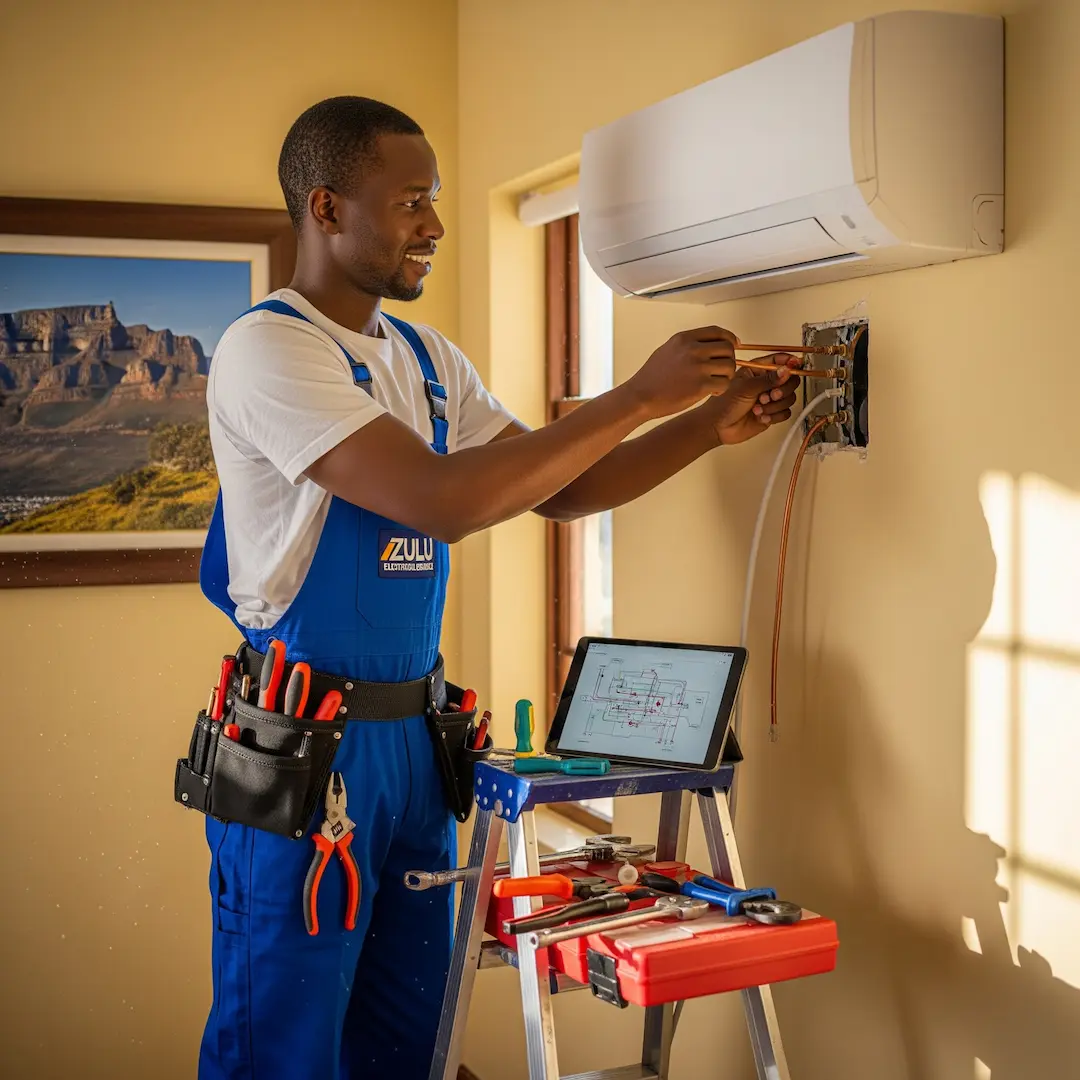
Staying Cool in SA: What to Consider Before Installing a New Air Conditioner
Installing a new air conditioner in South Africa? Learn key factors to consider before buying, from sizing and efficiency to installation tips that ensure lasting comfort and value.

Staying Cool in SA: What to Consider Before Installing a New Air Conditioner
The South African sun can be relentless, and when the mercury rises, a well-functioning air conditioner can transform your home from a sauna into a sanctuary. But before you dive into the world of BTU ratings and outdoor units, it’s essential to understand what goes into selecting and installing a new aircon. It's more than just buying a unit; it's about making an informed decision that ensures your comfort and the longevity of your investment.
Understanding Your Cooling Needs: Sizing It Right
One of the most common pitfalls homeowners face is choosing an aircon that’s either too small or too large for their space. Our expert service providers often recount situations where a homeowner installed a small unit in a large, open-plan living area, only to find it constantly battling to cool the space, leading to higher electricity bills and a frustrated household. Conversely, a unit that's too powerful for a small room will cycle on and off too frequently, which can also be inefficient and impact the unit's lifespan.
The key here is BTU (British Thermal Unit) – the measure of an aircon’s cooling capacity. Several factors influence the ideal BTU for your room:
- Room Size: This is the primary factor. As a general rule of thumb, you need approximately 600 BTUs per square meter. So, a 20 square meter room would typically require a 12,000 BTU (or 1.5-ton) unit.
- Ceiling Height: Taller ceilings mean more air volume to cool, so you might need a slightly larger unit.
- Sunlight Exposure: Rooms that receive a lot of direct sunlight, especially during the hottest parts of the day, will require more cooling power. Consider the orientation of your windows and the amount of shade they receive.
- Insulation: Well-insulated homes retain cool air more effectively, potentially allowing for a slightly smaller unit. Poorly insulated homes, on the other hand, will need more powerful cooling.
- Number of Occupants: More people in a room generate more heat.
- Heat-Generating Appliances: Kitchens, for instance, often need higher BTU units due to heat generated by stoves and ovens.
It's always best to consult with a professional who can conduct a proper heat load calculation for your specific space. This ensures you get an aircon that's perfectly matched to your needs, providing optimal cooling efficiency and saving you money in the long run.
Choosing the Right Type of Air Conditioner for Your South African Home
South Africa's diverse climate and housing styles mean there's no one-size-fits-all aircon solution. Understanding the different types available will help you make an informed decision:
- Split Air Conditioners: These are the most common type for residential use. They consist of an indoor unit (mounted on a wall) and an outdoor unit (compressor) connected by refrigerant lines. They are quiet, efficient, and offer good cooling for single rooms or open-plan areas. They are a popular choice for bedrooms and living rooms.
- Multi-Split Air Conditioners: Similar to split systems, but one outdoor unit can connect to multiple indoor units, allowing you to cool several rooms independently. This is a great option if you want to cool different areas of your home without installing multiple outdoor units.
- Cassette Air Conditioners: These are often found in commercial spaces but can also be suitable for larger residential areas with false ceilings. The indoor unit is recessed into the ceiling, offering a discreet look and excellent airflow distribution.
- Window Air Conditioners: These self-contained units are installed in a window or a custom-made wall opening. While they are generally less expensive upfront, they can be noisier and less efficient than split systems. They are often a good solution for smaller rooms or temporary cooling needs.
- Portable Air Conditioners: These units are mobile and don't require permanent installation. They are a good temporary solution for cooling specific areas, but they are generally less efficient and noisier than fixed units. They also require a window or vent for exhaust.
When considering the right type, think about your aesthetic preferences, the layout of your home, and your budget.
The Professional Advantage: Why DIY Aircon Installation Is a No-Go
You might be tempted to save a few rand by attempting to install an aircon yourself, but our experts cannot stress enough how vital professional installation is. We've seen countless cases where DIY attempts lead to significant problems down the line – from refrigerant leaks that damage the environment and the unit, to electrical mishaps that pose a serious safety risk.
Here's why professional installation is non-negotiable:
- Safety First: Aircon installation involves working with electricity, refrigerant gases, and often requires working at heights. Incorrect wiring can lead to electrical fires or shocks, while improper handling of refrigerant can cause severe injury and environmental damage. Professional installers are trained to adhere to strict safety protocols, including those outlined in SANS 10142-1 for electrical installations.
- Optimal Performance and Efficiency: A poorly installed aircon will not operate efficiently. This means higher electricity bills and a unit that struggles to cool your home. Professionals ensure proper sizing, correct refrigerant levels, secure pipe connections, and optimal placement of both indoor and outdoor units, all of which are crucial for the unit's peak performance and energy efficiency.
- Warranty Validity: Almost all air conditioner manufacturers explicitly state that their warranties are void if the unit is not installed by a certified professional. This means if anything goes wrong with your unit after a DIY installation, you'll be solely responsible for the repair costs, which can be substantial.
- Specialised Tools and Expertise: Aircon installation requires specific tools like vacuum pumps, manifold gauges, and pipe benders, which are not typically found in a standard DIY toolkit. More importantly, it requires specialized knowledge of refrigeration cycles, electrical connections, and drainage systems.
- Compliance and Regulations: In South Africa, certain electrical work requires compliance with SANS standards. Certified electricians are aware of and adhere to these regulations, ensuring your installation is safe and legal.
A typical professional aircon installation process generally involves:
- Site Assessment: The technician will assess the room, check electrical points, and determine the best placement for both the indoor and outdoor units.
- Mounting the Indoor Unit: The indoor unit is securely mounted to the wall, ensuring it's level and has adequate clearance for airflow.
- Mounting the Outdoor Unit: The outdoor unit (condenser) is placed on a stable, level surface, typically on a concrete slab or wall-mounted brackets, away from direct sunlight and with sufficient airflow.
- Connecting Refrigerant Lines: Copper pipes are run between the indoor and outdoor units, carrying the refrigerant. These connections must be precisely measured, cut, flared, and securely joined to prevent leaks.
- Electrical Wiring: The electrical connections are made, linking the indoor and outdoor units to the power supply. This must be done by a qualified electrician to ensure safety and compliance.
- Drainage System: A condensate drain pipe is installed to remove the water collected by the indoor unit during the cooling process. Proper sloping is crucial to prevent water accumulation and mould growth.
- Vacuuming the System: This critical step involves using a vacuum pump to remove all air and moisture from the refrigerant lines. Failure to do this can lead to system contamination, reduced efficiency, and premature compressor failure.
- Charging with Refrigerant: The correct amount of refrigerant is then added to the system.
- Testing and Commissioning: The entire system is thoroughly tested to ensure it's functioning correctly, cooling efficiently, and there are no leaks.
By entrusting your aircon installation to a qualified professional, you're not just buying a service; you're investing in peace of mind, long-term efficiency, and the safety of your home.
Practical Considerations for Your South African Home
Beyond the technical aspects, there are a few practical considerations that our service providers often highlight for homeowners in South Africa:
- Noise Levels: While modern aircons are much quieter than older models, consider the noise levels of both the indoor and outdoor units, especially if the outdoor unit will be near a neighbour's window or a bedroom. Look for units with low decibel ratings.
- Energy Efficiency: With rising electricity costs in South Africa, energy efficiency is paramount. Look for units with a high Energy Efficiency Ratio (EER) or Seasonal Energy Efficiency Ratio (SEER). Inverter technology air conditioners are generally more energy-efficient as they can vary their compressor speed, rather than simply switching on and off.
- Maintenance and Servicing: Like any appliance, air conditioners require regular maintenance to operate efficiently and extend their lifespan. This typically involves cleaning filters, checking refrigerant levels, and inspecting components. Discuss maintenance requirements with your installer.
- Aesthetics: Consider how the indoor and outdoor units will look in and around your home. Some units are designed to be more aesthetically pleasing than others.
- Smart Features: Many modern air conditioners come with smart features, allowing you to control them remotely via a smartphone app. This can be incredibly convenient for pre-cooling your home before you arrive or adjusting settings from anywhere.
By taking these factors into account, you'll be well on your way to making an informed decision about installing a new air conditioner that provides comfort and value for years to come.
Frequently Asked Questions
How long does aircon installation typically take?
The duration of an aircon installation can vary depending on the type of unit, the complexity of the installation, and the specific property. A standard split unit installation in a residential setting can typically take anywhere from half a day to a full day. More complex multi-split systems or commercial installations will naturally take longer.
What maintenance does an air conditioner need?
Regular maintenance is crucial for optimal performance and longevity. This typically involves cleaning or replacing air filters every few months, especially during peak usage seasons. Annually, it's recommended to have a professional service your unit. This service usually includes checking refrigerant levels, cleaning coils, inspecting electrical components, and ensuring the drainage system is clear.
Can I install an aircon in any room?
While air conditioners can be installed in most rooms, the optimal placement depends on various factors. Consider the room's size, sunlight exposure, and the presence of heat-generating appliances. For efficient cooling, the indoor unit should be placed in a location that allows for good air circulation, away from direct obstructions. The outdoor unit needs sufficient airflow and a stable surface. A professional assessment will determine the best location for your specific needs.
How much electricity does an air conditioner use?
The electricity consumption of an air conditioner depends on its BTU rating, energy efficiency (EER/SEER), how often it's used, and the ambient temperature. Larger units and older, less efficient models will consume more power. Inverter technology air conditioners are generally more energy-efficient as they can adjust their cooling output, reducing energy waste. Regular maintenance also contributes to efficient operation.
Find a vetted electrician near you
Aircon installation: find a pro near you
Suzette Meyer is the lead author and content creator for Kandua.com, South Africa’s #1 marketplace for home services. Suzette has made it her mission to help homeowners with advice on all aspects of home repair, maintenance and improvement, including how to choose the right Pro and how to make smart upgrades that improve your resale value or save costs.

Latest articles, advice and more
.webp)
.webp)
.webp)
.webp)
.jpeg)
Sinking Pavers, Weeds and Water That Pools: What Your Driveway Is Telling You
When your driveway starts sprouting weeds, pooling water, or sinking in patches, the bricks are not failing you. The layers underneath have moved, and they are trying to tell you exactly what went wrong.
.webp)
.webp)
Beyond the Unboxing: A Detailed Guide to Correct Washing Machine Plumbing & Setup
New washing machine in South Africa? Learn essential plumbing and setup tips to prevent leaks, ensure efficient operation, and extend your appliance’s lifespan - expert advice before your first load.
.webp)
New Washing Machine? Don't Plug It In Yet! Essential Installation Tips for SA Homes
Installing a new washing machine? Learn the essential setup steps South African homeowners often overlook to prevent leaks, noise, and damage—and ensure efficient, long-lasting performance from day one.
.webp)
.webp)
%25201200%2520x%25201200%2520(1).jpeg)
What Retiling a Bathroom Costs in 2026, Room by Room
Retiling a bathroom in South Africa costs between R230 and R800 per square metre in 2026, including materials and labour. A standard family bathroom, stripped and fully retiled, usually lands between R11,800 and R27,500. A guest toilet costs a fraction of that. A large porcelain en-suite costs a lot more.
How to Install a Horizontal Geyser | Step-by-Step Pro Guide
Want to install a geyser like a pro? This step-by-step tutorial shows you exactly how to do a horizontal Ariston Axios geyser installation, straight from the BluLever plumbing workshop. 🎥 Hosted by MK, BluLever’s technical facilitator, and supported by a qualified electrician, Life and a BluLever graduate artisan, Zinhle. This is your ultimate guide to a SANS 10254-compliant installation — from preparing the wall, to plumbing, electrical wiring, and pro troubleshooting tips.
How to Maintain a Geyser | Step-by-Step Pro Guide
Want to maintain a geyser like a pro? This step-by-step tutorial shows you exactly how to do the three core geyser maintenance checks on an Ariston Axios geyser installation, straight from the BluLever plumbing workshop. 🎥 Hosted by MK, BluLever’s technical facilitator, and supported by a qualified electrician, Life. This is your ultimate guide to geyser maintenance — from diagnosing the problem to checking the heat regulation of the geyser, to pressure regulation and then finally corrosion protection.
%201.avif)
Not just another newsletter. It's an advantage