
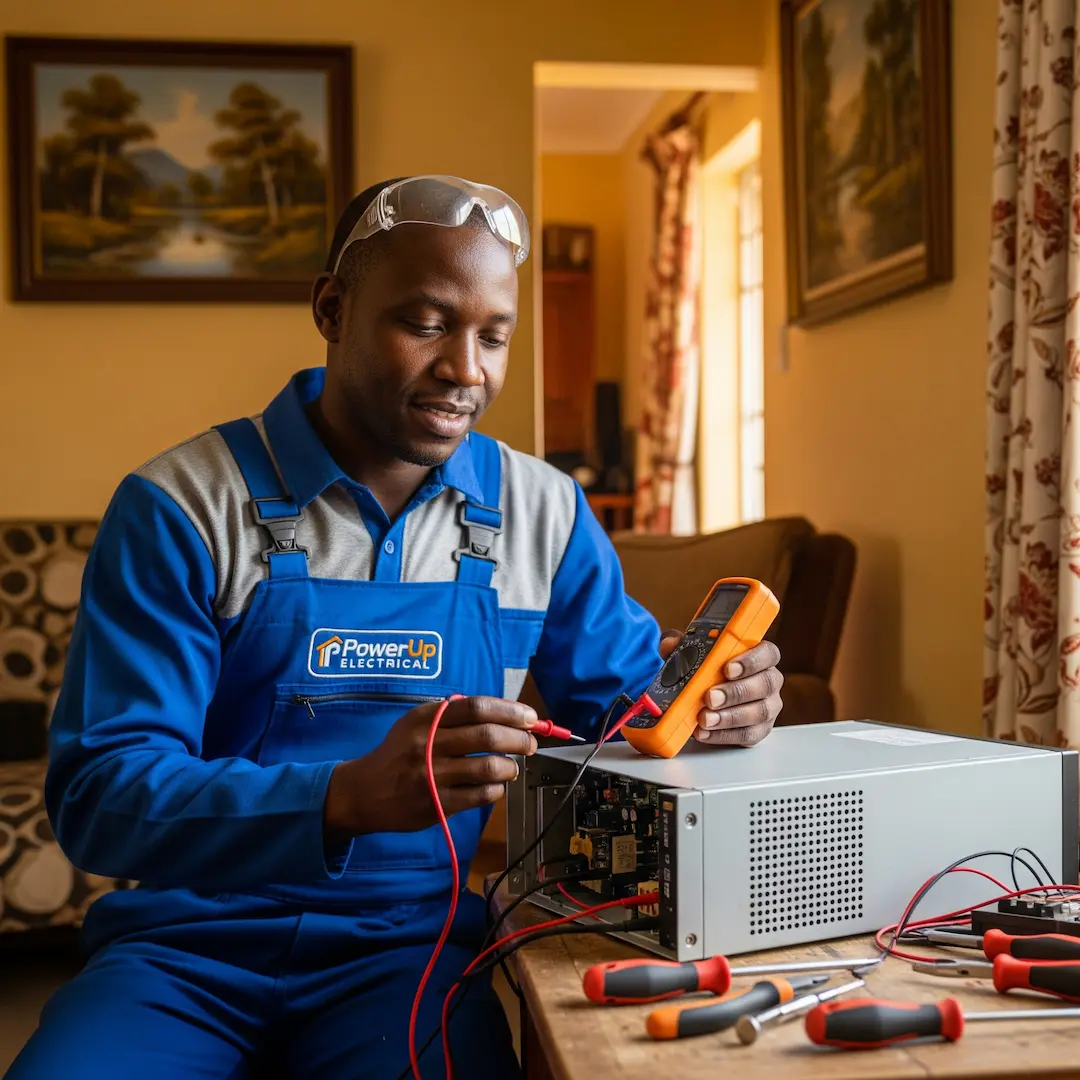
UPS Repair in South Africa: Diagnosing Battery Issues & Other Common Failures
UPS not working during load shedding? Learn the most common UPS problems in South African homes, especially battery issues, and how to know when a quick fix or professional repair is needed.

Living in South Africa, power interruptions are an unfortunate reality. A reliable Uninterrupted Power Supply (UPS) system can be a lifesaver, keeping your essential electronics running smoothly during load shedding or unexpected outages. But what happens when your trusty UPS starts acting up, leaving you in the dark when you need it most?
Many homeowners and businesses in South Africa experience common UPS issues, particularly around battery performance. It's frustrating to hear that dreaded beeping or realise your devices aren't receiving backup power. Understanding the potential culprits behind these failures can help you decide whether a simple fix is possible or if it's time to call in a professional.
The Heart of the Matter: Diagnosing UPS Battery Issues
When a UPS fails to provide backup power, the battery is almost always the first suspect. From conversations with experienced electricians across South Africa, the vast majority of UPS repair calls stem from battery-related problems.
1. Dead or Degraded Batteries
"My UPS battery is dead." This is perhaps the most common complaint. Over time, all batteries degrade. UPS batteries, typically sealed lead-acid (SLA) batteries, are no exception. Their lifespan is finite, and factors like frequent deep discharges, high ambient temperatures, and continuous charging can accelerate this degradation.
- Symptoms:UPS beeps continuously or emits a "battery low" alarm even after being charged for an extended period.
- Connected devices immediately shut down when the main power fails.
- The UPS indicator light shows a battery fault.
- The battery casing might appear swollen or distorted (a clear sign of a failing or dangerous battery).
- Expert Insight: Our electricians often point out that while a UPS battery might be rated for 3-5 years, in real-world South African conditions with frequent load shedding cycles, their effective lifespan can be closer to 2-3 years, especially if the UPS is consistently being drained and recharged. "We've seen instances where a client's UPS battery barely lasted a year because they were running their whole home office off it during every stage of load shedding without adequate recovery time," shared one technician from Durban.
2. Battery Terminal Corrosion
Corrosion on battery terminals can disrupt the flow of current, preventing the battery from charging or discharging effectively. This often looks like a white or bluish powdery buildup on the metal connections.
- Symptoms:UPS fails to switch to battery power or provides very short backup times.
- Visible corrosion on battery terminals.
- Intermittent power supply from the UPS.
- Expert Insight: A quick visual inspection can usually confirm this. While you might be tempted to clean it yourself, remember that dealing with electrical components requires caution. If you're not confident, it's best to let a professional handle it.
3. Improper Battery Sizing or Overload
If your UPS isn't providing enough backup time, or if it immediately trips when power goes out, you might be overloading it. This isn't strictly a "battery issue" but rather an issue with the battery's capacity being insufficient for the connected load.
- Symptoms:Very short backup times, much less than expected.
- UPS trips or shuts down when main power fails, even with a charged battery.
- Overload warning indicator on the UPS.
- Expert Insight: One common scenario we hear about is when someone purchases a small, inexpensive UPS for a single PC, and then later connects a monitor, printer, and Wi-Fi router to it. "Suddenly, they're pulling three times the power the UPS was designed for, and it's no surprise it can't handle a power cut for more than a few minutes," explained an electrician who frequently works in Johannesburg's bustling business districts. Always ensure your UPS's VA (Volt-Ampere) rating is appropriate for the total wattage of the devices you intend to power.
Beyond the Battery: Other Common UPS Failures
While batteries are often the primary culprits, other components can fail, leading to your UPS not providing backup power.
1. Faulty Inverter or Charger Circuitry
The inverter converts the DC power from the battery into AC power for your devices, and the charger circuit replenishes the battery when mains power is available. If either of these fails, the UPS won't function correctly.
- Symptoms:UPS doesn't charge the battery, even when connected to mains.
- UPS turns on but doesn't provide AC output when on battery mode.
- Burning smell or visible burn marks on the UPS casing (immediately disconnect if you notice this!).
- Expert Insight: This is where professional intervention is almost always necessary. "Diagnosing circuit board issues requires specialised tools and knowledge," says a seasoned technician from Cape Town. "Attempting to fix this yourself without the right expertise can be dangerous and could further damage the unit." These issues can sometimes be caused by power surges or spikes, which are not uncommon in South African power grids.
2. Overload Protection Tripping
UPS units have built-in overload protection to prevent damage to the unit and connected devices. If you've plugged in too many high-power items, the UPS might trip to protect itself.
- Symptoms:UPS immediately shuts down or makes a clicking noise and then shuts down when an attempt is made to power devices.
- "Overload" indicator light illuminates.
- Expert Insight: This often happens when people try to power appliances not typically suited for UPS systems, like heaters, kettles, or fridges. "A client once tried to run their microwave off a small UPS during load shedding. It tripped immediately, of course," chuckled an electrician from Pretoria. "UPS units are designed for sensitive electronics like computers and networking equipment, not high-wattage appliances." Always check the total wattage of your connected devices against your UPS's capacity.
3. Internal Component Failure (Capacitors, Relays, Fans)
Like any electronic device, internal components such as capacitors, relays, or cooling fans can fail over time.
- Symptoms:Unusual noises (e.g., loud humming, rattling from a failing fan).
- UPS runs excessively hot.
- Intermittent power delivery.
- UPS completely unresponsive.
- Expert Insight: Identifying these failures often requires opening the UPS casing, which should only be done by a qualified technician due to the presence of high voltage components and charged capacitors. Many modern UPS units are not designed for easy user access to internal components.
When is Repair the Best Solution?
Deciding whether to repair or replace your UPS depends on several factors:
- Age of the UPS: If your UPS is very old (5+ years), especially if it's a smaller, entry-level model, the cost of repair might outweigh the cost of a new unit.
- Type of Failure: Battery replacement is often straightforward and cost-effective. Circuit board repairs, however, can be more complex and expensive.
- Cost of Repair vs. Replacement: Get a quote for the repair. If it's more than 50-60% of the cost of a comparable new UPS, replacement is usually the more sensible option, especially considering new units come with warranties.
- Availability of Parts: For older or less common models, finding replacement parts, especially specific circuit board components, can be challenging.
DIY Considerations and Safety Disclaimer
While diagnosing a dead battery might seem simple, replacing it can still pose risks if not done correctly. Working with any electrical appliance, especially one that stores significant power like a UPS, can be extremely dangerous if you are not experienced and knowledgeable.
Always remember to:
- Disconnect the UPS from the mains power completely before attempting any inspection or repair.
- Consult the manufacturer's manual for specific instructions for your UPS model.
- Never open the casing unless you are certain it is safe and you know what you are doing. Internal components can store lethal electrical charges even after the unit is unplugged.
- If in doubt, always call a qualified electrician. They have the training, tools, and expertise to safely diagnose and repair UPS issues, ensuring compliance with South African safety standards.
For more complex issues like faulty circuitry, attempting a DIY repair is strongly discouraged. It can lead to further damage to the UPS, pose a significant electrical shock hazard, or even cause a fire. Trust the expertise of professionals who deal with these systems daily.
Frequently Asked Questions (FAQs)
How long do UPS batteries typically last in South Africa?
In South Africa, with frequent load shedding cycles, the lifespan of a typical sealed lead-acid UPS battery can range from 2 to 3 years. Factors like the quality of the battery, ambient temperature, and how often it's fully discharged significantly impact its longevity.
Can I use a car battery for my UPS?
It is generally not recommended to use a car battery for a standard UPS designed for sealed lead-acid batteries. Car batteries are designed for high cranking amps over short bursts, while UPS batteries are designed for deep cycling and sustained discharge. Using the wrong battery type can damage your UPS and pose safety risks due to different charging profiles and potential for off-gassing.
My UPS makes a continuous beeping sound. What does that mean?
A continuous beeping sound usually indicates a problem that requires immediate attention. Most commonly, it signifies a low battery that is about to run out, an overloaded UPS, or an internal fault. Check your UPS's display panel or indicator lights, and consult your user manual to decipher the specific alarm code for your model.
How can I extend the life of my UPS battery?
To extend your UPS battery's life, avoid consistently overloading the unit, keep it in a cool and well-ventilated area (avoid direct sunlight or enclosed spaces), and avoid frequent deep discharges if possible. If you know you'll have prolonged power outages, consider upgrading to a UPS with a larger capacity or external battery pack to reduce stress on the internal battery.
Find a vetted electrician near you
UPS repair: find a pro near you
Suzette Meyer is the lead author and content creator for Kandua.com, South Africa’s #1 marketplace for home services. Suzette has made it her mission to help homeowners with advice on all aspects of home repair, maintenance and improvement, including how to choose the right Pro and how to make smart upgrades that improve your resale value or save costs.

Latest articles, advice and more
.webp)
.webp)
.webp)
.webp)
.jpeg)
Sinking Pavers, Weeds and Water That Pools: What Your Driveway Is Telling You
When your driveway starts sprouting weeds, pooling water, or sinking in patches, the bricks are not failing you. The layers underneath have moved, and they are trying to tell you exactly what went wrong.
.webp)
.webp)
Beyond the Unboxing: A Detailed Guide to Correct Washing Machine Plumbing & Setup
New washing machine in South Africa? Learn essential plumbing and setup tips to prevent leaks, ensure efficient operation, and extend your appliance’s lifespan - expert advice before your first load.
.webp)
New Washing Machine? Don't Plug It In Yet! Essential Installation Tips for SA Homes
Installing a new washing machine? Learn the essential setup steps South African homeowners often overlook to prevent leaks, noise, and damage—and ensure efficient, long-lasting performance from day one.
.webp)
.webp)
%25201200%2520x%25201200%2520(1).jpeg)
What Retiling a Bathroom Costs in 2026, Room by Room
Retiling a bathroom in South Africa costs between R230 and R800 per square metre in 2026, including materials and labour. A standard family bathroom, stripped and fully retiled, usually lands between R11,800 and R27,500. A guest toilet costs a fraction of that. A large porcelain en-suite costs a lot more.
How to Install a Horizontal Geyser | Step-by-Step Pro Guide
Want to install a geyser like a pro? This step-by-step tutorial shows you exactly how to do a horizontal Ariston Axios geyser installation, straight from the BluLever plumbing workshop. 🎥 Hosted by MK, BluLever’s technical facilitator, and supported by a qualified electrician, Life and a BluLever graduate artisan, Zinhle. This is your ultimate guide to a SANS 10254-compliant installation — from preparing the wall, to plumbing, electrical wiring, and pro troubleshooting tips.
How to Maintain a Geyser | Step-by-Step Pro Guide
Want to maintain a geyser like a pro? This step-by-step tutorial shows you exactly how to do the three core geyser maintenance checks on an Ariston Axios geyser installation, straight from the BluLever plumbing workshop. 🎥 Hosted by MK, BluLever’s technical facilitator, and supported by a qualified electrician, Life. This is your ultimate guide to geyser maintenance — from diagnosing the problem to checking the heat regulation of the geyser, to pressure regulation and then finally corrosion protection.
%201.avif)
Not just another newsletter. It's an advantage