
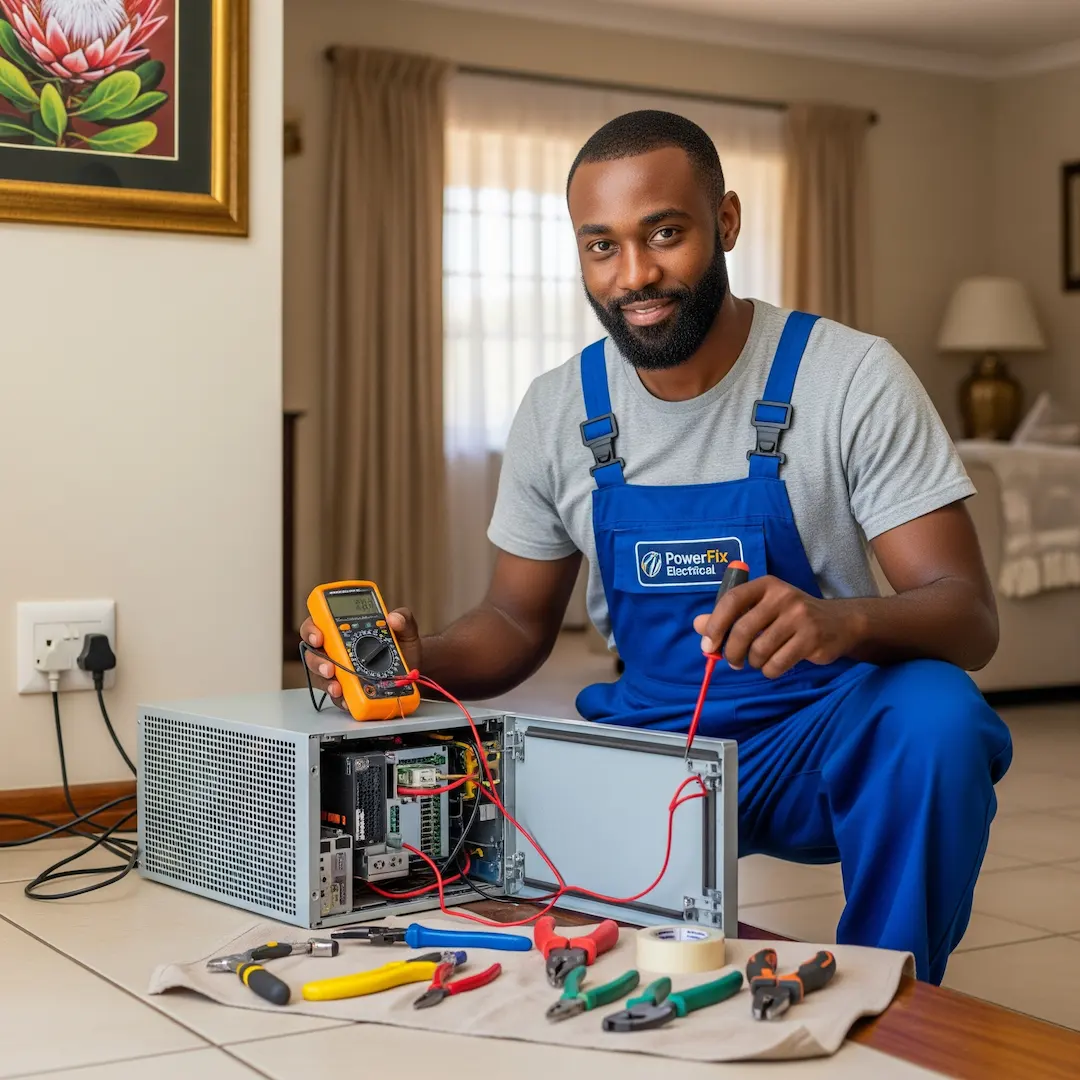
UPS System Malfunction? Why Specialist Repair Ensures Your Data and Devices Remain Safe in SA
UPS malfunctioning in South Africa? Learn why specialist repair is vital to protect your data, prevent device damage, and ensure reliable backup power during load shedding - before costly losses occur.

UPS System Malfunction? Why Specialist Repair Ensures Your Data and Devices Remain Safe in SA
That dreaded, incessant beeping. The sudden click as your home office plunges into darkness, despite the lights staying on elsewhere. A malfunctioning Uninterruptible Power Supply (UPS) is more than just an annoyance; it’s a direct threat to your expensive electronics and irreplaceable data. In a country where load shedding and power surges are a part of life, your UPS is the unsung hero protecting your digital world. But when the hero falters, who do you call?
Many homeowners are tempted to either ignore the warning signs or attempt a quick fix themselves. However, a UPS system is a sophisticated piece of equipment. Opting for specialist repair isn't just about convenience; it's a critical step in safeguarding your valuable assets. Let's delve into why entrusting your UPS to a professional is the smartest move for your peace of mind and your pocket.
The High Stakes of a Failing UPS
It’s easy to underestimate the importance of a fully functional UPS until it’s too late. We've heard stories from our network of expert electricians that serve as stark warnings. One technician recounted a call-out to a home office in Johannesburg where a small business owner had ignored his UPS’s constant beeping for weeks. During a sudden power cut, his high-end computer didn't just switch off; the abrupt power loss corrupted his primary hard drive, wiping out years of client records and financial data. The cost of data recovery far exceeded what a simple UPS repair would have been.
A faulty UPS doesn't just fail to provide backup power. It can also:
- Damage Connected Devices: A malfunctioning unit can fail to regulate voltage properly, sending harmful power spikes or sags directly to your sensitive electronics like PCs, routers, and TVs, potentially frying their internal components.
- Create Fire Hazards: The batteries and internal circuitry handle significant electrical loads. A fault, such as a short circuit or an overheating battery, can pose a serious fire risk if left unaddressed.
- Lead to Complete Data Loss: The primary job of a UPS is to give you enough time to save your work and shut down your equipment safely. If it fails instantly, any unsaved data is gone for good.
Ignoring the warning signs is a gamble with stakes that are simply too high.
Inside Your UPS: More Than Just a Battery
A common question we hear is, "Is UPS repair really that complex? Can't I just swap the battery?" While a dead or dying battery is the most frequent culprit, it's far from the only potential problem. A UPS is a complex system with several interconnected components, each vital for its proper operation.
Think of it like a car. A flat battery is a common issue, but it could also be a symptom of a faulty alternator that isn't charging it. Similarly, in a UPS, the problem might not be the battery itself, but the part of the system responsible for keeping it healthy.
Here’s a simplified breakdown of what’s inside:
- The Battery: This is the heart of the system, storing the power needed during an outage. They are typically sealed lead-acid (SLA) or lithium-ion batteries and have a finite lifespan, usually 3-5 years.
- The Inverter: This crucial component converts the battery's direct current (DC) power into the alternating current (AC) power that your devices use. A faulty inverter can mean no backup power, even with a brand-new battery.
- The Charger: This circuit is responsible for recharging the battery from the mains power and keeping it at an optimal float voltage. If the charger fails, the battery will eventually drain and won't be ready for the next outage.
- The Control Circuitry: This is the "brain" of the UPS. It monitors the incoming power, detects an outage, switches to battery power instantly, and controls all the warning lights and beeps. A fault here can lead to all sorts of erratic behaviour.
A qualified technician knows how to diagnose the entire system, not just the most obvious part. They can determine if you simply need a new battery or if a deeper, more technical fault in the circuitry is the root cause.
The Professional Repair Process: What to Expect
When you call a specialist to repair your UPS, you're not just getting a battery swapper. You're hiring an expert in power electronics who will perform a thorough diagnostic assessment to ensure a lasting and safe solution.
Here’s what a professional service typically involves:
- Initial Diagnosis: The technician will first listen to your description of the problem (e.g., "it beeps constantly," "it doesn't hold a charge," "it smells strange").
- Systematic Testing: They will use a multimeter and other diagnostic tools to test the key components. This includes checking the output voltage, testing the battery's health and load capacity, and inspecting the functionality of the charging and inverter circuits.
- Internal Inspection: The unit will be safely opened and inspected for any visible signs of damage, such as burnt components on the circuit board, bulging or leaking batteries, or a failed cooling fan. Dust and debris, which can cause overheating, will also be cleaned out.
- Component Replacement: Based on the diagnosis, the technician will replace only the faulty parts. This could be the battery, the fan, capacitors, or other circuit board components. They will use high-quality, compatible parts to ensure reliability.
- Final Testing and Calibration: After the repair, the technician will run a full cycle test. This involves simulating a power outage to ensure the UPS switches to battery power seamlessly, provides the expected runtime, and recharges correctly once mains power is restored.
This methodical approach ensures that the underlying issue is resolved, giving you confidence that your equipment is protected.
The Dangers of DIY: A Word of Caution
While the spirit of DIY is strong in South Africa, a UPS is one device where you should exercise extreme caution. Our experts are clear on this: attempting a DIY repair without the proper knowledge and tools can be dangerous.
- Risk of Severe Electric Shock: A UPS contains large capacitors that can store a lethal electrical charge long after the unit has been unplugged from the wall and the battery has been disconnected. Professionals know how to safely discharge these components before beginning work.
- Battery Hazards: Leaking battery acid is highly corrosive and can cause severe skin burns and damage to your property. Furthermore, incorrect handling or short-circuiting a battery can cause it to overheat, release toxic fumes, or even explode.
- Causing More Damage: Without diagnostic equipment, you might misdiagnose the problem. Replacing a battery when the charger is faulty will just result in another dead battery in a few months, wasting your time and money.
Disclaimer: Unless you are a qualified electronics technician with experience in power systems, do not attempt to open or repair a UPS yourself. The risks of personal injury and further damage to the device are significant.
For the safety of yourself and your valuable electronics, finding a qualified electrician or electronics repair specialist is the only recommended course of action. They have the expertise to diagnose the fault accurately and perform the repair safely, ensuring your digital life remains uninterrupted.
Frequently Asked Questions
How long should a UPS battery last in South Africa?
A typical sealed lead-acid (SLA) battery in a consumer-grade UPS has a lifespan of about 3 to 5 years. However, factors like frequent load shedding, high ambient temperatures (like in a stuffy cabinet), and the number of discharge cycles can shorten this lifespan considerably. Regular self-tests, if your UPS has them, can help you monitor its health.
What are signs my UPS needs repair, other than it not switching on?
Look out for warning signs like constant beeping that doesn't stop, an "error" or "replace battery" light that stays on, a noticeable decrease in runtime (e.g., it used to last 15 minutes, now it only lasts 2), or a strange smell, which could indicate an overheating component or a leaking battery. Any of these symptoms warrant a professional inspection.
Is it more cost-effective to repair or replace my UPS?
This depends on the age and quality of the UPS. For a high-quality, expensive unit (often used for servers or extensive home office setups), repair is almost always more cost-effective, especially if it's just a battery replacement. For smaller, entry-level UPS systems that are over 5 years old, the cost of a new battery and labour might be close to the price of a brand-new unit with a fresh warranty. A technician can give you a quote to help you decide.
Can any general electrician repair a UPS?
While many qualified electricians can perform basic UPS repairs like battery replacements, more complex issues involving the internal circuit board require a specialist. It's best to seek out an electrician or an electronics technician who specifically lists UPS or power electronics repair as one of their services. They will have the specific diagnostic tools and component-level knowledge required for a thorough job.
Find a vetted electrician near you
UPS repair: find a pro near you
Suzette Meyer is the lead author and content creator for Kandua.com, South Africa’s #1 marketplace for home services. Suzette has made it her mission to help homeowners with advice on all aspects of home repair, maintenance and improvement, including how to choose the right Pro and how to make smart upgrades that improve your resale value or save costs.

Latest articles, advice and more
.webp)
.webp)
.jpeg)
Sinking Pavers, Weeds and Water That Pools: What Your Driveway Is Telling You
When your driveway starts sprouting weeds, pooling water, or sinking in patches, the bricks are not failing you. The layers underneath have moved, and they are trying to tell you exactly what went wrong.
.jpeg)
What Your Garage Door Motor Actually Does (And Why It Breaks)
Spoiler alert: your garage door motor isn't actually doing the heavy lifting. The torsion springs carry almost all the weight. The motor simply pushes, pulls, controls the descent so it doesn't slam, and acts as a lock when the door is shut. That’s why a relatively small box on your ceiling can move such a massive door. Want to test this? Pull the red manual release cord and lift the door by hand. If it glides up easily and stays put when you let go, your springs are doing their job, and the fault lies with the motor. If the door feels like dead weight or slams back down- stop. You’ve got a spring problem.
.jpeg)
4 Warning Signs Your Tiles Are Failing (And What They Mean)
Tiles rarely fail overnight. They warn you first. A hollow sound underfoot, grout that crumbles away, a tile that lifts at one edge, or a crack that runs across two tiles all point to something happening under the surface. Here is what each sign means, and how urgent it is.
.webp)
.webp)
Beyond the Unboxing: A Detailed Guide to Correct Washing Machine Plumbing & Setup
New washing machine in South Africa? Learn essential plumbing and setup tips to prevent leaks, ensure efficient operation, and extend your appliance’s lifespan - expert advice before your first load.
.webp)
New Washing Machine? Don't Plug It In Yet! Essential Installation Tips for SA Homes
Installing a new washing machine? Learn the essential setup steps South African homeowners often overlook to prevent leaks, noise, and damage—and ensure efficient, long-lasting performance from day one.
.webp)
.webp)
%25201200%2520x%25201200%2520(1).jpeg)
What Retiling a Bathroom Costs in 2026, Room by Room
Retiling a bathroom in South Africa costs between R230 and R800 per square metre in 2026, including materials and labour. A standard family bathroom, stripped and fully retiled, usually lands between R11,800 and R27,500. A guest toilet costs a fraction of that. A large porcelain en-suite costs a lot more.
How to Install a Horizontal Geyser | Step-by-Step Pro Guide
Want to install a geyser like a pro? This step-by-step tutorial shows you exactly how to do a horizontal Ariston Axios geyser installation, straight from the BluLever plumbing workshop. 🎥 Hosted by MK, BluLever’s technical facilitator, and supported by a qualified electrician, Life and a BluLever graduate artisan, Zinhle. This is your ultimate guide to a SANS 10254-compliant installation — from preparing the wall, to plumbing, electrical wiring, and pro troubleshooting tips.
How to Maintain a Geyser | Step-by-Step Pro Guide
Want to maintain a geyser like a pro? This step-by-step tutorial shows you exactly how to do the three core geyser maintenance checks on an Ariston Axios geyser installation, straight from the BluLever plumbing workshop. 🎥 Hosted by MK, BluLever’s technical facilitator, and supported by a qualified electrician, Life. This is your ultimate guide to geyser maintenance — from diagnosing the problem to checking the heat regulation of the geyser, to pressure regulation and then finally corrosion protection.
%201.avif)
Not just another newsletter. It's an advantage