
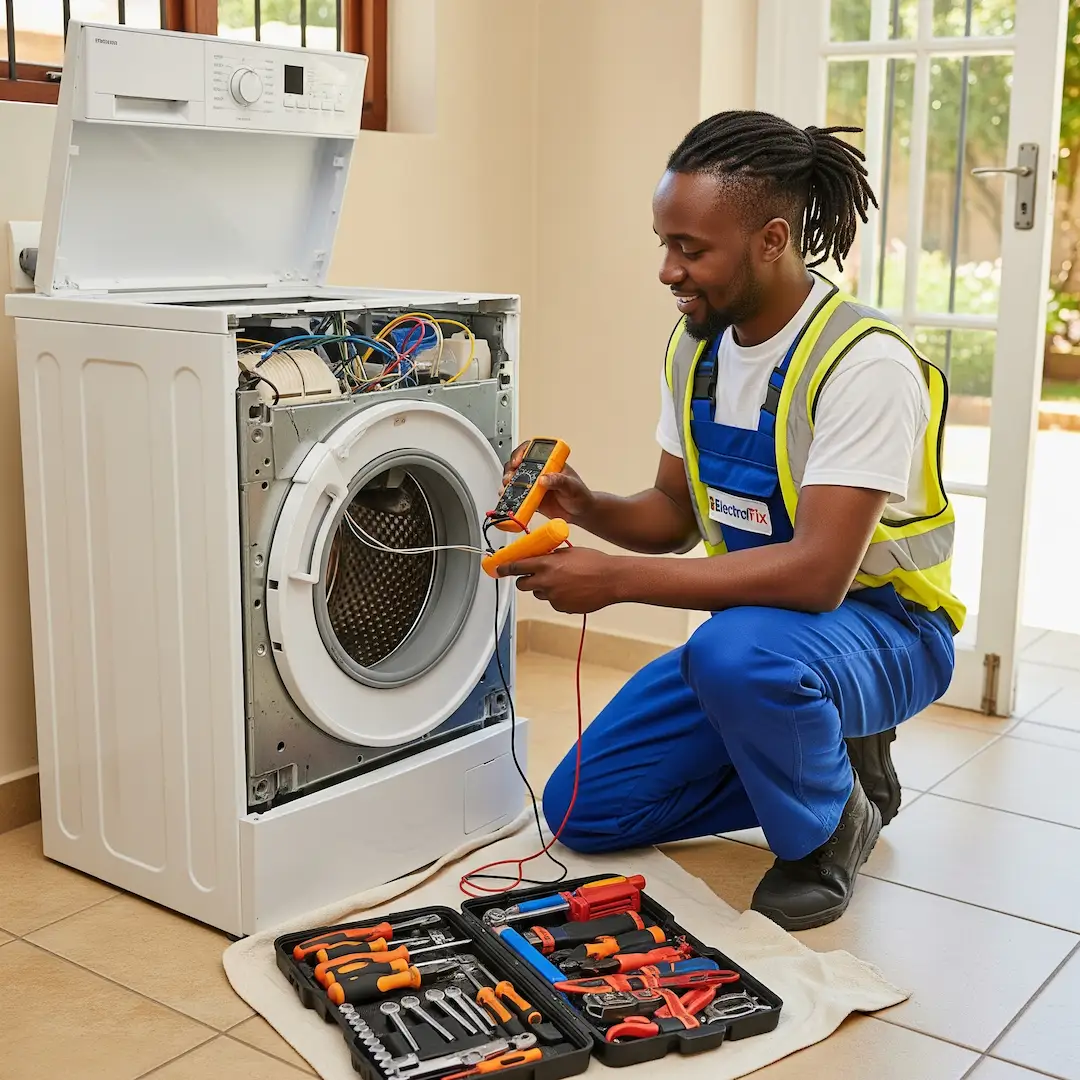
Washing Machine Broken? Choosing a Reliable Repair Service in South Africa for Lasting Solutions
Washing machine broken? Learn how to choose a reliable South African repair service, avoid unnecessary replacement costs, and get lasting, professional results for your appliance.

Washing Machine Broken? Choosing a Reliable Repair Service in South Africa for Lasting Solutions
There are few household appliance failures as disruptive as a broken washing machine. Suddenly, laundry baskets overflow, and the simple rhythm of your week is thrown into chaos. When your machine starts making a strange noise, stops spinning, or refuses to drain, you’re faced with a critical decision: should you attempt a repair, or is it time to buy a new one? And if you do opt for repair, who can you trust to fix it properly without charging a fortune?
Making the right choice can save you hundreds, if not thousands, of rands. This guide will walk you through the decision-making process, explain the crucial differences between a DIY attempt and a professional fix, and outline what to look for in a reliable repair service in South Africa.
Repair or Replace? A Practical South African Guide
Before you even start searching for a technician, it’s worth weighing the pros and cons of repairing your current machine versus investing in a new one. Here are the key factors to consider:
- The Age of Your Machine: Most washing machines in South Africa have a lifespan of about 8 to 12 years. If your machine is approaching or has surpassed this age, a major repair might not be a wise investment. The odds of another component failing soon are relatively high. However, if your machine is only 3-5 years old, a repair is almost always the more cost-effective option.
- The Cost of Repair vs. Replacement: This is the most critical calculation. Get a quote for the repair first. As a general rule of thumb, if the repair cost is more than 50% of the price of a comparable new machine, replacement is usually the better long-term solution. For example, if a major repair for your 8-year-old top loader is quoted at R2,800, but a new, more energy-efficient model costs R5,500, buying new makes more sense.
- The Nature of the Problem: Some faults are far more serious than others.
- Minor Fixes: Issues like a blocked drain pump, a faulty lid switch, or a snapped drive belt are typically affordable to repair, often costing between R600 and R1,500. These are definitely worth fixing.
- Major Failures: If the motor has burned out, the main electronic control board (the machine's 'brain') has failed, or the drum bearings are gone, you're looking at a significant expense. These repairs can easily exceed R2,000 and push you closer to the cost of a new machine.
- Energy and Water Efficiency: Newer washing machines are often significantly more efficient than models from a decade ago. With rising electricity and water costs in South Africa, a new machine with a higher energy rating (like A+++) could lead to noticeable savings on your monthly utility bills, offsetting some of the initial purchase price over time.
The Pitfalls of DIY vs. The Value of a Professional
When faced with a broken appliance, the temptation to save money by watching a few online videos and tackling the job yourself is strong. While commendable, modern washing machines are complex devices, and a DIY attempt can often go wrong.
Why DIY Can Be a Costly Mistake
One of our top-rated appliance repair experts in Pretoria shared a common story. A client’s machine was leaking. After watching a tutorial, the homeowner confidently disassembled the front panel to replace the door seal. In the process, they accidentally disconnected a sensor wire and couldn't figure out where it reconnected. Worse, they overtightened a clamp, which led to a bigger leak once they turned the water back on. The initial R800 seal replacement turned into a R2,000 professional call-out to fix the original problem and the damage caused by the DIY attempt.
Here’s why a professional is usually the safer, more reliable choice:
- Accurate Diagnosis: A machine that isn't spinning isn't just "not spinning." The cause could be a worn belt, a faulty lid switch, imbalanced load detection, a problem with the motor's carbon brushes, or a failure in the main circuit board. A professional technician has the diagnostic tools and experience to test each component systematically and find the exact root cause. This prevents you from wasting money on parts you don’t need.
- Access to Genuine, High-Quality Parts: A professional service has established supply chains for authentic parts from brands common in South Africa like Defy, Samsung, Bosch, LG, and Whirlpool. Using a generic or incorrect part is a recipe for disaster. It may fit, but it might not be rated for the correct voltage or pressure, leading to premature failure and potentially causing damage to other components. A genuine part ensures the repair lasts.
- Safety is Paramount: A washing machine combines water and high-voltage electricity. An incorrect repair, especially involving wiring, can create a serious risk of electric shock or fire. Professionals are trained to work safely, ensuring all components are properly installed, grounded, and insulated according to safety standards.
- Guarantees on Workmanship: Reputable repair companies stand by their work. They will typically offer a warranty (e.g., 3-6 months) on both the parts they supply and the labour. If the same problem reoccurs within that period, they will fix it at no extra cost. This is a level of assurance you simply don't get with a DIY fix.
What to Look for in a Washing Machine Repair Service
You’ve decided to hire a pro. Now, how do you find a good one? Here’s a checklist to help you choose a reliable and effective technician.
- Experience with Your Brand: While most technicians can handle common problems, it’s beneficial to find one with specific experience in your machine’s brand. They’ll be more familiar with its common quirks and have easier access to the right parts.
- Transparent Pricing Structure: Ask about their fees upfront. A professional service should be able to clearly explain their pricing, which typically includes:
- A call-out fee to cover their travel and initial diagnosis time.
- An hourly labour rate.
- An estimate for any parts that may be required. Be wary of anyone who gives a vague quote over the phone or whose price seems too good to be true.
- Good Reviews and Reputation: Look for services with positive, credible online reviews. Pay attention to comments about professionalism, punctuality, and whether the repair was successful long-term. Word-of-mouth recommendations are also invaluable.
- Professionalism and Communication: A good technician will communicate clearly, arrive at the agreed-upon time (or call if they are delayed), treat your home with respect, and clean up after the job is done.
Choosing the right repair service means you’re not just paying for a temporary fix; you’re investing in a lasting solution that extends the life of your appliance and gives you peace of mind.
Frequently Asked Questions
How long should a standard washing machine repair take?
Most common repairs, where the technician has the necessary part in their vehicle, can be completed within 1 to 2 hours. If a specific part needs to be ordered, the repair might be completed over two visits—one for diagnosis and one for the final installation after the part arrives.
Is it normal for a repair service to charge a call-out fee?
Yes, it is standard practice in South Africa. The call-out fee covers the technician's time, fuel, and expertise in travelling to your home and diagnosing the problem. This fee is usually payable even if you decide not to proceed with the repair after receiving the full quote. Some companies may deduct the call-out fee from the final bill if you go ahead with the work.
Will the technician perform the repair at my home?
Absolutely. The vast majority of washing machine repairs are carried out on-site at your home. Only in very rare cases, such as a complex issue requiring specialised workshop equipment, would the technician need to take the appliance away.
Is it safe to use my washing machine if it's making a strange noise but still seems to be working?
It's not recommended. A strange noise, like grinding, squealing, or banging, is a clear sign that a component is failing. Continuing to use the machine could cause the failing part to break completely, potentially damaging other, more expensive components in the process and leading to a much costlier repair. It's best to stop using it and call a technician.
Find a vetted electrician near you
Washing machine repair: find a pro near you
Suzette Meyer is the lead author and content creator for Kandua.com, South Africa’s #1 marketplace for home services. Suzette has made it her mission to help homeowners with advice on all aspects of home repair, maintenance and improvement, including how to choose the right Pro and how to make smart upgrades that improve your resale value or save costs.

Latest articles, advice and more
.webp)
.webp)
.jpeg)
Sinking Pavers, Weeds and Water That Pools: What Your Driveway Is Telling You
When your driveway starts sprouting weeds, pooling water, or sinking in patches, the bricks are not failing you. The layers underneath have moved, and they are trying to tell you exactly what went wrong.
.jpeg)
What Your Garage Door Motor Actually Does (And Why It Breaks)
Spoiler alert: your garage door motor isn't actually doing the heavy lifting. The torsion springs carry almost all the weight. The motor simply pushes, pulls, controls the descent so it doesn't slam, and acts as a lock when the door is shut. That’s why a relatively small box on your ceiling can move such a massive door. Want to test this? Pull the red manual release cord and lift the door by hand. If it glides up easily and stays put when you let go, your springs are doing their job, and the fault lies with the motor. If the door feels like dead weight or slams back down- stop. You’ve got a spring problem.
.jpeg)
4 Warning Signs Your Tiles Are Failing (And What They Mean)
Tiles rarely fail overnight. They warn you first. A hollow sound underfoot, grout that crumbles away, a tile that lifts at one edge, or a crack that runs across two tiles all point to something happening under the surface. Here is what each sign means, and how urgent it is.
.webp)
.webp)
Beyond the Unboxing: A Detailed Guide to Correct Washing Machine Plumbing & Setup
New washing machine in South Africa? Learn essential plumbing and setup tips to prevent leaks, ensure efficient operation, and extend your appliance’s lifespan - expert advice before your first load.
.webp)
New Washing Machine? Don't Plug It In Yet! Essential Installation Tips for SA Homes
Installing a new washing machine? Learn the essential setup steps South African homeowners often overlook to prevent leaks, noise, and damage—and ensure efficient, long-lasting performance from day one.
.webp)
.webp)
%25201200%2520x%25201200%2520(1).jpeg)
What Retiling a Bathroom Costs in 2026, Room by Room
Retiling a bathroom in South Africa costs between R230 and R800 per square metre in 2026, including materials and labour. A standard family bathroom, stripped and fully retiled, usually lands between R11,800 and R27,500. A guest toilet costs a fraction of that. A large porcelain en-suite costs a lot more.
How to Install a Horizontal Geyser | Step-by-Step Pro Guide
Want to install a geyser like a pro? This step-by-step tutorial shows you exactly how to do a horizontal Ariston Axios geyser installation, straight from the BluLever plumbing workshop. 🎥 Hosted by MK, BluLever’s technical facilitator, and supported by a qualified electrician, Life and a BluLever graduate artisan, Zinhle. This is your ultimate guide to a SANS 10254-compliant installation — from preparing the wall, to plumbing, electrical wiring, and pro troubleshooting tips.
How to Maintain a Geyser | Step-by-Step Pro Guide
Want to maintain a geyser like a pro? This step-by-step tutorial shows you exactly how to do the three core geyser maintenance checks on an Ariston Axios geyser installation, straight from the BluLever plumbing workshop. 🎥 Hosted by MK, BluLever’s technical facilitator, and supported by a qualified electrician, Life. This is your ultimate guide to geyser maintenance — from diagnosing the problem to checking the heat regulation of the geyser, to pressure regulation and then finally corrosion protection.
%201.avif)
Not just another newsletter. It's an advantage