
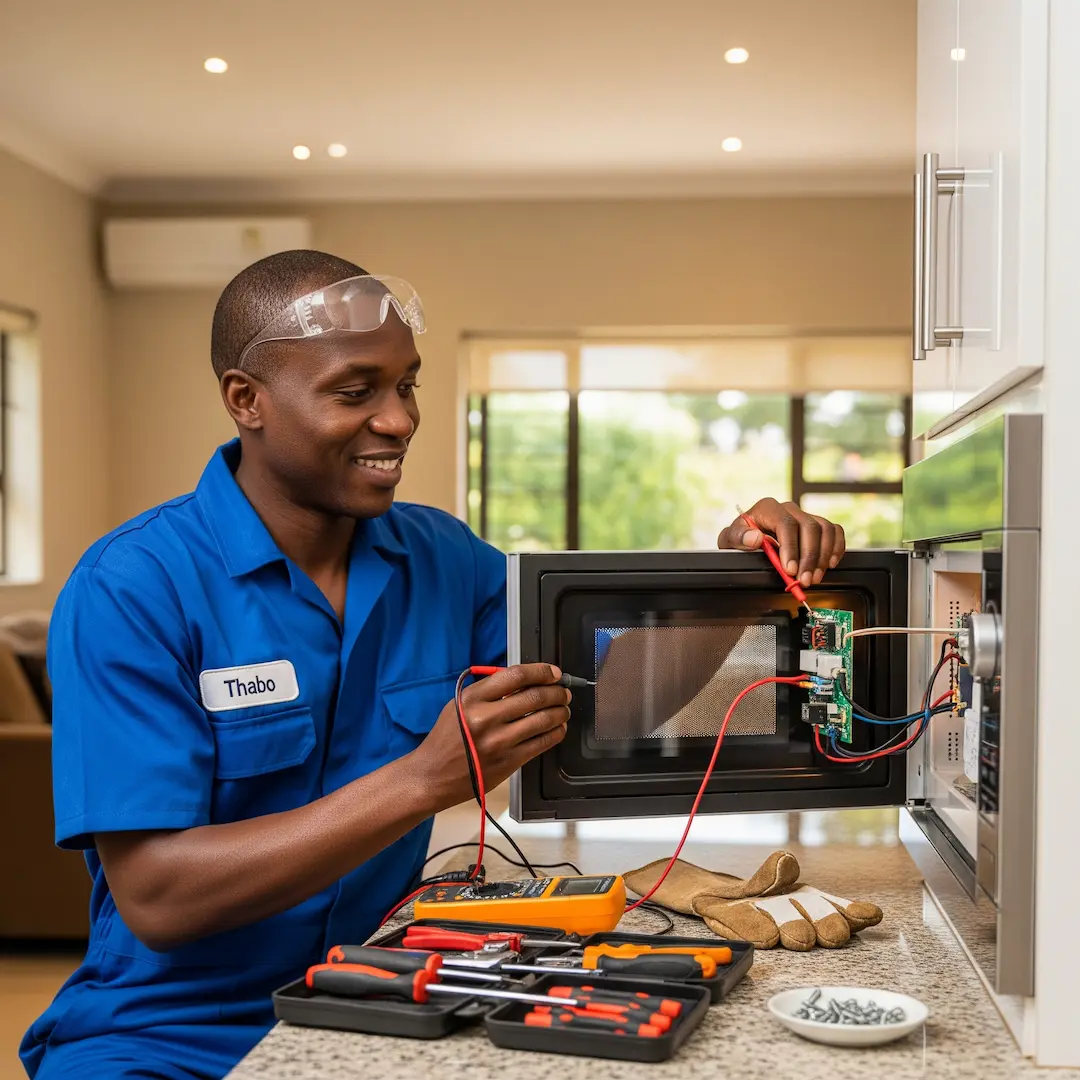
Your Microwave is Back! Post-Repair Care for Safety and Longevity in SA
Microwave repaired in South Africa? Discover essential post-repair care tips to ensure safe operation, extend lifespan, and avoid repeat faults - expert advice to keep your kitchen running smoothly.

Your Microwave is Back! Post-Repair Care for Safety and Longevity in SA
There’s nothing quite like the convenience of a working microwave. From quickly reheating leftovers to defrosting dinner in a flash, it’s a staple in most South African kitchens. But what happens after your trusted appliance has just come back from a repair? It's easy to plug it in and go back to business as usual, but taking a few proactive steps can significantly extend its life and ensure it operates safely.
Our expert electricians, who regularly tackle everything from minor glitches to major overhauls, often share valuable insights on how homeowners can get the most out of their repaired appliances. Here’s what they recommend for keeping your microwave in top shape after a repair.
Understanding Your Repaired Microwave
When an appliance like a microwave undergoes repair, it's typically because a specific component has failed or is malfunctioning. This could be anything from the magnetron (which generates the microwaves) to the control panel, the door interlock switch, or even just a faulty capacitor. A professional repair ensures that the problematic part is replaced with a suitable equivalent and that the appliance is reassembled correctly, often with safety checks performed as standard.
One electrician recounted a job where a homeowner had attempted a DIY repair on their microwave, only to cause further damage to the internal wiring. After the professional repair, the key was not just fixing the original fault, but educating the homeowner on proper usage to prevent recurrence. This highlights the importance of not just the repair itself, but the post-repair care.
Immediate Post-Repair Checks and Best Practices
Once your microwave is back, resist the urge to immediately throw in a meal. Take a moment to ensure everything is in order.
- Placement: Ensure the microwave is placed on a stable, flat surface with adequate ventilation. Overheating is a common enemy of electronic components, and restricted airflow can lead to premature failure. Check that the vents (usually at the back or sides) are not blocked by walls or other kitchen items.
- Power Connection: Plug the microwave directly into a wall socket if possible. Avoid using extension cords or multi-plugs, especially if they are not rated for high-wattage appliances. Our service providers often see issues stemming from inadequate power supply or overloaded circuits.
- Initial Test Run: Before putting food in, run a small test. Place a cup of water inside and run the microwave for 30-60 seconds on high power. Check if the water heats up normally and listen for any unusual noises. A strange hum or rattling could indicate a lingering issue, though often it’s just the sound of a newly seated component.
- Door Seal Inspection: The door seal is crucial for preventing microwave energy from escaping. Visually inspect the seal around the door for any signs of damage, gaps, or debris. A damaged seal can not only lead to inefficient heating but also pose a safety risk.
Daily Habits for Longevity
The way you use your microwave daily has a significant impact on its lifespan.
- Use Microwave-Safe Cookware: This might seem obvious, but using non-microwave-safe containers (like metal, certain plastics, or old ceramic dishes with metallic glazes) can cause arcing, sparks, and damage to the magnetron and internal components. Always look for the "microwave-safe" symbol.
- Avoid Running Empty: Never run the microwave when it's empty. Without food or liquid to absorb the microwave energy, the magnetron can be damaged by the energy reflecting back into it. This is a common cause of magnetron failure.
- Don't Slam the Door: The microwave door contains sensitive interlock switches that prevent the appliance from operating when the door is open. Repeatedly slamming the door can damage these switches, leading to the microwave not starting or operating unsafely. Close it firmly but gently.
- Clean Up Spills Immediately: Food splatters and spills are not just unsightly; they can carbonise and cause arcing over time, especially if they accumulate on the waveguide cover (the small, often thin, rectangular piece inside the microwave). This reduces efficiency and can damage the microwave's interior.
- Proper Defrosting: When defrosting, break up the food periodically and rotate it. This ensures even thawing and prevents overworking specific areas of the microwave.
Essential Cleaning and Maintenance
Regular cleaning is paramount for both hygiene and the longevity of your microwave.
- Interior Cleaning: After each use (or at least daily), wipe down the interior with a damp cloth and mild dish soap. For stubborn dried-on food, place a bowl of water with a slice of lemon or a tablespoon of vinegar inside, microwave on high for 2-3 minutes, and let the steam loosen the grime. Then, wipe clean. This not only cleans but also deodorises.
- Exterior Cleaning: Wipe down the exterior surfaces regularly to prevent dust and grease buildup, which can block vents.
- Turntable Care: Remove the glass turntable and its support ring periodically and wash them in warm, soapy water. Ensure they are completely dry before placing them back inside.
- Never Use Harsh Cleaners: Avoid abrasive cleaners, steel wool, or harsh chemicals, as these can scratch the interior coating, damage the components, or leave residue that could be dangerous when heated.
When to Call an Electrician Again
Even with the best care, sometimes things go wrong. Knowing when to call in a professional is key to safety and avoiding further damage.
- Unusual Noises: If you hear grinding, buzzing, or loud humming sounds that weren't present before the repair or during normal operation, it's time to get it checked.
- Strange Odours: A burning smell, especially metallic or electrical, is a serious warning sign. Switch off the microwave immediately and unplug it.
- Smoke or Sparks: Any sign of smoke or internal sparking (beyond what might occur with tiny metal flecks on a plate) requires immediate disconnection and professional inspection.
- Inconsistent Heating: If your food isn't heating evenly or at all, even after following all the advice, the internal components might be failing again.
- Door Issues: If the door doesn't close securely, or if the microwave operates with the door ajar, it’s a critical safety hazard and must be repaired by a professional.
Remember, attempting DIY repairs on a microwave, especially involving its high-voltage components, is extremely dangerous due to the stored electrical charge even when unplugged. Always consult a qualified and experienced electrician for any internal issues or safety concerns. Their expertise not only ensures a safe repair but also provides peace of mind.
Frequently Asked Questions
How often should I clean my microwave?
For optimal performance and hygiene, it's best to wipe down the interior of your microwave daily, especially after any spills or splatters. A deeper clean, involving removing and washing the turntable, should be done at least once a week or as needed.
Can I use a regular extension cord for my microwave?
It is generally not recommended to use a regular extension cord for high-wattage appliances like microwaves. If an extension cord must be used, ensure it is a heavy-duty cord rated for the microwave's wattage to prevent overheating, fire hazards, or damage to the appliance. Plugging directly into a wall socket is always the safest option.
What does "arcing" mean in a microwave, and how can I prevent it?
Arcing refers to sparks or flashes of light inside the microwave. It's usually caused by metal items (like foil, metal-rimmed plates, or even dry, carbonised food particles) interacting with the microwaves. To prevent arcing, always use microwave-safe dishes, clean up food spills immediately, and ensure no metallic objects are placed inside.
My microwave seems to be running, but the food isn't heating up. What could be the problem?
If your microwave sounds like it's operating but isn't heating food, the most common culprit is a faulty magnetron, which is the component responsible for generating the microwaves. Other potential issues could include a problem with the high-voltage diode, capacitor, or transformer. This issue typically requires a professional electrician to diagnose and repair due to the dangerous high-voltage components involved.
Find a vetted electrician near you
Small appliance repair: find a pro near you
Suzette Meyer is the lead author and content creator for Kandua.com, South Africa’s #1 marketplace for home services. Suzette has made it her mission to help homeowners with advice on all aspects of home repair, maintenance and improvement, including how to choose the right Pro and how to make smart upgrades that improve your resale value or save costs.

Latest articles, advice and more
.webp)
.webp)
.jpeg)
Sinking Pavers, Weeds and Water That Pools: What Your Driveway Is Telling You
When your driveway starts sprouting weeds, pooling water, or sinking in patches, the bricks are not failing you. The layers underneath have moved, and they are trying to tell you exactly what went wrong.
.jpeg)
What Your Garage Door Motor Actually Does (And Why It Breaks)
Spoiler alert: your garage door motor isn't actually doing the heavy lifting. The torsion springs carry almost all the weight. The motor simply pushes, pulls, controls the descent so it doesn't slam, and acts as a lock when the door is shut. That’s why a relatively small box on your ceiling can move such a massive door. Want to test this? Pull the red manual release cord and lift the door by hand. If it glides up easily and stays put when you let go, your springs are doing their job, and the fault lies with the motor. If the door feels like dead weight or slams back down- stop. You’ve got a spring problem.
.jpeg)
4 Warning Signs Your Tiles Are Failing (And What They Mean)
Tiles rarely fail overnight. They warn you first. A hollow sound underfoot, grout that crumbles away, a tile that lifts at one edge, or a crack that runs across two tiles all point to something happening under the surface. Here is what each sign means, and how urgent it is.
.webp)
.webp)
Beyond the Unboxing: A Detailed Guide to Correct Washing Machine Plumbing & Setup
New washing machine in South Africa? Learn essential plumbing and setup tips to prevent leaks, ensure efficient operation, and extend your appliance’s lifespan - expert advice before your first load.
.webp)
New Washing Machine? Don't Plug It In Yet! Essential Installation Tips for SA Homes
Installing a new washing machine? Learn the essential setup steps South African homeowners often overlook to prevent leaks, noise, and damage—and ensure efficient, long-lasting performance from day one.
.webp)
.webp)
%25201200%2520x%25201200%2520(1).jpeg)
What Retiling a Bathroom Costs in 2026, Room by Room
Retiling a bathroom in South Africa costs between R230 and R800 per square metre in 2026, including materials and labour. A standard family bathroom, stripped and fully retiled, usually lands between R11,800 and R27,500. A guest toilet costs a fraction of that. A large porcelain en-suite costs a lot more.
How to Install a Horizontal Geyser | Step-by-Step Pro Guide
Want to install a geyser like a pro? This step-by-step tutorial shows you exactly how to do a horizontal Ariston Axios geyser installation, straight from the BluLever plumbing workshop. 🎥 Hosted by MK, BluLever’s technical facilitator, and supported by a qualified electrician, Life and a BluLever graduate artisan, Zinhle. This is your ultimate guide to a SANS 10254-compliant installation — from preparing the wall, to plumbing, electrical wiring, and pro troubleshooting tips.
How to Maintain a Geyser | Step-by-Step Pro Guide
Want to maintain a geyser like a pro? This step-by-step tutorial shows you exactly how to do the three core geyser maintenance checks on an Ariston Axios geyser installation, straight from the BluLever plumbing workshop. 🎥 Hosted by MK, BluLever’s technical facilitator, and supported by a qualified electrician, Life. This is your ultimate guide to geyser maintenance — from diagnosing the problem to checking the heat regulation of the geyser, to pressure regulation and then finally corrosion protection.
%201.avif)
Not just another newsletter. It's an advantage