
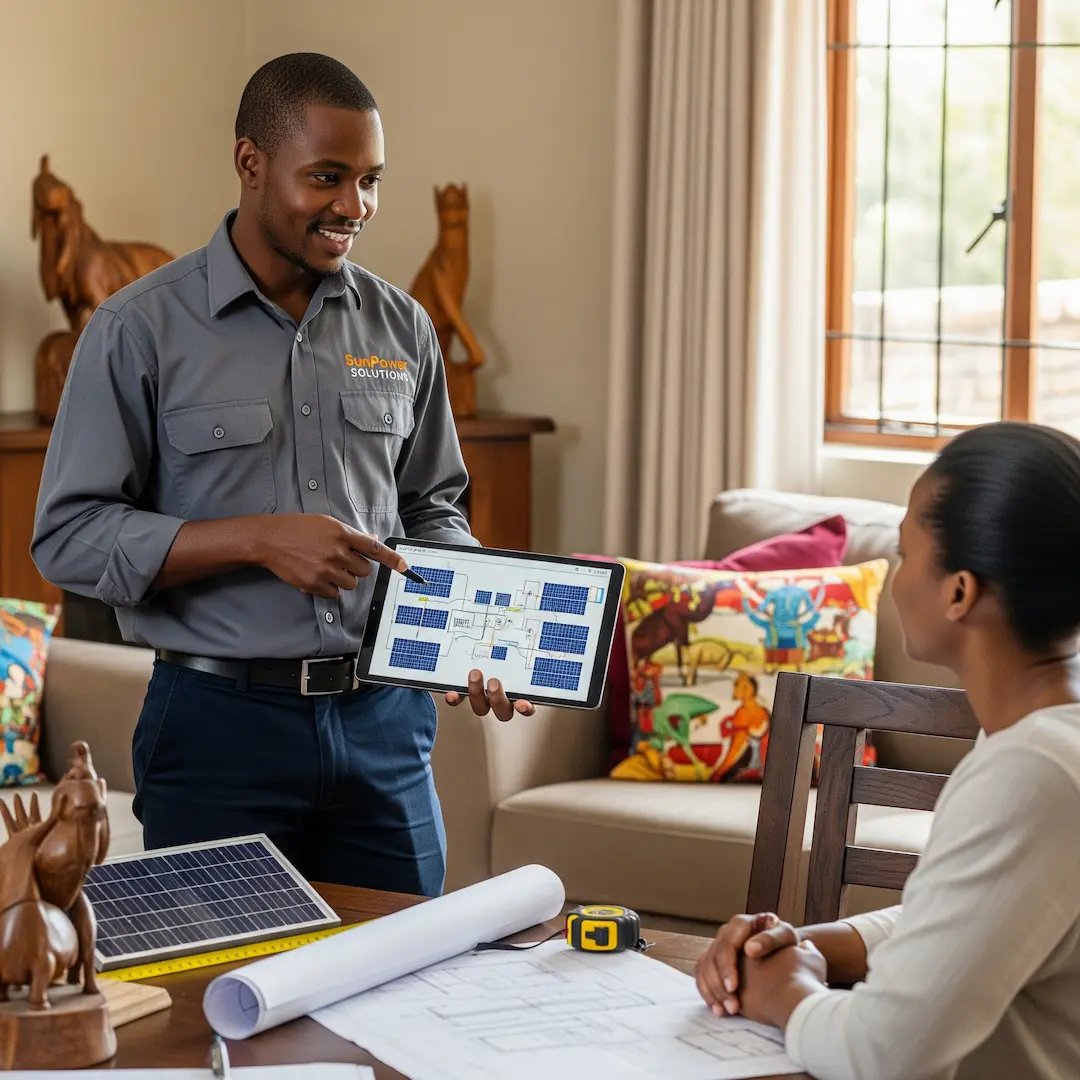
Designing Your Solar System in SA: Sizing, Components & Planning for Energy Independence
Wondering how much solar power your South African home needs? Learn how experts design the right system based on usage, load shedding needs, and long-term energy independence.

How Much Solar Power Do I Really Need?
The dream of energy independence is becoming a reality for more and more South African homeowners. With the unpredictable nature of our national grid, investing in a solar system isn't just about saving money in the long run; it's about gaining control, peace of mind, and ensuring your lights stay on even when load shedding hits. But where do you begin when considering a solar system for your home? The design phase is crucial, as it lays the groundwork for a system that truly meets your unique needs and the specific challenges of our South African environment.
Let's unpack what goes into designing a solar system, from understanding how much power you truly need to choosing the right components that will serve you best.
Step 1: Understanding Your Energy Needs
This is the bedrock of any successful solar installation. You wouldn't build a house without knowing how many rooms you need, and the same applies to your solar system. Many homeowners start by looking at their electricity bills, which is a great starting point. Your bill will typically show your average monthly (or daily) energy consumption in kilowatt-hours (kWh).
However, as experienced installers often share, just looking at your bill isn't enough. It's like asking how much fuel your car uses without considering how far you drive each day! You need to perform a "load audit." This involves listing every appliance in your home, its wattage (power consumption), and how many hours per day you typically use it.
Here’s how an expert electrician would guide you through a load audit:
- Identify Your Appliances: Go through your home room by room. Don't forget the geyser, oven, air conditioning units, pool pump, and even smaller items like phone chargers.
- Find the Wattage: Most appliances have a sticker or label indicating their wattage (W). For example, a kettle might be 2000W, a TV 100W, and a fridge 150W. If it only lists amps (A) and volts (V), you can calculate wattage:
Watts (W) = Volts (V) x Amps (A). In South Africa, household voltage is typically 230V. - Estimate Daily Usage Hours: Be realistic. How many hours a day is your fridge running (even if cycling on and off)? How many hours is the TV on? This is where an expert's experience truly shines. They'll tell you that a fridge doesn't continuously draw its rated wattage; it cycles. Similarly, your geyser heats for a few hours a day, not all day.
- Calculate Daily kWh Consumption for Each Appliance:
- Daily kWh = (Appliance Wattage / 1000) x Hours Used Per Day
- Example: A 2000W kettle used for 0.5 hours a day: (2000 / 1000) x 0.5 = 1 kWh/day
- Sum It Up: Add up the daily kWh for all your appliances to get your total daily energy consumption.
Pro-Tip from a Cape Town Installer: "We often find that clients underestimate their geyser and oven consumption. These are significant energy hogs. During the consultation, we'll delve into your actual usage patterns for these heavy-draw appliances, sometimes even recommending smart geyser timers or gas alternatives to reduce your overall solar system size requirements."
Once you have your total daily kWh, you can factor in the average peak sun hours for your specific South African location. Most areas in South Africa average between 4.5 and 6.5 peak sun hours per day. This figure helps determine how much energy your panels will actually produce.
Step 2: Choosing Your Solar System Type – Grid-Tied, Off-Grid, or Hybrid?
Your energy consumption data, coupled with your specific goals (e.g., just load shedding backup, complete energy independence, or reducing bills), will guide you towards the most suitable system type for the South African context.
- Grid-Tied Systems (On-Grid):How it works: Your solar panels generate electricity, which is converted to AC by an inverter and primarily feeds your home. Any excess power can be fed back into the national grid (if your municipality allows for net metering or similar arrangements). When your solar panels aren't producing enough (e.g., at night, on very cloudy days), you draw power from the grid.
- Pros in SA: Lower initial cost as no batteries are required. Can significantly reduce electricity bills.
- Cons in SA: Does not provide power during load shedding or grid outages unless you have a specific grid-tied inverter with a backup function (often called "hybrid ready" or "EPS function").
- Best for: Homeowners who primarily want to reduce their electricity bill and whose municipality offers a feed-in tariff or net metering.
- Off-Grid Systems:How it works: Completely independent of the national grid. All electricity is generated by your solar panels, stored in batteries, and then used by your home. A generator might be used as a backup.
- Pros in SA: Complete energy independence, immunity to load shedding. Ideal for remote locations where grid connection is unavailable or too costly.
- Cons in SA: Higher upfront cost due to the need for substantial battery storage and often a larger solar array. Requires careful management of energy consumption.
- Best for: Remote properties, or those who desire absolute independence from Eskom and local municipalities, and are prepared for the higher initial investment.
- Hybrid Systems:How it works: The most popular choice for many South African homeowners. These systems combine the benefits of both grid-tied and off-grid setups. They connect to the grid but also incorporate batteries to store excess solar energy. During load shedding, the system automatically switches to battery power. When batteries are low and there's no sun, they can be topped up from the grid (or a generator).
- Pros in SA: Provides backup power during load shedding, reduces reliance on the grid, and allows for greater energy self-sufficiency. Offers flexibility in managing energy flow.
- Cons in SA: More expensive than pure grid-tied systems due to batteries and more complex inverters.
- Best for: Most South African households looking for a balance between bill reduction and reliable backup during power outages.
Experience from a Durban Solar Specialist: "We've seen a massive shift towards hybrid systems in the last few years. Customers want the peace of mind during load shedding, but they also want to offset their monthly bills. A well-designed hybrid system gives them the best of both worlds, particularly with intelligent inverters that can prioritise solar, then battery, then grid."
Step 3: Selecting the Right Components – Panels, Inverters & Batteries
Once you know your energy needs and chosen system type, it's time to delve into the specific components. The quality and compatibility of these elements are paramount for system efficiency and longevity.
Solar Panels (PV Modules)
The "collectors" of your solar energy. Key considerations include:
- Type:Monocrystalline: Generally more efficient (around 18-22%) and occupy less roof space for the same power output. They perform well in lower light conditions but are typically more expensive. Recognisable by their uniform, dark appearance.
- Polycrystalline: Less efficient (around 15-17%) than monocrystalline, requiring more roof space, but they are more cost-effective. They have a speckled, blue appearance.
- Thin-film: Less common for residential use in SA due to lower efficiency and larger space requirements, but they can be flexible.
- Wattage: Panels are rated in Watts (W), typically ranging from 350W to 600W+ for residential use. Higher wattage panels mean fewer panels are needed to achieve your desired power output.
- Temperature Coefficient: This indicates how much a panel's performance degrades in high temperatures. Given South Africa's climate, a lower (better) temperature coefficient is important.
- Durability and Warranty: Look for reputable brands with good product and performance warranties (e.g., 25-year performance warranty).
Authoritative Advice: Always ensure panels conform to international standards like IEC 61215 and IEC 61730 for quality and safety.
Inverters
The "brain" of your solar system, converting the DC electricity from your panels into AC electricity usable by your home appliances.
- Types (as discussed above): Grid-tied, Off-grid, and Hybrid. The choice here is driven by your overall system design.
- Rated Power (kW): This indicates the maximum continuous power the inverter can supply. It should be sized appropriately for your peak energy demand. For instance, if you regularly run appliances that cumulatively draw 5000W, you'd need at least a 5kW inverter. Often, it's recommended to size the inverter slightly larger (e.g., 25-30% more than your total appliance wattage) to handle surge currents, especially from motors or compressors.
- Maximum Power Point Tracking (MPPT): Most modern inverters use MPPT technology, which optimises the power output from your solar panels, even under varying conditions like partial shading.
- Efficiency: A higher efficiency rating means less energy is lost during conversion.
- Brand Reputation and Support: Choose well-known brands with local support and readily available spares in South Africa. Popular brands include Sunsynk, Deye, Victron Energy, GoodWe, and Luxpower.
Trustworthiness Tip from a Pretoria Electrician: "Don't skimp on your inverter. It's a critical component. A cheap, unreliable inverter can be the weakest link in your system, leading to poor performance and frequent breakdowns. We always recommend inverters with a proven track record in SA's conditions, especially those that handle voltage fluctuations well."
Batteries (for Off-Grid and Hybrid Systems)
The "storage unit" for your excess solar energy.
- Type:Lithium-ion (LiFePO4/LFP): The gold standard for solar battery storage in South Africa. They offer excellent lifespan (many more cycles than lead-acid), high efficiency (typically 90-95%), deep discharge capabilities (80-100% Depth of Discharge or DoD), and are relatively compact. While more expensive upfront, their longer lifespan and better performance often make them more cost-effective in the long run.
- Lead-Acid (Gel/AGM): A more traditional, cheaper option, but with a significantly shorter lifespan and lower DoD (typically 50%). They are heavier, require more space, and are less efficient.
- Capacity (kWh): This dictates how much energy your battery bank can store. It's typically calculated based on your daily energy consumption and how many days of autonomy (backup power) you desire without sun or grid input.
- Cycle Life: The number of charge and discharge cycles a battery can endure before its capacity significantly degrades. Look for batteries with high cycle counts (e.g., 6000+ cycles for LiFePO4).
- Battery Management System (BMS): Crucial for lithium-ion batteries, the BMS protects the battery from overcharging, over-discharging, and temperature extremes, ensuring safety and longevity.
Experience shared by a Johannesburg Installer: "Load shedding has really highlighted the importance of battery sizing. We've had clients who initially thought a small battery would be enough, only to realise during extended outages that they need more capacity, especially if they have essentials like fridges, lights, and WiFi running for long periods. Always factor in your load shedding stage and duration when planning."
Step 4: System Integration & Safety Considerations
Designing a solar system isn't just about picking individual components; it's about ensuring they work together seamlessly and safely. This is where professional design and installation become critical.
- Mounting Structure: The framework that secures your panels to the roof or ground. It must be robust enough to withstand South Africa's winds and weather, and properly anchored to your roof structure.
- Cabling and Protection: Correctly sized cabling is essential to prevent energy loss and overheating. Circuit breakers, surge protection devices (SPDs), and isolators are vital safety components to protect your system and home from electrical faults and lightning strikes, particularly given South Africa's often severe thunderstorms. All electrical work must comply with SANS 10142-1 regulations.
- Monitoring System: Modern solar systems often come with monitoring apps or platforms that allow you to track your energy production, consumption, and battery status in real-time, offering valuable insights into your energy usage.
- PV System Earthing (Grounding): Proper earthing is a critical safety measure to protect against electric shock and damage from lightning. This must comply with SANS regulations.
- Council Approval and SSEG Registration: In many South African municipalities, connecting a solar system to the grid (especially hybrid and grid-tied systems) requires specific approvals and registration as a Small Scale Embedded Generation (SSEG) system. This ensures your system complies with local bylaws and grid connection standards (like NRS 097-2-1). Attempting to connect a grid-tied or hybrid system without proper registration can lead to penalties and potential safety risks.
A Word of Caution: While DIY solar kits might seem appealing, designing and installing a solar system involves intricate electrical work and safety protocols. Attempting a DIY installation without proper knowledge and qualifications can be extremely dangerous, leading to electrocution, fire hazards, and costly damage. Always consult with qualified and accredited solar professionals who understand South African regulations and conditions.
The Planning Process with an Expert
When you engage with a solar system design and consultation expert, expect a thorough process:
- Initial Consultation: Discussing your motivations, budget, and current energy challenges.
- Site Assessment: A professional will visit your property to assess your roof's suitability (size, orientation, shading), structural integrity, and electrical infrastructure.
- Load Analysis Deep Dive: Reviewing your electricity bills and conducting a detailed appliance audit to accurately determine your energy consumption patterns.
- System Sizing and Component Selection: Based on the load analysis and site assessment, they will recommend the optimal system size (kWp for panels, kWh for batteries, and kW for inverter) and suitable components, explaining the pros and cons of different options.
- Financial Analysis: Providing a clear breakdown of estimated costs, potential savings, and return on investment.
- Regulatory Compliance: Guiding you through the necessary municipal approvals and SSEG registration processes.
- Quotation and Design Proposal: Presenting a detailed proposal that includes system specifications, layout diagrams, and a clear pricing structure.
By investing in a professional solar system design and consultation, you're not just buying equipment; you're investing in a tailored, efficient, and safe solution that will provide reliable power for years to come.
Frequently Asked Questions
How long does a solar system typically last in South Africa?
A well-designed and properly installed solar system can last for many years. Solar panels usually come with a 20-25 year performance warranty, meaning they are guaranteed to produce a certain percentage of their original output (e.g., 80%) after that period. Inverters generally have a lifespan of 5-10 years, while modern lithium-ion batteries can last 10-15 years or more, depending on usage and cycle depth.
Will a solar system completely eliminate my electricity bill?
It depends on the size and type of your system, and your energy consumption habits. An off-grid system, by definition, aims for complete independence. Hybrid and grid-tied systems can significantly reduce your bill, potentially to just the fixed service charges from your municipality, especially if you produce more energy than you consume and your municipality offers net metering. However, achieving a zero bill often requires a substantial upfront investment.
Can I start with a small solar system and expand it later?
Yes, this is a common and practical approach, especially with hybrid systems. Many homeowners begin with a basic load shedding backup system and then add more panels and batteries as their budget allows or their energy needs grow. It's crucial to plan for this expansion during the initial design phase, particularly by choosing an inverter that can accommodate future additions.
What maintenance does a solar system require in South Africa?
Solar systems generally require minimal maintenance. The main tasks involve keeping the panels clean to ensure optimal sunlight absorption (especially in dusty areas or if near trees), and periodic checks of the system components by a qualified electrician. Batteries, particularly lithium-ion, are largely maintenance-free. Regular professional inspections (e.g., annually) can help identify any potential issues early and ensure your system continues to perform efficiently and safely.
Find a vetted electrician near you
Solar system design and consultation: find a pro near you
- Solar system design and consultation near you
- Solar system design and consultation in Johannesburg
- Solar system design and consultation in Sandton
- Solar system design and consultation in Midrand
- Solar system design and consultation in Roodepoort
- Solar system design and consultation in Randburg
- Solar system design and consultation in Pretoria
- Solar system design and consultation in Cape Town
Suzette Meyer is the lead author and content creator for Kandua.com, South Africa’s #1 marketplace for home services. Suzette has made it her mission to help homeowners with advice on all aspects of home repair, maintenance and improvement, including how to choose the right Pro and how to make smart upgrades that improve your resale value or save costs.

Latest articles, advice and more
.webp)
.webp)
.jpeg)
Sinking Pavers, Weeds and Water That Pools: What Your Driveway Is Telling You
When your driveway starts sprouting weeds, pooling water, or sinking in patches, the bricks are not failing you. The layers underneath have moved, and they are trying to tell you exactly what went wrong.
.jpeg)
What Your Garage Door Motor Actually Does (And Why It Breaks)
Spoiler alert: your garage door motor isn't actually doing the heavy lifting. The torsion springs carry almost all the weight. The motor simply pushes, pulls, controls the descent so it doesn't slam, and acts as a lock when the door is shut. That’s why a relatively small box on your ceiling can move such a massive door. Want to test this? Pull the red manual release cord and lift the door by hand. If it glides up easily and stays put when you let go, your springs are doing their job, and the fault lies with the motor. If the door feels like dead weight or slams back down- stop. You’ve got a spring problem.
.jpeg)
4 Warning Signs Your Tiles Are Failing (And What They Mean)
Tiles rarely fail overnight. They warn you first. A hollow sound underfoot, grout that crumbles away, a tile that lifts at one edge, or a crack that runs across two tiles all point to something happening under the surface. Here is what each sign means, and how urgent it is.
.webp)
.webp)
Beyond the Unboxing: A Detailed Guide to Correct Washing Machine Plumbing & Setup
New washing machine in South Africa? Learn essential plumbing and setup tips to prevent leaks, ensure efficient operation, and extend your appliance’s lifespan - expert advice before your first load.
.webp)
New Washing Machine? Don't Plug It In Yet! Essential Installation Tips for SA Homes
Installing a new washing machine? Learn the essential setup steps South African homeowners often overlook to prevent leaks, noise, and damage—and ensure efficient, long-lasting performance from day one.
.webp)
.webp)
%25201200%2520x%25201200%2520(1).jpeg)
What Retiling a Bathroom Costs in 2026, Room by Room
Retiling a bathroom in South Africa costs between R230 and R800 per square metre in 2026, including materials and labour. A standard family bathroom, stripped and fully retiled, usually lands between R11,800 and R27,500. A guest toilet costs a fraction of that. A large porcelain en-suite costs a lot more.
How to Install a Horizontal Geyser | Step-by-Step Pro Guide
Want to install a geyser like a pro? This step-by-step tutorial shows you exactly how to do a horizontal Ariston Axios geyser installation, straight from the BluLever plumbing workshop. 🎥 Hosted by MK, BluLever’s technical facilitator, and supported by a qualified electrician, Life and a BluLever graduate artisan, Zinhle. This is your ultimate guide to a SANS 10254-compliant installation — from preparing the wall, to plumbing, electrical wiring, and pro troubleshooting tips.
How to Maintain a Geyser | Step-by-Step Pro Guide
Want to maintain a geyser like a pro? This step-by-step tutorial shows you exactly how to do the three core geyser maintenance checks on an Ariston Axios geyser installation, straight from the BluLever plumbing workshop. 🎥 Hosted by MK, BluLever’s technical facilitator, and supported by a qualified electrician, Life. This is your ultimate guide to geyser maintenance — from diagnosing the problem to checking the heat regulation of the geyser, to pressure regulation and then finally corrosion protection.
%201.avif)
Not just another newsletter. It's an advantage