
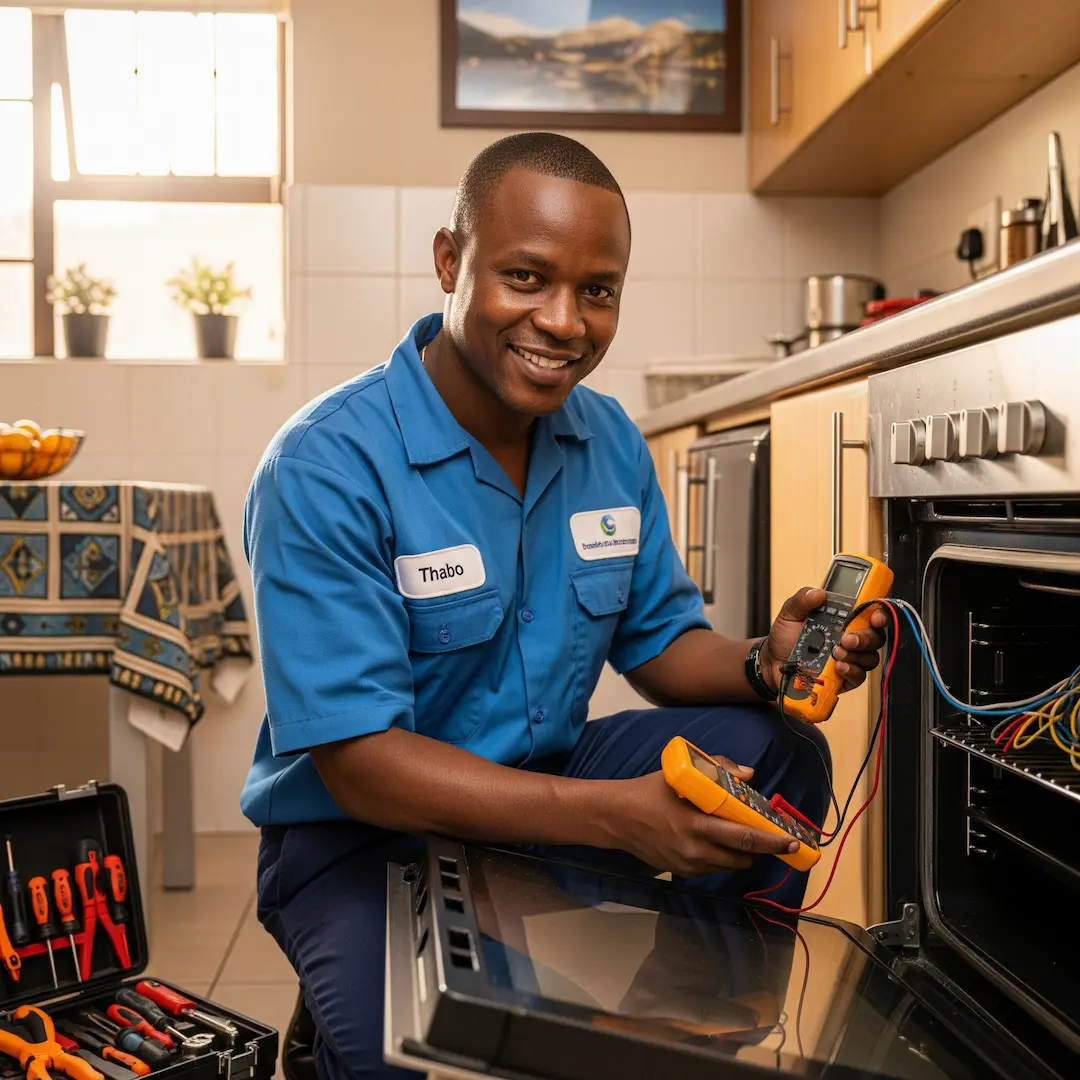
Electric Stove or Oven Not Heating? Common Problems & When to Call for Repair in SA
Electric stove or oven not heating in South Africa? Discover common causes, simple checks, and clear signs it’s time to call a professional repair service before meals - and appliances - are ruined.

Electric Stove or Oven Not Heating? Common Problems & When to Call for Repair in SA
Few things are as frustrating as planning a delicious meal, only to find your electric stove or oven isn't heating up. Whether it's a trusty old workhorse or a relatively new appliance, issues can crop up. Understanding the most common culprits behind a non-heating stove or oven can save you time and help you decide when it's time to call in a professional. As electricians across South Africa often share, many problems stem from a few key areas, and knowing what to look for can be incredibly helpful.
The Mystery of the Missing Heat: Common Culprits
When your electric stove plate isn't glowing or your oven isn't reaching temperature, it usually points to one of a handful of issues. From what our expert service providers encounter in South African homes, these are the most frequent offenders:
1. Faulty Heating Elements
This is perhaps the most common reason for a stove or oven not heating. Just like any component that undergoes significant heat cycles, elements can degrade and eventually fail.
- Stove Plate Elements: On a conventional electric stove, each "hob" or plate has its own heating element. If one plate isn't working, but others are, it’s a strong indicator that the element itself is the problem. You might even see physical signs of damage, like blistering, cracks, or a broken coil.
- Oven Elements: Ovens typically have two main heating elements: the bake element (at the bottom) and the grill/broil element (at the top). If your oven isn't heating at all, or only heats from the top or bottom, one of these elements is likely to blame. A common observation from our technicians is a visible break or charring on the element itself, often at the point where it connects to the wiring.
2. Thermostat Malfunctions
The thermostat is the brain of your oven when it comes to temperature control. It senses the internal temperature and cycles the heating elements on and off to maintain the desired setting.
- Inconsistent Heating: If your oven heats sporadically, or struggles to reach and maintain the set temperature, a faulty thermostat is a prime suspect. One scenario often recounted by pros is arriving at a job where the oven heats for a short period and then completely cools down, only to heat up again much later, indicating the thermostat isn't accurately reading or regulating.
- No Heat At All: In some cases, a completely failed thermostat won't allow the elements to activate at all, resulting in no heat whatsoever.
3. Wiring Issues
Electricity needs a clear path to flow, and any interruption in the wiring can prevent an element from heating.
- Loose Connections: Over time, vibrations and heat expansion can cause electrical connections to loosen at the terminal blocks or element connections. A service provider once described a call-out where an oven was intermittently heating, and upon inspection, found a visibly charred and loose wire connection at the back of the element – a clear sign of poor contact and arcing.
- Damaged Wires: Rodent damage, pinched wires, or insulation degradation due to excessive heat can all lead to breaks in the circuit. This is less common but can occur, especially in older appliances.
4. Blown Fuses or Tripped Circuit Breakers
While this might seem obvious, it's often overlooked. Your stove and oven draw a significant amount of power, and electrical protection systems are designed to trip if there's an overload or fault.
- Dedicated Circuit: Most electric stoves and ovens in South Africa are on a dedicated circuit in your distribution board. If the breaker for that specific circuit has tripped, or if a fuse has blown (in older installations), your appliance won't get any power. This is usually a sign of an underlying issue, such as a short circuit within the appliance or an overloaded circuit.
- Main Breaker: In rare cases, a major fault could trip your main house breaker, cutting power to everything.
5. Selector Switch or Timer Faults
The selector switch (the knob you turn to choose "bake," "grill," "fan assist," etc.) directs power to the appropriate elements. Similarly, some ovens have an integrated timer that can prevent the oven from operating if not set correctly or if faulty.
- No Power to Specific Functions: If certain oven functions work (e.g., the grill) but the main bake function doesn't, the selector switch could be faulty, failing to direct power to the bake element.
- Oven Not Starting: Some ovens require the timer to be set to "manual" or a specific cooking duration before they will heat up. If the timer is faulty or incorrectly set, it can prevent the oven from starting.
When to Call for Professional Repair
While understanding these common issues is helpful for diagnosis, attempting DIY repairs on an electric stove or oven can be extremely dangerous. These appliances operate on high voltage, and improper handling can lead to electric shock, fires, or further damage to the appliance.
Always call a qualified electrician or appliance repair technician if:
- You suspect an electrical fault: Issues like tripped circuit breakers, burning smells, or sparks indicate a serious electrical problem that requires immediate professional attention. Electrical work in South Africa must adhere to strict safety standards (like SANS 10142-1), and only a qualified professional should undertake it.
- You need to replace an element or component: While replacing an element might seem straightforward, it involves working with electrical connections. Our expert service providers repeatedly stress the importance of correct wiring and earthing to ensure safety and prevent future failures.
- You are unsure of the cause: If you've checked the basics (like the circuit breaker) and the problem persists, it's safer and more efficient to let a professional diagnose the issue accurately.
- You are uncomfortable working with electricity: If you have any hesitation, or lack the necessary tools and expertise, don't risk it. Your safety is paramount.
- The problem is intermittent: Intermittent issues can be the trickiest to diagnose and often point to loose connections or failing components that require careful inspection.
A qualified professional has the tools, knowledge, and experience to safely diagnose the problem, source the correct parts (which can vary significantly between brands and models), and perform the repair according to safety standards, giving you peace of mind and getting your kitchen back in working order.
Frequently Asked Questions
Why is only one hob on my electric stove not heating up?
If only one hob isn't heating, it's highly likely that the heating element for that specific hob is faulty and needs to be replaced. Check for any visible damage like cracks or broken coils on the element itself.
My oven light works, but the oven isn't heating. What does that mean?
This typically indicates that the oven is receiving power (hence the light working), but there's an issue with the heating circuit. Common culprits in this scenario include a faulty heating element (bake or grill), a malfunctioning thermostat, or a problem with the selector switch.
How long do electric stove and oven elements typically last?
The lifespan of heating elements can vary significantly depending on usage and quality, but they generally last anywhere from 5 to 15 years. Frequent use, power surges, and manufacturing defects can shorten their lifespan.
Can I still use my electric stove if one of the plates isn't working?
Yes, you can generally still use the other functioning plates on your electric stove if only one is not working. However, it's advisable to get the faulty plate repaired or replaced to restore full functionality and prevent potential future issues with the wiring or connections. Ensure the faulty hob is switched off at all times to prevent any unexpected electrical issues.
Find a vetted electrician near you
Electric stove/oven repair: find a pro near you
- Electric stove/oven repair near you
- Electric stove/oven repair in Johannesburg
- Electric stove/oven repair in Sandton
- Electric stove/oven repair in Midrand
- Electric stove/oven repair in Roodepoort
- Electric stove/oven repair in Randburg
- Electric stove/oven repair in Pretoria
- Electric stove/oven repair in Cape Town
Suzette Meyer is the lead author and content creator for Kandua.com, South Africa’s #1 marketplace for home services. Suzette has made it her mission to help homeowners with advice on all aspects of home repair, maintenance and improvement, including how to choose the right Pro and how to make smart upgrades that improve your resale value or save costs.

Latest articles, advice and more
.webp)
.webp)
.jpeg)
Sinking Pavers, Weeds and Water That Pools: What Your Driveway Is Telling You
When your driveway starts sprouting weeds, pooling water, or sinking in patches, the bricks are not failing you. The layers underneath have moved, and they are trying to tell you exactly what went wrong.
.jpeg)
What Your Garage Door Motor Actually Does (And Why It Breaks)
Spoiler alert: your garage door motor isn't actually doing the heavy lifting. The torsion springs carry almost all the weight. The motor simply pushes, pulls, controls the descent so it doesn't slam, and acts as a lock when the door is shut. That’s why a relatively small box on your ceiling can move such a massive door. Want to test this? Pull the red manual release cord and lift the door by hand. If it glides up easily and stays put when you let go, your springs are doing their job, and the fault lies with the motor. If the door feels like dead weight or slams back down- stop. You’ve got a spring problem.
.jpeg)
4 Warning Signs Your Tiles Are Failing (And What They Mean)
Tiles rarely fail overnight. They warn you first. A hollow sound underfoot, grout that crumbles away, a tile that lifts at one edge, or a crack that runs across two tiles all point to something happening under the surface. Here is what each sign means, and how urgent it is.
.webp)
.webp)
Beyond the Unboxing: A Detailed Guide to Correct Washing Machine Plumbing & Setup
New washing machine in South Africa? Learn essential plumbing and setup tips to prevent leaks, ensure efficient operation, and extend your appliance’s lifespan - expert advice before your first load.
.webp)
New Washing Machine? Don't Plug It In Yet! Essential Installation Tips for SA Homes
Installing a new washing machine? Learn the essential setup steps South African homeowners often overlook to prevent leaks, noise, and damage—and ensure efficient, long-lasting performance from day one.
.webp)
.webp)
%25201200%2520x%25201200%2520(1).jpeg)
What Retiling a Bathroom Costs in 2026, Room by Room
Retiling a bathroom in South Africa costs between R230 and R800 per square metre in 2026, including materials and labour. A standard family bathroom, stripped and fully retiled, usually lands between R11,800 and R27,500. A guest toilet costs a fraction of that. A large porcelain en-suite costs a lot more.
How to Install a Horizontal Geyser | Step-by-Step Pro Guide
Want to install a geyser like a pro? This step-by-step tutorial shows you exactly how to do a horizontal Ariston Axios geyser installation, straight from the BluLever plumbing workshop. 🎥 Hosted by MK, BluLever’s technical facilitator, and supported by a qualified electrician, Life and a BluLever graduate artisan, Zinhle. This is your ultimate guide to a SANS 10254-compliant installation — from preparing the wall, to plumbing, electrical wiring, and pro troubleshooting tips.
How to Maintain a Geyser | Step-by-Step Pro Guide
Want to maintain a geyser like a pro? This step-by-step tutorial shows you exactly how to do the three core geyser maintenance checks on an Ariston Axios geyser installation, straight from the BluLever plumbing workshop. 🎥 Hosted by MK, BluLever’s technical facilitator, and supported by a qualified electrician, Life. This is your ultimate guide to geyser maintenance — from diagnosing the problem to checking the heat regulation of the geyser, to pressure regulation and then finally corrosion protection.
%201.avif)
Not just another newsletter. It's an advantage