
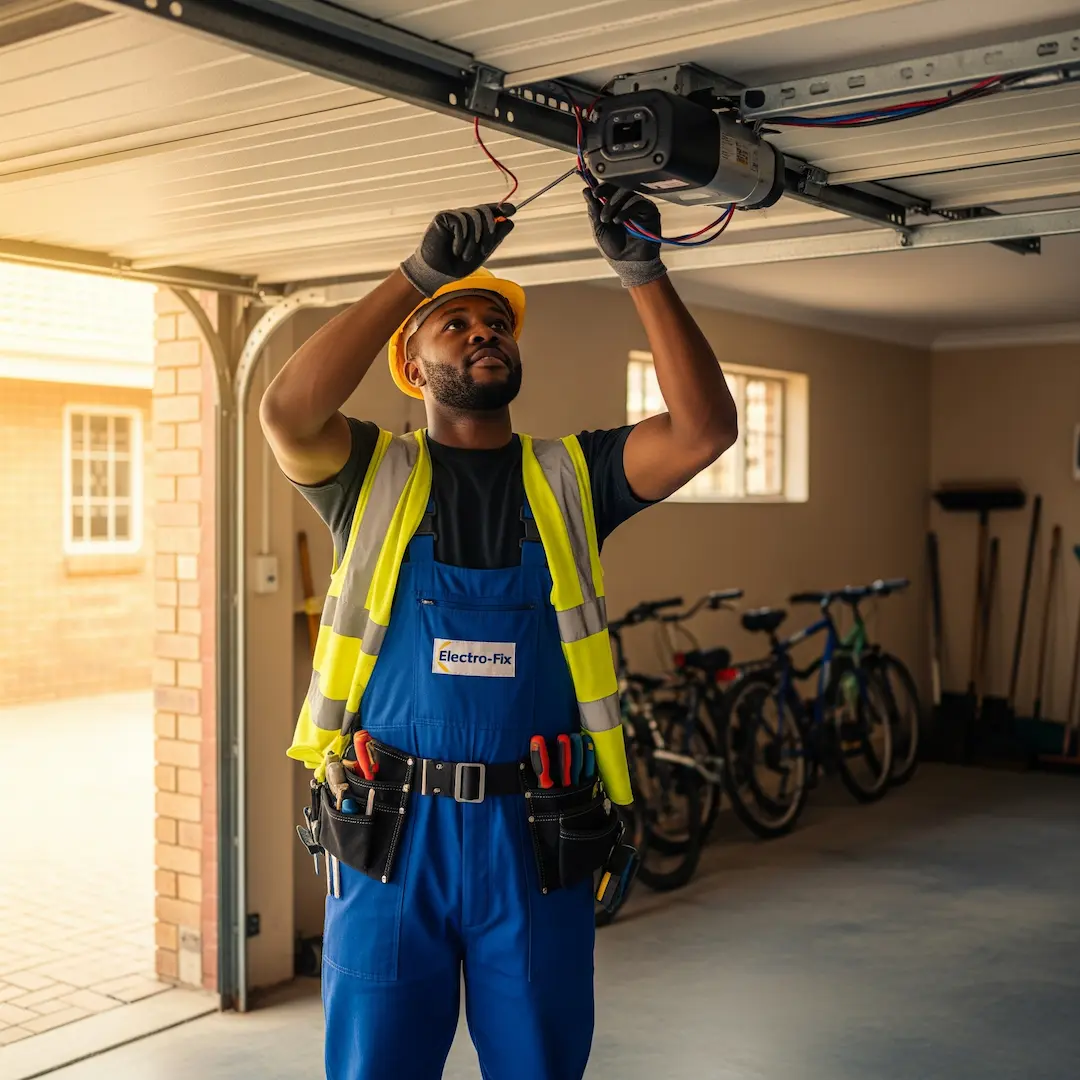
Installing a Garage Motor in SA: Choosing the Right Type & Ensuring Safety Automation
Installing or upgrading a garage door motor in South Africa? Learn how to choose the right motor type, key safety features, and why professional installation ensures security and reliable operation.

A functional garage door motor is more than just a convenience; it's a key component for security, accessibility, and peace of mind for South African homeowners. Whether you're upgrading an old system or installing a new one, choosing the right type of motor and ensuring proper, safe installation are paramount. Our expert electricians often share insights that highlight the crucial considerations, from selecting the best motor for your specific needs to understanding the essential safety features that protect your family and property.
Understanding Garage Door Motor Types: What Works Best for You?
When it comes to garage door motors in South Africa, you'll generally encounter a few main types, each with its own advantages. The right choice often depends on your garage door's size, weight, and your preference for noise levels and speed.
1. Chain-Drive Motors
These are perhaps the most common and robust option available. A chain-drive motor uses a metal chain to pull or push the garage door along its track.
- Pros: They are incredibly durable and can handle heavy doors with ease, making them a popular choice for double garages or solid wood doors. They are also typically the most budget-friendly option upfront.
- Cons: The primary drawback is noise. The metal chain moving along the track can be quite loud, which might be a consideration if your garage is directly beneath a bedroom or living area.
- Expert Insight: "I've installed countless chain-drive motors over the years," an experienced electrician once told me. "They're workhorses. For a large, heavy timber door, you'd be hard-pressed to find something more reliable. The noise can be a factor, though, especially in older homes where sound insulation might not be optimal."
2. Belt-Drive Motors
Belt-drive motors operate similarly to chain-drives, but they use a steel-reinforced rubber belt instead of a chain.
- Pros: The most significant advantage here is quiet operation. The rubber belt significantly reduces noise and vibration, making them ideal for garages attached to living spaces. They also tend to be smoother in operation.
- Cons: They are generally more expensive than chain-drive motors and might not be as robust for extremely heavy, commercial-grade doors.
- Expert Insight: "For a homeowner with a bedroom above the garage, a belt-drive is almost always my first recommendation," shared another professional. "The difference in noise is remarkable. It’s a worthwhile investment for the peace and quiet."
3. Screw-Drive Motors
These motors feature a threaded steel rod that rotates, moving a trolley that pulls the door open or closed.
- Pros: They have fewer moving parts than chain or belt drives, which can translate to fewer maintenance issues over time. They are also relatively quiet compared to chain-drives.
- Cons: Screw-drive motors can be sensitive to temperature fluctuations, which might affect their performance in extreme South African climates. They can also be slower in operation.
- Expert Insight: "Screw-drives are a solid choice for certain scenarios," an installer explained. "They're very dependable once installed correctly, but I always advise clients to consider the local climate. If your garage gets extremely hot or cold, it's something to think about."
Power Requirements and Compatibility
Once you've considered the type, it's crucial to think about the motor's power and its compatibility with your specific garage door.
- Door Weight and Size: Garage door motors are rated for specific lifting capacities. A standard single garage door will require less power than a large double door or a heavy wooden door. Overworking an underpowered motor will lead to premature failure. Always check the motor's specifications against your door's weight.
- Spring System: The garage door's spring system (torsion springs or extension springs) does most of the heavy lifting. The motor provides the final push. It's critical that your springs are correctly tensioned and in good working order before a new motor is installed. A worn-out spring system will place undue stress on the motor.
- Power Supply: Most garage door motors require a standard 230V AC power supply. Ensure there's an accessible and dedicated power point in your garage for the motor. An electrician will ensure this connection meets SANS electrical safety standards.
Essential Safety Features: Protecting What Matters Most
Automated garage doors offer convenience, but safety must always be the top priority. Modern garage door motors come equipped with vital safety features designed to prevent accidents and protect property.
1. Auto-Reverse Mechanism
This is arguably the most critical safety feature. If the door encounters an obstruction while closing (e.g., a child, a pet, or an object), the auto-reverse mechanism should immediately stop the door's descent and reverse its direction.
- How it Works: This often involves photo-electric sensors mounted near the bottom of the garage door tracks, which emit an invisible light beam. If the beam is broken while the door is closing, it triggers the auto-reverse. Some systems also use pressure sensors built into the bottom edge of the door.
- Why it's Crucial: A properly functioning auto-reverse prevents serious injury or damage. It's something every homeowner should test regularly.
- Expert Insight: "I once saw a door close on a child's bicycle because the sensors weren't aligned," recounted a seasoned professional. "Fortunately, the auto-reverse kicked in quickly. It just highlights why these features aren't optional – they're life-savers."
2. Manual Override/Release
In the event of a power outage, or if the motor malfunctions, a manual override is essential. This allows you to disconnect the door from the motor and operate it by hand.
- How it Works: Typically, a red emergency release cord hangs from the motor trolley. Pulling this cord disengages the trolley from the door, allowing you to manually open or close the garage door.
- Why it's Crucial: Imagine a power cut when your car is trapped inside, or you need urgent access. The manual override ensures you're never stranded.
3. Rolling Code Technology
For security, modern garage door openers use rolling code technology. This means that each time you use your remote, it sends a new, unique code to the receiver.
- Why it's Crucial: This prevents code grabbing (where an intruder captures and reuses your remote's signal) and enhances the security of your home. Older, fixed-code systems are much more vulnerable to sophisticated break-ins.
4. Obstruction Detection
Beyond auto-reverse, some motors have advanced obstruction detection that monitors resistance during operation. If the door encounters unusual resistance, it will stop or reverse.
Why Professional Installation Prevents Breakdowns and Ensures Safety
While it might be tempting to tackle a garage motor installation as a DIY project, it's a task best left to professionals. Here's why:
- Complexity and Calibration: Garage door motors are intricate systems that need precise calibration. The spring tension, limit settings (how far the door opens and closes), and force settings (how much power the motor applies) all need to be perfectly adjusted. Incorrect adjustments can lead to the door not closing properly, premature motor wear, or worse, a door that doesn't reverse when it should.
- Electrical Safety: Working with electricity carries inherent risks. A qualified electrician understands SANS regulations and will ensure the wiring is safe, correctly earthed, and meets all local standards, reducing the risk of fire or electrocution.
- Warranty and Longevity: Most reputable motor manufacturers will only honour warranties if the installation has been performed by a certified professional. Furthermore, a correctly installed motor will have a significantly longer lifespan and fewer issues down the line.
- Time and Tools: Professionals have the specialised tools and experience to complete the installation efficiently and correctly, saving you time, frustration, and potential costly errors.
- Expert Diagnostics: If an issue arises later, a professional installer can accurately diagnose and fix the problem, ensuring your system remains safe and functional.
Trusting a qualified electrician with your garage door motor installation isn't just about convenience; it's about ensuring the long-term safety, security, and smooth operation of a vital part of your home. It's an investment that pays dividends in peace of mind.
Frequently Asked Questions
How often should I service my garage door motor?
It's generally recommended to have your garage door motor and system serviced annually. This allows a professional to check the spring tension, lubricate moving parts, adjust limits and force settings, and test all safety features, ensuring optimal performance and longevity.
Can I install a garage door motor on any type of garage door?
Most standard garage door types (sectional, tip-up, roll-up) can be automated. However, the specific motor type and power rating will depend on the door's weight, size, and existing spring system. Very old or custom-built doors might require specific considerations.
What should I do if my garage door motor stops working during a power outage?
In a power outage, you should locate the emergency release cord (usually red) hanging from the motor's trolley. Pull this cord to disengage the door from the motor, allowing you to operate it manually. Remember to re-engage the door with the motor once power is restored or the issue is resolved.
How can I tell if my garage door safety sensors are working correctly?
To test your safety sensors, simply place a non-permanent object (like a cardboard box) in the path of the closing garage door. If the sensors are working, the door should stop its descent and reverse upward before making contact with the object. If it doesn't, do not use the automatic opener until the sensors have been inspected and repaired by a professional.
Find a vetted gate and garage technician near you
Garage door motor installation: find a pro near you
- Garage door motor installation near you
- Garage door motor installation in Johannesburg
- Garage door motor installation in Sandton
- Garage door motor installation in Midrand
- Garage door motor installation in Roodepoort
- Garage door motor installation in Randburg
- Garage door motor installation in Pretoria
- Garage door motor installation in Cape Town
Suzette Meyer is the lead author and content creator for Kandua.com, South Africa’s #1 marketplace for home services. Suzette has made it her mission to help homeowners with advice on all aspects of home repair, maintenance and improvement, including how to choose the right Pro and how to make smart upgrades that improve your resale value or save costs.

Latest articles, advice and more
.webp)
.webp)
.webp)
.webp)
.jpeg)
Sinking Pavers, Weeds and Water That Pools: What Your Driveway Is Telling You
When your driveway starts sprouting weeds, pooling water, or sinking in patches, the bricks are not failing you. The layers underneath have moved, and they are trying to tell you exactly what went wrong.
.webp)
.webp)
Beyond the Unboxing: A Detailed Guide to Correct Washing Machine Plumbing & Setup
New washing machine in South Africa? Learn essential plumbing and setup tips to prevent leaks, ensure efficient operation, and extend your appliance’s lifespan - expert advice before your first load.
.webp)
New Washing Machine? Don't Plug It In Yet! Essential Installation Tips for SA Homes
Installing a new washing machine? Learn the essential setup steps South African homeowners often overlook to prevent leaks, noise, and damage—and ensure efficient, long-lasting performance from day one.
.webp)
.webp)
%25201200%2520x%25201200%2520(1).jpeg)
What Retiling a Bathroom Costs in 2026, Room by Room
Retiling a bathroom in South Africa costs between R230 and R800 per square metre in 2026, including materials and labour. A standard family bathroom, stripped and fully retiled, usually lands between R11,800 and R27,500. A guest toilet costs a fraction of that. A large porcelain en-suite costs a lot more.
How to Install a Horizontal Geyser | Step-by-Step Pro Guide
Want to install a geyser like a pro? This step-by-step tutorial shows you exactly how to do a horizontal Ariston Axios geyser installation, straight from the BluLever plumbing workshop. 🎥 Hosted by MK, BluLever’s technical facilitator, and supported by a qualified electrician, Life and a BluLever graduate artisan, Zinhle. This is your ultimate guide to a SANS 10254-compliant installation — from preparing the wall, to plumbing, electrical wiring, and pro troubleshooting tips.
How to Maintain a Geyser | Step-by-Step Pro Guide
Want to maintain a geyser like a pro? This step-by-step tutorial shows you exactly how to do the three core geyser maintenance checks on an Ariston Axios geyser installation, straight from the BluLever plumbing workshop. 🎥 Hosted by MK, BluLever’s technical facilitator, and supported by a qualified electrician, Life. This is your ultimate guide to geyser maintenance — from diagnosing the problem to checking the heat regulation of the geyser, to pressure regulation and then finally corrosion protection.
%201.avif)
Not just another newsletter. It's an advantage