
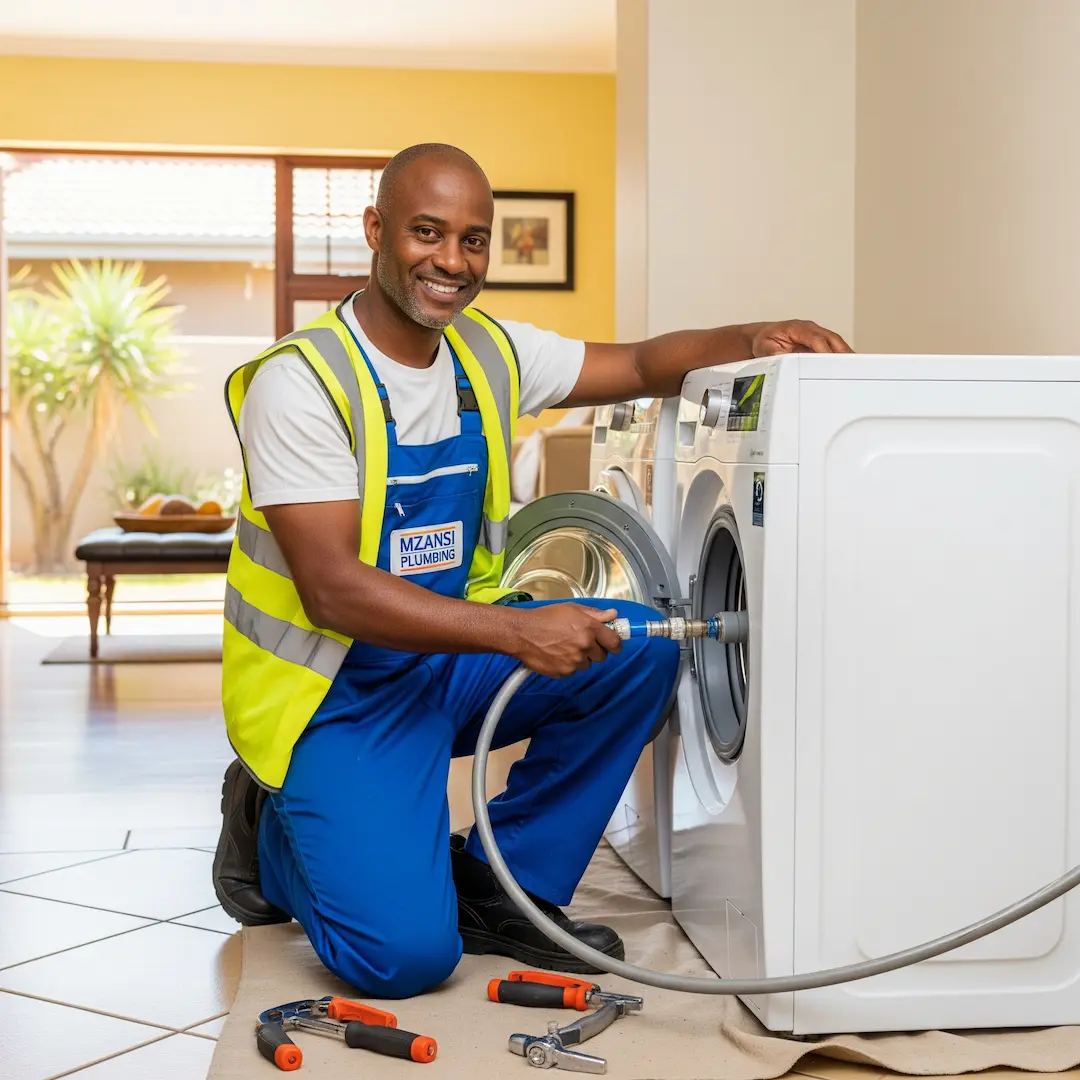
Getting Your Washing Machine Hooked Up Right: The Value of Professional Plumbing in SA
Installing a washing machine in South Africa? Learn why professional plumbing ensures correct hookup, prevents leaks and damage, and protects your appliance and home from costly installation mistakes.

Getting Your Washing Machine Hooked Up Right: The Value of Professional Plumbing in SA
So, you’ve just bought a shiny new washing machine! The excitement is real. You're picturing fresh laundry, less time spent at the laundromat, and the sheer convenience of it all. But before you can start that first load, there's one crucial step: installation. While it might seem like a simple case of plugging it in and connecting a few hoses, a professional installation is one of the smartest investments you can make for your new appliance and your home.
Getting it wrong can lead to a world of frustration, from a machine that sounds like it’s about to take off during the spin cycle to, in the worst cases, a flooded kitchen or laundry room. We've spoken to our network of seasoned plumbers across South Africa, and they all agree: the small upfront cost of a professional installation pales in comparison to the potential cost and headache of repairs down the line.
Let's break down why getting your washing machine hooked up by a pro is the right call.
The Professional Touch: More Than Just Connecting Hoses
When a qualified plumber installs your washing machine, you're not just paying for a pair of hands. You're paying for experience, precision, and peace of mind. Here’s what a professional brings to the job that makes all the difference.
1. Correct Unpacking and Removal of Transit Bolts
This is a big one. New washing machines are shipped with "transit bolts" or "shipping bolts" that hold the drum securely in place to prevent damage during transport. One of our top-rated plumbers in Johannesburg recently shared a story about a call-out to a brand-new home. The client had tried a DIY installation and was convinced their new, expensive machine was faulty because it was vibrating violently and "dancing" across their tiled floor. The problem? The transit bolts were still in. Forgetting to remove them can cause permanent damage to the machine's suspension and drum from the very first wash. A professional will always ensure these are removed and will often advise you to keep them in a safe place for future moves.
2. Secure Water Supply Connections
Connecting the water inlet hoses seems straightforward, but this is where tiny mistakes can lead to big leaks.
- Correct Washers: A professional ensures the rubber washers inside the hose fittings are present and correctly seated to create a watertight seal without being overtightened.
- No Cross-Threading: They have the experience to connect the hoses to the taps without cross-threading, which can damage both the tap and the hose permanently.
- Leak Testing: After connection, a pro will turn on the water and meticulously check for any drips or slow leaks at the connection points – a step many DIYers forget. A slow, unnoticed leak behind a machine can lead to mould growth, water damage to cupboards and floorboards, and a hefty repair bill.
3. The Art of Proper Drainage
The placement of the drain hose is critical for the machine to function correctly.
- Preventing Siphoning: If the drain hose is pushed too far down the standpipe, it can create a siphon effect, causing water to drain out of the machine while it's trying to fill. This wastes water and electricity and can lead to error codes on modern machines.
- Avoiding Floods: If the hose is not securely fastened in the drainpipe, the force of the water being pumped out can cause it to pop out, emptying litres of greywater all over your floor. Plumbers will always secure the hose with the provided U-bend bracket and ensure it’s at the correct height (typically between 60cm and 100cm from the floor) as specified by the manufacturer.
4. The Critical Importance of Levelling
This is perhaps the most underrated aspect of washing machine installation. A machine that isn’t perfectly level will cause problems. One of our plumbing experts from Durban puts it this way: "Think of it like a car with unbalanced tyres. At low speeds, you might not notice, but at high speeds, the whole thing shakes. It’s the same with a spin cycle."
- Noise and Vibration: An unlevel machine will vibrate excessively and make a tremendous amount of noise during the spin cycle.
- Wear and Tear: This constant, unbalanced vibration puts immense strain on the internal components, especially the drum bearings and suspension system. This can drastically shorten the lifespan of your appliance, turning your long-term investment into a short-term disappointment.
A professional uses a spirit level and carefully adjusts the machine's feet until it is perfectly stable and level on all four corners. This single step is the key to a quiet, efficient, and long-lasting machine.
Avoiding Common Washing Machine Plumbing Problems
Ultimately, the goal is a trouble-free laundry experience for years to come. By understanding the potential pitfalls, you can see how professional installation is a proactive step to prevent them.
- Leaks and Water Damage: The most common and costly issue. A professional installation minimises this risk by ensuring all connections are secure and tested. The cost of replacing flooring, skirting boards, or kitchen cabinets far exceeds the cost of a plumber's call-out fee.
- Premature Machine Failure: An improperly levelled machine or one running with transit bolts still in place is a machine destined for an early grave. The cost of replacing damaged bearings or a suspension system can often be close to half the price of a new machine.
- Inefficient Operation: Incorrect drainage can lead to the machine using more water and energy than necessary, increasing your utility bills over time.
Investing in a professional plumber from the start ensures every component is installed according to manufacturer specifications and plumbing best practices. It’s about setting your appliance up for success from day one.
Frequently Asked Questions
What are those big bolts at the back of my new machine?
Those are called transit bolts or shipping bolts. They are installed by the manufacturer to keep the internal drum from moving around and getting damaged during transportation. They must be removed before you use the machine for the first time. Failure to do so will cause severe vibration and can permanently damage your appliance.
How can I tell if my washing machine is not level?
The most obvious sign is excessive noise and vibration during the spin cycle. If the machine rocks or shakes violently, it's likely not level. You can check this by placing a spirit level on top of the machine (check front-to-back and side-to-side). You can also try to rock the machine gently with your hands; it should feel solid and not wobble.
Do I need special taps for my washing machine?
Most washing machines connect to standard 3/4 inch (20mm) threaded cold water taps, which are common in South African laundry areas. Some machines may have both hot and cold water inlets. It's important that the taps are in good working order, can be shut off completely, and are free from leaks. If your existing taps are old, corroded, or leaking, it's wise to have a plumber replace them during the installation.
Can a washing machine be installed anywhere in the house?
Technically, a washing machine can be installed wherever you have three things: a stable and level floor, access to a suitable water supply, and access to a proper drainage point (like a standpipe or gully). This is why kitchens and laundry rooms are ideal. Installing one in a location without existing plumbing, like a garage or spare room, would require significant additional plumbing work to run new water and drain lines.
Find a vetted plumber near you
Washing machine installation: find a pro near you
- Washing machine installation near you
- Washing machine installation in Johannesburg
- Washing machine installation in Sandton
- Washing machine installation in Midrand
- Washing machine installation in Roodepoort
- Washing machine installation in Randburg
- Washing machine installation in Pretoria
- Washing machine installation in Cape Town
Suzette Meyer is the lead author and content creator for Kandua.com, South Africa’s #1 marketplace for home services. Suzette has made it her mission to help homeowners with advice on all aspects of home repair, maintenance and improvement, including how to choose the right Pro and how to make smart upgrades that improve your resale value or save costs.

Latest articles, advice and more
.webp)
.webp)
.webp)
.webp)
.jpeg)
Sinking Pavers, Weeds and Water That Pools: What Your Driveway Is Telling You
When your driveway starts sprouting weeds, pooling water, or sinking in patches, the bricks are not failing you. The layers underneath have moved, and they are trying to tell you exactly what went wrong.
.webp)
.webp)
Beyond the Unboxing: A Detailed Guide to Correct Washing Machine Plumbing & Setup
New washing machine in South Africa? Learn essential plumbing and setup tips to prevent leaks, ensure efficient operation, and extend your appliance’s lifespan - expert advice before your first load.
.webp)
New Washing Machine? Don't Plug It In Yet! Essential Installation Tips for SA Homes
Installing a new washing machine? Learn the essential setup steps South African homeowners often overlook to prevent leaks, noise, and damage—and ensure efficient, long-lasting performance from day one.
.webp)
.webp)
%25201200%2520x%25201200%2520(1).jpeg)
What Retiling a Bathroom Costs in 2026, Room by Room
Retiling a bathroom in South Africa costs between R230 and R800 per square metre in 2026, including materials and labour. A standard family bathroom, stripped and fully retiled, usually lands between R11,800 and R27,500. A guest toilet costs a fraction of that. A large porcelain en-suite costs a lot more.
How to Install a Horizontal Geyser | Step-by-Step Pro Guide
Want to install a geyser like a pro? This step-by-step tutorial shows you exactly how to do a horizontal Ariston Axios geyser installation, straight from the BluLever plumbing workshop. 🎥 Hosted by MK, BluLever’s technical facilitator, and supported by a qualified electrician, Life and a BluLever graduate artisan, Zinhle. This is your ultimate guide to a SANS 10254-compliant installation — from preparing the wall, to plumbing, electrical wiring, and pro troubleshooting tips.
How to Maintain a Geyser | Step-by-Step Pro Guide
Want to maintain a geyser like a pro? This step-by-step tutorial shows you exactly how to do the three core geyser maintenance checks on an Ariston Axios geyser installation, straight from the BluLever plumbing workshop. 🎥 Hosted by MK, BluLever’s technical facilitator, and supported by a qualified electrician, Life. This is your ultimate guide to geyser maintenance — from diagnosing the problem to checking the heat regulation of the geyser, to pressure regulation and then finally corrosion protection.
%201.avif)
Not just another newsletter. It's an advantage