
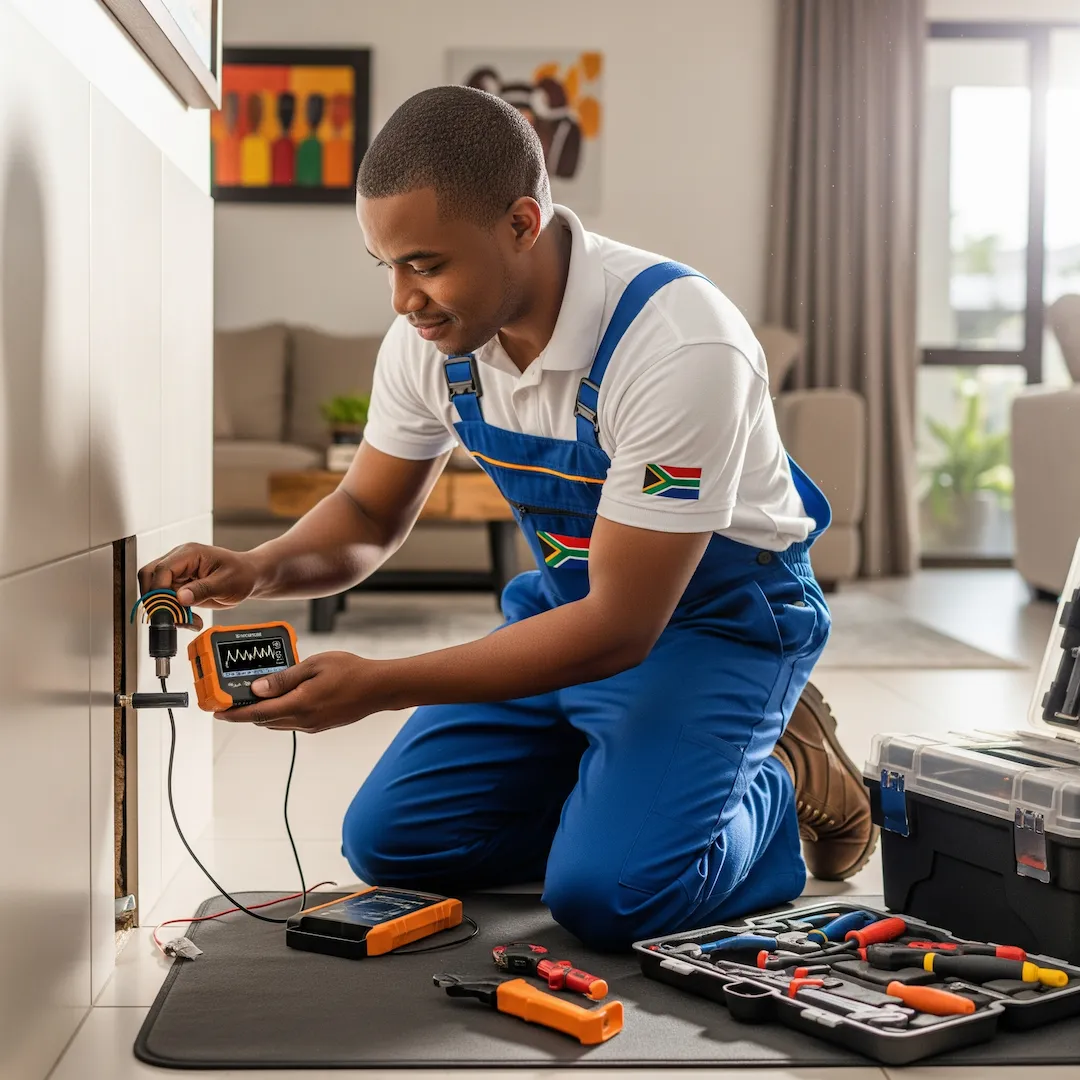
High Water Bill? The Value of Professional, Non-Invasive Hidden Leak Detection in South Africa
High water bill in South Africa? Discover how professional, non-invasive leak detection finds hidden leaks fast, prevents property damage, and saves money - without breaking walls or paving.

High Water Bill? The Value of Professional, Non-Invasive Hidden Leak Detection in South Africa
You open your monthly municipal bill, take one look at the water charges, and your heart sinks. It’s double, maybe even triple, what you normally pay, yet your habits haven’t changed. You haven’t been filling the pool every day or watering the garden for hours. This sudden, unexplained spike is often the first and only sign of a silent saboteur at work in your home: a hidden water leak.
Before you start picturing your walls being knocked down and your beautiful paving being ripped up, take a breath. Finding a hidden leak no longer means destructive guesswork. Modern leak detection specialists in South Africa use advanced, non-invasive technology to pinpoint the exact source of the problem without turning your property into a construction site. This article explores why investing in a professional service is not just a solution, but a smart financial decision that protects your property and your peace of mind.
What is Non-Invasive Leak Detection?
In the past, finding a leak in a concealed pipe—whether under a concrete slab, behind a tiled wall, or deep in the garden—was a messy, disruptive process. It often involved a "search and destroy" method of digging and breaking surfaces until the wet spot was found.
Today, professional plumbers and leak detection specialists employ sophisticated equipment that allows them to "see" and "hear" water escaping from pipes without any physical destruction. It's the difference between performing keyhole surgery and a full-blown operation.
One of our top-rated plumbers from Pretoria shared a recent experience: "We were called to a home in Centurion with a massive water bill. The homeowner was convinced the leak was under his newly renovated kitchen floor. Using our acoustic equipment, we located the leak within 30 minutes. It was actually in the front garden, five metres away from the house, under a flowerbed. We saved him from needlessly destroying his expensive new tiles and the associated repair costs."
These non-invasive methods are incredibly accurate and rely on a few key technologies.
Common Non-Invasive Leak Detection Technologies
- Acoustic Leak Detection: This is one of the most common and effective methods. Specialists use highly sensitive ground microphones and listening devices to "hear" the specific sound frequency of water escaping a pressurised pipe. The sound is loudest directly above the leak, allowing the technician to pinpoint the location with remarkable accuracy, often to within a square metre.
- Thermal Imaging: Infrared (or thermal) cameras detect minute temperature differences on surfaces. When a hot water pipe is leaking under a floor, for example, the water warms the surface directly above it. A thermal camera will display this as a distinct warm spot or plume. Conversely, a cold water leak will create a cool signature. This is invaluable for tracing leaks behind walls and under floors without removing a single tile.
- Gas Tracer Systems (Gas Sniffing): For particularly tricky leaks or non-pressurised pipes, a safe, non-toxic tracer gas (usually a mix of hydrogen and nitrogen) is introduced into the drained pipe system. Hydrogen is the lightest element and its small molecules can escape through the tiniest crack. A sensitive gas detector, or "sniffer," is then used to scan the surface area. The detector will sound an alarm when it picks up traces of the gas, identifying the precise leak location.
- Pipe and Cable Locators: Sometimes, the first challenge is knowing exactly where the pipes are buried. Using electromagnetic equipment, specialists can trace the path of metallic pipes underground or in walls, creating a clear map to focus their leak detection efforts.
The Professional Advantage vs. The DIY Gamble
Faced with a high bill, it’s tempting to try and find the leak yourself. You might turn off all your taps and watch the municipal meter. If it keeps spinning, you know you have a leak. But knowing you have one and knowing where it is are two completely different challenges.
DIY attempts often lead to more harm than good. A homeowner might notice a damp patch on a wall and assume the leak is right there. After chipping away plaster and tiles, they find the pipe is dry. The water was actually travelling along a beam from a leak two metres away. Now, they have a leak and a damaged wall to repair.
Disclaimer: Attempting to find and repair hidden leaks yourself can be dangerous and costly. Breaking into walls or floors without knowing the layout of your plumbing, electrical wiring, or structural supports can lead to personal injury, flooding, or severe property damage. This should only be attempted if you have proven expertise and the correct tools.
Here’s why a professional approach is superior:
- Accuracy: Professionals don’t guess. Their equipment provides data that leads them to the source, eliminating the need for destructive searching.
- Efficiency: A skilled technician can often locate a hidden leak in an hour or two. A DIY search can take days of fruitless effort and mounting frustration.
- Cost-Effectiveness: The fee for a professional leak detection service is almost always less than the cost of repairing the unnecessary damage caused by a DIY search, not to mention the ongoing cost of wasted water.
- Comprehensive Reporting: A professional will provide you with a detailed report of their findings, including photos or markings of the exact location. This report is invaluable for your insurance claim and for the plumber who will carry out the repair.
The True Cost of Ignoring a Hidden Leak
That shocking water bill is just the tip of the iceberg. An unresolved leak can cause a cascade of expensive and hazardous problems for your South African home.
- Structural Damage: Constant dampness can compromise the integrity of concrete foundations, rot wooden support beams, and cause brickwork to degrade. These are repairs that can run into tens or even hundreds of thousands of Rands.
- Mould and Mildew: Leaks create the perfect damp, dark environment for mould to thrive. Black mould is not just unsightly; it can release spores that cause respiratory problems, allergies, and other health issues for your family.
- Pest Infestations: Cockroaches, termites, and other pests are attracted to moisture. A hidden leak can create a welcoming habitat for an infestation inside your walls or under your floors.
- Damage to Finishes: Water will eventually ruin whatever it touches. This includes warping wooden floors, staining carpets, causing paint to peel, and damaging expensive cabinetry.
When you weigh these potential costs against the fee for a professional leak detection service, the value becomes crystal clear. It's a preventative investment that saves you money, time, and immense stress in the long run.
Finding the Right Leak Detection Expert
Hiring a specialist is the crucial next step. They aren't just a "plumber with a bakkie"; they are a technician with specialised training and expensive, calibrated equipment. When you call, you are hiring their expertise as much as their tools. They have the experience to interpret the subtle sounds and thermal signatures that lead to a successful find, ensuring the subsequent repair is targeted, quick, and effective. By making this choice, you're not just stopping a leak—you're protecting the value and safety of your home.
Frequently Asked Questions
How long does a professional leak detection service typically take?
For a standard residential property, a non-invasive leak detection inspection usually takes between one to three hours. The duration can vary depending on the size of the property, the complexity of the pipework, and the difficulty in isolating the leak. The technician will usually be able to give you a more accurate time estimate once they begin the assessment.
Will the leak detection process damage my garden or paving?
No, the goal of non-invasive leak detection is to avoid any damage. Methods like acoustic listening, thermal imaging, and gas tracing are all performed on the surface. The technician will only mark the precise spot where the digging for the repair needs to happen, ensuring minimal disruption to your garden, driveway, or paved areas.
Is the equipment used by professionals safe for my family and pets?
Absolutely. The technologies used are completely safe. Acoustic equipment simply listens for sound. Thermal imaging cameras detect heat and emit nothing. The tracer gas used in some systems is a harmless, non-flammable mixture of nitrogen and hydrogen, which dissipates quickly and poses no risk to people, pets, or plants.
What happens after the specialist finds the leak?
Once the leak is pinpointed, the specialist will clearly mark the location. They will then provide you with a detailed report, often including photographs, explaining their findings. This report can be given to your plumber of choice to perform the actual repair. Some leak detection companies also offer repair services, but they will typically quote for this separately.
Find a vetted plumber near you
Leak detection: find a pro near you
Suzette Meyer is the lead author and content creator for Kandua.com, South Africa’s #1 marketplace for home services. Suzette has made it her mission to help homeowners with advice on all aspects of home repair, maintenance and improvement, including how to choose the right Pro and how to make smart upgrades that improve your resale value or save costs.

Latest articles, advice and more
.webp)
.webp)
.jpeg)
Sinking Pavers, Weeds and Water That Pools: What Your Driveway Is Telling You
When your driveway starts sprouting weeds, pooling water, or sinking in patches, the bricks are not failing you. The layers underneath have moved, and they are trying to tell you exactly what went wrong.
.jpeg)
What Your Garage Door Motor Actually Does (And Why It Breaks)
Spoiler alert: your garage door motor isn't actually doing the heavy lifting. The torsion springs carry almost all the weight. The motor simply pushes, pulls, controls the descent so it doesn't slam, and acts as a lock when the door is shut. That’s why a relatively small box on your ceiling can move such a massive door. Want to test this? Pull the red manual release cord and lift the door by hand. If it glides up easily and stays put when you let go, your springs are doing their job, and the fault lies with the motor. If the door feels like dead weight or slams back down- stop. You’ve got a spring problem.
.jpeg)
4 Warning Signs Your Tiles Are Failing (And What They Mean)
Tiles rarely fail overnight. They warn you first. A hollow sound underfoot, grout that crumbles away, a tile that lifts at one edge, or a crack that runs across two tiles all point to something happening under the surface. Here is what each sign means, and how urgent it is.
.webp)
.webp)
Beyond the Unboxing: A Detailed Guide to Correct Washing Machine Plumbing & Setup
New washing machine in South Africa? Learn essential plumbing and setup tips to prevent leaks, ensure efficient operation, and extend your appliance’s lifespan - expert advice before your first load.
.webp)
New Washing Machine? Don't Plug It In Yet! Essential Installation Tips for SA Homes
Installing a new washing machine? Learn the essential setup steps South African homeowners often overlook to prevent leaks, noise, and damage—and ensure efficient, long-lasting performance from day one.
.webp)
.webp)
%25201200%2520x%25201200%2520(1).jpeg)
What Retiling a Bathroom Costs in 2026, Room by Room
Retiling a bathroom in South Africa costs between R230 and R800 per square metre in 2026, including materials and labour. A standard family bathroom, stripped and fully retiled, usually lands between R11,800 and R27,500. A guest toilet costs a fraction of that. A large porcelain en-suite costs a lot more.
How to Install a Horizontal Geyser | Step-by-Step Pro Guide
Want to install a geyser like a pro? This step-by-step tutorial shows you exactly how to do a horizontal Ariston Axios geyser installation, straight from the BluLever plumbing workshop. 🎥 Hosted by MK, BluLever’s technical facilitator, and supported by a qualified electrician, Life and a BluLever graduate artisan, Zinhle. This is your ultimate guide to a SANS 10254-compliant installation — from preparing the wall, to plumbing, electrical wiring, and pro troubleshooting tips.
How to Maintain a Geyser | Step-by-Step Pro Guide
Want to maintain a geyser like a pro? This step-by-step tutorial shows you exactly how to do the three core geyser maintenance checks on an Ariston Axios geyser installation, straight from the BluLever plumbing workshop. 🎥 Hosted by MK, BluLever’s technical facilitator, and supported by a qualified electrician, Life. This is your ultimate guide to geyser maintenance — from diagnosing the problem to checking the heat regulation of the geyser, to pressure regulation and then finally corrosion protection.
%201.avif)
Not just another newsletter. It's an advantage