
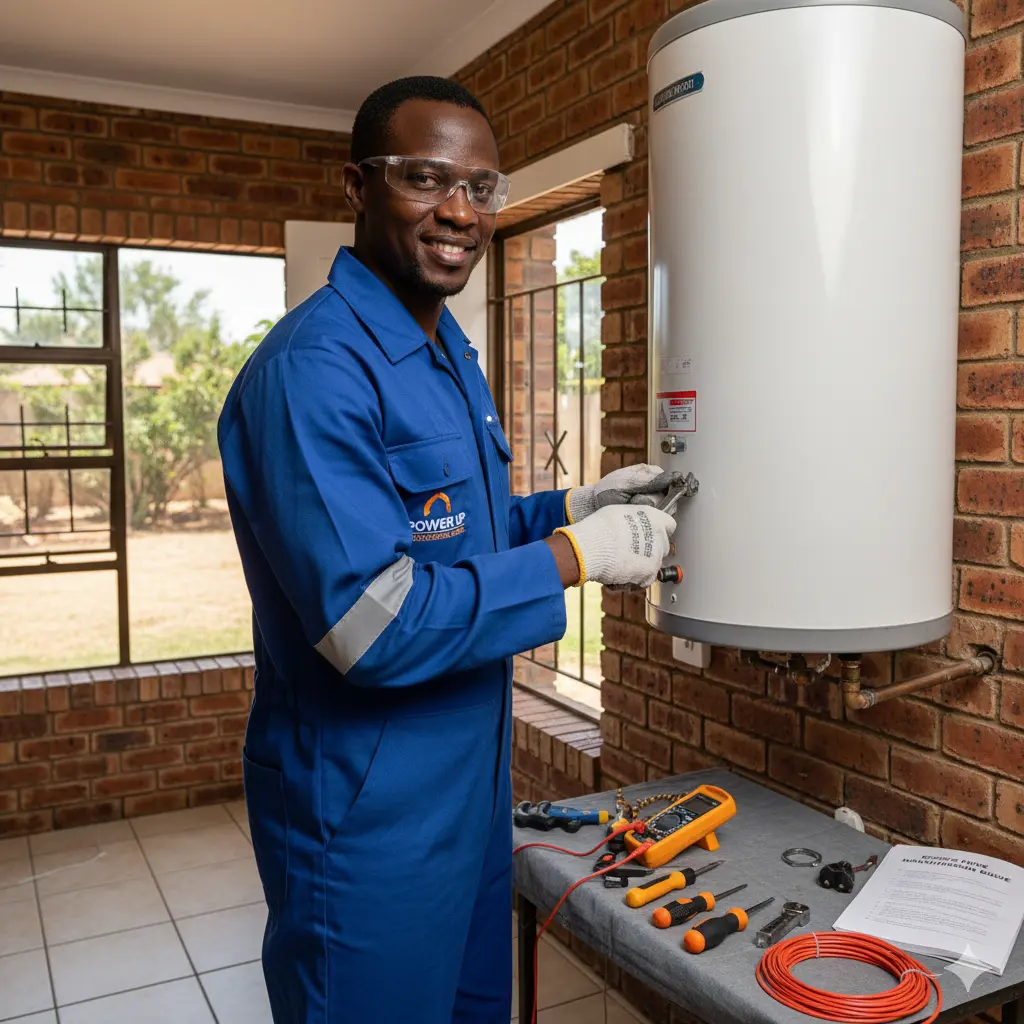
How to Maintain a Geyser After Installation
New geyser installed? Learn essential maintenance tips for South African homes to improve efficiency, extend lifespan, and prevent costly breakdowns before problems start.

How to Maintain a Geyser After Installation
A geyser is an essential appliance in most South African homes, providing hot water for daily activities like bathing, cooking, and cleaning. Once installed, it's easy to forget about your geyser until something goes wrong. However, regular maintenance is crucial to ensure it operates efficiently, lasts longer, and avoids costly repairs. In this guide, we'll walk you through practical tips on how to maintain your geyser after installation, helping you save money and avoid unnecessary headaches.
Why Geyser Maintenance is Non-Negotiable
Your geyser is probably out of sight and out of mind... until it stops working. Proactive maintenance is the best way to prevent that dreaded cold-shower surprise. Here's why it's so important.
Extend the Lifespan of Your Geyser
A standard geyser can last anywhere from 5 to 15 years, but its lifespan is heavily influenced by maintenance. Regular servicing helps combat the two biggest enemies of any geyser: corrosion and sediment build-up. By keeping these in check, you can significantly prolong the life of your unit.
Improve Energy Efficiency (and Save on Electricity Bills)
Your geyser is one of the biggest energy consumers in your home. Over time, sediment from your water supply can build up at the bottom of the tank and coat the heating element. This forces the element to work harder and longer to heat the water, causing your electricity bill to creep up. A clean, well-maintained geyser is an efficient geyser.
Prevent Catastrophic Failures (and Water Damage)
A burst geyser can cause devastating water damage to your ceilings, walls, floors, and furniture. Regular maintenance involves checking crucial safety components, such as the Temperature and Pressure (TP) valve and the anode rod, which are designed to prevent the tank from overpressurizing or corroding from the inside out.
Ensure Consistent Hot Water Supply
Is your water not as hot as it used to be? Or does it run out faster than before? These are often early signs that your geysers need servicing. Maintenance ensures the thermostat is calibrated correctly and the heating element is functioning optimally, providing you with the consistent hot water you expect.
Your Geyser Maintenance Checklist: DIY vs. Professional Tasks
Maintaining your geyser is a team effort between you and a qualified plumber. Here's a breakdown of what you can do yourself and when it's time to call in a Kandua Pro.
Simple DIY Checks You Can Do Regularly (Monthly)
These quick checks don't require any special tools and can help you spot a problem before it gets serious.
- Visual Inspection: Take a look at your geyser and the surrounding area. Look for any signs of dripping water, rust spots on the tank, or dampness on the ceiling or walls below.
- Listen for Strange Noises: A healthy geyser should be relatively quiet. If you start hearing popping, banging, or rumbling sounds, it's often a sign of sediment build-up being heated at the bottom of the tank.
- Check the Drip Tray and Overflow Pipe: Your geyser should be sitting in a drip tray with an overflow pipe leading outside. Check that the tray is dry and the pipe isn't constantly dripping. A slow, occasional drip from the overflow is standard as the water heats and expands, but a steady stream means there's a problem.
- Test the Temperature and Pressure (TP) Valve: This is a critical safety feature. CAUTION: The water that comes out will be very hot. Carefully lift the lever on the TP valve for a few seconds. A short burst of water should come out of the overflow pipe. If it doesn't, or if it continues to leak after you release the lever, the valve may need to be replaced by a professional.
Essential Maintenance Best Left to the Professionals (Every 2-3 Years)
These tasks are more complex and require the expertise and tools of a qualified plumber. We strongly recommend booking a Kandua Pro for a full geyser service every 2 to 3 years (or more frequently if you live in a hard water area).
- Draining the Geyser to Remove Sediment: A plumber will safely drain the entire tank to flush out all the accumulated sediment and mineral scale. This immediately improves efficiency and reduces strain on the heating element.
- Inspecting and Replacing the Anode Rod: The anode rod is a "sacrificial" metal rod inside your geyser tank. Its job is to attract corrosive elements in the water, essentially sacrificing itself to protect the tank lining. Once it's depleted, the tank itself will start to corrode. A plumber will inspect it and replace it if necessary.
- Checking the Thermostat and Heating Element: A professional will check that the thermostat is accurate and that the heating element is clean and functioning correctly. They can replace these components if they are faulty or worn out.
- Inspecting All Electrical Connections: Faulty wiring is a serious safety hazard. A plumber will ensure all electrical components are secure, insulated, and up to code.
Warning Signs: When to Call a Kandua Pro Immediately
Some issues can't wait for a scheduled service. If you notice any of the following, turn off the power to your geyser at the main distribution board (DB) and call a professional right away:
- Water is leaking from the geyser tank itself.
- A complete lack of hot water.
- The circuit breaker for the geyser keeps tripping.
- Loud banging or rumbling noises from the tank.
- Discoloured or rusty-looking hot water.
- A continuous, steady flow of water from the overflow pipe.
The Kandua Advantage: Why Trust Us With Your Geyser Maintenance?
Your geyser is a vital and potentially dangerous appliance. When it comes to servicing or repairs, you need someone you can trust.
- Vetted and Reviewed Pros: Every plumber on the Kandua platform is vetted, experienced, and reviewed by previous customers just like you.
- Quick and Easy: No need to spend hours calling around. Answer a few questions, and we'll connect you with up to 5 qualified plumbers in your area.
- Compare Quotes: You'll receive multiple, no-obligation quotes so you can compare prices and choose the Pro that's right for your budget.
- Peace of Mind: Knowing your geyser is in the hands of a qualified professional is the ultimate peace of mind.
Your home deserves the best. Don't wait for a cold shower or a costly disaster to think about your geyser.
Ready to book a professional service? Connect with a top-rated, Kandua-approved plumber today!
Frequently Asked Questions (FAQs)
How much does a professional geyser service typically cost?
The cost can vary depending on your location, the type of geyser, and the services included. A standard service might range from R600 to R1500. If parts like the anode rod, element, or thermostat need to be replaced, the cost will be higher. It's always best to get a few quotes.
My overflow pipe is dripping. Is this normal?
A slow, intermittent drip is standard, especially when the geyser is actively heating water (due to thermal expansion). However, if you see a constant, steady stream of water, it usually indicates that the TP valve or another component is faulty and needs immediate attention from a plumber.
Can I install a geyser blanket myself to save energy?
Yes, installing a geyser blanket is a great DIY project that can reduce heat loss by 25%-45%. Be sure to follow the manufacturer's instructions carefully and do not cover the thermostat, control panels, or the TP valve.
How long should a geyser last in South Africa?
With regular maintenance, a good quality geyser should last between 10 and 15 years. Without maintenance, its lifespan could be cut in half, especially in areas with hard water.
What exactly is an anode rod, and why is it so important?
The anode rod is a metal rod (usually magnesium or aluminium) that screws into the top of your geyser tank. It protects the tank from rust by attracting corrosive particles in the water through an electrochemical process. It's designed to be "sacrificed" over time, and replacing it is far cheaper than replacing the entire geyser.
Does my home insurance cover a burst geyser?
Most building insurance policies in South Africa do cover damage from a burst geyser. However, some insurers may reject a claim if they find the geyser was not properly maintained. Regular servicing provides a record of responsible ownership. Always check the specifics of your policy.
How can I save electricity with my geyser, especially with loadshedding?
Besides regular maintenance and installing a geyser blanket, you can install a timer only to heat the water when you need it. Setting the thermostat to 60°C is also ideal for balancing energy efficiency and preventing bacterial growth.
Find a vetted plumber near you
Geyser installation and repairs: find a pro near you
- Geyser installation and repairs near you
- Geyser installation and repairs in Johannesburg
- Geyser installation and repairs in Sandton
- Geyser installation and repairs in Midrand
- Geyser installation and repairs in Roodepoort
- Geyser installation and repairs in Randburg
- Geyser installation and repairs in Pretoria
- Geyser installation and repairs in Cape Town
Suzette Meyer is the lead author and content creator for Kandua.com, South Africa’s #1 marketplace for home services. Suzette has made it her mission to help homeowners with advice on all aspects of home repair, maintenance and improvement, including how to choose the right Pro and how to make smart upgrades that improve your resale value or save costs.

Latest articles, advice and more
.webp)
.webp)
.jpeg)
Sinking Pavers, Weeds and Water That Pools: What Your Driveway Is Telling You
When your driveway starts sprouting weeds, pooling water, or sinking in patches, the bricks are not failing you. The layers underneath have moved, and they are trying to tell you exactly what went wrong.
.jpeg)
What Your Garage Door Motor Actually Does (And Why It Breaks)
Spoiler alert: your garage door motor isn't actually doing the heavy lifting. The torsion springs carry almost all the weight. The motor simply pushes, pulls, controls the descent so it doesn't slam, and acts as a lock when the door is shut. That’s why a relatively small box on your ceiling can move such a massive door. Want to test this? Pull the red manual release cord and lift the door by hand. If it glides up easily and stays put when you let go, your springs are doing their job, and the fault lies with the motor. If the door feels like dead weight or slams back down- stop. You’ve got a spring problem.
.jpeg)
4 Warning Signs Your Tiles Are Failing (And What They Mean)
Tiles rarely fail overnight. They warn you first. A hollow sound underfoot, grout that crumbles away, a tile that lifts at one edge, or a crack that runs across two tiles all point to something happening under the surface. Here is what each sign means, and how urgent it is.
.webp)
.webp)
Beyond the Unboxing: A Detailed Guide to Correct Washing Machine Plumbing & Setup
New washing machine in South Africa? Learn essential plumbing and setup tips to prevent leaks, ensure efficient operation, and extend your appliance’s lifespan - expert advice before your first load.
.webp)
New Washing Machine? Don't Plug It In Yet! Essential Installation Tips for SA Homes
Installing a new washing machine? Learn the essential setup steps South African homeowners often overlook to prevent leaks, noise, and damage—and ensure efficient, long-lasting performance from day one.
.webp)
.webp)
%25201200%2520x%25201200%2520(1).jpeg)
What Retiling a Bathroom Costs in 2026, Room by Room
Retiling a bathroom in South Africa costs between R230 and R800 per square metre in 2026, including materials and labour. A standard family bathroom, stripped and fully retiled, usually lands between R11,800 and R27,500. A guest toilet costs a fraction of that. A large porcelain en-suite costs a lot more.
How to Install a Horizontal Geyser | Step-by-Step Pro Guide
Want to install a geyser like a pro? This step-by-step tutorial shows you exactly how to do a horizontal Ariston Axios geyser installation, straight from the BluLever plumbing workshop. 🎥 Hosted by MK, BluLever’s technical facilitator, and supported by a qualified electrician, Life and a BluLever graduate artisan, Zinhle. This is your ultimate guide to a SANS 10254-compliant installation — from preparing the wall, to plumbing, electrical wiring, and pro troubleshooting tips.
How to Maintain a Geyser | Step-by-Step Pro Guide
Want to maintain a geyser like a pro? This step-by-step tutorial shows you exactly how to do the three core geyser maintenance checks on an Ariston Axios geyser installation, straight from the BluLever plumbing workshop. 🎥 Hosted by MK, BluLever’s technical facilitator, and supported by a qualified electrician, Life. This is your ultimate guide to geyser maintenance — from diagnosing the problem to checking the heat regulation of the geyser, to pressure regulation and then finally corrosion protection.
%201.avif)
Not just another newsletter. It's an advantage