
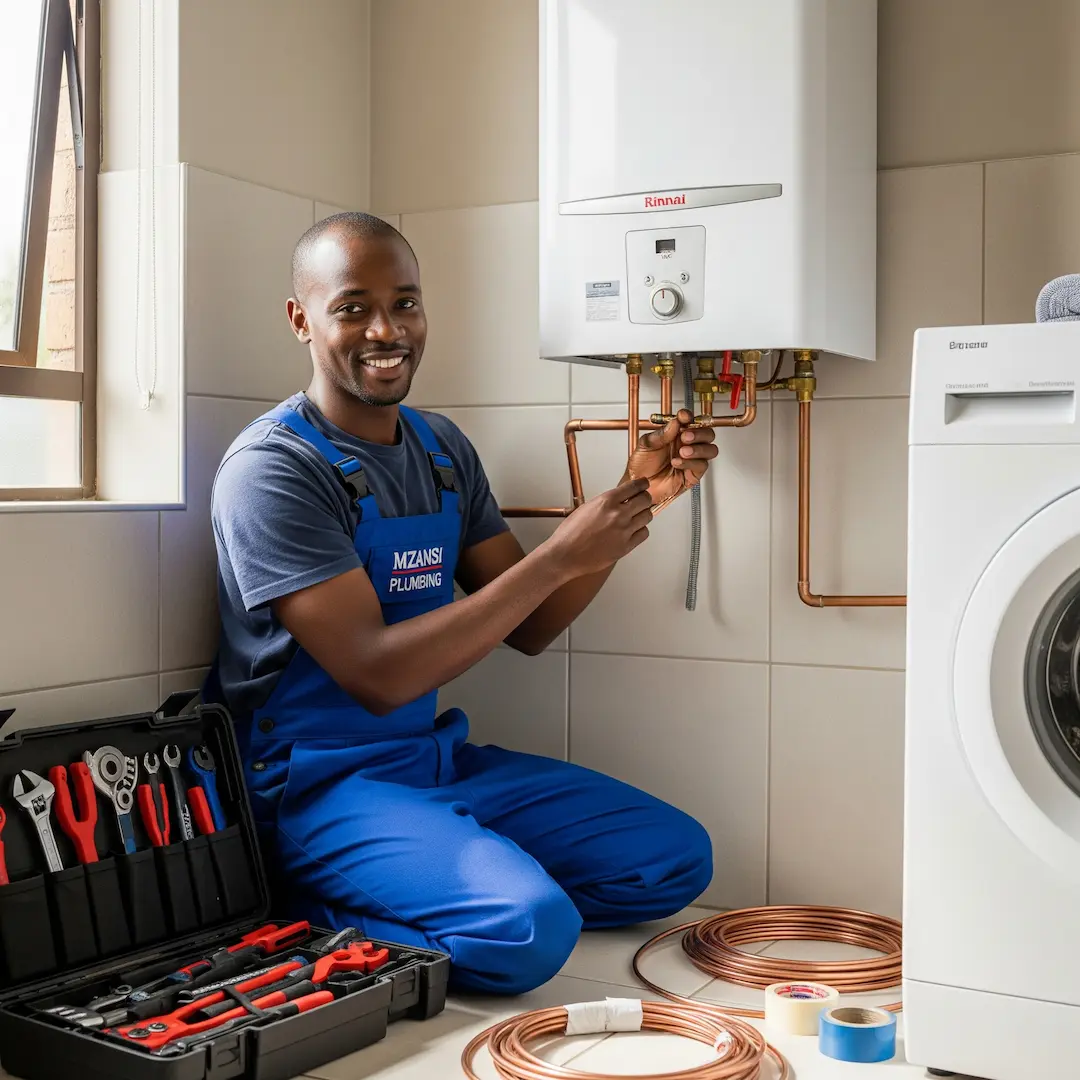
Is Natural Gas Geyser an Option for Your Home? Understanding the Benefits and Requirements
Considering natural gas for your South African home? Learn the benefits of natural gas geysers, how they compare to LPG, and what availability and requirements you need to know.

Is Natural Gas an Option for Your Home? Understanding the Benefits and Requirements
South African homeowners are constantly seeking reliable and cost-effective energy solutions, especially with the ongoing challenges of electricity supply. While many are familiar with LPG (liquefied petroleum gas) geysers, natural gas offers another compelling option for heating your home's water. But what exactly is a natural gas geyser, and more importantly, is it even available in your area? Let's delve into the specifics.
What is a Natural Gas Geyser?
A natural gas geyser is a water heating system that uses natural gas as its fuel source to provide hot water on demand. Unlike traditional electric geysers that store and continuously heat a tank of water, natural gas geysers operate by heating water as it flows through the unit. This on-demand heating mechanism contributes significantly to energy efficiency and ensures you never run out of hot water, even during long showers or high usage periods.
From an expert plumber's perspective, the mechanism is quite clever: when a hot water tap is opened, a flow sensor within the geyser detects the water movement. This triggers the igniter, lighting the gas burner. As the water passes through a heat exchanger coil, it rapidly absorbs heat from the burning gas. The water then exits the geyser at your desired temperature. This system means there's no standing water to keep hot, making it remarkably efficient.
Do I Have Natural Gas in My Area? Understanding South Africa's Landscape
This is often the first and most critical question for homeowners considering natural gas. Unlike electricity, which has a national grid, natural gas distribution in South Africa is more localised and relies on a pipeline network.
Currently, the primary supply of piped natural gas in South Africa originates from the Pande and Temane gas fields in Mozambique. This gas is transported via the ROMPCO pipeline, and then distributed by entities like Sasol and Egoli Gas to various consumers, predominantly industrial, but also to some residential areas.
Based on insights from industry professionals, natural gas availability for residential use is mainly concentrated in specific regions:
- Gauteng: Particularly in areas within Johannesburg (serviced by Egoli Gas) and some industrial hubs where Sasol's pipeline network extends. Residential estates that have proactively installed natural gas infrastructure are also popping up.
- Mpumalanga: Due to its proximity to Sasol's operations, certain industrial and surrounding residential areas may have access.
- KwaZulu-Natal: Some parts of KZN, especially those with established industrial gas demand, might have natural gas connections.
A crucial point to understand is the current state of supply. Our expert service providers have shared that South Africa's reliance on the Mozambican gas fields is facing challenges, with reserves projected to decline from 2026 and a potential cessation of supply by mid-2027 for non-Sasol industrial users. However, there are ongoing efforts and projects to secure future gas supply, including potential domestic gas discoveries (both onshore and offshore) and the development of Liquefied Natural Gas (LNG) import terminals, such as the Matola import terminal project in Mozambique which aims to supply gas to the South African market via the ROMPCO pipeline. This means the landscape is evolving, but direct residential access might still be limited to specific, pre-existing networks.
To determine if natural gas is an option for your home, your best course of action is to:
- Contact local gas distributors: If you're in Gauteng, Egoli Gas is the primary residential distributor to check with. In other areas, research if there are local natural gas pipeline operators.
- Inquire with your municipality or local residents' associations: They might have information on planned or existing natural gas infrastructure in your neighbourhood.
- Consult a qualified gas installer: An experienced gas practitioner will have up-to-date knowledge of natural gas availability in different areas and can advise on feasibility.
Benefits of a Natural Gas Geyser
If natural gas is available in your area, installing a natural gas geyser can offer several significant advantages for South African homeowners:
- Continuous Hot Water Supply: This is arguably one of the biggest draws. Unlike electric geysers that can run out of hot water if demand exceeds the tank's capacity, a natural gas geyser heats water on demand, providing an endless supply. No more cold showers after the kids have used all the hot water!
- Energy Efficiency and Cost Savings: Natural gas geysers are highly efficient because they only consume energy when hot water is needed. There's no energy wasted on keeping a large tank of water constantly hot. With rising electricity tariffs and frequent load shedding, many homeowners find that natural gas offers lower operational costs compared to electric geysers in the long run.
- Reliability During Power Outages: This is a major benefit in South Africa. Natural gas geysers operate independently of the electrical grid (though some advanced models might require a small electrical supply for their electronic controls, which can be powered by a UPS or inverter during outages). This means you'll have hot water even when load shedding hits.
- Environmentally Friendly: Natural gas burns cleaner than many other fossil fuels, producing fewer carbon emissions compared to electricity generated from coal-fired power stations. For environmentally conscious households, this makes it a more sustainable choice.
- Compact and Space-Saving: Most natural gas geysers are tankless, meaning they are much smaller than traditional electric geysers and can be wall-mounted, freeing up valuable space in your home.
Infrastructure Requirements for a Natural Gas Geyser Installation
For a natural gas geyser to be installed in your home, specific infrastructure is required. This isn't a simple plug-and-play solution, and it's vital to work with a qualified and registered gas practitioner to ensure safety and compliance with South African National Standards (SANS).
- Natural Gas Supply Line: The fundamental requirement is access to a natural gas pipeline network. If your property isn't already connected, this could involve a significant installation process from the street to your home. In some residential estates, the natural gas infrastructure may already be in place.
- Gas Meter: A gas meter will be installed on your property to measure your natural gas consumption, similar to an electricity meter.
- Dedicated Gas Piping: From the gas meter, a network of dedicated gas pipes will need to be installed within your home to carry the natural gas to the geyser. These pipes must be made of approved materials (e.g., Class 1 or 2 copper pipes) and installed according to strict safety regulations (SANS 10087-1). Our plumbing experts emphasise that these are not the same copper pipes used for water, and proper sleeving is required where pipes pass through walls or concrete.
- Ventilation: Natural gas appliances require adequate ventilation to safely disperse combustion by-products. This is paramount for safety and will be carefully assessed by your installer.
- Certificate of Conformity (CoC): By law, any natural gas installation must be inspected, tested, and approved by a registered gas practitioner who will then issue a Certificate of Conformity (CoC). This certificate confirms that the installation complies with all relevant South African legislation, including the Occupational Health and Safety Act and the Pressure Equipment Regulations, and adheres to SANS standards. This CoC is critical not only for safety but also for your home insurance to remain valid in case of a gas-related incident.
Important Considerations for Homeowners
- Professional Installation is Non-Negotiable: Due to the inherent risks associated with gas, it is absolutely crucial to use a registered and qualified gas practitioner for any natural gas plumbing installation. An unregistered individual doing gas work is illegal and can lead to severe safety hazards, injury, or even death. Always verify your installer's credentials with the South African Qualifications and Certification Committee for Gas (SAQCC Gas).
- Regular Maintenance: Like any appliance, natural gas geysers require regular maintenance to ensure optimal performance and safety. An annual service by a registered gas installer is highly recommended.
- Initial Investment: While natural gas geysers often offer lower running costs, the initial installation cost can be higher than that of an electric geyser, especially if new gas lines need to be laid to your property. Consider this as a long-term investment in energy efficiency and uninterrupted hot water.
Conclusion
For South African homeowners living in areas with access to natural gas infrastructure, a natural gas geyser presents a highly attractive alternative to traditional electric models. The benefits of continuous hot water, lower running costs, and independence from the electricity grid are significant. However, understanding the availability of natural gas in your specific region and the stringent installation requirements is key to making an informed decision. Always prioritise safety by engaging only with registered and certified gas practitioners.
Frequently Asked Questions
How long do natural gas geysers typically last?
With proper installation and regular maintenance, a natural gas geyser can have a lifespan of 15 years or even longer. This longevity makes them a durable investment for your home.
Can I convert my existing electric geyser to natural gas?
No, an electric geyser cannot be converted to run on natural gas. They are fundamentally different systems. You would need to replace your electric geyser with a new, purpose-built natural gas geyser unit.
Are natural gas geysers noisy?
Modern natural gas geysers are generally quiet during operation. You might hear a slight whooshing sound when the burner ignites, but it's typically not disruptive. Advanced models are designed for minimal noise output.
What safety features do natural gas geysers have?
Natural gas geysers are equipped with multiple safety features. These typically include flame sensors to detect if the flame goes out, pressure relief valves, temperature limit switches to prevent overheating, and automatic shut-off valves in case of gas leaks or unusual operation. Additionally, strict South African National Standards (SANS) govern their design and installation to ensure safety.
Find a vetted plumber near you
Natural gas plumbing installation: find a pro near you
Suzette Meyer is the lead author and content creator for Kandua.com, South Africa’s #1 marketplace for home services. Suzette has made it her mission to help homeowners with advice on all aspects of home repair, maintenance and improvement, including how to choose the right Pro and how to make smart upgrades that improve your resale value or save costs.

Latest articles, advice and more
.webp)
.webp)
.jpeg)
Sinking Pavers, Weeds and Water That Pools: What Your Driveway Is Telling You
When your driveway starts sprouting weeds, pooling water, or sinking in patches, the bricks are not failing you. The layers underneath have moved, and they are trying to tell you exactly what went wrong.
.jpeg)
What Your Garage Door Motor Actually Does (And Why It Breaks)
Spoiler alert: your garage door motor isn't actually doing the heavy lifting. The torsion springs carry almost all the weight. The motor simply pushes, pulls, controls the descent so it doesn't slam, and acts as a lock when the door is shut. That’s why a relatively small box on your ceiling can move such a massive door. Want to test this? Pull the red manual release cord and lift the door by hand. If it glides up easily and stays put when you let go, your springs are doing their job, and the fault lies with the motor. If the door feels like dead weight or slams back down- stop. You’ve got a spring problem.
.jpeg)
4 Warning Signs Your Tiles Are Failing (And What They Mean)
Tiles rarely fail overnight. They warn you first. A hollow sound underfoot, grout that crumbles away, a tile that lifts at one edge, or a crack that runs across two tiles all point to something happening under the surface. Here is what each sign means, and how urgent it is.
.webp)
.webp)
Beyond the Unboxing: A Detailed Guide to Correct Washing Machine Plumbing & Setup
New washing machine in South Africa? Learn essential plumbing and setup tips to prevent leaks, ensure efficient operation, and extend your appliance’s lifespan - expert advice before your first load.
.webp)
New Washing Machine? Don't Plug It In Yet! Essential Installation Tips for SA Homes
Installing a new washing machine? Learn the essential setup steps South African homeowners often overlook to prevent leaks, noise, and damage—and ensure efficient, long-lasting performance from day one.
.webp)
.webp)
%25201200%2520x%25201200%2520(1).jpeg)
What Retiling a Bathroom Costs in 2026, Room by Room
Retiling a bathroom in South Africa costs between R230 and R800 per square metre in 2026, including materials and labour. A standard family bathroom, stripped and fully retiled, usually lands between R11,800 and R27,500. A guest toilet costs a fraction of that. A large porcelain en-suite costs a lot more.
How to Install a Horizontal Geyser | Step-by-Step Pro Guide
Want to install a geyser like a pro? This step-by-step tutorial shows you exactly how to do a horizontal Ariston Axios geyser installation, straight from the BluLever plumbing workshop. 🎥 Hosted by MK, BluLever’s technical facilitator, and supported by a qualified electrician, Life and a BluLever graduate artisan, Zinhle. This is your ultimate guide to a SANS 10254-compliant installation — from preparing the wall, to plumbing, electrical wiring, and pro troubleshooting tips.
How to Maintain a Geyser | Step-by-Step Pro Guide
Want to maintain a geyser like a pro? This step-by-step tutorial shows you exactly how to do the three core geyser maintenance checks on an Ariston Axios geyser installation, straight from the BluLever plumbing workshop. 🎥 Hosted by MK, BluLever’s technical facilitator, and supported by a qualified electrician, Life. This is your ultimate guide to geyser maintenance — from diagnosing the problem to checking the heat regulation of the geyser, to pressure regulation and then finally corrosion protection.
%201.avif)
Not just another newsletter. It's an advantage