
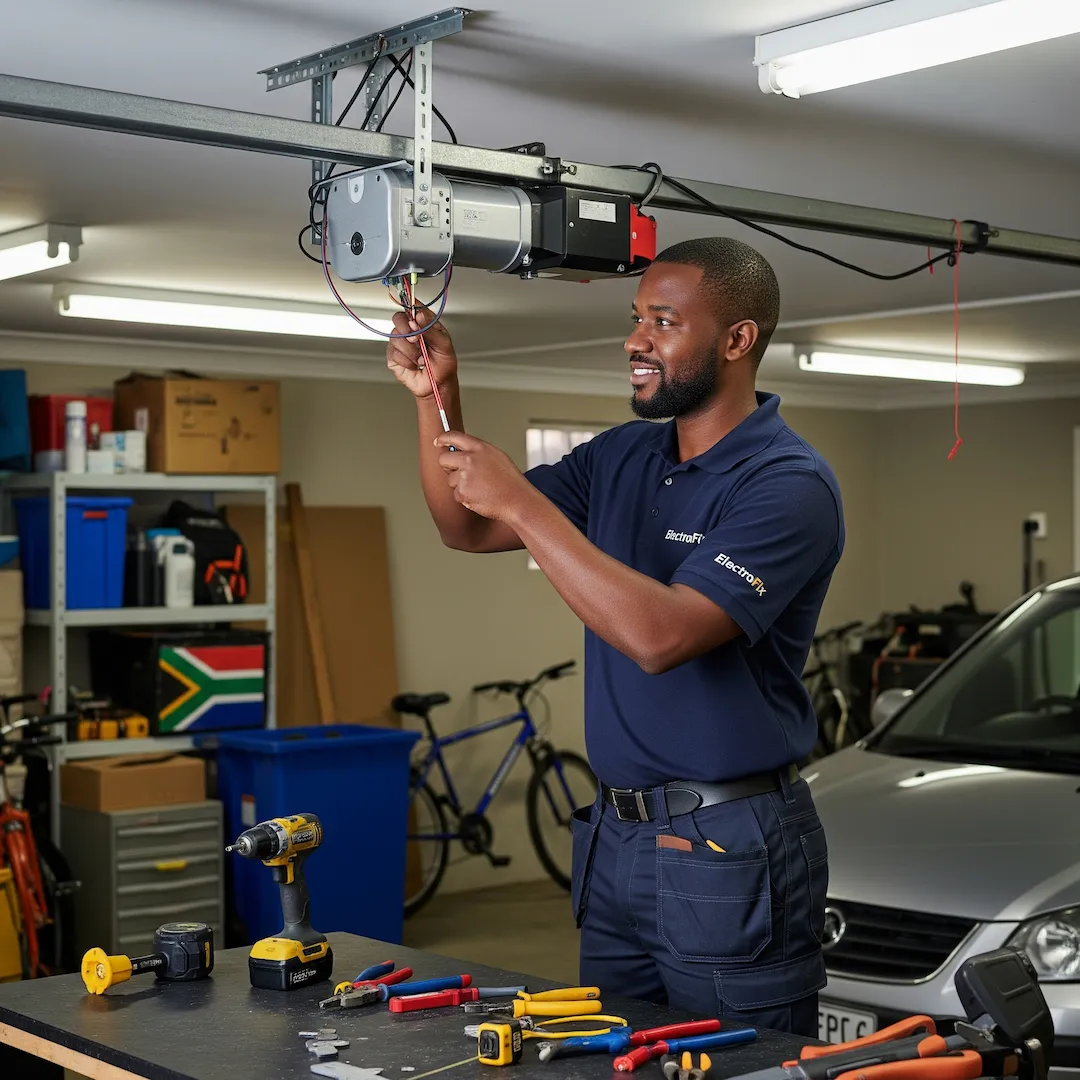
Automating Your Garage in SA: Why Professional Motor Installation Ensures Safety and Reliability
Installing a garage door motor in South Africa? Learn why professional installation is essential for safety, reliability, load-shedding performance, and long-term peace of mind.

Automating Your Garage in SA: Why Professional Motor Installation Ensures Safety and Reliability
The convenience of an automated garage door is undeniable. On a rainy Johannesburg evening or when you’re arriving home late at night, the simple push of a button offers security and comfort. But that seamless convenience hinges entirely on one thing: the quality of the installation. A poorly installed garage door motor isn't just an inconvenience waiting to happen; it's a significant safety risk to your family and a threat to your property.
While it might seem like a straightforward job, the difference between a DIY attempt and a professional installation is vast. It’s the difference between a system that fails unexpectedly during load-shedding and one that works reliably for years. It’s the difference between a potential hazard and a secure, integrated part of your home. Let's explore why entrusting this task to a professional is a non-negotiable for any South African homeowner.
More Than Just a Motor: The Importance of Secure Mounting
A garage door motor exerts a surprising amount of force every time it opens or closes your door. The constant vibration and torque require an anchor point that is absolutely solid. This is where professional expertise first becomes apparent.
One of our top-rated installers recently shared a story from a call-out in a Durban suburb. The homeowner’s motor had stopped working, and the garage door was stuck halfway. Upon inspection, the installer found the motor hanging precariously by a single bolt. The original installer had used standard wood screws to attach the mounting bracket directly to the ceiling's plasterboard, completely missing the structural roof trusses. Over a few months, the vibrations had worked the screws loose until the entire unit failed.
A professional understands the dynamics at play. They will:
- Assess the Structure: They identify the strongest mounting points, whether they are solid timber trusses, steel beams, or a concrete ceiling.
- Use Correct Hardware: Different surfaces require specific fasteners. An expert will use heavy-duty lag bolts for wood, expansion bolts (like rawl bolts) for concrete or brick, and appropriate machine screws for steel frames.
- Ensure Perfect Alignment: The motor, the drive rail (or tube), and the door itself must be perfectly aligned. Misalignment puts immense strain on the motor's gearbox and the door's moving parts, leading to premature wear and noisy operation. A professional ensures the entire system operates smoothly, minimising stress and maximising its lifespan.
The Power Behind the Pull: Why Correct Electrical Wiring is Non-Negotiable
This is where safety becomes paramount. A garage door motor is a powerful electrical appliance, and its connection to your home's power supply must be handled with precision and in compliance with South African law. Simply running an extension cord across the ceiling is not only unsafe but also a fire hazard.
All permanent electrical work in South Africa, including wiring a garage motor, must adhere to SANS 10142-1 regulations. A qualified electrician or installer ensures this compliance.
Key electrical considerations include:
- A Dedicated Power Source: Ideally, the motor should be wired to its own point, protected by a circuit breaker. One of our experts in Pretoria often tells of clients whose motors constantly trip the power. The cause is almost always that the motor was wired into an existing lighting circuit, which becomes overloaded when the powerful motor starts up.
- Proper Grounding (Earthing): This is a critical safety feature that protects against electric shock in the event of a fault. A professional ensures the unit is correctly earthed as per manufacturer specifications and electrical code.
- Safe and Secure Cabling: All wiring will be neatly secured and protected from moving parts. No loose cables should hang where they can be snagged by the door, your car, or a ladder.
- Load-Shedding Preparedness: A professional will correctly install and test the battery backup system, ensuring it's properly charged and ready to take over when the power goes out. They will also show you how to engage the manual override, a crucial piece of knowledge for any homeowner.
Safety First: The Non-Negotiable Features of a Modern Installation
Modern garage door motors are equipped with brilliant safety features designed to prevent accidents. However, these features are only effective if they are installed and calibrated correctly.
Obstruction Sensing (Auto-Reverse)
This is arguably the most important safety mechanism. The motor is designed to detect resistance—if the door encounters an object while closing, it should immediately stop and reverse.
An expert installer doesn't just switch this feature on; they test and calibrate it. They will place a solid object (like a piece of wood) on the ground and test that the door reverses upon contact. They adjust the sensitivity to be just right—sensitive enough to detect a small child or a pet, but not so sensitive that a gust of wind triggers it.
Safety Beams (Infrared Sensors)
These are installed as a secondary layer of protection. A beam of infrared light is sent from one side of the garage door opening to the other. If anything breaks this beam while the door is closing, the motor will instantly reverse. This is vital for preventing the door from even making contact with a person, pet, or vehicle that quickly moves into its path. A professional will ensure these beams are installed at the correct height (usually no more than 15cm off the ground) and are perfectly aligned to function correctly.
A skilled installer ensures these systems are not just present, but are working in perfect harmony to create a safe environment.
Frequently Asked Questions (FAQs)
How long does a typical garage motor installation take?
For a standard sectional or tip-up garage door with existing, accessible power, a professional installation typically takes between 2 to 4 hours. This includes mounting the motor, installing the rail and drive mechanism, wiring, and calibrating all the safety features and travel limits. Complex installations or those requiring new electrical wiring may take longer.
Do I need to service my garage door motor after it's installed?
Yes, regular servicing is highly recommended to ensure longevity and reliable operation. Most manufacturers suggest a service every 12 months. This usually involves checking the chain or belt tension, lubricating moving parts like wheels and hinges, testing the battery backup, and re-calibrating the safety features to ensure they are working correctly.
What's the difference between a chain-drive and a belt-drive motor?
The main difference is the mechanism used to pull the trolley that opens the door.
- Chain-drive motors use a metal chain. They are very durable and generally more affordable but tend to be noisier. They are a reliable workhorse for most standard garage doors.
- Belt-drive motors use a steel-reinforced rubber belt. They are significantly quieter, making them an excellent choice if you have a bedroom or living space above the garage. They offer a smoother operation but typically come at a slightly higher price point.
Can an automated motor be installed on my old wooden garage door?
In most cases, yes. However, the condition of the door is critical. An installer will first inspect the door to ensure it is structurally sound, well-balanced, and moves smoothly on its tracks. If the door is warped, very heavy, or has worn-out springs or hinges, these issues must be repaired first. An automated motor is designed to do the work of a person, not to overcome a faulty door mechanism. Forcing a motor to operate a poorly-balanced door will cause it to fail very quickly.
Find a vetted gate and garage technician near you
Garage door motor installation: find a pro near you
- Garage door motor installation near you
- Garage door motor installation in Johannesburg
- Garage door motor installation in Sandton
- Garage door motor installation in Midrand
- Garage door motor installation in Roodepoort
- Garage door motor installation in Randburg
- Garage door motor installation in Pretoria
- Garage door motor installation in Cape Town
Suzette Meyer is the lead author and content creator for Kandua.com, South Africa’s #1 marketplace for home services. Suzette has made it her mission to help homeowners with advice on all aspects of home repair, maintenance and improvement, including how to choose the right Pro and how to make smart upgrades that improve your resale value or save costs.

Latest articles, advice and more
.webp)
.webp)
.jpeg)
Sinking Pavers, Weeds and Water That Pools: What Your Driveway Is Telling You
When your driveway starts sprouting weeds, pooling water, or sinking in patches, the bricks are not failing you. The layers underneath have moved, and they are trying to tell you exactly what went wrong.
.jpeg)
What Your Garage Door Motor Actually Does (And Why It Breaks)
Spoiler alert: your garage door motor isn't actually doing the heavy lifting. The torsion springs carry almost all the weight. The motor simply pushes, pulls, controls the descent so it doesn't slam, and acts as a lock when the door is shut. That’s why a relatively small box on your ceiling can move such a massive door. Want to test this? Pull the red manual release cord and lift the door by hand. If it glides up easily and stays put when you let go, your springs are doing their job, and the fault lies with the motor. If the door feels like dead weight or slams back down- stop. You’ve got a spring problem.
.jpeg)
4 Warning Signs Your Tiles Are Failing (And What They Mean)
Tiles rarely fail overnight. They warn you first. A hollow sound underfoot, grout that crumbles away, a tile that lifts at one edge, or a crack that runs across two tiles all point to something happening under the surface. Here is what each sign means, and how urgent it is.
.webp)
.webp)
Beyond the Unboxing: A Detailed Guide to Correct Washing Machine Plumbing & Setup
New washing machine in South Africa? Learn essential plumbing and setup tips to prevent leaks, ensure efficient operation, and extend your appliance’s lifespan - expert advice before your first load.
.webp)
New Washing Machine? Don't Plug It In Yet! Essential Installation Tips for SA Homes
Installing a new washing machine? Learn the essential setup steps South African homeowners often overlook to prevent leaks, noise, and damage—and ensure efficient, long-lasting performance from day one.
.webp)
.webp)
%25201200%2520x%25201200%2520(1).jpeg)
What Retiling a Bathroom Costs in 2026, Room by Room
Retiling a bathroom in South Africa costs between R230 and R800 per square metre in 2026, including materials and labour. A standard family bathroom, stripped and fully retiled, usually lands between R11,800 and R27,500. A guest toilet costs a fraction of that. A large porcelain en-suite costs a lot more.
How to Install a Horizontal Geyser | Step-by-Step Pro Guide
Want to install a geyser like a pro? This step-by-step tutorial shows you exactly how to do a horizontal Ariston Axios geyser installation, straight from the BluLever plumbing workshop. 🎥 Hosted by MK, BluLever’s technical facilitator, and supported by a qualified electrician, Life and a BluLever graduate artisan, Zinhle. This is your ultimate guide to a SANS 10254-compliant installation — from preparing the wall, to plumbing, electrical wiring, and pro troubleshooting tips.
How to Maintain a Geyser | Step-by-Step Pro Guide
Want to maintain a geyser like a pro? This step-by-step tutorial shows you exactly how to do the three core geyser maintenance checks on an Ariston Axios geyser installation, straight from the BluLever plumbing workshop. 🎥 Hosted by MK, BluLever’s technical facilitator, and supported by a qualified electrician, Life. This is your ultimate guide to geyser maintenance — from diagnosing the problem to checking the heat regulation of the geyser, to pressure regulation and then finally corrosion protection.
%201.avif)
Not just another newsletter. It's an advantage