
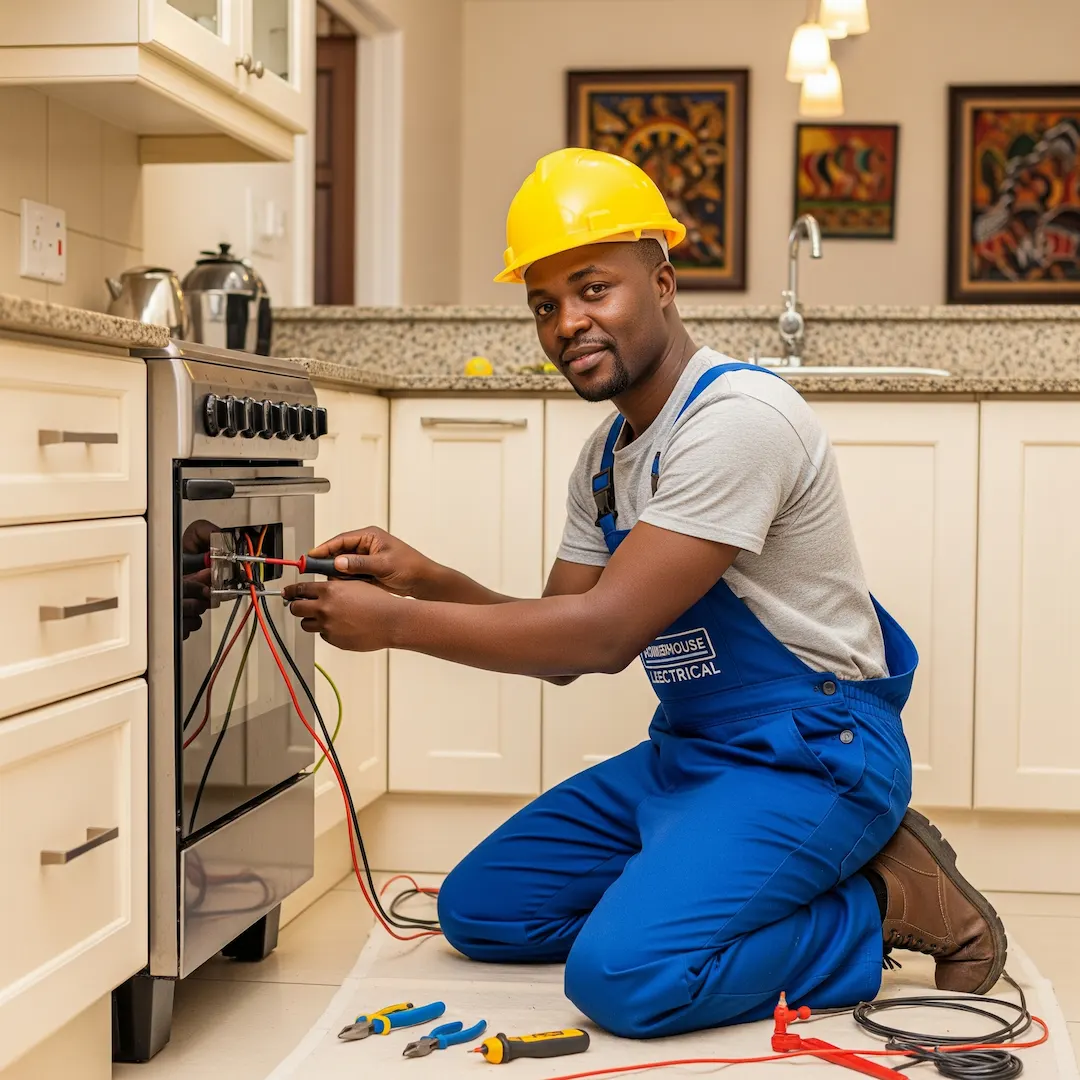
Electric Stove Installation in SA: Why Professional Wiring Guarantees Safety and Performance
Installing a new electric stove in South Africa? Learn why professional wiring is essential for safety, performance, and preventing electrical hazards—protecting your home and ensuring reliable cooking.

Electric Stove Installation in SA: Why Professional Wiring Guarantees Safety and Performance
You’ve just bought a brand-new electric stove or oven. The excitement is real! You’re already picturing the delicious roasts, perfectly baked cakes, and hearty family meals you’re about to create. Before you start planning your first menu, there's a crucial step that needs your full attention: the installation.
It might seem as simple as putting it in place and plugging it in, but installing a modern electric stove is a task where cutting corners can have serious consequences. Unlike a kettle or a microwave, these powerful appliances have specific electrical needs that, if ignored, can lead to poor performance, electrical faults, and even dangerous situations like fires.
This guide, based on insights from certified electricians across South Africa, explains exactly why a professional installation isn't just a recommendation—it's an absolute necessity for the safety of your home and family.
Why Your Stove Isn't a Simple "Plug-and-Play" Appliance
The core of the issue lies in the sheer amount of electrical power a stove needs to operate. Your standard wall socket is designed to handle appliances that draw up to 16 amps of current. Your new stove, however, is a completely different beast.
A typical electric stove with an oven and four plates can draw anywhere from 30 to 60 amps when multiple elements are running. Trying to power this through a regular plug point is like trying to force the water from a fire hose through a garden hose pipe—the system simply can't handle the pressure. This overload is what leads to major problems.
To function safely, an electric stove requires its own dedicated circuit, connected directly to your main distribution board (DB board). This circuit must have wiring of the correct thickness (gauge) and be protected by a circuit breaker with the appropriate amperage rating to handle the high load.
The Critical Risks of an Incorrect Stove Installation
Attempting a DIY installation or hiring an unqualified handyman might seem like a way to save a few rand, but the potential costs are infinitely higher. Our network of professional electricians regularly encounters issues stemming from improper installations.
One expert recently told us about a call-out in a Johannesburg suburb. A family had their new stove connected by a general handyman. A few weeks later, they noticed a strange burning smell near the kitchen and that the wall behind the stove was warm to the touch. The electrician discovered that the handyman had used standard, thin-gauge wire to connect the high-powered stove. The wire was overheating dangerously inside the wall cavity, slowly melting its protective insulation and posing an imminent fire risk. It was a disaster waiting to happen, all because the correct, thicker cable wasn't used.
Here are the most common dangers:
- Overloaded Circuits and Fire Hazards: Connecting a stove to a circuit that isn't rated for its power draw will cause the wires to overheat. This can melt the plastic insulation around the wires, leading to a short circuit and potentially igniting surrounding materials like wooden cupboards or drywall.
- Damage to Your New Appliance: An unstable or insufficient power supply can damage the sensitive electronic components in modern stoves. This can lead to inconsistent cooking temperatures, malfunctioning digital displays, or complete appliance failure.
- Voiding Your Warranty: Most, if not all, appliance manufacturers stipulate in their warranty terms that the unit must be installed by a qualified electrician. If your stove fails due to an electrical issue caused by improper installation, your warranty will almost certainly be void, leaving you to foot the bill for expensive repairs or a full replacement.
- Non-Compliance with South African Law: In South Africa, all fixed electrical installations, including connecting a stove, must be done by a qualified electrician in accordance with the SANS 10142-1 regulations (The South African National Standard for the wiring of premises). An incorrect installation is not just unsafe; it's also illegal.
What a Professional Electrician Does During a Stove Installation
When you hire a qualified electrician, you're paying for their expertise and peace of mind. They follow a systematic process to ensure your installation is safe, compliant, and efficient.
Here’s what a proper, professional installation involves:
- Assessing Your Existing Electrical System: The electrician will first inspect your DB board to ensure there is capacity for a new, dedicated circuit. They will check the main switch and earth leakage protection.
- Installing the Dedicated Circuit: They will run a new, appropriately sized cable from the DB board directly to the location of your stove. The thickness of this cable is crucial and is determined by the power rating of your specific appliance.
- Fitting the Correct Circuit Breaker: A new, dedicated circuit breaker of the correct amperage will be installed in your DB board. This breaker is a critical safety device designed to trip and cut the power if the stove ever draws too much current, preventing overheating.
- Installing a Stove Isolator Switch: SANS regulations require an accessible isolator switch to be installed within reach of the stove (usually on the wall nearby). This switch allows you to safely and quickly cut all power to the appliance for maintenance, cleaning, or in an emergency, without having to go to the main DB board.
- Final Connection and Testing: The electrician will securely connect the stove to the new circuit, ensuring all connections are tight and properly insulated. They will then switch on the power, test the appliance's functions, and check that the voltage and current draw are within safe limits.
- Issuing a Certificate of Compliance (CoC): For any new electrical circuit installation, a qualified electrician is required to issue an Electrical Certificate of Compliance. This document certifies that the work has been done correctly and meets all the safety standards of SANS 10142-1. Keep this document safe, as it's vital for your home insurance and for the future sale of your property.
A Note on DIY: While the temptation to handle home projects yourself is understandable, electrical work is one area where mistakes can be catastrophic. Given the high power involved and the legal requirements, installing an electric stove is a job that should always be left to a licensed professional. Your safety, your property, and your new appliance are worth the investment.
So, Who Is Qualified to Install Your Electric Stove?
The answer is simple and non-negotiable: only a qualified and registered electrician.
A handyman, a plumber, or a kitchen fitter, no matter how skilled they are in their own trade, is not legally permitted to perform this work unless they also hold the required electrical qualifications. Always ask for proof of qualification and registration with the Department of Labour before allowing anyone to work on your home's electrical system. A true professional will be happy to provide it.
Making the right choice at the installation stage ensures your new stove performs at its best and gives you the confidence that your kitchen is a safe place for you and your loved ones for years to come.
Frequently Asked Questions
Can I use the old wiring from my previous stove for the new one?
Not always. An electrician will need to inspect it first. Older wiring may not be thick enough to handle the power demands of a modern stove, or it may have degraded over time. A professional will assess its condition and gauge to ensure it meets the requirements of your new appliance and current SANS 10142-1 safety standards. It's often safer and necessary to install a new, dedicated circuit.
How long does a professional stove installation typically take?
If the necessary wiring and a suitable circuit breaker are already in place, the process can be quite quick, often taking an hour or less. However, if a completely new dedicated circuit needs to be run from your DB board to the kitchen, the job could take anywhere from 2 to 4 hours, depending on the complexity of your home's layout.
What is the difference between installing a hob, an oven, and a freestanding stove?
From an electrical standpoint, the principle is the same. All three are high-current appliances that require a dedicated circuit from your DB board and a nearby isolator switch. The specific power rating (in kilowatts, kW) of the unit will determine the required thickness of the wiring and the size of the circuit breaker, but the safety requirements and installation process are fundamentally identical for built-in hobs, under-counter ovens, and all-in-one freestanding stoves.
Do I need a new Certificate of Compliance (CoC) for just a stove replacement?
If you are replacing an old stove with a new one and using the exact same, existing, compliant wiring without any alterations, you may not need a new CoC. However, if the electrician has to install a new circuit, upgrade the wiring, or change the circuit breaker, then they are legally required to issue a new CoC for that specific work performed. It is always best practice to have the existing installation verified for safety.
Find a vetted electrician near you
Electric stove or oven installations: find a pro near you
- Electric stove or oven installations near you
- Electric stove or oven installations in Johannesburg
- Electric stove or oven installations in Sandton
- Electric stove or oven installations in Midrand
- Electric stove or oven installations in Roodepoort
- Electric stove or oven installations in Randburg
- Electric stove or oven installations in Pretoria
- Electric stove or oven installations in Cape Town
Suzette Meyer is the lead author and content creator for Kandua.com, South Africa’s #1 marketplace for home services. Suzette has made it her mission to help homeowners with advice on all aspects of home repair, maintenance and improvement, including how to choose the right Pro and how to make smart upgrades that improve your resale value or save costs.

Latest articles, advice and more
.webp)
.webp)
.jpeg)
Sinking Pavers, Weeds and Water That Pools: What Your Driveway Is Telling You
When your driveway starts sprouting weeds, pooling water, or sinking in patches, the bricks are not failing you. The layers underneath have moved, and they are trying to tell you exactly what went wrong.
.jpeg)
What Your Garage Door Motor Actually Does (And Why It Breaks)
Spoiler alert: your garage door motor isn't actually doing the heavy lifting. The torsion springs carry almost all the weight. The motor simply pushes, pulls, controls the descent so it doesn't slam, and acts as a lock when the door is shut. That’s why a relatively small box on your ceiling can move such a massive door. Want to test this? Pull the red manual release cord and lift the door by hand. If it glides up easily and stays put when you let go, your springs are doing their job, and the fault lies with the motor. If the door feels like dead weight or slams back down- stop. You’ve got a spring problem.
.jpeg)
4 Warning Signs Your Tiles Are Failing (And What They Mean)
Tiles rarely fail overnight. They warn you first. A hollow sound underfoot, grout that crumbles away, a tile that lifts at one edge, or a crack that runs across two tiles all point to something happening under the surface. Here is what each sign means, and how urgent it is.
.webp)
.webp)
Beyond the Unboxing: A Detailed Guide to Correct Washing Machine Plumbing & Setup
New washing machine in South Africa? Learn essential plumbing and setup tips to prevent leaks, ensure efficient operation, and extend your appliance’s lifespan - expert advice before your first load.
.webp)
New Washing Machine? Don't Plug It In Yet! Essential Installation Tips for SA Homes
Installing a new washing machine? Learn the essential setup steps South African homeowners often overlook to prevent leaks, noise, and damage—and ensure efficient, long-lasting performance from day one.
.webp)
.webp)
%25201200%2520x%25201200%2520(1).jpeg)
What Retiling a Bathroom Costs in 2026, Room by Room
Retiling a bathroom in South Africa costs between R230 and R800 per square metre in 2026, including materials and labour. A standard family bathroom, stripped and fully retiled, usually lands between R11,800 and R27,500. A guest toilet costs a fraction of that. A large porcelain en-suite costs a lot more.
How to Install a Horizontal Geyser | Step-by-Step Pro Guide
Want to install a geyser like a pro? This step-by-step tutorial shows you exactly how to do a horizontal Ariston Axios geyser installation, straight from the BluLever plumbing workshop. 🎥 Hosted by MK, BluLever’s technical facilitator, and supported by a qualified electrician, Life and a BluLever graduate artisan, Zinhle. This is your ultimate guide to a SANS 10254-compliant installation — from preparing the wall, to plumbing, electrical wiring, and pro troubleshooting tips.
How to Maintain a Geyser | Step-by-Step Pro Guide
Want to maintain a geyser like a pro? This step-by-step tutorial shows you exactly how to do the three core geyser maintenance checks on an Ariston Axios geyser installation, straight from the BluLever plumbing workshop. 🎥 Hosted by MK, BluLever’s technical facilitator, and supported by a qualified electrician, Life. This is your ultimate guide to geyser maintenance — from diagnosing the problem to checking the heat regulation of the geyser, to pressure regulation and then finally corrosion protection.
%201.avif)
Not just another newsletter. It's an advantage