
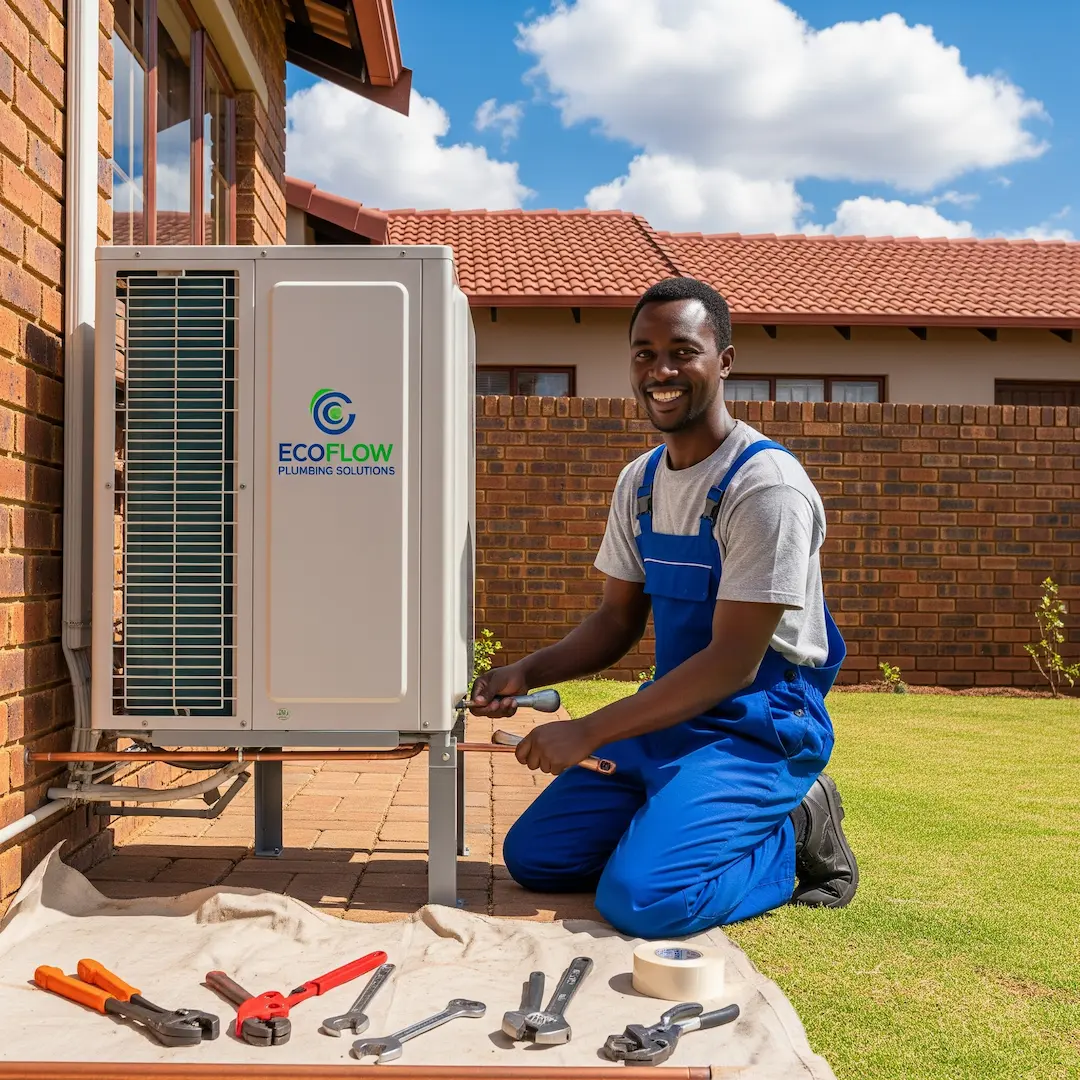
Heat Pump Sizing & Placement: Optimising Your Installation for Energy Efficiency
Planning a heat pump in South Africa? Learn why correct sizing and placement matter, how experts choose the right system, and how to maximise efficiency, savings, and performance before installation.

Investing in a heat pump for your home is a smart move towards energy efficiency and lower utility bills, especially with the rising cost of electricity in South Africa. But simply buying a heat pump isn't enough; getting the sizing and placement right is crucial to unlock its full potential. Our expert plumbers, who've seen countless installations across the country, often share their insights on these critical planning stages. This guide will walk you through the essential considerations for selecting the right size heat pump and finding its optimal location.
What Size Heat Pump Do I Need?
This is perhaps the most common question homeowners ask, and for good reason. An undersized heat pump will struggle to meet your hot water demands, leading to cold showers and excessive running, while an oversized one will cycle on and off too frequently, wasting energy and potentially shortening its lifespan. The goal is to match the heat pump's capacity to your household's hot water consumption.
Our plumbing professionals emphasise that there's no one-size-fits-all answer. It's a calculation based on several factors:
- Number of Occupants: This is your primary indicator. More people generally mean higher hot water demand. A small family of two will have very different needs from a bustling household of six.
- Hot Water Usage Habits: Do you all shower at the same time in the morning? Do you have large baths frequently? Do you run your washing machine and dishwasher with hot water during peak times? These habits significantly impact daily hot water consumption. For instance, a family who staggers their showers will likely need a smaller capacity than a family who all need hot water simultaneously before school or work.
- Number of Hot Water Outlets: Consider how many showers, baths, basins, and kitchen sinks draw hot water. More outlets usually mean a greater potential for simultaneous demand.
- Geyser Size (if applicable): If you're replacing a geyser with a heat pump, the existing geyser's capacity can be a good starting point, but it's important to cross-reference this with actual usage. Often, geysers are oversized for a household's needs.
- Climate Zone: While heat pumps are incredibly efficient, their performance can be slightly affected by very low ambient temperatures. In colder regions of South Africa, you might lean towards a slightly larger unit to ensure consistent hot water supply during winter.
Practical Sizing Guidelines (Based on Expert Observations)
While a professional assessment is always recommended, here are some general guidelines shared by our experienced installers:
- 100-150 Litre Geyser Replacement: For a small household (1-2 people) with moderate hot water usage, a 3kW to 4.5kW heat pump is often sufficient. We’ve seen many successful installations in compact apartments or small homes with these capacities.
- 150-200 Litre Geyser Replacement: A medium-sized family (3-4 people) with standard hot water needs might opt for a 4.5kW to 6kW heat pump. One plumber recounted a situation where a family of four initially thought they needed a huge unit, but after assessing their actual usage patterns, a 5kW unit connected to their existing 200L geyser proved perfectly adequate, saving them on initial investment and running costs.
- 250-300 Litre Geyser Replacement and Larger Homes: For larger families (5+ people) or homes with high hot water demand (multiple bathrooms, frequent use of large baths), an 8kW to 10kW or even larger heat pump might be necessary. In these scenarios, a detailed hot water audit by a professional is invaluable.
The key takeaway from our plumbing experts is: don't guess. A qualified plumber will conduct a thorough assessment of your specific hot water needs to recommend the most appropriate heat pump size.
Where Should a Heat Pump Be Installed? Optimal Placement for Efficiency and Noise
Once you've determined the ideal size, the next crucial step is finding the best location for your heat pump. Proper placement significantly impacts its energy efficiency, operational noise, and overall lifespan. Our installers have shared numerous anecdotes illustrating the importance of this step.
Heat pumps operate by extracting heat from the ambient air, so their environment plays a vital role. Here are the key factors to consider for optimal placement:
- Proximity to the Geyser/Hot Water Cylinders: The closer the heat pump is to the hot water cylinder it's heating, the more efficient it will be. This minimises heat loss through pipes and reduces the energy required to circulate water. One plumber recounted a job where a homeowner wanted the heat pump installed far from the geyser due to aesthetic reasons. While it was possible, the installer explained the inevitable drop in efficiency and increased running costs due to the longer pipe runs. The homeowner eventually opted for a slightly less ideal aesthetic in favour of long-term savings.
- Accessibility for Maintenance: Heat pumps, like any appliance, require periodic maintenance. Ensure the chosen location allows easy access for servicing, filter cleaning, and potential repairs. You don't want a unit tucked away in a cramped space where a technician can barely reach it.
- Ventilation and Airflow: Heat pumps need a consistent supply of ambient air to extract heat from. The unit should be placed in an area with good airflow, away from confined spaces like small cupboards or alcoves that can restrict air circulation. Avoid placing it in an enclosed area with no way for the "exhaust" cold air to dissipate.
- Noise Considerations: While modern heat pumps are quieter than older models, they do produce some operational noise, similar to an air conditioner's outdoor unit. Consider the proximity to bedrooms, living areas, and your neighbours' properties. Placing it on a solid concrete slab rather than a wooden deck can also help minimise vibrations and noise transmission. Our installers often advise homeowners to stand where the heat pump will be placed and imagine the sound, especially if it's near a quiet area of the house.
- Protection from Elements (but not fully enclosed): While designed for outdoor use, protecting your heat pump from direct, harsh weather conditions can extend its life. This doesn't mean enclosing it entirely, which would hinder airflow. A simple canopy or an area under an eave can offer sufficient protection from heavy rain and direct sunlight.
- Drainage: Heat pumps produce condensate (water) as a byproduct of their operation, especially in humid conditions. Ensure there's adequate drainage or a connection to a suitable drain nearby to prevent water pooling around the unit.
- Sunlight Exposure: Placing the heat pump in a location that receives some direct sunlight can slightly improve its efficiency, especially in winter. However, avoid excessive, prolonged direct sunlight in extremely hot climates, as this can sometimes overwork the unit. A balance is key.
Integration with Existing Plumbing
For most South African homes, a heat pump is integrated with an existing geyser. The heat pump acts as a highly efficient water heater that continuously heats the water in your geyser. This integration requires a skilled plumber to ensure:
- Correct Pipework Connections: The heat pump needs to be correctly plumbed into the geyser's hot and cold water lines.
- Electrical Connections: A dedicated electrical circuit is usually required for the heat pump, and this must be installed by a qualified electrician, adhering to SANS 10142-1 regulations. Our plumbers often work closely with electricians on these installations to ensure compliance and safety.
- Bypass Valves: Reputable installers will often include bypass valves in the plumbing setup. This allows you to isolate the heat pump for maintenance without interrupting your hot water supply (by reverting to the geyser's electrical element if it has one). This foresight can save a lot of inconvenience down the line.
Taking the Next Step
Proper sizing and strategic placement are foundational to a successful heat pump installation in your South African home. While this guide provides a comprehensive overview, remember that every home is unique. For precise recommendations tailored to your specific needs, always consult with a qualified and experienced plumber. They can assess your property, analyse your hot water consumption patterns, and advise on the most efficient and cost-effective heat pump solution for you.
Frequently Asked Questions
Can I connect a heat pump to my existing geyser?
Yes, in most cases, a heat pump is designed to work in conjunction with your existing geyser. The heat pump essentially takes over the heating function, making your current geyser far more energy-efficient.
How much space does a heat pump unit typically require?
The physical footprint of a heat pump varies by size and model, but generally, you'll need an area of at least 1.5m x 1m around the unit for adequate airflow and maintenance access. It’s important not to obstruct the airflow around the unit.
Will a heat pump provide hot water instantly?
Heat pumps heat water and store it in your geyser, similar to how a traditional geyser works. While they are very efficient at reheating, hot water is not produced "instantly" at the tap, but rather drawn from the heated supply in the geyser. The recovery rate (how quickly it reheats the stored water) is generally very good.
Are there any specific maintenance requirements for heat pumps?
Yes, like any appliance, heat pumps benefit from regular maintenance. This typically includes cleaning the air filter periodically, checking the condensate drain, and ensuring there are no obstructions around the unit. Annual professional servicing is recommended to keep the unit running efficiently and prolong its lifespan.
Suzette Meyer is the lead author and content creator for Kandua.com, South Africa’s #1 marketplace for home services. Suzette has made it her mission to help homeowners with advice on all aspects of home repair, maintenance and improvement, including how to choose the right Pro and how to make smart upgrades that improve your resale value or save costs.

Related articles, advice and more
.webp)
What Does a Plumbing Call-Out Fee Usually Include?
When that familiar drip-drip-drip starts under the kitchen sink or your geyser begins a slow weep in the ceiling, the first thing most South African homeowners do is pick up the phone. But before a wrench even touches a pipe, you’ll likely hear the term "call-out fee."
.jpg)
How to Choose Between Repair and Replacement for Your Geyser
Deciding between repairing and replacing isn't just about the immediate price tag. It is about safety, long-term electricity savings, and compliance with South African building regulations. Based on insights from vetted plumbers across Johannesburg, Cape Town, and Durban, this guide will help you navigate that decision with confidence.
.jpg)
What to Do If Your Electric Problem Comes Back After Repair
There are few things more frustrating than paying for a repair only to have the lights flicker, the breaker trip, or the plug point fail again a few days later. Here is a step-by-step guide to handling the situation professionally, safely, and effectively to get it sorted out for good.
.jpg)
Understanding Geyser Warranties in South Africa
For most South African households, the geyser is the hardest-working appliance in the home. To help you protect your investment, we have broken down exactly how Geyser warranties work in South Africa, drawing on insights from qualified plumbers who handle rejected claims daily.
.webp)
How Hard Water Damages Your Plumbing (and What to Do About It)
If you suspect you have hard water, you are in the "awareness" stage of a very important journey for your home's maintenance. Ignoring it can lead to burst geysers and clogged pipes. This guide, compiled with insights from top local plumbers, will explain exactly how hard water affects your plumbing and the practical steps you can take to fix it.
.webp)
.webp)
.webp)
Latest articles, advice and more
.webp)
How To Fix A Damp Wall And What's Actually Causing It
If your walls are weeping, your plaster is flaking, or you can smell that musty, damp smell, you're not dealing with one problem; you're dealing with three possible ones. The fix depends entirely on the cause.
.webp)
Gutter Cleaning: How Often Should You Do It and What Does It Cost?
Clean your gutters at least twice a year, and always before your rainy season kicks in. In South Africa, a professional gutter clean usually costs somewhere between R450 and R2,500, depending on the size of your home, how high the roof is, and how blocked things have become. Here is how to work out the right frequency and a fair price.
.webp)
Why Are My Plug Points Not Working? A Troubleshooting Guide
If your plug points have suddenly gone dead, the usual culprits are a tripped earth leakage switch, a tripped circuit breaker, loose or burnt wiring, or a faulty appliance overloading the circuit. Work through the safety checks below before you call anyone, then understand when the job requires a registered electrician.
.webp)
How a Geyser Timer Can Cut Your Electricity Bill
If you've been staring at your Eskom bill and wondering where the money is going, your geyser might be the culprit. Here's the good news: a simple geyser timer can cut your hot water costs by up to 30% each month, which typically saves South African homeowners between R200 and R400 on their electricity bills, depending on their current usage.
%20(1).webp)
How To Treat and Paint Over Damp Walls (So It Doesn't Come Back)
You've noticed a patch on the bedroom wall: discoloured and maybe a bit soft to the touch, and you're wondering if a fresh coat of paint will simply cover the problem. The short answer: no, it won't. But the good news is that understanding what's happening beneath that stain, and treating it properly, is far simpler than you might think.
.webp)
Beyond the Unboxing: A Detailed Guide to Correct Washing Machine Plumbing & Setup
New washing machine in South Africa? Learn essential plumbing and setup tips to prevent leaks, ensure efficient operation, and extend your appliance’s lifespan - expert advice before your first load.
.webp)
New Washing Machine? Don't Plug It In Yet! Essential Installation Tips for SA Homes
Installing a new washing machine? Learn the essential setup steps South African homeowners often overlook to prevent leaks, noise, and damage—and ensure efficient, long-lasting performance from day one.
%20(1).webp)
.webp)
TV Repair Costs in South Africa: Diagnosing Screen, Power & Component Issues
Find out what TV repairs really cost in South Africa – from call-out and diagnosis fees to screen, power and main board fixes – and when it’s cheaper to replace your TV instead of repairing it.
.webp)
Septic Tank Leak Repair Cost in South Africa: Addressing Odours & Environmental Hazards
Learn typical septic tank leak repair costs in South Africa, what drives the price up, how to spot early warning signs (odours, soggy ground, backups), and when it’s safer and cheaper to get a professional in.
How to Install a Horizontal Geyser | Step-by-Step Pro Guide
Want to install a geyser like a pro? This step-by-step tutorial shows you exactly how to do a horizontal Ariston Axios geyser installation, straight from the BluLever plumbing workshop. 🎥 Hosted by MK, BluLever’s technical facilitator, and supported by a qualified electrician, Life and a BluLever graduate artisan, Zinhle. This is your ultimate guide to a SANS 10254-compliant installation — from preparing the wall, to plumbing, electrical wiring, and pro troubleshooting tips.
How to Maintain a Geyser | Step-by-Step Pro Guide
Want to maintain a geyser like a pro? This step-by-step tutorial shows you exactly how to do the three core geyser maintenance checks on an Ariston Axios geyser installation, straight from the BluLever plumbing workshop. 🎥 Hosted by MK, BluLever’s technical facilitator, and supported by a qualified electrician, Life. This is your ultimate guide to geyser maintenance — from diagnosing the problem to checking the heat regulation of the geyser, to pressure regulation and then finally corrosion protection.
%201.avif)
Not just another newsletter. It's an advantage


From problem to solved.


.svg)


.avif)
.avif)
.avif)


.avif)