
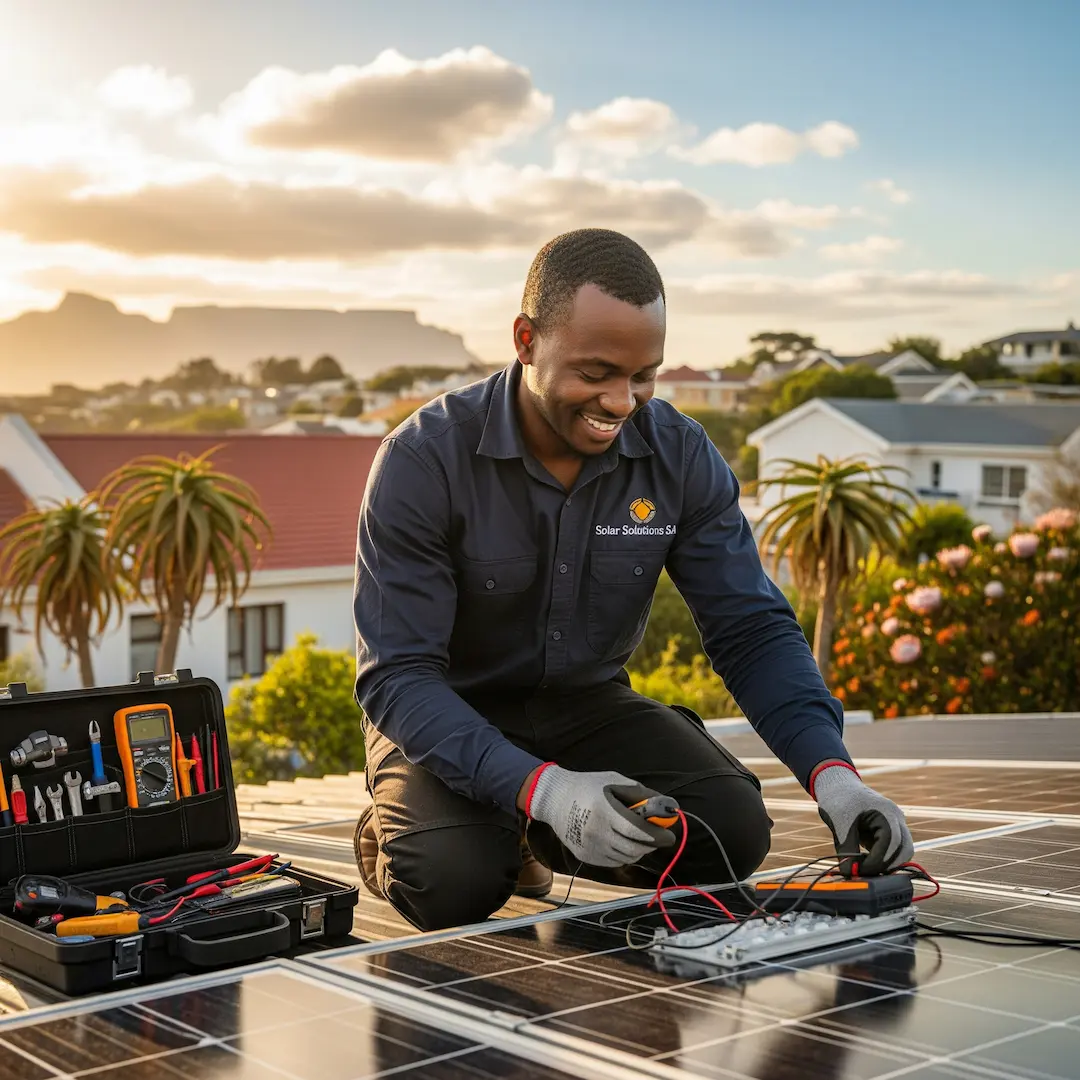
Your Solar System is Running Smoothly! Proactive Maintenance Tips for SA Solar Owners
Solar system repaired and running well? Discover proactive maintenance tips to maximise efficiency, prevent future faults, and protect long-term energy savings for South African solar owners.

Your Solar System is Running Smoothly! Proactive Maintenance Tips for SA Solar Owners
It’s a fantastic feeling when your solar system is running optimally, especially after a repair. The hum of efficiency, the reduced electricity bill – it’s a testament to a smart investment. But like any sophisticated system, a solar setup benefits immensely from proactive care. Think of it like servicing your car; regular checks prevent minor issues from becoming major headaches. For South African homeowners, understanding how to keep your solar system efficient after a repair isn't just about saving money, it’s about maximizing your energy independence and ensuring a consistent power supply.
Our trusted electricians often share how a little vigilance goes a long way. They’ve seen countless cases where a small, unnoticed issue escalates into a significant repair simply because it wasn't caught early. This guide will walk you through the essential steps for maintaining your solar system's health, helping you recognise potential issues, and ensuring your investment continues to deliver peak performance for years to come.
Why Proactive Maintenance Matters
Even after a successful repair, ongoing maintenance is crucial. It's not just about fixing something when it breaks; it's about preventing it from breaking in the first place, or at least catching issues when they are small and manageable. Here's why staying on top of your solar system's health is so important:
- Maximising Energy Production: A well-maintained system operates at its peak efficiency, generating the maximum possible electricity for your home. Dirt, debris, or even minor component issues can significantly reduce output.
- Extending System Lifespan: Regular checks and timely interventions can significantly extend the overall lifespan of your solar panels, inverter, batteries, and wiring. This protects your substantial initial investment.
- Preventing Costly Repairs: Identifying and addressing small problems early on is almost always less expensive than waiting for them to develop into major faults. Our experts often recount stories of homeowners who saved thousands by simply attending to a minor issue before it compounded.
- Ensuring Safety: Electrical systems, especially high-voltage solar setups, require respect. Regular professional checks ensure that all connections are secure and that there are no fire hazards or other safety risks.
- Maintaining Warranty Validity: Many solar equipment warranties require proof of regular maintenance to remain valid. Neglecting upkeep could void your warranty, leaving you responsible for costly repairs down the line.
Daily and Weekly Checks: What You Can Do
While professional maintenance is essential, there are several simple checks you can perform regularly to keep an eye on your system's health.
- Monitor Your Energy Production: Most modern inverters come with a monitoring app or display. Get into the habit of checking your daily and weekly energy production. A sudden, unexplained drop in output could signal a problem. For example, one homeowner noticed their usual 20 kWh daily production suddenly dropped to 10 kWh. A quick check revealed a patch of bird droppings on a key panel, easily resolved, restoring full output.
- Visual Inspection of Panels: From the ground, take a quick look at your solar panels. Are they free of excessive dust, leaves, or bird droppings? Are there any visible cracks or discolouration? While you shouldn't get on the roof yourself for cleaning, a visual check helps you identify when cleaning is needed.
- Check Inverter Status: Your inverter usually has indicator lights or a display screen. Familiarise yourself with what the normal operating lights look like. Any error codes or blinking lights that aren't typical for normal operation should be noted.
- Listen for Unusual Noises: While solar systems are generally quiet, listen for any strange humming, buzzing, or clicking sounds coming from your inverter or other components.
Monthly and Quarterly Checks: A Deeper Look
These checks might require a bit more attention but are still within the realm of a confident homeowner.
- Clean Solar Panels (If Safe to Do So): If your panels are easily accessible and you have the right safety equipment (and feel confident), a gentle rinse with water can remove accumulated dust. Avoid harsh chemicals or abrasive materials. Remember, getting onto a roof can be dangerous; if in doubt, always call a professional. Many of our experienced installers will tell you that a simple hosepipe with gentle water pressure is usually enough for light cleaning, but for stubborn grime, specialized cleaning tools might be needed, or better yet, a professional cleaning service.
- Check for Shading Issues: As seasons change, trees grow, or new structures are built, shading patterns on your roof might change. Even partial shading on one panel can significantly reduce the output of the entire string. Take a moment to observe your panels throughout the day to identify any new shading.
- Inspect Wiring and Connections (from the ground): Visually check any accessible wiring and conduits for signs of wear and tear, rodent damage, or loose connections. Never touch exposed wires.
- Battery Health (if applicable): If you have a battery storage system, check the charge levels and ensure the ventilation (if present) is clear. For older lead-acid batteries, ensure terminals are clean and free of corrosion, but only if you are comfortable and understand the safety precautions for working with batteries. Modern lithium-ion batteries typically require less user intervention.
Annual Professional Servicing: Non-Negotiable for SA Solar Owners
While your diligent efforts contribute significantly to your system's health, an annual professional service by a qualified solar electrician is non-negotiable. This is where true expertise comes into play, ensuring safety, efficiency, and longevity. Our expert service providers highlight that this annual check-up often uncovers hidden issues before they become serious.
During a professional service, you can expect the following:
- Thorough Panel Inspection: Professionals will check for micro-cracks, hot spots, delamination, and any degradation that might not be visible from the ground. They have specialized tools like thermal cameras for this.
- Inverter Diagnostics: The inverter is the brain of your system. Professionals will perform comprehensive diagnostic tests, check for firmware updates, and ensure all electrical parameters are within optimal ranges.
- Battery System Check-up: For systems with batteries, they will assess battery health, state of charge, cycling, and connection integrity. This is vital for maximising battery lifespan and performance.
- Wiring and Connection Integrity: All DC and AC wiring, connections, and conduits will be thoroughly inspected for wear, corrosion, or loosening. Loose connections are a common cause of efficiency loss and potential fire hazards. Adherence to SANS 10142-1 (the wiring code) is paramount for electrical safety.
- Earthing and Surge Protection: They will verify that earthing is correctly installed and functioning, and that surge protection devices are in good working order, protecting your system from lightning strikes and power surges.
- Mounting Structure Assessment: The integrity of the mounting system is crucial. Professionals will check for rust, corrosion, and ensure all clamps and bolts are secure, especially in areas prone to high winds.
- Performance Testing: Using specialised equipment, they will test the system's actual power output against its rated capacity to ensure it’s performing as expected.
One of our highly experienced installers recently recounted a situation where a homeowner called them for a routine annual service. Everything seemed fine on the surface, but during the professional inspection, they discovered a small, almost imperceptible rodent chew on a critical DC cable in the roof space. If left unchecked, this could have led to a major short circuit and potential fire. The homeowner was incredibly relieved that this hidden danger was identified and rectified. This kind of expert eye is what an annual service provides.
Recognising Early Warning Signs
Even with proactive maintenance, issues can arise. Knowing the early warning signs can help you act quickly and prevent minor glitches from escalating.
- Consistent Drop in Production: If your monitoring app shows a sustained drop in energy production without a clear reason (like prolonged cloudy weather), it's a red flag.
- Frequent Inverter Error Codes: While occasional, transient error codes might occur, frequent or persistent error messages on your inverter indicate a problem. Consult your inverter manual or call a professional.
- Flickering Lights or Power Fluctuations: If you notice electrical anomalies in your home that weren't there before, it could be related to your solar system or inverter.
- Unusual Smells: Any burning smell coming from your inverter or electrical components requires immediate attention. Switch off your system at the main breaker and call an electrician immediately.
- Physical Damage to Panels or Wiring: Visible cracks, scorch marks, or loose wires are clear indicators that professional intervention is needed.
DIY Disclaimer
While basic visual checks and gentle cleaning (if safe and accessible) can be done by homeowners, any electrical work or repairs involving your solar system should only be performed by a qualified and certified electrician. Working with high-voltage DC electricity is extremely dangerous and can lead to severe injury or even death. Never attempt to open your inverter or tamper with wiring if you are not a trained professional. When in doubt, call an expert.
FAQs
Q1: How often should I clean my solar panels in South Africa?
A1: The frequency of cleaning depends largely on your local environment. In dusty areas or regions with heavy bird activity (like coastal towns), you might need to clean them every few months. In cleaner, rural areas, once or twice a year might suffice. However, always assess visually; if they look dirty, they likely need cleaning.
Q2: What's the average lifespan of a solar inverter, and how do I know if mine needs replacing?
A2: Most modern solar inverters are designed to last between 10 to 15 years. Signs that your inverter might be failing include frequent error messages, significantly reduced energy production despite clear weather, unusual noises, or complete system shutdowns. A professional electrician can diagnose inverter issues accurately.
Q3: Can bad weather, like hailstorms or strong winds, damage my solar panels?
A3: Solar panels are designed to be durable and can withstand most normal South African weather conditions, including moderate hail and strong winds. However, extreme weather events, such as very large hailstones or cyclonic winds, can cause damage. After severe weather, it's always a good idea to visually inspect your panels for any cracks or dislodged components.
Q4: My monitoring app shows my solar production is down. What's the first thing I should check?
A4: First, check for obvious shading – perhaps a new tree branch or even a buildup of dirt on the panels. Then, check your inverter's display for any error codes. If these simple checks don't reveal the cause, or if the problem persists, it's best to contact a qualified solar electrician for a thorough diagnosis.
Find a vetted electrician near you
Solar repairs and maintenance: find a pro near you
- Solar repairs and maintenance near you
- Solar repairs and maintenance in Johannesburg
- Solar repairs and maintenance in Sandton
- Solar repairs and maintenance in Midrand
- Solar repairs and maintenance in Roodepoort
- Solar repairs and maintenance in Randburg
- Solar repairs and maintenance in Pretoria
- Solar repairs and maintenance in Cape Town
Suzette Meyer is the lead author and content creator for Kandua.com, South Africa’s #1 marketplace for home services. Suzette has made it her mission to help homeowners with advice on all aspects of home repair, maintenance and improvement, including how to choose the right Pro and how to make smart upgrades that improve your resale value or save costs.

Latest articles, advice and more
.webp)
.webp)
.webp)
.webp)
.jpeg)
Sinking Pavers, Weeds and Water That Pools: What Your Driveway Is Telling You
When your driveway starts sprouting weeds, pooling water, or sinking in patches, the bricks are not failing you. The layers underneath have moved, and they are trying to tell you exactly what went wrong.
.webp)
.webp)
Beyond the Unboxing: A Detailed Guide to Correct Washing Machine Plumbing & Setup
New washing machine in South Africa? Learn essential plumbing and setup tips to prevent leaks, ensure efficient operation, and extend your appliance’s lifespan - expert advice before your first load.
.webp)
New Washing Machine? Don't Plug It In Yet! Essential Installation Tips for SA Homes
Installing a new washing machine? Learn the essential setup steps South African homeowners often overlook to prevent leaks, noise, and damage—and ensure efficient, long-lasting performance from day one.
.webp)
.webp)
%25201200%2520x%25201200%2520(1).jpeg)
What Retiling a Bathroom Costs in 2026, Room by Room
Retiling a bathroom in South Africa costs between R230 and R800 per square metre in 2026, including materials and labour. A standard family bathroom, stripped and fully retiled, usually lands between R11,800 and R27,500. A guest toilet costs a fraction of that. A large porcelain en-suite costs a lot more.
How to Install a Horizontal Geyser | Step-by-Step Pro Guide
Want to install a geyser like a pro? This step-by-step tutorial shows you exactly how to do a horizontal Ariston Axios geyser installation, straight from the BluLever plumbing workshop. 🎥 Hosted by MK, BluLever’s technical facilitator, and supported by a qualified electrician, Life and a BluLever graduate artisan, Zinhle. This is your ultimate guide to a SANS 10254-compliant installation — from preparing the wall, to plumbing, electrical wiring, and pro troubleshooting tips.
How to Maintain a Geyser | Step-by-Step Pro Guide
Want to maintain a geyser like a pro? This step-by-step tutorial shows you exactly how to do the three core geyser maintenance checks on an Ariston Axios geyser installation, straight from the BluLever plumbing workshop. 🎥 Hosted by MK, BluLever’s technical facilitator, and supported by a qualified electrician, Life. This is your ultimate guide to geyser maintenance — from diagnosing the problem to checking the heat regulation of the geyser, to pressure regulation and then finally corrosion protection.
%201.avif)
Not just another newsletter. It's an advantage